
AI is revolutionizing healthcare analytics by streamlining processes, enhancing data accuracy, and improving patient outcomes. With vast amounts of data generated every day, traditional analytical methods often fall short. AI technologies bring forth scalability and speed, allowing healthcare professionals to glean actionable insights from complex data. Additionally, machine learning algorithms can predict patient trends, optimize operational efficiency, and personalize treatment plans. As the healthcare sector embraces these advancements, engineers and data scientists play a crucial role in building robust systems that harness AI effectively. The implications on patient care and operational efficiency are profound, as healthcare organizations progressively leverage AI to transform data into critical insights.
Integrating AI into Healthcare Analytics

AI technologies have transformed healthcare analytics by providing innovative solutions to manage and interpret complex datasets. Machine learning, natural language processing, and predictive modeling are at the forefront, offering unprecedented opportunities for enhanced efficiency and accuracy in patient care.
Machine learning algorithms are powerful tools for mining vast amounts of healthcare data. These algorithms can classify patient information, recognize patterns, and offer insights into treatment outcomes that were previously unattainable. By learning from existing data, these algorithms can predict potential health issues and recommend targeted interventions. This reduces unnecessary procedures and cuts down on healthcare costs, directing resources where they are most needed.
Another pivotal technology is natural language processing (NLP). This allows computers to understand and interpret human language, facilitating the analysis of unstructured data such as doctor’s notes, clinical reports, and patient feedback. By extracting key information from such sources, NLP systems can enhance data comprehensiveness and promote more robust analytics platforms. This translates to better patient outcomes as healthcare professionals access complete and intelligible data to inform their decisions.
Predictive modeling harnesses statistical techniques and empirical data. It estimates the probability of future outcomes in patient health, offering critical foresight in clinical decision-making. These models can forecast disease outbreaks, predict patient admissions, and optimize resource allocation. Hospitals use predictive analytics to prevent adverse events such as patient falls or readmissions, tailoring treatment plans to minimize risks.
Despite their promise, integrating AI into healthcare analytics faces several challenges. Data privacy and security remain top concerns, with sensitive patient information needing strict protection against breaches. Additionally, there is the subject of bias in AI algorithms, which can arise from unrepresentative training data. Addressing these issues is crucial to ensure fair and ethical clinical practices.
Successful implementations demonstrate the profound benefits of integrating AI in healthcare settings. For instance, a hospital that implemented a machine learning model to predict patient deterioration experienced a significant reduction in emergency transfers. Similarly, NLP-driven analytics platforms have streamlined operations by automating the extraction of critical patient data, slashing administrative time by nearly 30%.
Operational efficiency has also seen marked improvement. Healthcare organizations deploying predictive modeling witness more accurate predictions of resource requirements, minimizing operational bottlenecks. This proves instrumental during peak times or health crises when resource management is paramount.
For more information on the ethical implications and advancements in AI, explore Generative AI Ethics.
The integration of AI into healthcare analytics continues to evolve, bringing about transformative changes. However, the journey requires ongoing vigilance and adaptation to technological, ethical, and clinical advancements to fully realize its potential in enhancing patient care and operational efficiencies.
The Impact of AI on Patient Outcomes and Operational Efficiency
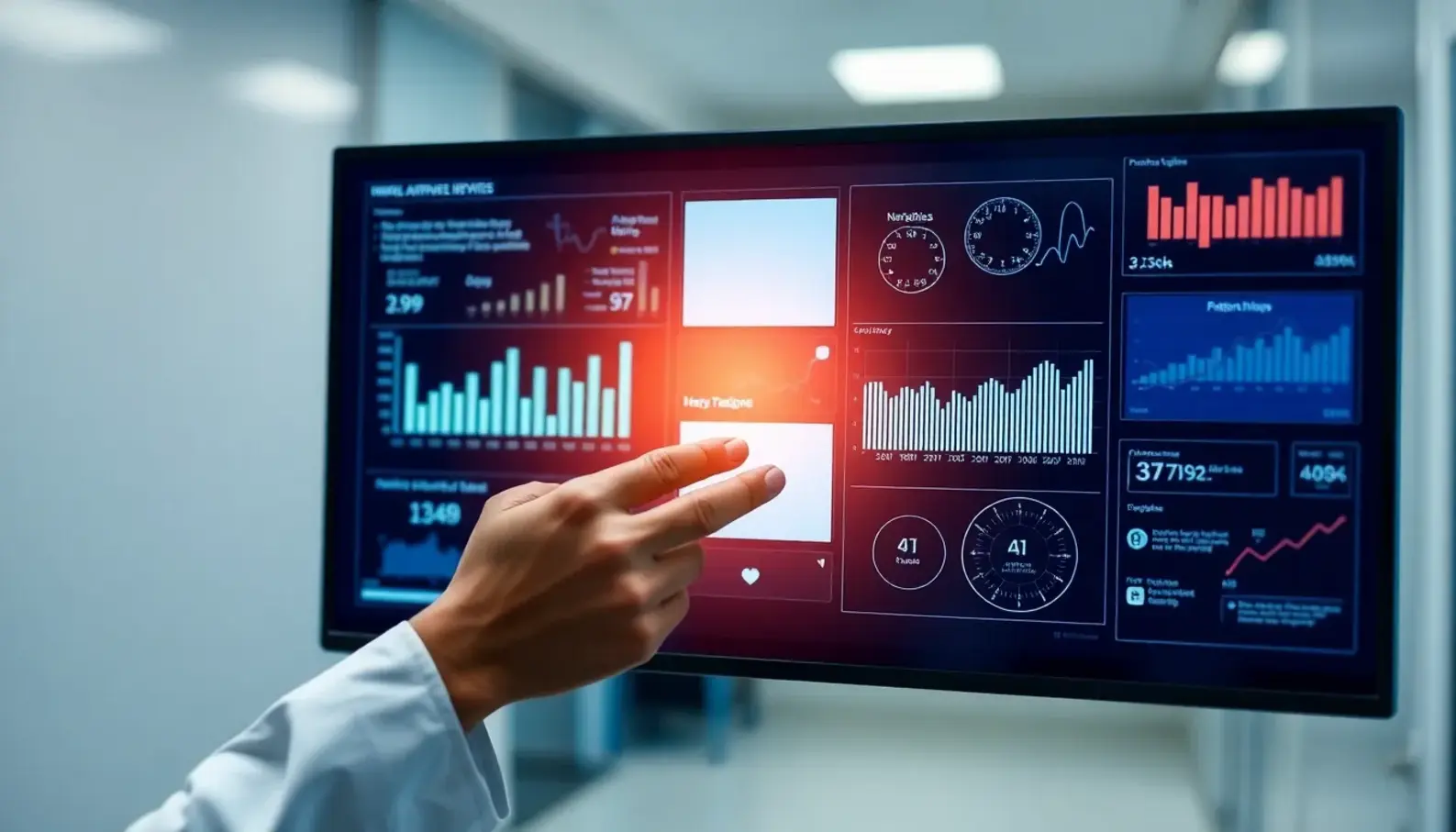
Artificial Intelligence (AI) has begun to revolutionize healthcare by providing tools that enable enhanced analytics, improving both patient outcomes and operational efficiency. As AI continues to evolve, its impact becomes increasingly tangible, helping to bridge gaps in diagnostic processes, treatment timing, and patient satisfaction.
AI and Diagnostic Accuracy
A fundamental aspect of AI’s role in healthcare is its contribution to diagnostic accuracy. By leveraging vast datasets, AI algorithms can identify patterns that might elude human practitioners. This capacity enables early detection and more precise diagnoses of conditions like cancers, heart diseases, and neurological disorders. For instance, in radiology, AI systems can analyze medical images with an accuracy comparable to or even exceeding that of human radiologists, leading to earlier and more accurate interventions. Such precision not only aids in initiating timely treatments but also reduces the risk of false positives and unnecessary procedures, leading to improved patient outcomes.
Enhancing Treatment Timing
AI also plays a crucial role in improving treatment timing. Predictive analytics allows for the early identification of potential health deteriorations. AI can process real-time data from patient monitors, electronic health records, and other sources to predict adverse events. For example, in critical care settings, AI systems can alert medical staff to changes in a patient’s condition, such as the likelihood of a cardiac event, days before it might be detectable by conventional monitoring alone. This foresight leads to timely interventions and can drastically improve recovery rates and minimize hospitalization durations.
Improving Patient Satisfaction
Patient satisfaction is a critical metric in evaluating the success of healthcare systems. AI contributes significantly by personalizing the patient experience. Virtual health assistants provide patients with immediate responses to health queries, reminders for medication adherence, and post-discharge care instructions. By streamlining communication and ensuring consistent follow-ups, AI helps create a more patient-friendly environment. Furthermore, natural language processing (NLP) allows systems to understand and respond to patient queries more effectively, reducing wait times and enhancing the overall satisfaction rate.
Operational Efficiency
Beyond direct patient interactions, AI boosts operational efficiency by optimizing administrative workflows. AI systems can automate appointment scheduling, manage billing processes, and streamline patient triaging. Hospitals and clinics deploying AI have reported reduced operational costs and improved resource allocation, ensuring that healthcare professionals can focus more on patient care rather than administrative tasks. Predictive analytics also aid in inventory management, ensuring that medical supplies are adequately stocked based on anticipated needs, thus preventing shortages or wastages.
Challenges in Implementation
Despite the clear benefits, implementing AI in healthcare comes with challenges. Issues related to data privacy, algorithm bias, and interoperability pose significant barriers. Protecting patient information while integrating AI systems critically involves adhering to stringent privacy norms and regulations. Moreover, algorithm bias can result from non-representative datasets, potentially leading to skewed outcomes. Engineers must ensure diverse data sourcing and continuous algorithm evaluation to address such biases.
Scalability and sustainability are other essential considerations. AI solutions must be adaptable across different healthcare settings and be cost-effective to maintain. Collaboration between data scientists, healthcare professionals, and policymakers is crucial to developing robust AI systems that meet clinical standards and are accessible across varied healthcare environments.
Developing Scalable AI Solutions
For AI to be sustainable in healthcare, engineers need to focus on creating scalable solutions. Modular AI systems, which can be customized to fit specific needs while maintaining core functionalities, offer flexibility and adaptability. Furthermore, using scalable cloud-based platforms enables the broader deployment of AI solutions, ensuring consistent updates and maintenance without extensive local infrastructure.
To further understand the integration of AI in different sectors, the article AI in Business Growth provides additional insights into how businesses are leveraging AI to optimize operations, which parallels many strategies used in healthcare.
In conclusion, AI stands poised to profoundly impact healthcare by enhancing both patient outcomes and operational efficiencies. While the journey towards fully integrated AI systems in healthcare is complex, the benefits evident from early implementations offer a promising glimpse into a future where healthcare is more responsive, personalized, and efficient.
Final words
AI’s integration into healthcare analytics is not just a technological shift, but a fundamental change in how patient care is delivered. By harnessing AI capabilities, healthcare professionals can significantly enhance efficiency, improve diagnostic accuracy, and personalize patient treatments. Engineers and data scientists must continue to collaborate and innovate, ensuring that these technologies are used effectively. The future of healthcare analytics is bright with AI at its core, promising substantial improvements in both operational efficiency and patient care outcomes.
Get Toolkit
Learn more: innoupdates.com
About us
We empower healthcare organizations with cutting-edge AI analytics solutions, enhancing data-driven decision-making for improved patient outcomes and operational efficiency. Our toolkit provides engineers and data scientists with robust tools to integrate AI into healthcare systems effectively, ensuring seamless data analysis and actionable insights.