
As healthcare systems grapple with an influx of data, artificial intelligence (AI) offers a pivotal solution for enhancing analytics operations. By supporting informed decision-making, AI tools can streamline patient care and promote operational efficiency. Educators and healthcare leaders must understand the implications of these technologies, focusing on various applications within analytics. This exploration underscores the significant role AI plays not merely in data handling but as a catalyst for transformation within healthcare settings, urging stakeholders to leverage these advancements while navigating the complexities involved.
AI Technologies Revolutionizing Data Understanding
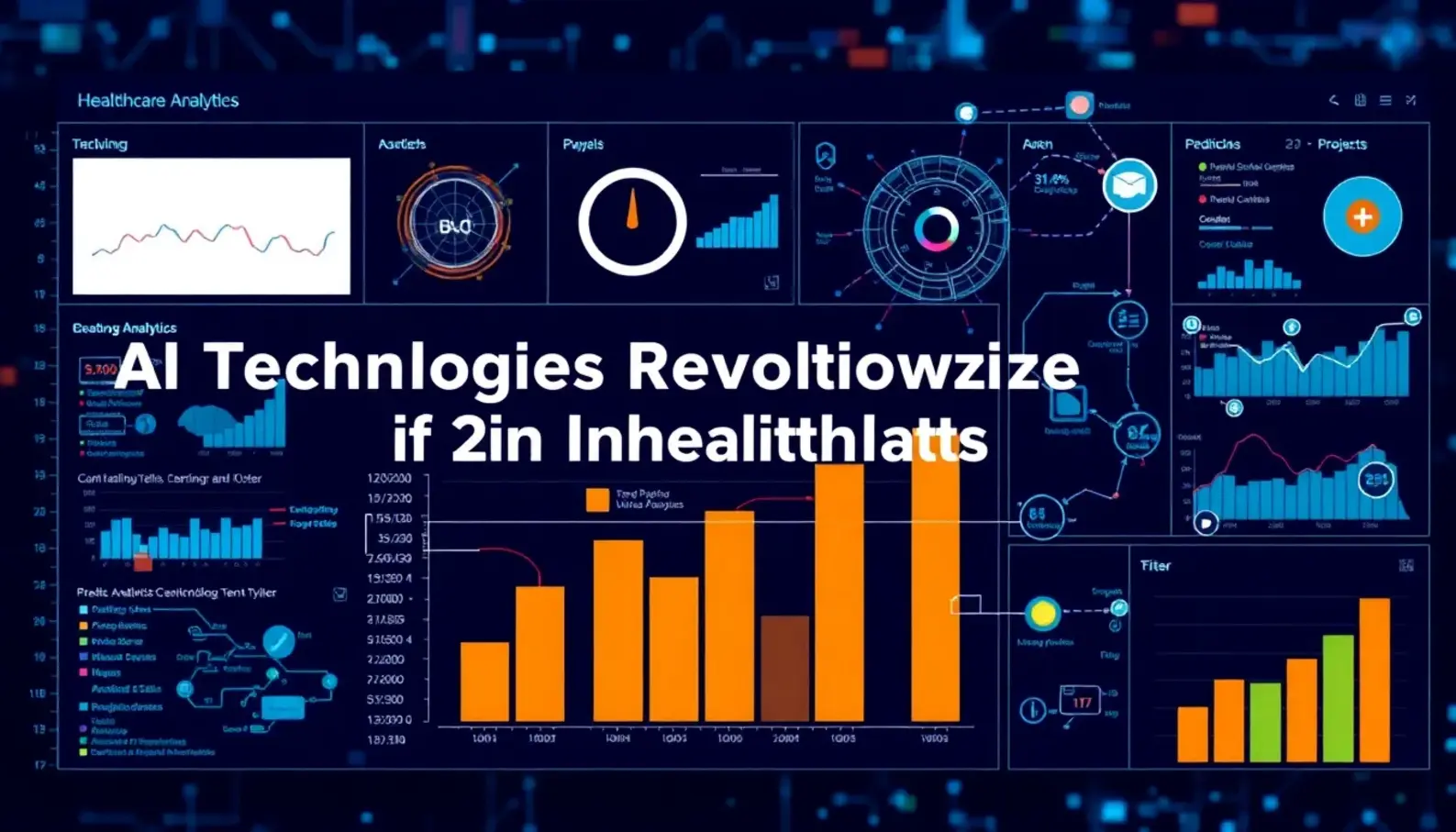
The infusion of AI technologies into healthcare analytics is creating transformative shifts in how data is understood and utilized. Machine learning, natural language processing (NLP), and predictive analytics are at the forefront, redefining the ways in which healthcare systems gain insights and improve operations.
Machine Learning: Enhancing Data Patterns and Predictions
Machine learning algorithms are designed to analyze vast amounts of healthcare data, identifying patterns and trends that human analysts cannot easily discern. By applying statistical methods, these algorithms can predict patient outcomes and identify at-risk populations. Such predictive capabilities are crucial in proactive patient management, enabling interventions before complications arise. Machine learning also aids in optimizing operational tasks such as scheduling and resource allocation, streamlining processes to reduce costs and improve service delivery.
For instance, hospitals are increasingly leveraging machine learning to predict patient admissions. By analyzing historical patient data alongside real-time information, these systems can forecast admission spikes, allowing healthcare facilities to adjust staffing levels and resource availability accordingly, thus enhancing operational efficiency and patient care.
Natural Language Processing: Unveiling New Data Dimensions
NLP is revolutionizing how unstructured data is interpreted and used in healthcare. With vast amounts of patient information stored as free-text notes, traditional data processing methods fall short. NLP approaches this challenge by extracting relevant information from clinical narratives, researchers’ notes, and even patient feedback. This extraction allows healthcare providers to gain a more comprehensive understanding of patient histories and outcomes.
Moreover, NLP streamlines clinical documentation, converting spoken doctor-patient interactions into structured data without manual input. This not only saves time but also reduces the risk of errors, ensuring that accurate information is readily available for decision-making processes.
An impactful application of NLP can be seen in mental health services, where analyzing patient communication patterns provides insights into treatment effectiveness and patient engagement. By assessing changes in language use and sentiment, healthcare providers can tailor interventions to better meet individual patient needs.
Predictive Analytics: Informing Proactive Care Decisions
Predictive analytics employs AI models to synthesize data insights and generate actionable predictions. Through these models, healthcare systems can anticipate future trends and prepare accordingly. Predictive analytics have proven crucial in areas such as disease progression modeling, enabling more personalized and precise treatment plans.
In diabetes management, predictive analytics systems continuously monitor patient biometric data to forecast potential glycemic events, prompting timely interventions. This not only improves patient outcomes by preventing acute events but also helps in reducing the long-term complications associated with diabetes, leading to significant healthcare savings and improved quality of life for patients.
Real-World Implementations: Transforming Healthcare with AI
A successful implementation of AI in healthcare analytics is found in large healthcare networks integrating AI-driven tools to manage patient flow and optimize their care delivery strategies. By utilizing predictive models to assess patient length of stay and readmission risks, these institutions enhance their operational efficiency, reducing wait times and improving overall care coordination.
Another compelling example is in oncology, where AI technologies assist in mining electronic health records to identify patient cohorts for clinical trials. This accelerates the recruitment process, ensuring that trials get underway more promptly, which accelerates the development of new cancer therapies.
Additionally, AI’s role in early disease detection cannot be overstated. Radiology departments now use AI algorithms to analyze imaging results, identifying abnormalities with high accuracy and speed. This early detection capability is particularly critical in conditions like breast cancer, where timely intervention can significantly improve prognosis.
These case studies underscore the profound impact AI has on improving healthcare decision-making and patient care. As AI technologies continue to evolve, their integration into healthcare systems promises even greater advancements. Bridging the gap between complex data and actionable clinical insights, AI is paving the way for a more efficient and effective healthcare landscape.
For further insights into the evolving role of AI across various sectors, you can explore the article on AI in Business Growth.
Challenges and Ethical Considerations in AI Implementation

The integration of Artificial Intelligence (AI) into healthcare analytics promises profound enhancements in operational efficiency. However, this implementation is fraught with challenges and ethical considerations that necessitate careful navigation. Key among these are data privacy concerns, algorithmic bias, and the need for transparency in AI systems.
Data privacy remains a paramount concern as AI systems rely heavily on vast datasets to train and operate effectively. The sensitivity of healthcare data demands robust safeguarding measures to prevent unauthorized access and misuse. Healthcare organizations must comply with data protection regulations such as the General Data Protection Regulation (GDPR) or the Health Insurance Portability and Accountability Act (HIPAA) in the United States. Implementing strong encryption protocols, regular audits, and strict access controls are essential steps in protecting patient data. Furthermore, organizations should regularly update these measures to keep pace with evolving cyber threats.
Algorithmic bias presents another significant challenge. Bias can occur at multiple stages of the AI lifecycle, from data collection to model training. If the data used to train AI systems reflect historical inequalities or are unrepresentative of broader populations, the resulting AI models can perpetuate and even exacerbate existing disparities. To mitigate this, diverse datasets should be used to train AI models, ensuring they are representative of the populations they aim to serve.
In addressing bias, it is crucial for organizations to adopt stringent evaluation processes. Regular bias audits should be conducted to identify and rectify discrepancies. These audits involve assessing the outcomes of AI decisions to ensure they are fair and equitable across different demographic groups. When potential bias is detected, the models should be retrained using more balanced datasets. Engaging multidisciplinary teams in the development and deployment process can also provide diverse perspectives and reduce the likelihood of bias.
Transparency in AI systems is vital for building trust with stakeholders, including patients, healthcare professionals, and regulators. Black-box models, which provide little insight into decision-making processes, pose challenges for accountability and can lead to mistrust. To enhance transparency, organizations should favor interpretable models, where possible, and maintain clear documentation on how AI decisions are made. Such documentation should be accessible to stakeholders and include information about the data used, model choices, and evaluation criteria.
An essential aspect of ethical AI implementation is fostering a culture that prioritizes ethical considerations as part of everyday decision-making. This involves cultivating awareness and education around AI ethics among all organization members. Training programs and workshops can be effective tools in illustrating the importance of ethical AI and equipping staff with the knowledge to recognize and address potential ethical issues.
Healthcare organizations should adopt frameworks and best practices that ensure the responsible use of AI. The AI Ethics Guidelines developed by various international bodies provide valuable starting points. These guidelines emphasize principles such as fairness, accountability, transparency, and privacy. Aligning organizational policies with these guidelines can help ensure that AI applications foster positive outcomes without compromising ethical standards.
Establishing a continuous evaluation and governance process is critical for the responsible deployment of AI. This includes the formation of AI ethics committees tasked with overseeing AI initiatives, ensuring compliance with ethical guidelines, and addressing any ethical concerns that arise. These committees should involve stakeholders from diverse fields, including ethicists, technologists, healthcare professionals, and patient advocates.
Moreover, the governance structure should promote ongoing dialogue about AI ethics, inviting feedback from all levels of the organization. Regularly revisiting and updating AI policies in response to new developments in technology and ethics will help maintain relevance and effectiveness.
The implementation of AI in healthcare analytics holds great potential for increasing operational efficiency. However, recognizing and addressing its challenges and ethical considerations is crucial for its success. By prioritizing data privacy, mitigating bias, ensuring transparency, and fostering an ethical culture, healthcare organizations can navigate the complexities of AI deployment responsibly. As we advance, maintaining a commitment to continuous evaluation and governance will be critical in cultivating AI systems that are not only efficient but also equitable and ethical.
For more insights on how other industries are addressing AI ethical challenges, consider visiting this resource.
Final words
The integration of AI technologies into healthcare analytics operations holds immense promise for improving patient care and operational efficiency. By understanding both the capabilities and challenges of AI, educators and healthcare leaders can better navigate the complexities of implementation. Prioritizing ethical considerations and continuous evaluation will ensure AI serves as a beneficial tool in healthcare analytics.
Download Whitepaper
Learn more: innoupdates.com
About us
Our company specializes in innovative AI solutions tailored for healthcare dynamics. We offer comprehensive analytics platforms that optimize decision-making and operational efficiency while ensuring compliance with ethical standards.