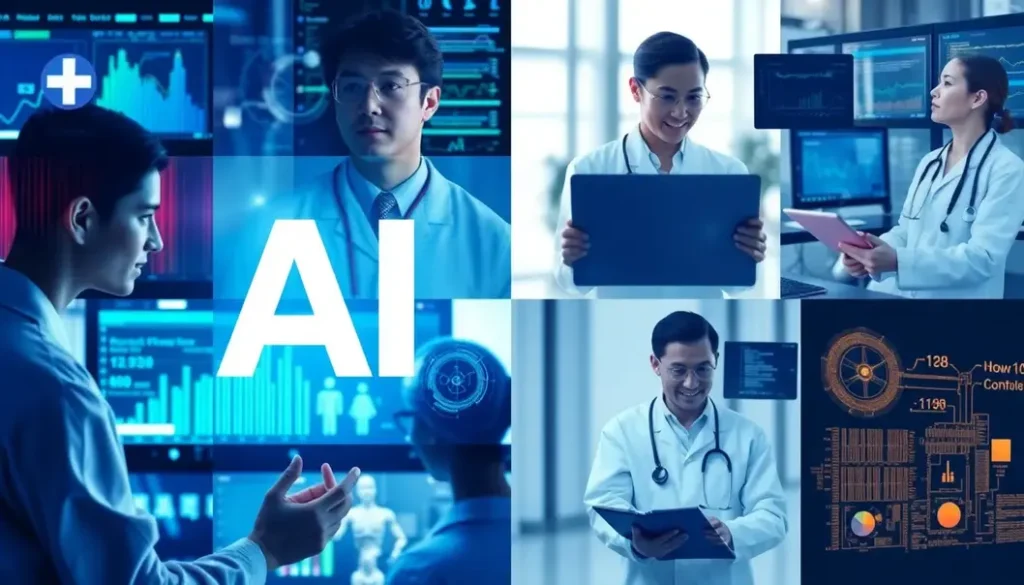
Artificial Intelligence (AI) is proving to be a key player in the healthcare domain, enhancing analytical capabilities and improving communication methods. By integrating machine learning algorithms and natural language processing, healthcare professionals can harness vast amounts of data to inform decision-making processes. This evolution is essential for developers and researchers alike, as it opens new avenues for addressing patient needs more effectively. As we delve deeper into AI’s potential in healthcare analytics communication, it becomes clear that both technical implementation and clear communication strategies are equally important to translating complex data insights into actionable healthcare improvements.
Understanding the Landscape: AI in Healthcare Analytics

Artificial intelligence (AI) has steadily woven itself into the healthcare analytics landscape, creating profound changes in how data is processed and insights are obtained. This synergy between AI and healthcare focuses on leveraging data processing capabilities to refine decision-making and provide enhanced insights into patient care. A deep dive into the various types of data, algorithms, and applications of AI in this sector can offer a clearer picture of its impact.
Healthcare data exists in numerous forms, from structured data like electronic health records (EHRs) and lab results to unstructured data such as clinical notes, medical imaging, and patient-generated data from wearable devices. AI’s prowess in handling such diverse data streams lies in its ability to process, analyze, and derive patterns that inform clinical and operational decisions.
The algorithms at the heart of AI applications in healthcare analytics are numerous and varied, each serving specific purposes. Machine learning algorithms, including supervised and unsupervised learning models, are prevalent. Supervised learning models, such as logistic regression and support vector machines, help predict patient outcomes based on historical data inputs. Unsupervised models, like clustering algorithms, identify patterns and group similar data points for insights into disease outbreaks or patient demographics.
Advanced algorithms like deep learning have further expanded AI’s capabilities in analyzing complex datasets, particularly in medical imaging. Convolutional neural networks (CNNs) and recurrent neural networks (RNNs) are integral in processing image data and sequential data, respectively. These algorithms help detect anomalies in radiology images or predict event sequences, enhancing diagnostic precision and operational efficiency.
The integration of AI in healthcare aims towards a few primary objectives: improving patient outcomes, optimizing resource management, and reducing costs. Automated data analysis leads to more accurate diagnoses, early disease detection, and personalized treatment plans. For instance, AI-driven analytics can predict patient deterioration and aid in timely interventions, consequently improving the overall quality of care.
AI technologies also contribute to operational efficiency by automating mundane tasks and streamlining workflows. Natural language processing (NLP) assists in converting unstructured data into structured insights, facilitating quicker access to critical patient information. This efficiency allows healthcare professionals to devote more time to direct patient care.
Several real-world case studies illustrate how AI enhances healthcare outcomes. One notable example is the use of AI systems in analyzing mammogram images. By employing deep learning models, healthcare providers can improve early breast cancer detection, which is crucial for patient prognosis. Similarly, AI-driven predictive analytics have optimized hospital resource allocation, reducing patient wait times and improving bed management.
Another impactful application is in managing patient readmissions. Predictive algorithms assess risk factors for readmission, allowing healthcare providers to implement preventive measures, significantly reducing unnecessary hospital returns. This not only enhances patient satisfaction but also aligns with healthcare systems’ cost-reduction goals.
Moreover, AI plays a pivotal role in personalized medicine, where the integration of patient-specific genomic data with existing healthcare records offers tailored treatment plans. By creating a comprehensive profile of the patient, AI enables more precise and effective treatment strategies.
The connection between AI and wearable technologies showcases another frontier in healthcare analytics. Wearable devices monitor vital signs continuously, and AI algorithms process this data to detect irregular patterns, alerting healthcare providers for immediate attention. This level of monitoring has proven crucial in managing chronic diseases and preventing potential health crises.
On the operations front, AI also enhances communication within healthcare systems, bridging the gap between various stakeholders. By standardizing data entry and access through electronic platforms, it prevents errors commonly associated with manual data handling. This harmonization of data not only improves internal communication but also patient engagement as they enjoy more seamless interactions with healthcare providers.
The integration of AI in healthcare analytics paves the way for a data-driven healthcare environment, transforming both patient outcomes and administrative operations. For a broader understanding of AI’s role across different sectors, you can explore further insights on AI innovation in other industries at AI in Law. In the future, as AI technologies advance and data dependency grows, healthcare systems are expected to become even more responsive and efficient in addressing patient needs and operational challenges.
Communication Breakthroughs: AI-Driven Data Interpretation

Artificial Intelligence (AI) has revolutionized the way medical data is interpreted and communicated, especially for non-specialists. Natural Language Processing (NLP) tools play a crucial role in translating complex information into accessible language. These tools empower patients, healthcare administrators, and other stakeholders with insights that were previously obfuscated by technical jargon.
NLP’s capabilities allow vast amounts of data from electronic health records, research studies, and medical imaging to become more understandable. By parsing through this information, NLP can detect patterns and present findings in layman’s terms. Patients can understand their health conditions better, enabling more informed decisions about their care.
This communication transformation facilitates a more involved role for patients in their treatment plans. Importantly, when patients comprehend their health information, they are more likely to engage with their treatment plans, leading to potentially better outcomes. Additionally, healthcare administrators benefit from clear data narratives that aid in resource allocation and policy making.
Within multidisciplinary healthcare teams, effective communication is paramount. AI-driven tools enhance collaboration by providing team members with a unified understanding of patient data. This fosters cohesive strategy development for treatment, ensuring that each specialist’s insights contribute effectively to patient care.
However, several challenges must be addressed for these tools to be fully effective. One major challenge is the variability in data quality across different systems. This inconsistency can hinder AI’s ability to generate accurate insights. Moreover, integrating AI tools into existing workflows requires significant changes in healthcare settings, which can face resistance from practitioners accustomed to traditional methods.
To overcome these challenges, strategic steps are necessary. First, training programs should be established to familiarize healthcare professionals with AI solutions. By building confidence in the technology, professionals can more readily integrate it into their workflow. Second, standardizing data formats across systems will improve the quality of insights extracted by AI tools, facilitating smoother operations.
Another strategy involves engaging patients through educational initiatives. Providing resources that clarify how AI enhances their care will foster trust. As patients become more familiar with these technologies, they’ll likely embrace data-driven insights as part of their healthcare journey.
Furthermore, ongoing evaluation of AI’s impact on communication within healthcare can pinpoint areas for improvement, ensuring that tools remain relevant and effective. Feedback loops between developers, medical professionals, and patients can drive continuous refinement of AI capabilities.
Collaboration between tech companies and healthcare providers is also pivotal. By working together, they can develop AI systems that are not only technically sound but also ethically aligned with the needs of patients. This partnership can address privacy concerns, ensuring data is used responsibly and securely.
While AI’s impact on healthcare communication is profound, ethical considerations must not be overlooked. Ensuring algorithmic transparency and avoiding biases in AI-driven interpretations are essential. This aligns with broader discussions about the ethics of AI in various domains, emphasizing the need for responsible innovation.
In conclusion, AI-driven data interpretation marks a significant breakthrough in healthcare communication. Through careful integration and ongoing collaboration, these tools can enhance patient engagement, support healthcare administrators, and strengthen multidisciplinary teams. By addressing challenges and maintaining ethical considerations, AI can continue to bridge gaps in healthcare communication, creating a more informed and efficient healthcare ecosystem.
Future Horizons: Challenges and Innovations in AI Integration

The integration of AI in healthcare analytics is poised to redefine the landscape of clinical decision-making. As healthcare systems evolve, AI-driven analytics present unparalleled opportunities to enhance patient outcomes, streamline operations, and transform diagnostics. Yet, the path forward is laden with challenges, risks, and ethical considerations that require incisive strategies to navigate successfully.
One of the most significant trends reshaping healthcare analytics is the exponential growth of data generated by digital health devices and systems. This data deluge demands sophisticated analytical tools capable of extracting meaningful patterns and insights. AI stands at the forefront, capable of processing vast datasets with remarkable speed and precision. Technologies like machine learning and natural language processing enable predictive analytics that can foresee patient deterioration, optimize treatment plans, and improve resource allocation.
In parallel with these advances, personalized medicine is gaining traction as a key application of AI. By analyzing genetic, environmental, and lifestyle data, AI can facilitate individualized treatment protocols that maximize therapeutic efficacy. This shift towards a more granular understanding of disease processes promises to transform patient care from a reactive model to one that is proactive and preventive.
Despite its potential, the integration of AI into healthcare analytics is not without risks. Data privacy remains a paramount concern. The necessity to protect sensitive patient information while leveraging data for AI-driven insights creates a complex legal and ethical landscape. Ensuring compliance with regulations such as GDPR and HIPAA is essential, yet these guidelines can, at times, hinder data sharing necessary for comprehensive AI analysis.
Moreover, AI systems must operate transparently to maintain trust among healthcare providers and patients. The “black-box” nature of many AI models, where decision-making processes are opaque, poses a significant barrier. Developing algorithms that are explainable and interpretable is crucial for adoption. Healthcare professionals need to understand how AI recommendations are derived to incorporate them into clinical decision-making effectively.
Ethical considerations also loom large. Bias in AI algorithms, often originating from training data that reflects historical disparities in healthcare access and outcomes, can exacerbate existing inequities. It is critical to ensure that AI systems are designed and trained responsibly, incorporating diverse data to minimize bias and enhance fairness.
Overcoming these barriers requires innovation at multiple levels. Technical solutions, such as federated learning, can allow AI models to be trained across decentralized datasets without compromising privacy. This approach not only protects individual data but also enables a more comprehensive analysis by pooling insights from disparate sources.
In addition, fostering an organizational culture that embraces AI is pivotal for successful integration. Healthcare institutions must invest in continuous education and training to build AI literacy among staff. Clinicians and administrators should be equipped with the knowledge to utilize AI tools effectively and to maximize their potential in improving patient outcomes.
Leadership plays a critical role in setting a vision for AI adoption, establishing governance frameworks that prioritize ethical considerations, and building infrastructure that supports AI initiatives. Collaboration between stakeholders, including technology developers, healthcare professionals, and policymakers, is essential to create an environment conducive to innovation.
AI in healthcare analytics represents a transformative force, with the potential to revolutionize traditional practices and unlock new possibilities for disease management and prevention. However, its integration requires strategic planning, a commitment to ethical principles, and a willingness to adapt and evolve. By addressing current challenges with innovative solutions and fostering a supportive organizational culture, the healthcare sector can effectively leverage AI to enhance decision-making and deliver superior health outcomes.
For further exploration of AI’s impact across different sectors, including law and business, visit AI in Business Growth.
Final words
As AI integrates deeper into healthcare analytics, the importance of accurate data communication becomes evident. Developers and researchers must work collaboratively to enhance analytical frameworks and ensure clarity in communication. Addressing the challenges with a focus on innovation will pave the way for improved healthcare delivery and patient outcomes.
Download our e-book to explore in-depth strategies for implementing AI in healthcare analytics.
Learn more: https://innoupdates.com
About us
Our company specializes in providing advanced AI solutions tailored for the healthcare sector. Our offerings include powerful analytics tools, customized software development, and consulting services. We help healthcare organizations harness the potential of AI to improve decision-making processes, enhance patient care, and streamline operations.