
The integration of artificial intelligence (AI) into cybersecurity is not just a buzzword; it represents a fundamental shift in how we approach digital defense mechanisms. As threats evolve in sophistication and volume, traditional methods struggle to keep pace, making AI an essential ally. This technology offers advanced tools for threat detection, remediation, and predictive analysis, transforming our ability to safeguard critical assets. Innovators in the field are leveraging these capabilities to create systems that can learn and adapt, ensuring a more resilient cybersecurity posture. Understanding and implementing AI solutions can redefine how we respond to potential breaches, and elevate security protocols to new heights.
Harnessing AI for Threat Detection

Artificial Intelligence (AI) has ushered in a new era of threat detection in cybersecurity. This transformation is largely due to AI’s capacity to analyze and interpret vast amounts of data rapidly. By leveraging machine learning algorithms, AI systems are able to detect anomalies within network traffic that would likely go unnoticed by traditional security measures. As the threat landscape evolves, AI’s role in identifying potential cybersecurity threats like malware, phishing, and ransomware becomes increasingly vital.
Machine learning, a subset of AI, is particularly effective in threat detection. It involves training algorithms on large datasets to recognize patterns and predict behaviors. These algorithms can learn from both labeled data, known as supervised learning, and unlabeled data, called unsupervised learning. In cybersecurity, supervised learning is often used to detect known threats, while unsupervised learning helps identify novel or unknown threats by recognizing deviations from established normal patterns. This capability is crucial in detecting zero-day attacks—vulnerabilities that are exploited before any patches are available.
Deep learning, a more advanced form of machine learning, employs neural networks with many layers to enhance detection capabilities. These networks can process inputs through multiple levels of abstraction, making them exceptionally proficient at distinguishing between benign and malicious activities. For instance, deep learning can be used to examine an email’s content, attachments, and metadata to determine the likelihood of it being a phishing attempt.
One of the significant advancements AI brings to the table is the ability to perform real-time threat analysis. Traditional security systems often struggle with real-time processing, leaving critical gaps in protection. AI-driven tools can process and analyze data streams in real time, flagging threats almost as soon as they arise. This immediacy is vital for minimizing damage and ensuring swift response times.
The capability to process vast datasets is another formidable strength of AI in cybersecurity. Network systems generate terabytes of data daily, and sifting through this manually is untenable. AI tools can efficiently handle these datasets, using techniques such as feature extraction to identify potentially malicious patterns without human intervention. By doing so, they reduce the window of vulnerability where threats can cause harm.
In the realm of anomaly detection, AI excels by establishing baseline behaviors for network traffic. Once the baseline is set, the AI system continually monitors network activity for deviations. These baselines are not static; machine learning allows them to adapt over time, learning from new data patterns. This dynamic adaptability is a powerful defense against advanced cyber threats that are constantly evolving.
Phishing detection is another area where AI demonstrates its prowess. By analyzing linguistic patterns and the structural aspects of emails using natural language processing (NLP), AI systems can detect subtle signals that might indicate a phishing attempt. These systems often supplement existing security measures to enhance accuracy in distinguishing phishing emails from legitimate correspondence.
Moreover, AI’s impact on threat intelligence is profound. By aggregating data from multiple sources, AI can provide comprehensive threat intelligence reports that offer insights into the latest tactics, techniques, and procedures (TTPs) employed by cybercriminals. Such insights are invaluable for fortifying defenses and developing proactive strategies.
AI’s integration with automated response systems represents a significant leap in cybersecurity management. Upon detecting a threat, AI systems can trigger automated responses to contain the threat, such as isolating affected parts of the network or launching pre-programmed mitigation protocols. This reduces the need for manual intervention, ensuring that responses are swift and effective.
Despite its advantages, AI in threat detection is not without challenges. An over-reliance on AI could lead to complacency, and while AI can process immense data volumes, the quality and reliability of input data remain critical. AI systems are only as effective as the data they are trained on. Poor-quality data can result in false positives or negatives, leading to either overreaction or ignorance of threats. Thus, continuous data quality assurance and ethical considerations in data handling are crucial.
AI has also sparked discussions about privacy concerns. As AI systems delve deeper into network data to detect threats, it’s vital to balance security needs with individuals’ privacy rights. Ensuring compliance with privacy regulations and maintaining transparency about data usage are critical aspects of ethical AI deployment.
The journey of AI in cybersecurity is intimately linked with other technological advancements. Learn more about AI’s potential in different domains in the article about agentic AI insights. As organizations bolster their cybersecurity frameworks, AI will undoubtedly play a pivotal role in shaping a robust defense strategy. By leveraging AI’s capabilities, companies can stay ahead of threats, ensuring that their defenses are as dynamic and adaptive as the threats they face.
AI-Enhanced Response Mechanisms
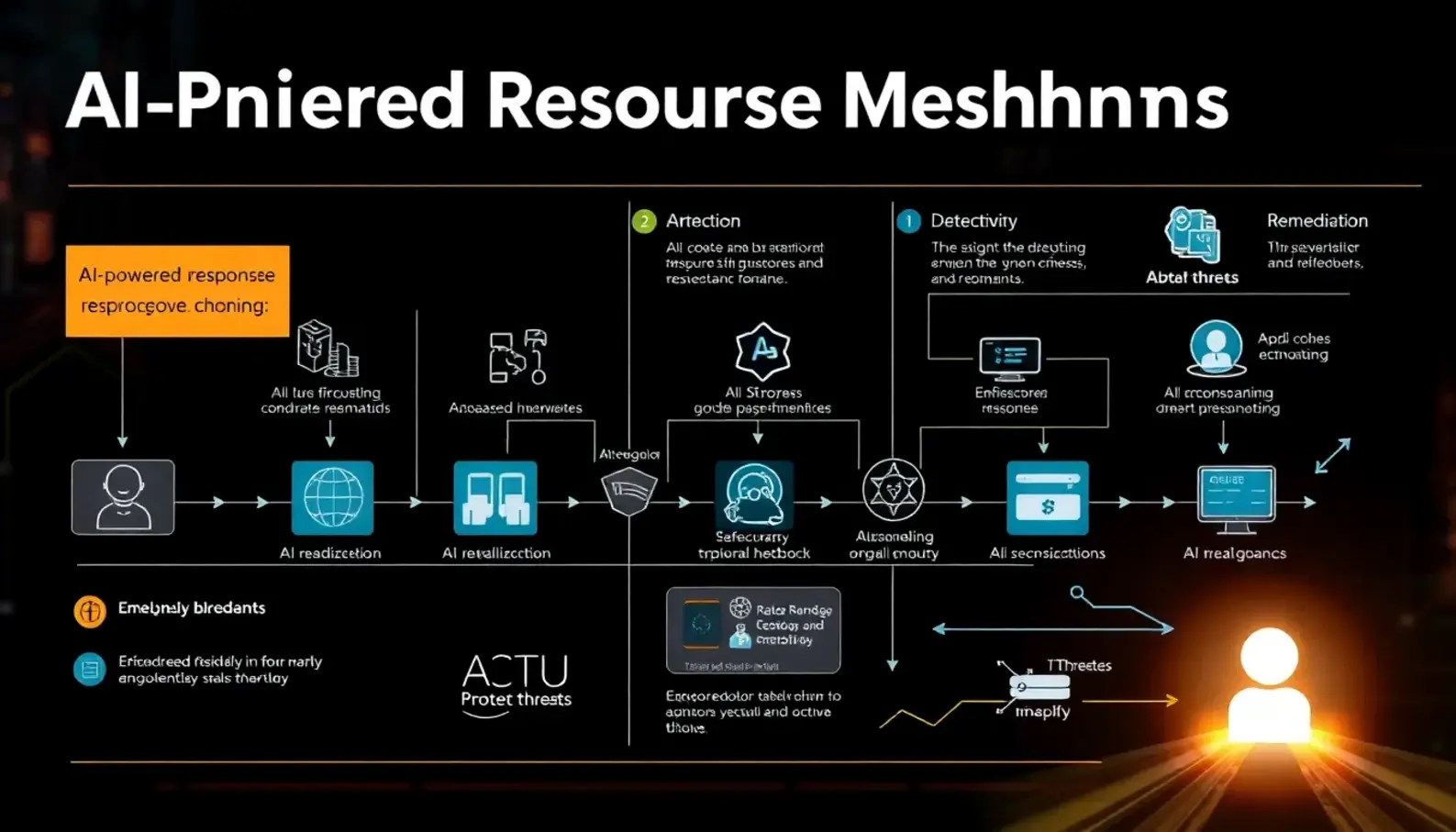
In a landscape where cyber threats evolve continuously, the integration of AI into incident response mechanisms represents a paradigm shift in cybersecurity. AI’s role in optimizing responses to cyber incidents not only enhances speed but also accuracy, fundamentally transforming threat management.
One of the most significant advancements in this realm is the implementation of Automated Incident Response (AIR) systems. These systems utilize AI to automate routine response tasks which traditionally require human intervention. By minimizing human involvement in these initial stages, AIR systems help in reducing both response times and the associated impacts of cyber incidents. AI can rapidly analyze security alerts and determine the most effective response, mitigating potential threats before they manifest into full-fledged security breaches.
An integral part of AI-enhanced response mechanisms is anomaly detection. Anomaly detection leverages AI to identify unusual patterns or activities within a network that deviate from established norms. Instead of relying solely on known threat signatures, AI-based systems can detect anomalies that might indicate novel or unknown cyber threats. This capability is particularly useful in spotting zero-day attacks—those for which no security patches or protections are yet available.
AI’s power in anomaly detection is amplifying its potential to avert threats before they can exploit vulnerabilities. Machine learning models, trained on vast datasets containing both normal and malicious activities, are adept at distinguishing between benign anomalies and real threats. This skill underpins AI’s ability to not only identify but also adaptively prioritize threats, ensuring faster and more effective responses.
Moreover, AI can orchestrate a range of responses automatically once a threat is confirmed. For instance, it can isolate affected systems to prevent lateral movement, deploy patches, and even interface with threat intelligence platforms to update defensive measures. This orchestration is particularly crucial in environments where response speed can mean the difference between containment and crisis.
The benefits of incorporating AI into security frameworks extend further with the development of adaptive security architectures. These frameworks are not static; they continuously evolve to accommodate new intelligence and threat landscapes. AI plays a pivotal role in ensuring these systems remain dynamic, enabling organizations to keep pace with adversaries’ evolving tactics.
In addition to rapid response and adaptability, automating incident response with AI introduces significant cost efficiencies. Human resources can be allocated to more strategic tasks, such as policy development and proactive threat hunting, while AI handles repetitive, labor-intensive processes. Such allocation maximizes the use of talent within cybersecurity teams, often under pressure due to skill shortages.
While AI-enhanced response mechanisms offer numerous advantages, they also bring new challenges. One such challenge is the risk of false positives, where benign activities might be flagged as threats, potentially leading to unnecessary disruptions. AI systems must be carefully calibrated and tested to minimize these occurrences without compromising sensitivity to threats.
Governance and ethical considerations regarding AI in cybersecurity are also critical. Ensuring AI systems operate transparently and accountably is paramount. Policies must be in place to govern AI behavior and ensure compliance with legal and ethical standards.
Nonetheless, the strategic integration of AI into cyber defense frameworks stands as a transformative factor in securing digital infrastructures against advanced threats. The synergy between AIR systems and traditional protocols presents a formidable defense against the complexities of modern cyber warfare, allowing organizations to not only respond to threats more effectively but to anticipate and neutralize them with unprecedented efficiency.
For further insights into the interplay between AI and digital strategy, consider exploring this resource on AI in business growth strategies here.
Final words
The application of AI in cybersecurity enhances our ability to detect threats and respond effectively. By leveraging these intelligent systems, businesses can improve their security protocols and better protect their critical assets. As technology continues to advance, embracing AI will be pivotal in maintaining a proactive cybersecurity posture, ensuring defenses evolve in tandem with emerging threats.
Join the Community
Learn more: innoupdates.com
About us
We provide advanced AI solutions tailored to fortify your cybersecurity framework. Our offerings include machine learning tools for threat detection, automated incident response systems, and comprehensive analytics to ensure a proactive security posture. Partner with us to enhance your digital defenses and navigate the evolving landscape of cyber threats.