
As customer expectations rise, businesses are turning to technology for solutions. Chatbots are emerging as a vital tool for customer service teams aiming to streamline operations, enhance user engagement, and deliver prompt assistance. With their ability to manage repetitive inquiries and provide support 24/7, chatbots effectively transform how businesses interact with their customers. This article explores the functionalities, advantages, and implementation strategies of chatbots in customer support, equipping teams with knowledge to harness this powerful technology.
Understanding Chatbots: The Future of Customer Service

The integration of chatbots into customer service platforms heralds a transformative shift in how businesses interact with consumers. While technology evolves, chatbots assert themselves as pivotal tools in enhancing these interactions by providing precision, speed, and availability. Let’s explore the different types of chatbots, their unique attributes, and how they contribute to reshaping customer service paradigms.
Fundamentally, chatbots are software applications designed to simulate human conversation. However, not all chatbots are created equal. Primarily, chatbots are categorized into rule-based chatbots and AI-driven chatbots. Rule-based chatbots operate on a predefined set of rules and responses. They are structured to handle specific tasks and follow a set script, which commands a linear and predictable way of engaging customers. Typically, they use a decision-tree format to take users through a pre-determined path. This method ensures clarity but struggles in dynamic, open-ended dialogues. Hence, rule-based chatbots shine when transaction-based queries or straightforward tasks are required.
In contrast, AI-driven chatbots, also referred to as intelligent chatbots, leverage natural language processing (NLP) and machine learning. These chatbots adapt and learn from every interaction, making them capable of processing nuanced questions and understanding context in dialogue. They excel in recognizing patterns within conversational data, which enables them to predict needs and provide sophisticated responses, often emulating human-like conversation. As a result, AI-driven chatbots are particularly effective for businesses with complex customer service needs where diverse dialogue paths are anticipated.
Integrating chatbots into customer service offers numerous advantages. Firstly, they provide 24/7 availability. Unlike human agents, chatbots can work round-the-clock without breaks. This factor vastly improves customer satisfaction by ensuring that assistance is always at hand, regardless of time zones or business hours. Secondly, chatbots significantly reduce wait times, which is crucial in retaining customer interest. Because they can simultaneously manage numerous interactions, they help prevent bottlenecks typical with human-staffed service centers during peak times.
An additional benefit of using chatbots is their ability to automate repetitive queries. This automation allows human agents to focus their expertise on more complex inquiries, enhancing the overall efficiency of customer support teams. Moreover, the use of AI-driven chatbots leads to insights from large datasets. The data generated from interactions can be used to understand user behaviors and preferences, allowing businesses to refine their strategies and offerings constantly.
The customizable nature of chatbots further contributes to their effectiveness. Businesses can tailor their chatbot’s personality and tone to align with their brand image, fostering a more personalized experience for users. This customization can extend to language options, integrating seamlessly with global customer bases, and offering support in multiple languages without additional personnel training.
However, implementing chatbots isn’t without challenges. Ensuring a seamless blend of automated and human support is crucial. Over-reliance on chatbots can lead to customer frustration when they fail to solve more involved queries. Hence, leading companies often use a hybrid model, combining AI-driven chatbots with human agents where necessary. This strategy ensures a safety net for complex issues while reaping the benefits of automation.
The future horizon of chatbots in customer service points towards even greater sophistication. The development of context-aware AI and advancements in emotion recognition technology promise to endow chatbots with more empathetic and intuitive interaction capabilities. By anticipating consumer needs and responding with empathy, the next-generation chatbots could revolutionize customer relations.
Businesses exploring the chatbot realm need to consider ethical implications and transparency in their use. Users should be aware of when they are interacting with a chatbot versus a human. Ethical AI practices will play a pivotal role in maintaining consumer trust and ensuring data protection. For further insights into ethical considerations around AI technologies, visit Generative AI Ethics.
In conclusion, chatbots are not merely tools of convenience but are becoming integral components of customer service architectures. As technology advances and businesses strive for greater efficiency and engagement, the strategic deployment of chatbots could unlock unprecedented opportunities in customer interactions. This momentum positions chatbots not just as futuristic novelties but as vital elements shaping the future of customer service.
Implementing Chatbots: Best Practices for Success
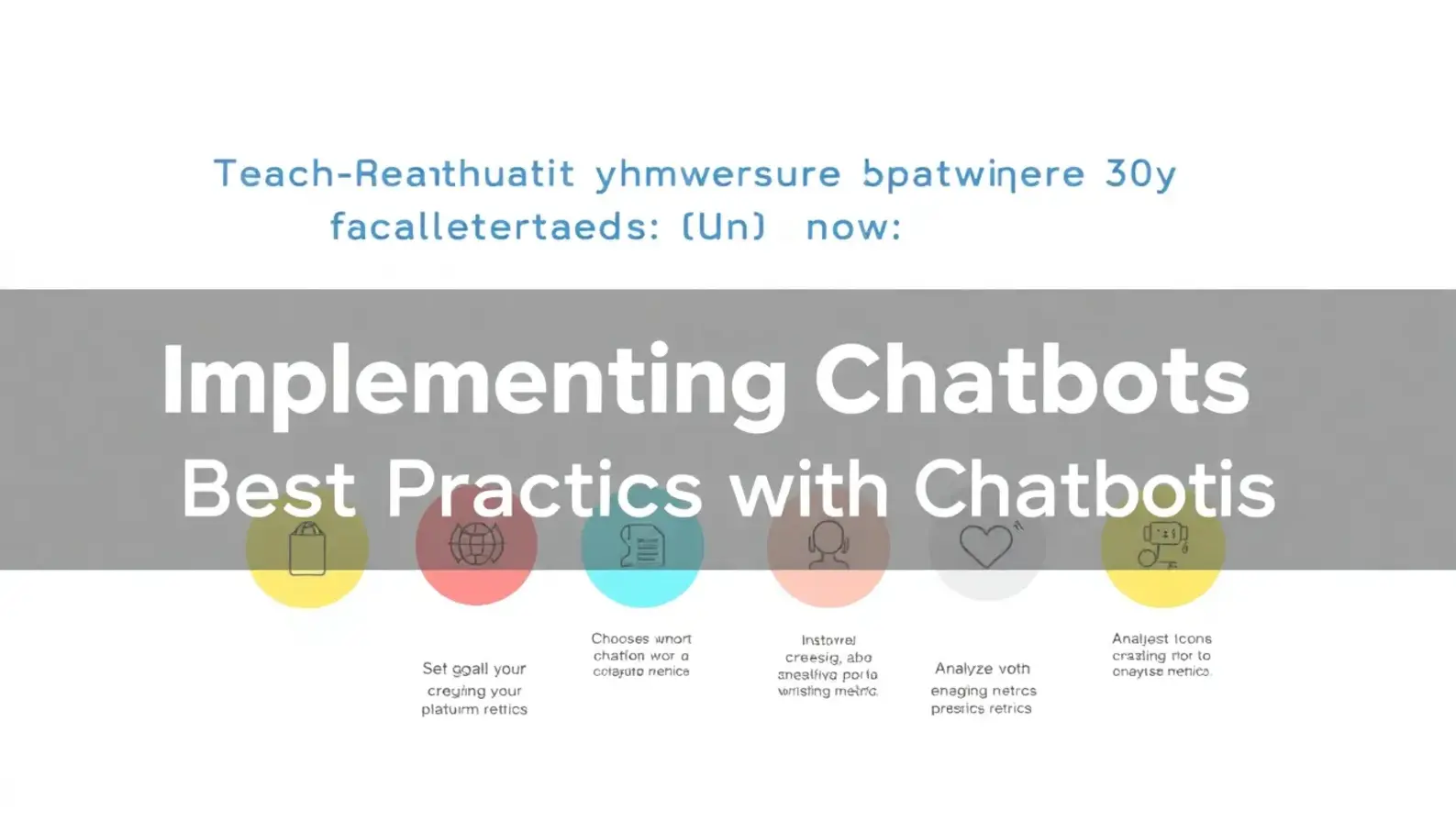
Integrating chatbots into customer service strategies involves several critical steps, each requiring thoughtful consideration to ensure effectiveness. Clear objectives, appropriate platform selection, refined conversation flows, and performance metrics are foundational elements for successful implementation.
Defining Objectives
Begin by identifying your main objectives for implementing a chatbot. These objectives should align with your overall business goals and customer service strategy. Common reasons include reducing response time, handling repetitive queries, and providing 24/7 assistance. Clearly defined goals will guide every stage of development, from design to deployment. Evaluate customer needs through feedback, surveys, and analysis of support interactions to identify which areas will benefit most from automation.
Selecting the Right Platform
Choosing the best platform is crucial, as it affects chatbot capabilities and user experience. Assess platforms based on natural language processing, integration capabilities, scalability, and ease of use. Ensure the platform supports existing systems to facilitate seamless operations. Some platforms offer user-friendly interfaces, enabling easier setup and modification without extensive technical know-how. Consider future growth and ensure the platform can scale with demand while supporting new functionalities as needed.
Refining Conversation Flows
Developing intuitive and natural conversation flows is essential for user satisfaction. Begin with a comprehensive map of potential interactions, considering various scenarios and user intents. Develop dialogues that account for different user inputs and provide clear, concise responses. Use branching logic to handle complex queries, providing a smooth flow between topics. Regular updates and improvements based on user feedback will enhance the system’s intelligence and reliability over time.
Feedback loops are crucial during the design phase. Test the conversation flows with real users to identify friction points or misunderstandings, and adjust accordingly. Keep dialogues consistent with brand voice and ensure solutions are articulated in a user-friendly manner.
Measuring Success Post-Implementation
Define key performance indicators (KPIs) that align with your objectives to measure success. Common KPIs include response time, resolution rate, customer satisfaction scores, and user engagement metrics. Use analytical tools provided by your platform to gain insights into user interactions, pinpointing areas needing improvement. Regular performance reviews and adjustments will ensure the chatbot continues to meet evolving customer expectations.
Case studies illustrate success in various industries, providing a blueprint for effective integration:
A retail company integrated chatbots to assist with order tracking and FAQs, reducing customer service workload by 30% within the first six months. By examining real-time data, they continuously refined conversation flows, improving customer satisfaction scores significantly.
In the financial sector, a firm implemented chatbots to handle transactions and inquiries about investments. The chatbot’s ability to manage high-volume interactions led to a 40% increase in customer engagement. Continual updates ensured the chatbot stayed abreast of regulatory changes, providing compliant and accurate assistance.
An airline utilized chatbots for booking and flight information, enabling passengers to receive immediate updates and changes. This led to a decline in call center volume, freeing representatives to handle more complex issues. The chatbot integration resulted in improved on-time communication and increased customer loyalty.
These examples highlight how clear objectives, careful platform selection, thoughtful design, and rigorous performance measurement are key to successful chatbot implementation in customer service. They demonstrate the transformative impact chatbots can have, enhancing efficiency and customer satisfaction across various sectors.
By adhering to these best practices, companies can implement chatbots that not only resolve immediate customer queries but also contribute positively to long-term customer relationships. This strategic approach ensures chatbots remain aligned with business objectives and adaptable to future innovations in AI technology.
For more insights on integrating AI into business strategies, check out this comprehensive guide on AI in Business Growth.
Final words
Chatbots are revolutionizing customer service by providing fast, efficient, and consistent support. They allow human agents to focus on more complex tasks while ensuring that customers receive immediate assistance for their inquiries. By strategically implementing chatbots, businesses can enhance not only their support efficiency but also overall customer satisfaction.
Enhance Customer Support with Chatbots
Learn more: https://innoupdates.com
About us
Our Chatbot Development Platform specializes in creating customized chatbots tailored to your business needs. From design to deployment, we provide end-to-end solutions that empower your customer service team and enhance customer interactions.