
AI is rapidly reshaping healthcare diagnostics, allowing medical professionals to enhance accuracy and patient outcomes. By leveraging vast datasets and advanced algorithms, AI tools facilitate more precise detections, predictive analytics, and personalized treatment options. This innovative approach promises to augment the expertise of healthcare practitioners, transforming the diagnostic workflow and enabling a more proactive stance in patient care. As the healthcare landscape evolves, understanding the capabilities and applications of AI in diagnostics becomes critical for maximizing patient health and operational efficiency.
The Role of AI in Diagnostic Procedures: An Overview
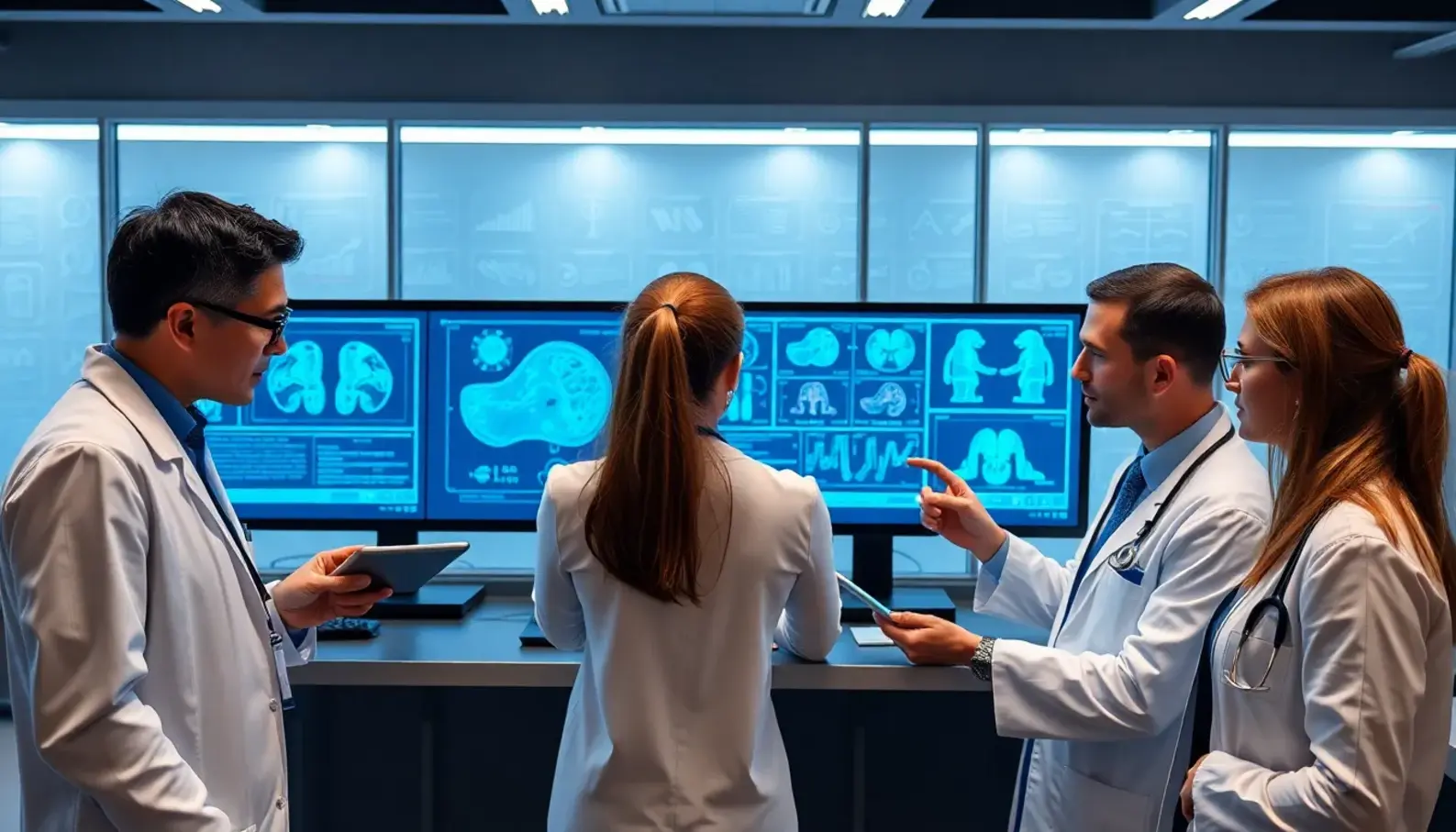
Artificial Intelligence (AI) is reshaping the landscape of healthcare diagnostics, offering transformative potential across various diagnostic procedures. By embedding AI algorithms into these processes, practitioners are witnessing unprecedented advancements in precision, efficiency, and personalization. This chapter explores the effectiveness of AI in analyzing medical imaging, pathology, and electronic health records (EHRs), emphasizing the underlying technologies that make these innovations possible and the tangible benefits they present.
At the heart of AI in diagnostics are sophisticated algorithms capable of learning and adapting over time. Machine learning, a core subset of AI, plays a pivotal role. By processing vast amounts of data, machine learning algorithms discern patterns and correlations that might elude human observation. Supervised learning, a vital machine learning method, involves training models using labeled datasets, enabling them to predict outcomes based on new data inputs. For instance, AI systems can be trained to identify lung nodules in radiographic images by analyzing thousands of prior cases with known outcomes.
Deep learning, a more specialized branch of machine learning, is particularly transformative in medical imaging analysis. Leveraging neural networks, it mimics the human brain’s structure and function. These networks work through layers that progressively extract higher-level features of the input data. In dermatology, for example, deep learning models have demonstrated proficiency in classifying skin lesions, often achieving accuracy comparable to dermatologists. These systems can sort through enormous image datasets, recognizing subtle cues that enhance diagnosis precision.
Natural Language Processing (NLP) is another integral AI technology in diagnostics, primarily concerning EHRs. By parsing through unstructured clinical notes, NLP extracts relevant health information, aiding in assembling comprehensive patient profiles. This capability boosts the retrieval of pertinent patient data, ensuring that care decisions are based on complete and up-to-date information. NLP not only organizes and analyzes textual information but can also illuminate connections between symptoms, medications, and outcomes, supporting more personalized treatment plans.
The impact of AI on reducing diagnostic errors is substantial. Diagnostic mistakes, often attributable to human oversight or cognitive biases, are mitigated through AI’s consistent analytical approach. Algorithms lack the fatigue or distraction that can compromise human judgment. In pathology, AI-driven image analysis reduces inter-observer variability, providing consistent evaluations of slides and enhancing the diagnostic reproducibility.
Furthermore, AI dramatically improves diagnostic efficiency. Traditional imagery analysis is time-consuming and requires significant manual effort from clinicians. AI expedites this process, rapidly scanning images and highlighting areas of interest. Similarly, AI technologies streamline EHR management, automatically organizing data and highlighting anomalies. This increase in efficiency translates to faster treatment decisions and reduced workload pressures for healthcare professionals.
Another profound advantage of AI in diagnostics is its ability to personalize patient care. By analyzing a patient’s unique data, including their genetic background, lifestyle, and medical history, AI can suggest tailored treatment options. Oncology is one domain where this personalization is notably impactful. AI models predict patient responses to different cancer therapies, optimizing treatment protocols tailored to individual genetic profiles and past treatment outcomes.
Real-world applications underscore AI’s transformative role in diagnostics. Consider an instance in cardiology, where AI-powered platforms analyze echocardiograms to detect cardiac abnormalities earlier than traditional methods. Another case in ophthalmology highlights AI systems used to diagnose diabetic retinopathy through retinal images, providing an early intervention that prevents vision loss. Such applications showcase AI’s potential to revolutionize diagnostic strategies.
AI’s integration into diagnostic procedures is not without challenges. Ethical considerations, such as ensuring patient privacy and data security, remain paramount. Moreover, there is an ongoing need for robust validation of AI tools before clinical implementation, demanding rigorous testing to confirm their efficacy and reliability.
Despite these challenges, AI continues to bridge gaps in diagnostic precision and efficiency. As AI-based technologies evolve, they promise to play an integral role in a future where healthcare diagnoses are not only accurate and timely but also highly personalized. This ongoing journey of innovation positions AI as a cornerstone of modern diagnostic methodologies, underscoring its potential to redefine patient care on a global scale.
For further exploration of the transformative role AI plays beyond healthcare diagnostics, consider looking into AI in Business Growth.
Challenges and Ethical Considerations in AI-Driven Diagnostics

Artificial intelligence has the potential to revolutionize healthcare diagnostics, but the journey towards its widespread implementation is fraught with challenges and ethical considerations. As AI systems become more integral to diagnostic processes, maintaining patient privacy and data security becomes paramount. Patient data, especially in healthcare, is highly sensitive. The unauthorized access or misuse of this data could lead to severe consequences for individuals, such as discrimination or identity theft.
Data Privacy
Ensuring data privacy involves implementing robust encryption techniques and stringent access controls. Healthcare institutions must prioritize data integrity and confidentiality, which requires continuous monitoring and updating of security protocols. Despite these measures, the risk of data breaches cannot be entirely eliminated. Organizations must foster a culture of vigilance and educate stakeholders about the importance of protecting patient information.
Algorithmic Bias
Algorithmic bias presents another significant challenge. AI systems learn from existing datasets, which may inadvertently reflect societal prejudices. For instance, if a diagnostic tool is trained mostly on data from one demographic group, it may perform poorly on others, leading to disparities in healthcare outcomes. To mitigate this, datasets must be diverse and representative. Moreover, continuous monitoring of AI outputs is essential to identify and rectify any biases that may emerge over time.
Efforts to address bias must also consider the context and environment in which the AI operates. Collaborating with multidisciplinary teams, including ethicists, can help ensure that AI tools are designed and applied fairly. Transparency in AI decision-making is equally crucial. Patients and healthcare providers must understand how an AI reached its conclusions. This can be achieved by developing algorithms that offer insights into their decision-making processes, often referred to as “explainable AI.”
Transparency and Trust
Explainable AI not only fosters transparency but also builds trust among patients and professionals. If users understand AI reasoning, they are more likely to accept and rely on its recommendations. Trust is further strengthened by demonstrating consistent accuracy and reliability in diagnostic outcomes. Healthcare professionals must remain involved, using AI as a complementary tool rather than a replacement for human judgment.
Regulatory Frameworks
The current regulatory frameworks in healthcare need to evolve alongside AI advancements. Existing regulations may not adequately address the unique challenges posed by AI diagnostics. Policymakers must collaborate with AI experts to develop guidelines that ensure safety and efficacy. This collaboration should focus on creating flexible, adaptive regulations that allow for innovation while protecting patient welfare.
One strategy to manage these complexities is to promote standardization in AI development and implementation across healthcare systems. This includes establishing common benchmarks for AI performance and encouraging interoperability between different AI tools and healthcare platforms.
Ethical Standards and Clinical Guidelines
As AI-based systems become more common, it is vital to integrate them in ways that comply with ethical standards and adhere to clinical guidelines. This integration requires aligning AI capabilities with the core values of medical ethics, such as beneficence, non-maleficence, autonomy, and justice. Engaging various stakeholders, including patients, in discourse on ethical AI use can guide this process.
Furthermore, clinicians should remain the decision-makers, leveraging AI as an assistant to enhance diagnostic precision. This ensures that human oversight is maintained, which is important for ethical accountability. Education and training for healthcare professionals on AI tools and their ethical implications are pivotal steps toward successful integration.
For further insights into responsible innovation in AI, continued exploration of ethical considerations is crucial. Visit Generative AI Ethics for comprehensive discussions on navigating the ethical landscape of AI.
AI’s integration into healthcare diagnostics offers immense potential to improve accuracy and speed, but it is not without its dilemmas. Addressing the challenges and ethical considerations head-on is imperative for the responsible advancement of AI in healthcare. Only through careful evaluation and collaboration can we ensure these powerful tools are implemented safely, equitably, and effectively.
Final words
The integration of AI in healthcare diagnostics heralds a new era of improved accuracy and patient management. By understanding the capabilities, challenges, and ethical landscape of AI technology, medical professionals can leverage these innovations to enhance their practice and patient care delivery. Adopting AI tools will not only improve diagnostic precision but will also foster a new standard of personalized healthcare.
Explore Our AI-Driven Diagnostic Tools
Learn more: innoupdates.com
About us
Healthcare AI Diagnostics and Treatment offers cutting-edge solutions that integrate AI technology into diagnostic processes, enhancing accuracy, efficacy, and patient care. Our tools empower medical professionals with analytics and insights, enabling a more informed approach to diagnosis and treatment.