Deep learning has revolutionized the field of image recognition, offering advanced methodologies for parsing and understanding visual data. Accelerated by vast datasets and increased computational power, this approach employs neural networks to automate the intricate processes of object detection, segmentation, and classification. As computer vision engineers and researchers delve into deep learning, it becomes crucial to explore its principles, architectures, and practical applications in real-world scenarios. This exploration not only emphasizes theoretical aspects but also paves the way for innovative solutions in diverse industries ranging from medical imaging to autonomous vehicles.
Understanding Neural Networks: The Backbone of Deep Learning in Image Recognition
Deep learning has revolutionized image recognition, and at its core are neural networks—complex architectures inspired by the human brain. This chapter explores the intricacies of neural networks, focusing on their architectures, types, layers, and processes that enable them to learn and recognize images.
Neural networks, modeled initially after biological neurons, consist of layers of interconnected nodes. These nodes, or artificial neurons, process and transmit information. Each connection has a weight, adjusted during training to minimize the error in predictions. The input passes through multiple layers to transform and extract features, central to image recognition.
Types of Neural Networks
Several neural network architectures cater to image recognition tasks, each with unique characteristics. Convolutional Neural Networks (CNNs) are perhaps the most renowned in this domain. CNNs excel by utilizing layers that perform convolution operations, effectively capturing spatial hierarchies in data. This attribute makes them ideal for understanding the pixel structure in images.
Beyond CNNs, Recurrent Neural Networks (RNNs) also play a role, particularly for tasks involving temporal sequences in image data, like videos. However, for static image recognition, CNNs remain predominant due to their superior handling of spatial data. Other architectures, like Transformer networks, have gained attention for their ability to model long-range dependencies, although they’re more commonly used in Natural Language Processing (NLP).
Network Layers
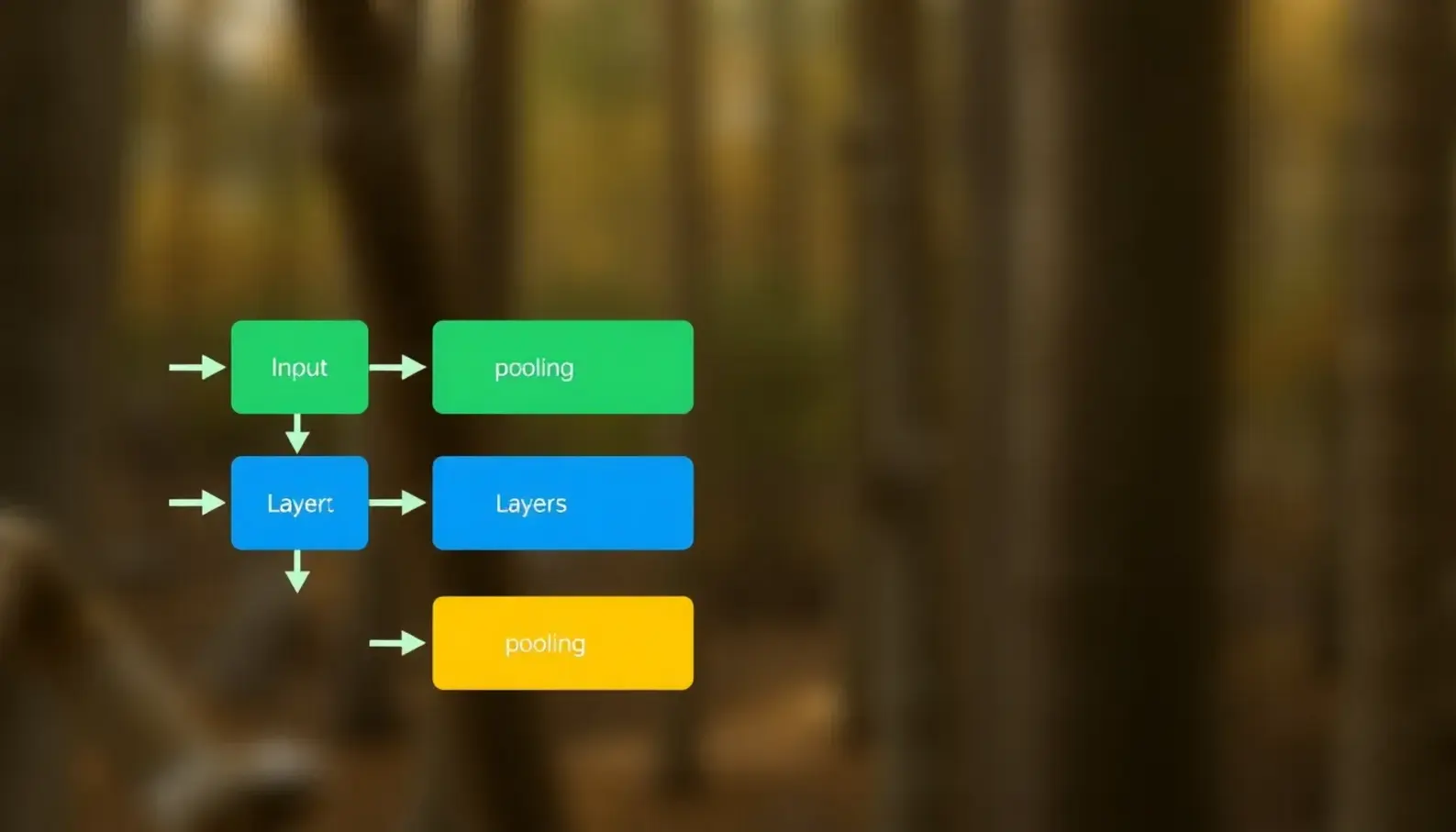
The architecture of a neural network can be broken down into distinct layers, each performing a specific function:
- Input Layer: This layer takes the raw input data. In image recognition, this could be pixel values.
- Hidden Layers: These might include various types:
- Convolutional Layers: Apply filters to detect patterns, from edges to more complex structures.
- Pooling Layers: Reduce dimensionality by down-sampling, aiding in computational efficiency and preventing overfitting.
- Fully Connected Layers: Connect every neuron from the previous layer, integrating the features learned into a final prediction.
- Output Layer: Produces the final classifications or predictions. For image recognition, this often means assigning a label to an input image.
Each type of layer contributes to the network’s ability to transform inputs into outputs through learned patterns.
Training Process
Training a neural network involves feeding it data, calculating the output, and adjusting the weights to improve accuracy. This process is iterative and can be broken down into key steps:
- Forward Propagation: The input is processed through the network layer by layer. Each layer performs calculations on the data based on its weights and biases.
- Loss Calculation: The network’s accuracy is evaluated using a loss function, determining the error between predicted and true values.
- Backpropagation: This critical algorithm updates the network’s weights. It calculates the gradient of the loss function with respect to each weight using the chain rule of calculus, adjusting weights in the direction that minimizes the loss.
- Optimization: Techniques such as Stochastic Gradient Descent (SGD), Adam, or RMSprop optimize the learning rate and help stabilize training.
Neural networks require massive datasets and high computational power for training. This demand highlights the importance of advancements in quantum computing innovations to further enhance training efficiency.
Advanced Techniques in Neural Networks
Recent developments have introduced techniques such as batch normalization and dropout. Batch normalization normalizes the inputs of each layer to improve stability and performance. Dropout prevents overfitting by randomly setting some neuron outputs to zero during training.
Furthermore, advances in transfer learning allow pretrained models to be fine-tuned for specific tasks, significantly reducing the data and time required for training. Models like VGG and ResNet, trained on extensive datasets, serve as effective feature extractors or backbones for custom image recognition tasks.
As we explore neural networks further, it’s essential to remember that their potential extends beyond architecture and training. The field continuously evolves, driven by innovations that enable computers to see and interpret the world more clearly and accurately. This exploration sets the stage for upcoming discussions on the implications and applications of these technologies in our daily lives.
Real-World Applications: Leveraging Deep Learning for Image Recognition
Deep learning has significantly revolutionized the domain of image recognition, providing new dimensions to various industries. The ability of deep learning algorithms to process and analyze large volumes of complex data has led to breakthroughs in several fields. This chapter explores these applications, focusing on how deep learning has advanced technology and impacted society.
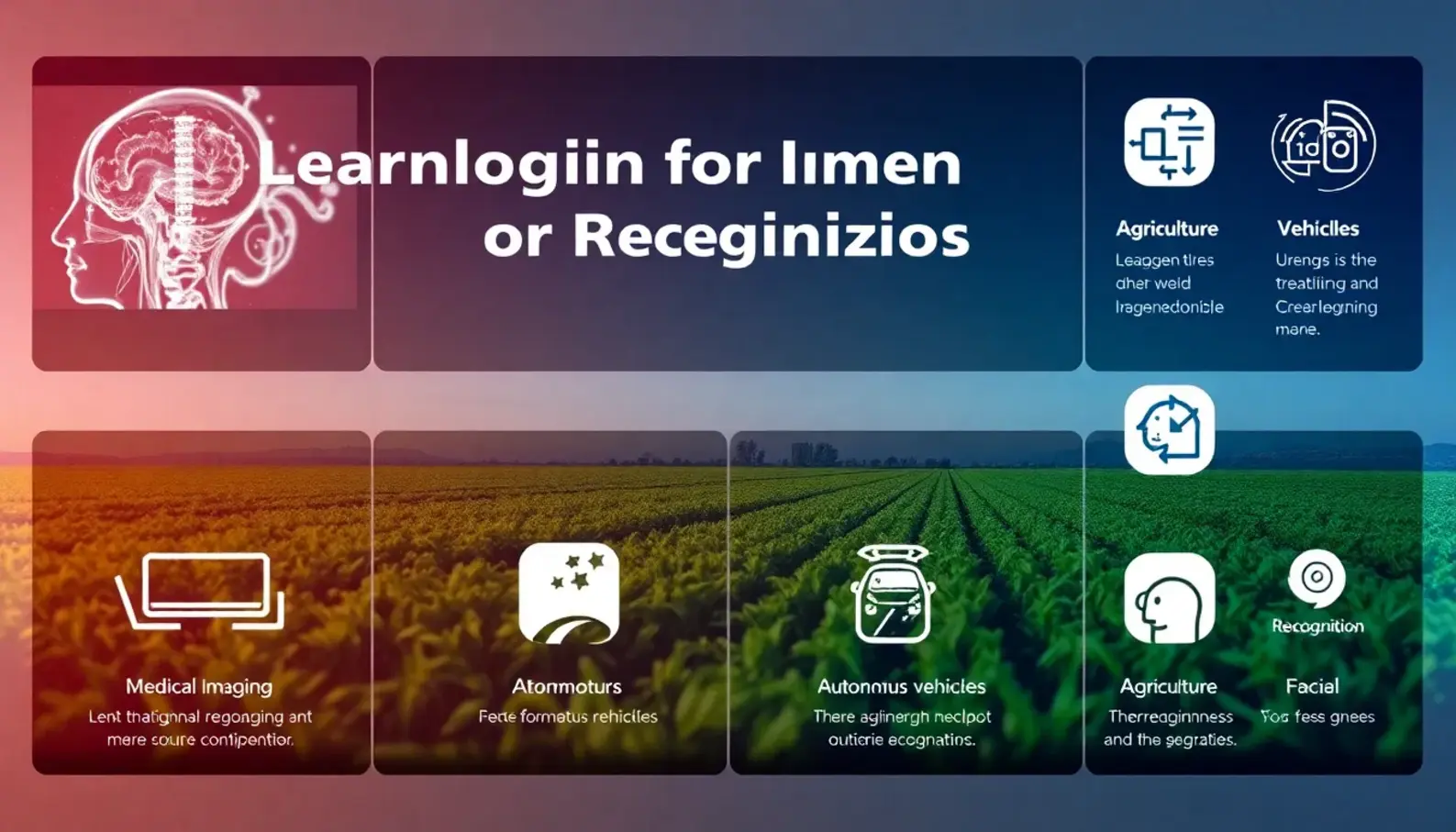
The healthcare industry has seen some of the most transformative uses of deep learning for image recognition. Algorithms are trained to analyze medical images such as X-rays, MRIs, and CT scans to assist in diagnoses. For example, deep learning models can help in detecting anomalies such as tumors or lesions, often with greater accuracy than human radiologists. This capability not only speeds up the diagnostic process but also increases accuracy, reducing human error. Such applications empower clinicians to make informed decisions, leading to better patient outcomes. Moreover, the reduction in diagnostic errors has led to a decrease in healthcare costs, which is vital for resource-strapped medical institutions.
In the automotive industry, deep learning is the backbone of autonomous vehicle technology. By utilizing image recognition capabilities, vehicles can identify and interpret visual information from their surroundings, such as road signs, pedestrians, and other vehicles. This is essential for the development of fully autonomous driving systems, which have the potential to increase road safety significantly. The reduction in human involvement in driving could lead to a decrease in traffic accidents, ultimately saving lives and reducing economic losses related to road accidents.
Security and surveillance systems are yet another sector benefiting from deep learning. Image recognition technologies are employed to improve the efficiency and reliability of security systems. For instance, facial recognition technology, powered by deep learning, enhances security by accurately identifying individuals at security checkpoints or in CCTV footage. This application has far-reaching implications for law enforcement and public safety, although it also raises ethical concerns regarding privacy and data protection.
In manufacturing, deep learning has introduced advanced quality control measures through image recognition. Automated systems can inspect products on assembly lines for defects, ensuring higher quality standards and reducing waste. These systems are adept at detecting flaws that are often invisible to the human eye. By ensuring that only products meeting stringent quality criteria reach the consumer, manufacturers can enhance customer satisfaction and brand reputation.
In agriculture, deep learning is used in precision farming. Image recognition technologies can analyze satellite or drone images of crop fields to monitor crop health, predict yields, and even identify pest infestations. These insights allow farmers to optimize their use of resources like water and fertilizers, leading to more sustainable farming practices. As a result, this empowers farmers to achieve higher crop yields while minimizing environmental impact, which is crucial for feeding a growing global population.
Retail and e-commerce have also embraced deep learning for image recognition to enhance customer experiences. Visual search tools allow customers to find products using images rather than text-based queries, leading to more intuitive and efficient shopping experiences. Image-based recommendation systems also provide personalized shopping suggestions, improving customer satisfaction and increasing sales.
In the field of art and heritage, deep learning aids in restoring and conserving valuable artworks and artifacts. Image recognition technologies can analyze high-resolution images of artworks, detecting and virtually repairing damage without physical intervention. This digital restoration preserves cultural heritage for future generations, enabling wider public access through digital exhibitions and databases.
Finally, the entertainment industry uses deep learning in various ways, including augmenting visual effects and creating virtual reality experiences that rely heavily on image recognition. In gaming, for example, deep learning algorithms facilitate real-time motion capture, which enhances the realism of animated characters and environments.
The integration of deep learning into these diverse applications exemplifies its transformative impact across sectors. As deep learning technology continues to evolve, its ability to transform images into actionable insights will undoubtedly open new frontiers, making society more efficient, safe, and connected. For further exploration of how AI is interwoven with societal structures, see the discussion on AI-driven innovations in business growth strategies over at Innoupdates.
Final words
The rapid advancement of deep learning in image recognition has unlocked unprecedented opportunities for innovation and efficiency across various sectors. By harnessing the power of neural networks, engineers and researchers can solve complex visual problems, thereby transforming industries from healthcare to automotive. As this technology evolves, continued exploration and adaptation will be key to leveraging its full potential in future projects.
Get Started with Deep Learning for Images
Learn more: https://innoupdates.com
About us
Our Image Recognition AI Development Kits provide the tools and resources necessary for engineers and researchers to implement state-of-the-art deep learning techniques in their image recognition projects. With modular components and extensive documentation, these kits facilitate rapid prototyping and deployment.