The integration of artificial intelligence into virtual assistant technology is reshaping how businesses communicate with their customers. Whether addressing queries, scheduling appointments, or providing product recommendations, intelligent virtual assistants are becoming indispensable tools for enhancing customer experience and operational efficiency. Developers and customer service teams alike are tasked with the challenge of leveraging AI capabilities to design, implement, and maintain effective virtual assistants that can understand and engage users in meaningful ways. This exploration covers the essentials of development, the role of AI, and strategic considerations for maximizing customer interactions.
Building the Foundation: Key Technologies in AI-Driven Virtual Assistants
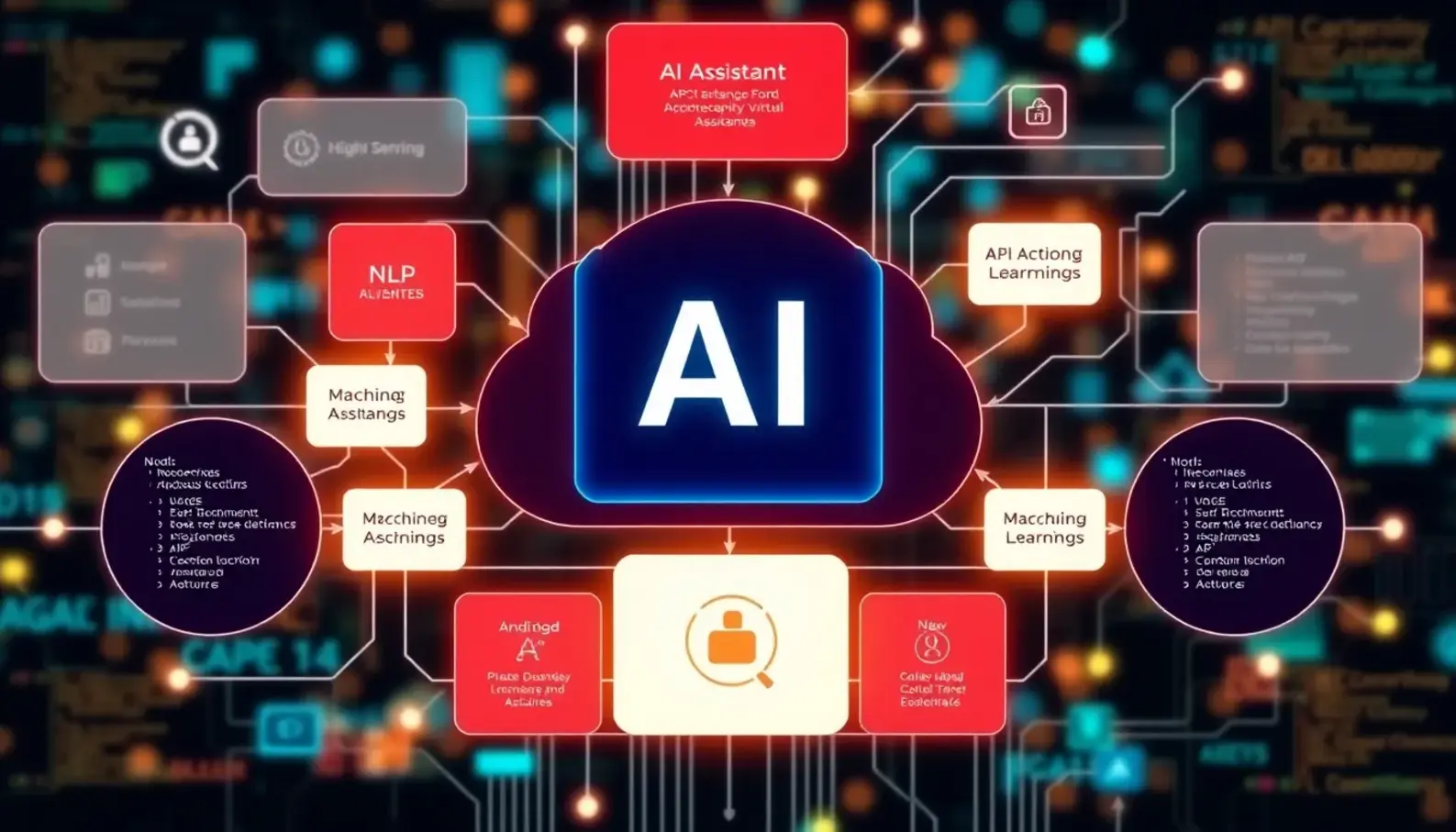
Creating responsive and efficient AI-driven virtual assistants is a complex undertaking that requires a solid technological foundation. To achieve seamless experiences, developers must be well-versed in the essential technologies influencing these intelligent systems. This chapter explores three critical areas: natural language processing (NLP), machine learning algorithms, and API integration tools. These components form the backbone of intelligent virtual assistants capable of dynamic interactions and problem-solving.
Natural Language Processing (NLP)
NLP is pivotal in enabling virtual assistants to understand and process human language. It allows systems to interpret, analyze, and generate text that feels natural to users. At its core, NLP deals with the complexities of human language, including syntax, semantics, and context. Key technologies within NLP include tokenization, part-of-speech tagging, named entity recognition, sentiment analysis, and syntactic parsing.
Tokenization is the process of breaking down text into words or phrases, forming the building blocks for further analysis. Part-of-speech tagging assigns grammatical categories to each word, helping the system understand relationships within a sentence. Named entity recognition identifies proper nouns and categorizes them into predefined classes, such as people or organizations. Sentiment analysis gauges the sentiment behind text, enabling understanding of user emotions. Finally, syntactic parsing breaks down sentences into their grammatical components, allowing the system to understand complex sentence structures.
Developers typically utilize pre-existing NLP frameworks to streamline the development process. These frameworks offer powerful tools and models trained on vast datasets, expediting the creation of sophisticated NLP functionalities. Selecting an appropriate NLP framework is critical, as it directly impacts the assistant’s language comprehension capabilities.
Machine Learning Algorithms
Machine learning algorithms are essential for creating personalized and adaptive virtual assistant experiences. They enable the system to learn from interactions and improve over time. Key machine learning approaches utilized in AI-driven assistants include supervised learning, unsupervised learning, reinforcement learning, and deep learning.
In supervised learning, algorithms learn from labeled data, making predictions or classifying new data based on these examples. This approach is useful for tasks such as intent recognition, where the system determines user intentions from input text.
Unsupervised learning explores unlabeled data, discerning patterns and structures without predefined categories. This technique aids in organizing user queries and identifying recurring user issues without prior knowledge.
Reinforcement learning focuses on decision-making, training models to achieve goals through trial and error. It is especially effective when virtual assistants must adapt to new situations dynamically.
Deep learning leverages neural networks to process vast amounts of data, ideal for complex problem-solving tasks. Deep learning models are often employed for intricate language processing tasks and natural language generation.
The choice of algorithms depends on the assistant’s objectives. Combining different algorithms can enhance versatility and robustness. However, the challenge lies in optimizing computational efficiency while maintaining high-performance levels.
API Integration Tools
API integration facilitates the seamless connection between virtual assistants and external services, enabling a broader spectrum of functionalities. APIs allow assistants to retrieve data from other systems, perform transactions, and access a wide array of services without external complexities.
Effective API integration involves several best practices. Authentication ensures secure data exchanges, ensuring systems interact safely. Version control allows developers to manage updates efficiently, maintaining compatibility with evolving API specifications. Additionally, cache strategies can optimize performance by reducing redundant data fetch operations.
When building virtual assistants, developers must choose the right integration tools that best suit their needs. Leveraging well-documented and stable APIs can prevent unnecessary roadblocks during development and deployment.
Architecture and Practical Coding Practices
To build scalable and responsive virtual assistants, developers must design a robust architecture. A successful architecture facilitates efficient data processing, quick response times, and adaptability to user needs. One popular approach is the modular architecture, which divides the system into independent modules or components. This design allows easier updates and scalability.
Adopting microservices within this architecture can further enhance modularity, with each service handling a specific task. This separation of concerns aids in maintaining code clarity and simplifies debugging. Moreover, asynchronous processing can augment responsiveness, managing multiple user interactions simultaneously without performance lags.
Practical coding practices such as refactoring, rigorous testing, and code reviews ensure high code quality and maintainability. Documenting code comprehensively allows for better collaboration among development teams.
Successful Implementations
Case studies of successful AI-driven virtual assistants can illuminate how these technologies coalesce to create compelling solutions. For instance, an assistant equipped with advanced NLP can provide nuanced responses that resonate with user queries, while machine learning algorithms enable ongoing learning and personalization. Furthermore, seamless API integration ensures the assistant has access to up-to-date information when needed. Ambient intelligent solutions in specific scenarios offer insights into how virtual assistants can enhance customer experiences uniquely.
In conclusion, developing AI-driven virtual assistants requires a deep understanding of foundational technologies like NLP, machine learning, and API integration. Through strategic implementation and effective architecture design, these systems can achieve new levels of engagement and efficiency. By leveraging these technologies, developers can create virtual assistants that not only meet but exceed user expectations in diverse contexts.
Enhancing User Experience: Designing Engaging Conversational Interfaces

Designing conversational interfaces for virtual assistants presents a unique opportunity to blend human-like interaction with the power of artificial intelligence. The key to creating a memorable user experience lies in building engagements that are not only efficient but also feel personalized and contextually aware.
Context-aware interactions form the backbone of effective conversational design. By leveraging user data, virtual assistants can provide more relevant responses, thereby enhancing the interaction. Contextual understanding allows assistants to remember user preferences and past interactions, enabling seamless transitions in conversation. This requires maintaining a dynamic dialogue state that adapts as new information becomes available.
Incorporating personalization into interactions plays a critical role in user satisfaction. Personalization can range from remembering the user’s name to recommending products based on past purchases or preferences. More advanced systems integrate learning mechanisms that evolve with user behavior, continually refining responses to better match individual expectations.
Feedback from users is invaluable in shaping the development and improvement of virtual assistant responses. It serves as a guide for identifying areas needing enhancement, such as recognizing intents or managing fallbacks. Regularly updating the assistant based on feedback ensures it keeps pace with user expectations and remains relevant.
Dialogue management strategies are fundamental in guiding the flow of conversations. Successful dialogue management accommodates both open-ended and goal-oriented dialogues. This involves designing the dialogue tree to anticipate potential user responses and providing multiple paths to achieve the desired outcome. Flexibility in navigating these dialogues is crucial, allowing users to deviate from expected responses without causing breakdowns in communication.
A significant challenge in conversational interface design is handling misunderstandings. Misunderstandings can occur due to ambiguous user inputs or incorrect assumptions by the assistant. Robust error-handling mechanisms must be in place to gracefully manage these scenarios. Providing clarifications, prompting the user to rephrase, or offering choices can help resolve these situations effectively. Adopting a strategy to apologize for misunderstandings can also enhance user trust.
Testing and iterating on conversational flows are essential for refining virtual assistant interactions. This process involves simulating conversations across different contexts and scenarios to identify potential issues. Developers should leverage user testing to gather diverse feedback, ensuring the assistant performs well across varying user demographics. Iterative improvements should focus on refining conversation paths that exhibit drop-offs or user frustration.
Real-world case studies provide insights into successful design patterns for conversational interfaces. For instance, a banking virtual assistant that effectively utilizes natural language processing (NLP) techniques can handle complex queries about account management while offering proactive advice on financial matters. By integrating predictive analytics, such systems also suggest personalized financial tips, demonstrating a deep understanding of user needs.
Another example might be found in the context of customer support for retail businesses, where the assistant manages returns and exchanges with notable efficiency. By understanding not just the user’s immediate query but also factoring in purchase history and typical customer journeys, the assistant resolves issues with minimal input, ensuring high satisfaction rates.
An interesting area of innovation is using conversational agents to improve accessibility and inclusivity, which advances AI in business growth. For users who rely on assistive technologies, designing voice interfaces that respond well to a variety of speech patterns or dialects means creating products that serve a broader audience.
Continually evolving conversational designs with a user-centric approach enhances engagement and builds lasting relationships between users and virtual assistants. As artificial intelligence progresses, the potential for creating increasingly sophisticated and empathetic virtual assistants grows, promising an exciting future for both developers and users.
Final words
The future of customer engagement lies in the hands of artificial intelligence and its potential within virtual assistants. By understanding the underlying technologies and designing effective conversational interfaces, developers can create tools that not only assist but also delight customers. Emphasizing user experience alongside robust technological frameworks ensures that these virtual assistants perform effectively, ultimately driving satisfaction and loyalty. As you embark on developing your intelligent virtual assistants, remember that success comes from thoughtful integration of technology with a deep understanding of user needs.
Build Intelligent Virtual Assistants with AI
Learn more: https://innoupdates.com
About us
Explore our platforms specifically designed for AI-driven virtual assistant development. We provide comprehensive tools, resources, and support to help you create powerful virtual assistants that enhance customer service and operational efficiency.