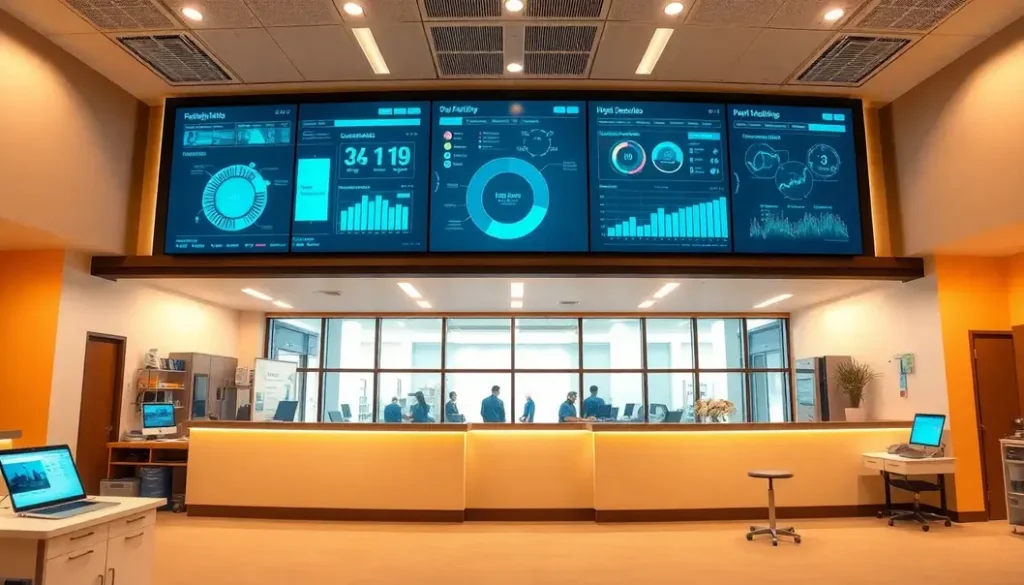
The integration of Artificial Intelligence (AI) in healthcare analytics reporting is reshaping how data is used to enhance patient care. By leveraging AI technologies, healthcare organizations can analyze vast datasets to unearth actionable insights. These insights not only improve operational efficiency but also optimize treatment plans and patient outcomes. Embracing AI in analytics promises better data interpretation and more informed decision-making, which is crucial in today’s complex healthcare environment. Understanding the mechanisms and benefits of AI can empower stakeholders to make data-driven choices that lead to innovative solutions.
Understanding AI’s Role in Healthcare Analytics

Artificial Intelligence (AI) is transforming healthcare analytics, offering profound insights and enabling enhanced decision-making. This technology plays a crucial role in interpreting complex data sets that were previously difficult to manage with conventional methods. AI’s involvement encompasses a variety of technologies such as machine learning, natural language processing, and predictive analytics, each contributing uniquely to the analysis and application of healthcare data.
Machine learning serves as a cornerstone of AI in healthcare analytics, employing algorithms that learn from data patterns to make informed predictions. These algorithms analyze vast amounts of data rapidly, recognizing trends that might elude human analysts. For instance, predictive analytics, a subset of machine learning, anticipates future outcomes based on historical data. By leveraging predictive models, healthcare providers can identify patients at risk for specific conditions and proactively address potential health concerns.
Natural language processing (NLP) is another critical technology that enables AI systems to comprehend and interpret human language. In the context of healthcare, NLP facilitates the extraction of meaningful information from unstructured data sources like clinical notes and medical literature. This capability allows for more comprehensive data analysis, enabling healthcare providers to gain insights from textual data that would otherwise remain untapped.
The types of data analyzed by AI in healthcare analytics are multifaceted. Electronic health records (EHR) provide a rich source of data, detailing patient history, treatments, and outcomes. AI technologies analyze EHRs to spot patterns that could indicate trends in patient health. Additionally, clinical trial data and patient demographics are key data sources. Clinical trials generate vast amounts of data that AI can sift through to identify successful treatment strategies. Meanwhile, patient demographics aid in tailoring healthcare strategies to match population-specific needs.
Significance in improving patient outcomes is a vital aspect of AI’s contribution to healthcare analytics. By identifying trends and predicting risks, AI supports clinicians in making data-driven decisions that enhance patient care. For example, AI-powered analysis has been employed to reduce hospital readmission rates by identifying patients who are most likely to be readmitted. This insight enables healthcare providers to implement targeted interventions, improving patient outcomes and reducing costs.
Case studies further illustrate the practical benefits of AI in healthcare analytics. One notable application involved using AI to analyze retinal images, where machine learning algorithms successfully identified early signs of diabetic retinopathy. Early detection through AI analysis allows for timely treatment, thereby preventing vision loss in patients. Another instance is the use of AI in optimizing the scheduling of surgeries in hospitals. By analyzing historical scheduling data, AI systems have enhanced operational efficiency, reducing wait times and improving the utilization of resources.
The practical implications extend beyond these examples. AI-driven analytics supports personalized medicine approaches, where treatment plans are tailored to individuals based on their unique data profiles. The potential for AI to revolutionize patient care is vast, yet not without challenges. Issues such as data privacy and integration with existing healthcare systems pose significant hurdles. Nonetheless, as AI continues to evolve, its methodologies and applications will likely become increasingly sophisticated, providing even greater insights and decision-making support in healthcare.
By addressing these challenges and harnessing the potential of AI, healthcare systems can significantly enhance their analytics capabilities. The integration of AI into healthcare analytics not only promises improved patient outcomes but also paves the way for more efficient and effective healthcare delivery systems. As such, understanding and leveraging AI’s role in healthcare analytics remains imperative for healthcare professionals and policymakers alike.
For more insight into similar technologies for innovations, consider exploring agentic AI insights, which discuss the broader impact of autonomous AI systems across various industries.
Maximizing Reporting Accuracy with AI
In the realm of healthcare analytics, enhancing the accuracy and clarity of reporting is paramount. Advanced AI technologies have enabled a transformation from traditional methods to highly precise and streamlined processes for creating healthcare reports. These innovations ensure that data errors are minimized, processes are efficient, and stakeholders receive actionable insights in real-time.
One of the most impactful technologies revolutionizing healthcare reporting is Natural Language Processing (NLP). NLP allows for the automated analysis of unstructured data, providing an unparalleled means to convert complex medical data into easily comprehensible reports. By processing human language data, NLP can extract key information from vast datasets, categorizing and summarizing medical records, clinical trial results, and patient feedback. This gives healthcare providers meaningful insights without the burden of sifting through extensive data manually.
NLP also excels in generating reports that cater to the varying expertise levels of stakeholders, from clinicians to administrative staff. By creating narratives from data, NLP tools can produce concise and easy-to-understand summaries that facilitate effective decision-making. For instance, medical coders can leverage NLP to ensure coding accuracy and compliance with ICD classifications, directly impacting billing and regulatory adherence.
Additionally, machine learning algorithms have been instrumental in reducing errors in data reporting. These algorithms identify patterns and anomalies, improving data validation processes and ensuring integrity. For example, AI models can detect discrepancies in patient records or flag abnormal results in lab tests that might indicate manual entry errors or malfunctioning equipment.
Real-time insights provided by AI are crucial for timely decision-making and operational efficiency. AI systems can process data continuously, allowing healthcare providers to monitor key metrics as they fluctuate. Real-time dashboards powered by AI facilitate quick reactions to emergencies or sudden changes in patient health statuses, significantly improving patient outcomes.
In the domain of AI-enabled reporting tools, several applications stand out. These tools not only automate data collection and report generation but also ensure compliance with stringent healthcare regulations. By incorporating AI, hospitals can adhere to data protection laws and standardize reporting formats, effortlessly meeting both internal and external audit requirements.
Visual analytics, augmented by AI, further elevate the clarity and impact of healthcare reporting. AI processes large volumes of data and distills them into intuitive visualizations that reveal trends and insights that are otherwise difficult to discern. Interactive dashboards offer stakeholders a comprehensive view of critical data points, allowing them to interact and manipulate data visualizations to probe deeper into specific areas.
One of the most significant advantages of AI-enhanced visual analytics is the ability to customize views based on user preferences and needs. For instance, clinicians might require a detailed breakdown of patient diagnostics, while administrators might focus more on operational metrics. AI adapts these visualizations automatically, ensuring that every stakeholder has access to relevant data.
Moreover, AI-driven analytics simplify complex datasets, making them accessible to non-specialists. The automatic generation of charts, graphs, and infographics by AI systems presents data in an appealing and understandable manner that can drive robust discussions and informed decisions.
In conclusion, AI technologies transform the landscape of healthcare reporting. Through the application of NLP, machine learning algorithms, and visual analytics, AI enhances reporting accuracy, streamlines processes, and delivers real-time insights. As the industry continues to evolve, adopting AI-driven reporting solutions seems not only beneficial but necessary for maintaining compliance and improving patient care outcomes. For further insights into AI’s transformative role across various industries, consider exploring related innovations in other fields such as business growth.
Final words
AI integration into healthcare analytics reporting presents an exciting frontier for innovation. By enhancing data accuracy and actionable insights, it propels healthcare forward. Organizations that embrace these technologies are better positioned to improve patient outcomes and streamline operations. The journey of AI in healthcare analytics is just beginning, urging stakeholders to engage and adapt for a future where data-driven decisions redefine excellence in care.
Stay informed on the latest trends in healthcare analytics and AI. Subscribe to our newsletter for insights!
Learn more: innoupdates.com
About us
We provide cutting-edge analytics solutions leveraging AI to help healthcare providers optimize operations and enhance patient care. Our platform supports real-time insights, compliance reporting, and predictive analytics tailored to your organization’s needs, ensuring that you stay ahead in a rapidly evolving healthcare landscape.