
Artificial Intelligence (AI) is increasingly becoming a cornerstone of modern drug discovery, reshaping how pharmaceutical companies approach research and development. From predicting molecular interactions to optimizing clinical trials, AI offers unprecedented capabilities that can enhance the efficiency and success rate of drug candidates. This article delves into the multifaceted applications of AI in drug discovery, illustrating its potential to streamline processes, reduce costs, and foster innovation in the pharmaceutical industry.
AI-Powered Molecular Design: From Concept to Candidate
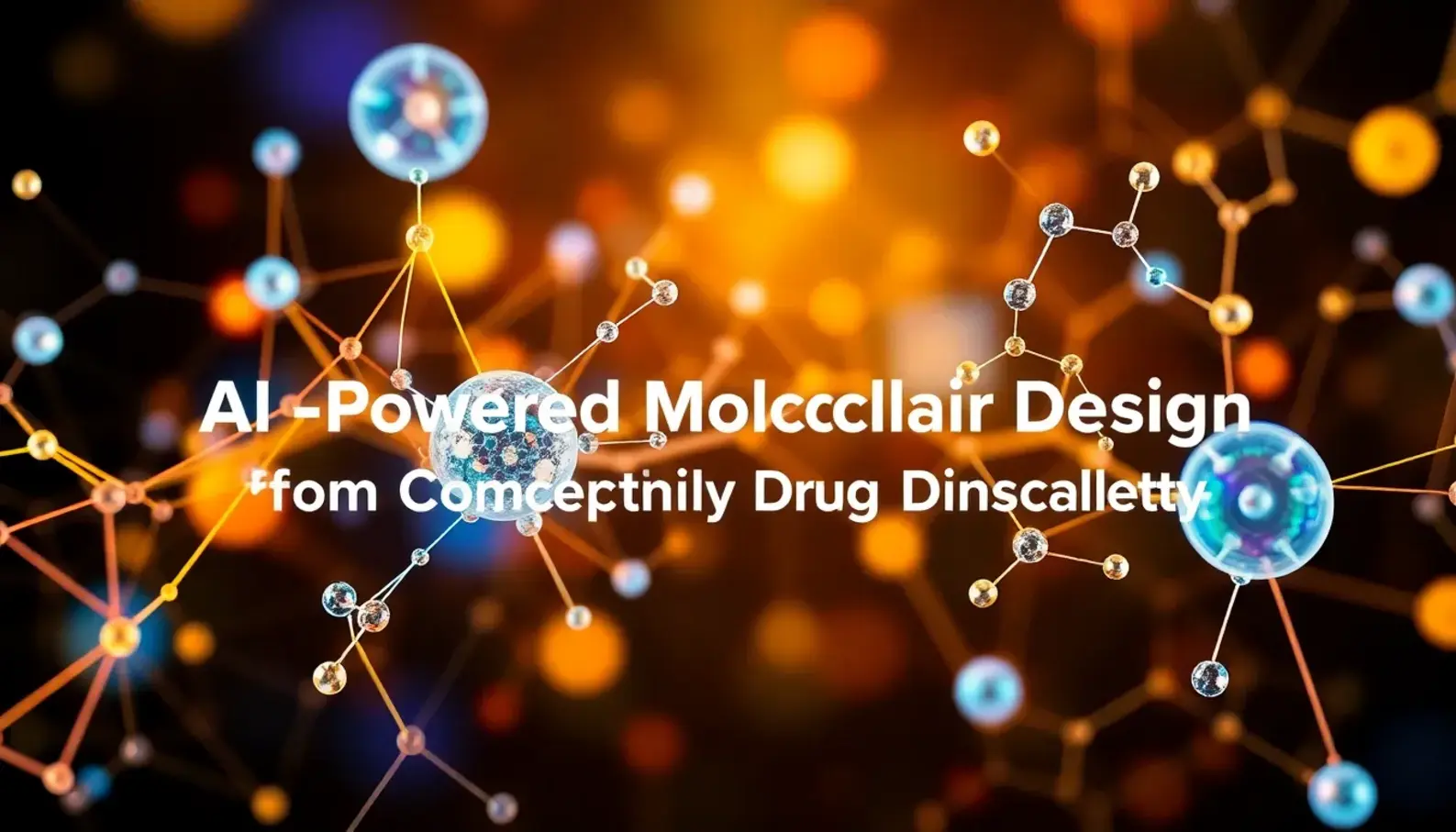
Artificial Intelligence (AI) is infusing the field of drug discovery with unprecedented capabilities. One crucial area of impact is molecular design, where AI algorithms predict interactions between compounds and biological targets. This transformation is driven by methodologies such as deep learning and reinforcement learning, which facilitate the discovery of innovative drug candidates.
Deep learning models, often leveraging neural networks, excel at identifying patterns in complex datasets. In molecular design, these models can process vast amounts of structural and biological data to predict how different molecules will interact with specific targets. By analyzing features like molecular structure, chemical properties, and biological activity, deep learning supports researchers in pinpointing promising candidates early in the drug development process.
Reinforcement learning, another powerful technique, extends this capability by enabling models to optimize candidate compounds iteratively. This approach mimics a reward-based system, where the algorithm continuously refines molecule configurations to enhance desired interactions with biological targets. The ability to adaptively improve candidate selection speeds up the lead optimization phase, which is vital for reducing the time and cost associated with drug development.
Case Studies in AI Molecular Design
A recent case demonstrated AI’s impact on identifying novel antibiotics. Researchers used AI-driven models to explore uncharted chemical spaces, discovering molecules structurally different from known antibiotics yet showing potent efficacy. This breakthrough underscores AI’s potential to address pressing global health challenges by overcoming traditional discovery limitations.
In another instance, AI algorithms were instrumental in the rapid identification of antiviral candidates during a pandemic. By leveraging deep learning models trained on the structural data of various viruses, researchers accelerated the screening process. This led to the identification of compounds capable of influencing viral entry mechanisms, a crucial step in therapeutic intervention.
Challenges in Data Quality and Integration
Despite these successes, challenges remain, particularly concerning data quality and integration. AI models rely on diverse and high-quality datasets to function effectively. This requires accessing expansive biological databases and ensuring the data is clean, comprehensive, and unbiased. Poor data quality can mislead models, causing inaccuracies in predictions.
Integrating datasets from different sources can pose technical challenges. Variability in data formats and standards necessitates robust data management and curation strategies. Ensuring interoperability between datasets enhances model accuracy, enabling better predictions and more effective drug candidate identification.
The success of AI in molecular design hinges on continuous improvements in data collection methodologies. Expanding datasets to include underrepresented chemical spaces or novel biological pathways will enrich model training, enhancing AI’s predictive capabilities and broadening the scope of drug discovery.
Future Directions and Considerations
As we look toward the future, equipping AI models with hybrid learning strategies might address current limitations. Combinations of supervised and unsupervised learning could allow more nuanced exploration of chemical spaces. Such advances might bridge gaps between theoretical possibilities and practical applications in drug development.
The path forward also involves ethical considerations in AI deployment, particularly regarding data privacy and security. Proper regulatory frameworks and transparent model-building practices will be essential to maintaining public trust and ensuring ethical AI use in pharmaceuticals.
Moreover, fostering collaboration between AI experts and pharmacologists can facilitate more holistic approaches to drug discovery. By merging technical expertise with domain-specific knowledge, the pharmaceutical industry can leverage AI’s full potential.
For those interested in broader implications and future applications across different fields, exploring AI in Business Growth reveals how AI is similarly transforming other industries by enhancing strategic capabilities.
In this chapter, we’ve explored AI’s transformative role in molecular design. Though challenges persist, the integration of AI into drug discovery continues to revolutionize pharmaceutical innovation. By enhancing efficiency and accuracy, AI is not only accelerating the path from concept to candidate, but is also laying the groundwork for a new era of personalized medicine, ultimately reshaping the landscape of healthcare.
Optimizing Clinical Trials with AI Technologies
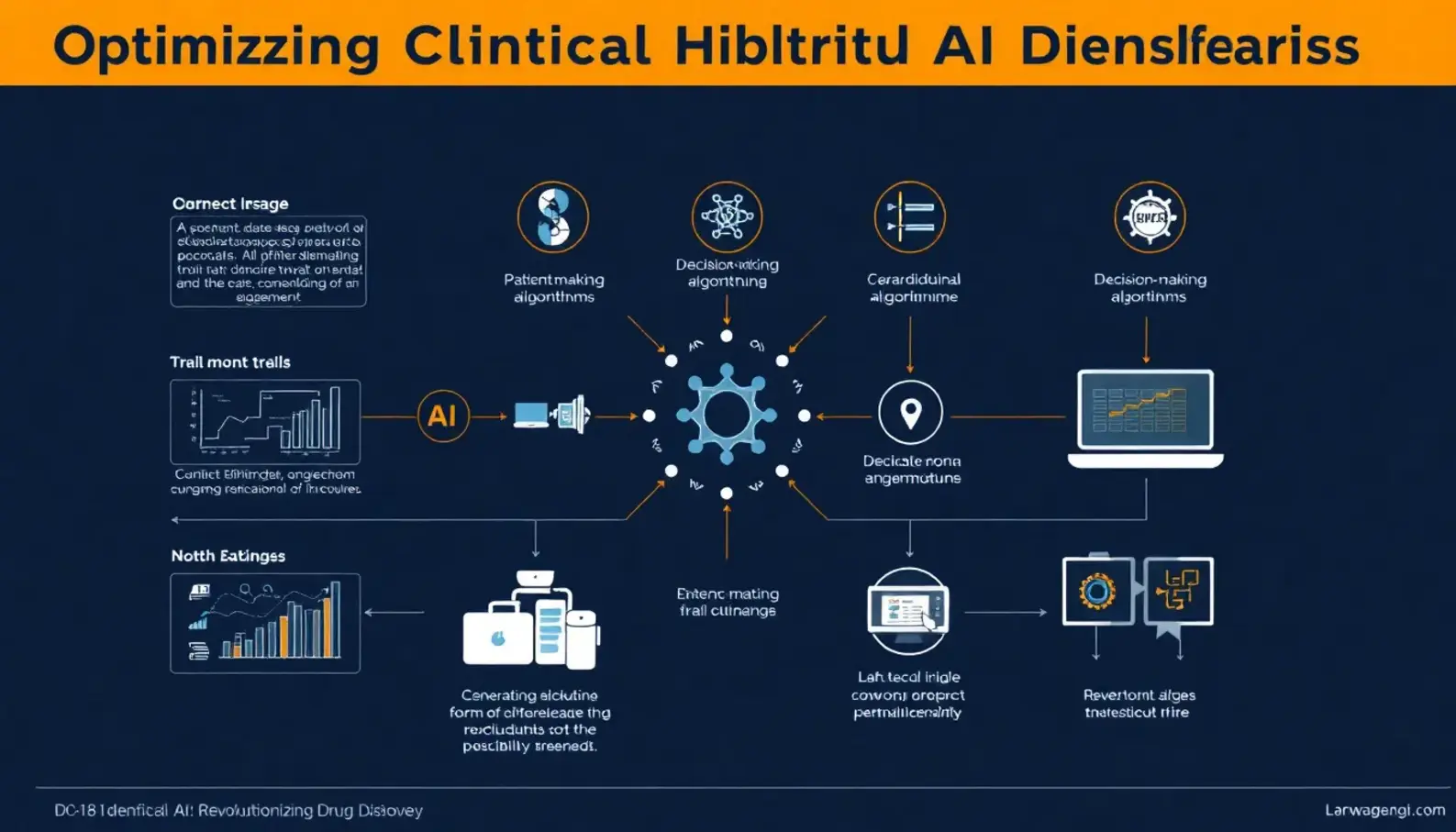
The utilization of AI technologies in clinical trials is shifting paradigms by introducing efficiency and precision in areas traditionally laden with complexity. At the heart of this transformation lies predictive analytics, which is proving pivotal in redefining patient recruitment and trial management processes.
Predictive Analytics in Patient Recruitment
Clinical trials have long struggled with recruiting participants who are both suitable and numerous enough to provide statistically significant results. Machine learning algorithms can analyze extensive medical records and demographic data to identify candidate populations that match trial criteria. By processing historical data from previous trials, AI can discern patterns and predict which patients are likely to be eligible, thereby streamlining recruitment processes and minimizing delays.
This approach also allows researchers to target diverse and appropriate sub-groups within the patient population, promoting a more inclusive trial by considering variables such as genetics, age, and comorbidities. Early implementations have already demonstrated a significant decrease in time and resources spent on identifying eligible participants.
Optimizing Trial Protocols
Beyond recruitment, AI offers substantial advancements in the optimization of trial protocols. By leveraging data from past trials, AI can predict potential outcomes and risks, allowing researchers to design trials that are more likely to yield meaningful results. Adjustments in protocols can be made in real-time, leading to more adaptive clinical trials. This flexibility is crucial as it leads to faster identification of both beneficial and detrimental effects of drugs under investigation.
Case studies highlight the impact of AI-driven protocol optimization: in one instance, trial durations were reduced by 20% while maintaining integrity and scientific rigor. Participants in these AI-enhanced trials report better alignment with study requirements and fewer reported instances of dropout, thus improving data consistency and reliability.
Implementations and Case Studies
An enlightening case involves a biopharma company specializing in oncology trials. They implemented AI to sift through massive datasets to find ideal candidates for a new cancer drug. Utilization of AI reduced participant enrollment time by 30%. Further, the company saw a 15% increase in participant retention due to more personalized trial management supported by AI insights.
In another scenario, a cardiovascular drug trial employed machine learning to simulate multiple trial designs before actual implementation. This pre-trial modeling predicted bottlenecks and recommended adjustments, ultimately leading to a faster and more efficient trial process.
Ethical and Regulatory Considerations
Despite these advances, integrating AI into clinical trials brings ethical and regulatory challenges. Ensuring patient data privacy and maintaining data integrity are paramount concerns. As AI algorithms become more predictive, the potential for biased outcomes increases. Addressing these challenges requires concerted efforts from AI developers and regulatory bodies alike to establish robust, transparent guidelines that govern AI use in clinical settings.
Navigating regulatory landscapes necessitates a collaborative approach. Regulatory authorities must work closely with AI developers to understand the technology’s nuances and craft frameworks that ensure compliance while fostering innovation. Innovators must prioritize ethical AI design, focusing on creating algorithms that are interpretive and unbiased.
A regulatory framework suggestion includes the establishment of AI oversight committees within organizations conducting clinical trials. These committees would provide continuous evaluation of AI processes and outcomes, ensuring ethical concerns are proactively addressed.
Looking Ahead
The road to fully integrating AI into clinical trial processes is one of immense potential and considerable challenge. The ongoing collaboration between AI technology providers, pharmaceutical companies, and regulatory authorities will be pivotal in accelerating this transition. Continued success stories will not only revolutionize clinical trial design and implementation but will also pave the way for faster, more efficient drug discovery processes.
For more insights into the various sectors where AI is making profound impacts, visit AI in Business Growth. This resource explores additional areas of innovation and can provide valuable context for understanding the broader implications of AI advancements.
Final words
AI is fundamentally changing the landscape of drug discovery. By enabling faster molecular design and more efficient clinical trials, pharmaceutical companies can enhance their innovation capabilities, ultimately delivering groundbreaking therapies to patients. Embracing AI technologies not only improves operational efficiency but also fosters a culture of research and collaboration.
Accelerate Drug Discovery with AI
Learn more: innoupdates.com
About us
Explore our AI-Powered Drug Discovery Tools that streamline molecular design and optimize clinical trial processes, enabling you to innovate faster and more effectively.