
As retail environments become increasingly competitive, harnessing technology is essential for enhancing customer engagement and operational efficiency. AI in retail experience testing offers a novel approach, enabling leaders to assess customer interactions, optimize personnel allocation, and fine-tune product placements. By deploying AI-driven insights, retailers can create tailored experiences that not only meet but anticipate customer needs, paving the way for lasting loyalty and enhanced financial performance. Embracing this technology isn’t merely an option—it’s becoming a necessity for any forward-thinking strategist or CFO aiming to stay ahead in a rapidly evolving market.
Understanding AI’s Impact on Retail Experience Testing
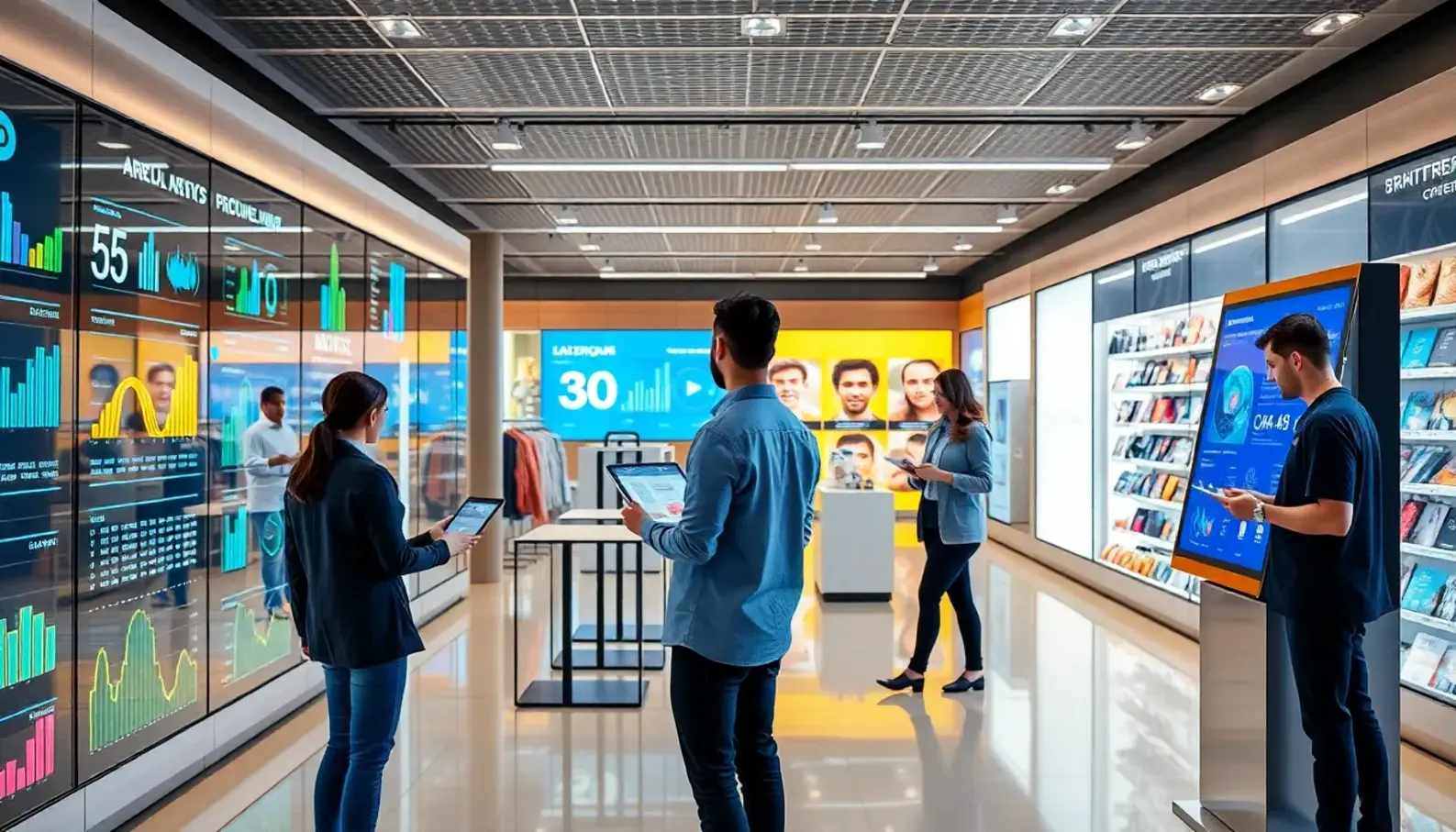
Artificial Intelligence is fundamentally transforming how retailers evaluate and refine customer interactions. The infusion of AI into retail experience testing facilitates robust analyses and drives strategic improvements more efficiently than traditional methods.
At the heart of AI-driven experience testing lies the ability to process and analyze extensive data sets. Retailers gather vast amounts of information from multiple channels—websites, mobile apps, in-store transactions, and social media platforms. AI tools sift through this data to identify patterns and trends in customer behavior. This data analysis provides retailers with a deep understanding of customer preferences and allows them to tailor their strategies accordingly.
Customer Behavior Analysis
AI-powered systems have the potential to analyze customer behavior with unprecedented precision. By leveraging machine learning algorithms and predictive analytics, retailers can understand not only what customers buy but also why they make those purchasing decisions. This insight enables businesses to tailor their product offerings and marketing strategies more effectively.
For instance, sentiment analysis, a function of AI, evaluates customer feedback from reviews and social media comments to gauge satisfaction levels and identify potential areas for improvement. This real-time feedback loop allows retailers to adapt swiftly to shifting customer expectations.
Moreover, AI tools can segment customers based on behavioral patterns. Segmentation enables retailers to create personalized shopping experiences, enhancing customer satisfaction and loyalty. By targeting specific customer needs, retailers enhance their connection with the demographic, leading to increased retention rates.
AI’s potential to predict future behavior is another game changer. By analyzing past transactions and engagement metrics, AI systems predict future trends and behaviors. Retailers can use this information to stay ahead of emerging trends and stock inventories accordingly, reducing waste and improving operational efficiency.
Streamlining Testing Processes
Beyond analyzing customer behavior, AI significantly streamlines experience testing processes. Traditionally, testing customer experiences required manual methods which were time-consuming and prone to human error. AI eliminates these inefficiencies by automating much of the testing process.
A/B testing, a vital tool in experience testing, sees significant enhancements with AI. AI systems automatically adjust variables such as product placements, pricing, and promotions, then analyze which combinations yield the best results. This dynamic approach not only improves testing accuracy but also reduces turnaround time, allowing retailers to make fluid adjustments in real time.
Additionally, AI’s ability to test and optimize in-store experiences is transformative. AI-powered cameras and sensors track customer movements within a store, providing data on how customers navigate aisles, where they spend the most time, and what products attract their attention. These insights help retailers optimize store layouts for better traffic flow and product exposure, ultimately enhancing the shopping experience.
Predictive and prescriptive analytics within AI guide decision-making by offering recommendations based on data-driven insights. Retailers are equipped with actionable intelligence that informs which strategies are likely to succeed, minimizing risk and maximizing potential revenue.
AI-Driven Decision-Making
The comprehensive data analysis and efficiencies offered by AI result in more informed decision-making across retail operations. With AI, decision-making shifts from reactive to proactive, as retailers anticipate customer demands and adjust their strategies accordingly.
Automated reporting tools deliver insights in user-friendly formats. Executives and managers receive digestible dashboards displaying current performance metrics and future projections. These tools ensure that decision-makers focus on strategy rather than data processing.
Moreover, the continuous learning capability of AI systems ensures that they evolve alongside market changes. Retailers can refine their tactics based on the latest data, ensuring sustained relevance and competitiveness in a rapidly evolving market.
Challenges and Considerations
Despite its benefits, integrating AI into retail experience testing is not without challenges. Data privacy remains a critical concern. Retailers must handle customer data ethically and in compliance with regulations. Moreover, AI implementations require substantial investment in technology and talent. Organizations must weigh these costs against potential benefits.
Retailers should also remain cognizant of potential biases within AI systems. Biases in data collection and algorithm design can skew results and lead to suboptimal decision-making. It is crucial for businesses to continually assess AI systems for fairness and accuracy.
Conclusion
AI’s impact on retail experience testing is profound and multifaceted. By enhancing data analysis capabilities and streamlining processes, AI enables retailers to deliver personalized and efficient customer experiences. The shift towards AI-driven decision-making ensures that retailers remain responsive and agile amidst ever-changing consumer landscapes.
For further insights into the ethical considerations surrounding generative AI in retail, investigate this exploration of AI ethics.
Leveraging Data Insights for Strategic Decisions

Artificial Intelligence in retail reshapes how data is collected, analyzed, and applied. For retail strategists and CFOs, the real value lies in transforming AI-driven experience test outputs into actionable insights. These data-derived insights have revolutionized strategic decision-making by enabling precise predictive analytics, detailed customer segmentation, and significant operational improvements.
The heart of AI’s contribution to strategic decision-making is predictive analytics. AI algorithms excel at identifying patterns and predicting trends based on vast volumes of data collected from customer interactions and transactions. Retailers can anticipate consumer demand, allowing CFOs to optimize inventory management and reduce holding costs. Predictive analytics also aid in revenue forecasting, helping financial officers align their budgets with realistic sales expectations. When actionable predictions fuel strategic planning, retailers can effectively mitigate risks, adapt to market changes, and seize new opportunities with greater confidence.
One prominent example is in demand forecasting. By analyzing historical transaction data alongside current purchasing trends, AI can predict future product demand with astonishing accuracy. This informs inventory levels, promotional strategies, and supply chain logistics, ensuring optimal resource allocation. A retail strategist can leverage this foresight to adjust procurement strategies, ensuring product availability aligns precisely with consumer demand. Reduced stockouts and overstock situations translate directly into increased revenues and reduced markdown losses, underscoring the intrinsic value of data insights in strategic decision-making.
Beyond forecasting, AI also enhances customer segmentation efforts, enabling a nuanced understanding of the consumer base. Traditionally, segmentation relied on demographic information, resulting in broad and often inaccurate categories. AI, however, can process data points from diverse sources, including transactional histories, online behaviors, and social media engagements. It identifies micro-segments within the customer base, offering insights far beyond traditional methods.
This sophistication allows for highly personalized marketing strategies. By understanding specific customer preferences, retailers can tailor promotions and communications that resonate more effectively with individual segments. Whether it’s customizing email promotions or personalizing product recommendations on e-commerce platforms, AI-driven segmentation fosters deeper customer engagement and loyalty. Engaged customers are more likely to convert, spend more, and make repeat purchases, enhancing the overall customer lifetime value.
AI’s contribution doesn’t stop at customer knowledge; it also drives operational improvements. By automating and optimizing processes, AI reduces inefficiencies across various retail operations. For instance, in supply chain management, AI analyzes logistics data to streamline distribution networks, minimizing lead times and reducing costs. Operations can be adjusted in real-time to accommodate shifts in consumer demand or supply chain disruptions. Strategic decisions become increasingly data-driven, empowering retail executives to allocate resources where they will have the most significant impact.
Moreover, AI-driven insights transform workforce management. Retailers can deploy AI to analyze staffing patterns and peak business hours, enabling efficient scheduling that matches labor supply with demand. This not only improves operational efficiency but also enhances employee satisfaction by ensuring balanced workloads and reducing turnover.
An area where AI’s operational impact is unmistakable is in dynamic pricing models. By continuously analyzing competitors’ pricing, customer demand, and market trends, AI systems can adjust prices in real-time to optimize sales and margins. CFOs can utilize these insights to maximize profitability while maintaining competitive pricing strategies, setting the stage for sustained growth and market leadership.
To fully harness these benefits, however, retailers must embrace a culture of data-driven decision-making. This involves investing in AI infrastructure and fostering a collaborative environment where data insights are shared across departments. Retailers also need to continuously refine their AI models based on feedback and new data inputs, ensuring that the insights remain relevant and accurate.
Retail strategies anchored in AI-driven insights are not only more resilient but also more agile. As the retail landscape becomes increasingly competitive, the ability to quickly interpret and act on data may determine success. By using AI-driven experience tests, retailers can make informed strategic decisions, drive customer satisfaction, and secure their position at the forefront of innovation.
For those seeking to further understand AI’s broader applications in business growth, exploring the application of AI in business growth can provide additional insights into transformative AI technologies in the corporate sector.
Implementing AI: Practical Steps and Considerations

To harness the full potential of artificial intelligence in retail experience testing, a structured implementation process is crucial. This involves selecting appropriate tools, investing in team training, and anticipating potential challenges. By understanding these elements, retailers can streamline operations, enhance customer engagement, and achieve a competitive edge.
Choosing the Right AI Tools
The first step in implementing AI for retail testing is selecting the right tools. Key considerations include the specific needs of your retail operation, budget constraints, and desired outcomes. AI tools vary in functionality, offering solutions for personalization, trend analysis, and inventory management. Opt for tools that integrate seamlessly with existing systems to ensure minimal disruption.
Evaluate tools based on scalability and future-proofing capabilities. Select solutions that can grow with your business, supporting additional features and innovations. Open-source platforms offer flexibility and customization, while proprietary solutions provide robust support and regular updates.
Team Training and Development
Once the suitable tools are identified, invest in training your team to use AI effectively. Begin with foundational knowledge of AI principles and gradually introduce specific applications relevant to your operations. Training sessions should include hands-on exercises, allowing team members to engage directly with the tools.
Consider creating cross-functional teams blending IT, marketing, and sales expertise. This diversity enriches the understanding of AI’s impact across the organization and facilitates successful integration. Encourage knowledge sharing and peer learning to enhance internal capabilities.
Integration into Workflow
Integrating AI tools into existing workflows demands careful planning. Start with pilot projects focusing on manageable business areas, such as optimizing in-store layout or customizing user experiences online. These pilots serve as testing grounds, helping to refine techniques before broader implementations.
Maintain open channels of feedback from team members involved in pilot programs. Their insights can inform adjustments to the integration strategy, ensuring smoother transitions across the organization.
Monitoring and Evaluation
Implementing AI is not a one-time project but a continuous process. Establish metrics to monitor the performance and effectiveness of AI tools. Important metrics include customer satisfaction, sales growth, and operational efficiency improvements.
Deploy regular evaluations and be prepared to iterate on your AI capabilities. This iterative process ensures your strategy evolves alongside changing market dynamics and technological advancements. Encouraging a culture of ongoing learning and adaptation will make your organization resilient in the face of change.
Pitfalls to Avoid
A significant risk in AI implementation is expecting immediate results. Viewing AI as a quick fix often leads to misguided investment decisions. Set realistic timelines and understand that benefits accumulate over time with consistent effort and refinement.
Another common pitfall is overlooking data quality. Since AI heavily relies on data, ensure your datasets are not only comprehensive but also clean and well-structured. Investing in robust data management practices will facilitate more accurate modeling and predictions.
Lastly, don’t ignore ethical considerations. The role of AI in business contexts carries ethical implications, such as privacy concerns and bias in algorithms. Establish clear guidelines and commit to ethical AI use to build trust with customers and stakeholders. Explore more on the ethics of generative AI in the AI ethics blog.
By carefully selecting tools, nurturing talent, and committing to an iterative process, retail businesses can successfully implement AI for experience testing. This strategic approach will not only enhance operational efficiencies but also enrich customer interactions, positioning your brand as a leader in the industry.
Final words
The integration of AI into retail experience testing is not just about keeping up with industry trends; it’s about gaining a competitive edge through enhanced insights and personalized customer experiences. Strategists and CFOs alike must recognize the value of AI in making data-driven decisions that can lead to increased profitability and customer satisfaction. As this technology evolves, so too will the retail landscape, demanding proactive engagement from all stakeholders.
Sign up for our upcoming webinar to explore in-depth strategies for implementing AI in retail experience testing!
Learn more: innoupdates.com
About us
We provide comprehensive solutions in AI technology focused on retail strategies, helping businesses leverage data for enhanced customer experiences and operational efficiency. Our services include customized consulting, training, and integration of AI tools suited to various retail environments.