As cybersecurity threats evolve, traditional encryption methods face unprecedented challenges. Quantum cryptography emerges as a revolutionary approach, promising unparalleled security by leveraging the principles of quantum mechanics. This new frontier of cryptographic technology safeguards sensitive information against eavesdropping and ensures the integrity of communications, offering solutions that are resilient against both classical and quantum attacks. Security experts and government entities now confront the urgency of adopting these innovations to secure data effectively in an age where quantum computing is poised to disrupt conventional cybersecurity.
The Fundamentals of Quantum Cryptography
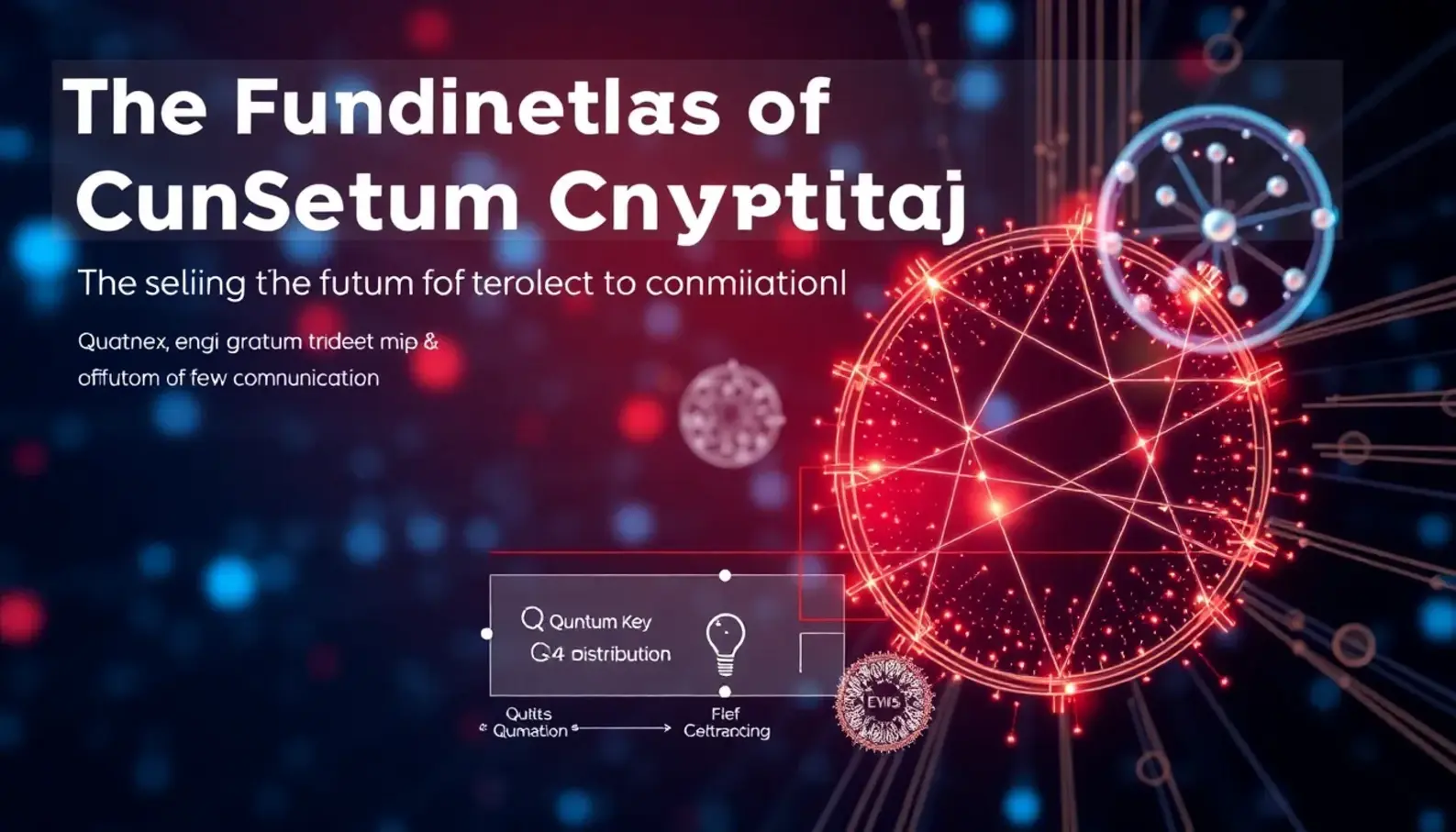
Quantum cryptography stands on the forefront of securing communications against increasingly sophisticated threats. At its core, it relies on the principles of quantum mechanics to transmit data in a manner inherently resistant to eavesdropping. Unlike classical cryptographic systems that depend on mathematical complexity, quantum cryptography leverages the physical properties of photons and atoms, ensuring security based on the laws of physics.
A crucial element in quantum cryptography is Quantum Key Distribution (QKD). QKD enables two parties to share a secret encryption key through a quantum channel. At the heart of QKD is the concept of the qubit, the quantum analog of the classical bit. Unlike a classical bit, which can be either 0 or 1, a qubit exists in a superposition of these states, thanks to the principles of quantum mechanics.
Superposition allows qubits to be in multiple states simultaneously, which is a pivotal feature for QKD. Such superpositions make it impossible for an eavesdropper to measure the quantum state of a qubit without disturbing it. This is where the no-cloning theorem becomes especially important. The no-cloning theorem states that it is not possible to create an identical copy of an arbitrary unknown quantum state. Therefore, any attempt at eavesdropping will alter the state being observed, signaling a potential breach to the communicating parties.
Entanglement, another cornerstone of quantum mechanics, further enhances the security framework. When two qubits are entangled, the state of one qubit is directly related to the state of the other, regardless of the distance between them. This phenomenon ensures that any measurement affecting one of the qubits will instantaneously affect the other, making entangled qubits a formidable tool in detecting eavesdropping.
Quantum cryptography’s practical applications have begun to revolutionize secure communications for both governmental and corporate sectors. Pilot projects worldwide have demonstrated the implementation of QKD systems over fiber optic networks and even through free-space optics. Governments are particularly interested in quantum cryptography for securing interagency communications and safeguarding sensitive data against cyber threats.
Companies have started exploring quantum cryptography for protecting financial transactions and ensuring data privacy in competitive environments. The integration of QKD with existing encryption systems enhances security layers without the usual computational overhead, making it a viable solution for real-world applications.
In addition to securing communication channels, quantum cryptography also plays a key role in the development of secure authentication protocols. These protocols leverage the unique properties of quantum states to verify identities without the need for password-based systems, which are often vulnerable to phishing attacks.
Research continues to push the boundaries of quantum cryptography. Innovations are underway to improve entanglement distribution over greater distances, overcome limitations in error rates, and reduce equipment costs. Collaboration between academia, industry, and governments is crucial in advancing the field and making quantum cryptography a mainstream solution for secure communications.
For those vested in the future of secure communications, an understanding of quantum cryptography is essential. The intersection of quantum mechanics principles with cryptographic techniques offers security solutions that are not only robust but also fundamentally different from classical approaches. As quantum technologies evolve, the implications for global security and data integrity will be profound, positioning quantum cryptography as a cornerstone in the architecture of next-generation secure communication systems.
To further explore the integration of quantum technologies and enhance understanding of its impact on secure communications, you can dive deeper into quantum computing innovations. This exploration will broaden your perspective on how emerging technologies are shaping the future of data security.
Real-World Implementation and Challenges

Quantum cryptography, with its promise of unbreakable encryption, has captured the attention of several key sectors. Its adoption, however, is fraught with both innovative achievements and significant challenges. Here we delve into how telecommunications, financial services, and government operations are harnessing quantum cryptography and the hurdles they face in doing so.
In telecommunications, quantum key distribution (QKD) is making strides. Major telecommunication companies are exploring QKD to secure data transmissions over fiber optics. The ability of QKD to generate encryption keys using quantum mechanics ensures a level of security unattainable with classical methods. Recent testbeds have demonstrated QKD across metropolitan areas, but the expansion is limited by infrastructure costs and the need for new fibers capable of supporting quantum signals alongside classical ones. Despite these hurdles, successful trials have encouraged ongoing investments, aiming to scale this technology to larger networks.
In the financial services sector, quantum cryptography offers a shield against the specter of quantum computing’s potential to break classical cryptographic algorithms. Some financial institutions have embedded quantum key distribution into their systems to protect high-value transactions. These implementations highlight the importance of security in financial communications, where regulatory compliance and customer trust are paramount. However, integration comes with challenges such as the need for specialized equipment and trained personnel, as well as potential latency issues when scaling across global networks.
Government operations represent another burgeoning area for quantum cryptography. Quantum communication technologies are being explored for secure communications within military and diplomatic contexts. Governments are investing in research and development to stay ahead in the race for quantum supremacy. Defense sectors, in particular, focus on developing quantum-resistant encryption to secure sensitive information. Nevertheless, challenges remain in the form of regulatory considerations and interoperability with existing technology infrastructures.
Case studies provide insight into the practical realities of adopting quantum cryptography. A notable example is the deployment of a QKD network in a European city, designed to secure healthcare data transmission. The project demonstrated enhanced security but also highlighted issues related to cost and the complexity of integrating quantum technologies with existing IT systems. Resistance to change among stakeholders was another significant challenge, often rooted in a lack of understanding of quantum technologies and their benefits.
Concerns around infrastructure investment are common across all sectors. Building the necessary infrastructure for quantum communication requires substantial financial outlays. The cost of deployment, maintenance, and necessary technological upgrades can be daunting. Additionally, the workforce needs to develop expertise in quantum technologies, necessitating training programs and education. This human capital investment is often underestimated but crucial for successful implementation.
Regulatory considerations also pose significant challenges. As national and international regulatory bodies continue to grapple with the implications of quantum technologies, establishing clear guidelines and standards is essential to foster broader adoption. Moreover, regulations need to address the cross-border nature of data transmission, complicating international implementations of quantum cryptography solutions.
Integrating quantum systems with existing cyber defense strategies is another hurdle. Quantum cryptography must work alongside legacy systems more accustomed to classical cryptographic methods. This requires not only technological adaptations but also a shift in security strategies. Organizations need to develop hybrid approaches that incorporate quantum cryptographic techniques with traditional security measures, ensuring seamless operation and minimizing vulnerabilities.
As quantum computing capabilities continue to advance, the future trajectory of quantum cryptography looks promising. It is anticipated that as quantum computing becomes more accessible, the demand for quantum-resistant encryption methods will increase. This is driving ongoing research into new protocols and algorithms that can withstand quantum decryption attempts, ensuring long-term security in a quantum world.
Further developments in quantum networking, like those discussed in Hybrid Computing Strategies, could facilitate more widespread adoption by addressing current limitations such as distance and signal fidelity. These innovations hold the key to ushering in a more secure era of communications, where quantum cryptography is not just a theoretical construct but a practical reality protecting sensitive information globally.
In sum, while quantum cryptography offers unparalleled security advantages, its real-world implementation is subject to significant hurdles that need to be addressed through investment, regulation, and innovation. As various sectors continue to engage with these challenges, the path towards a more secure quantum future becomes clearer, aligning with broader technological advancements and societal needs.
Final words
Incorporating quantum cryptography into cybersecurity strategies presents an imperative for security experts and governmental bodies. Understanding the foundational principles and real-world applications equips professionals with the knowledge necessary to combat emerging threats effectively. As technological advancements accelerate, embracing this next-generation encryption will undoubtedly play a critical role in securing sensitive information across all sectors.
Secure Your Data
Learn more: https://innoupdates.com
About us
InnoUpdates offers cutting-edge Cybersecurity Solutions designed to fortify your communications and protect sensitive data from evolving threats. Our services seamlessly integrate quantum cryptographic technologies, ensuring compliance and security in every sector.