
The integration of artificial intelligence (AI) into healthcare analytics is reshaping how medical data is processed and utilized. Automating analytics enhances decision-making, facilitates real-time patient monitoring, and improves operational efficiencies. As healthcare organizations increasingly harness AI tools, they unlock the potential of vast amounts of data, deriving actionable insights to enhance patient outcomes. This shift not only supports clinical staff but also aids administrators in strategic planning. By exploring AI’s capabilities in healthcare analytics, we reveal its impact on patient care, operational workflows, and cost management, setting the stage for a more effective healthcare delivery system.
The Evolution of Healthcare Analytics
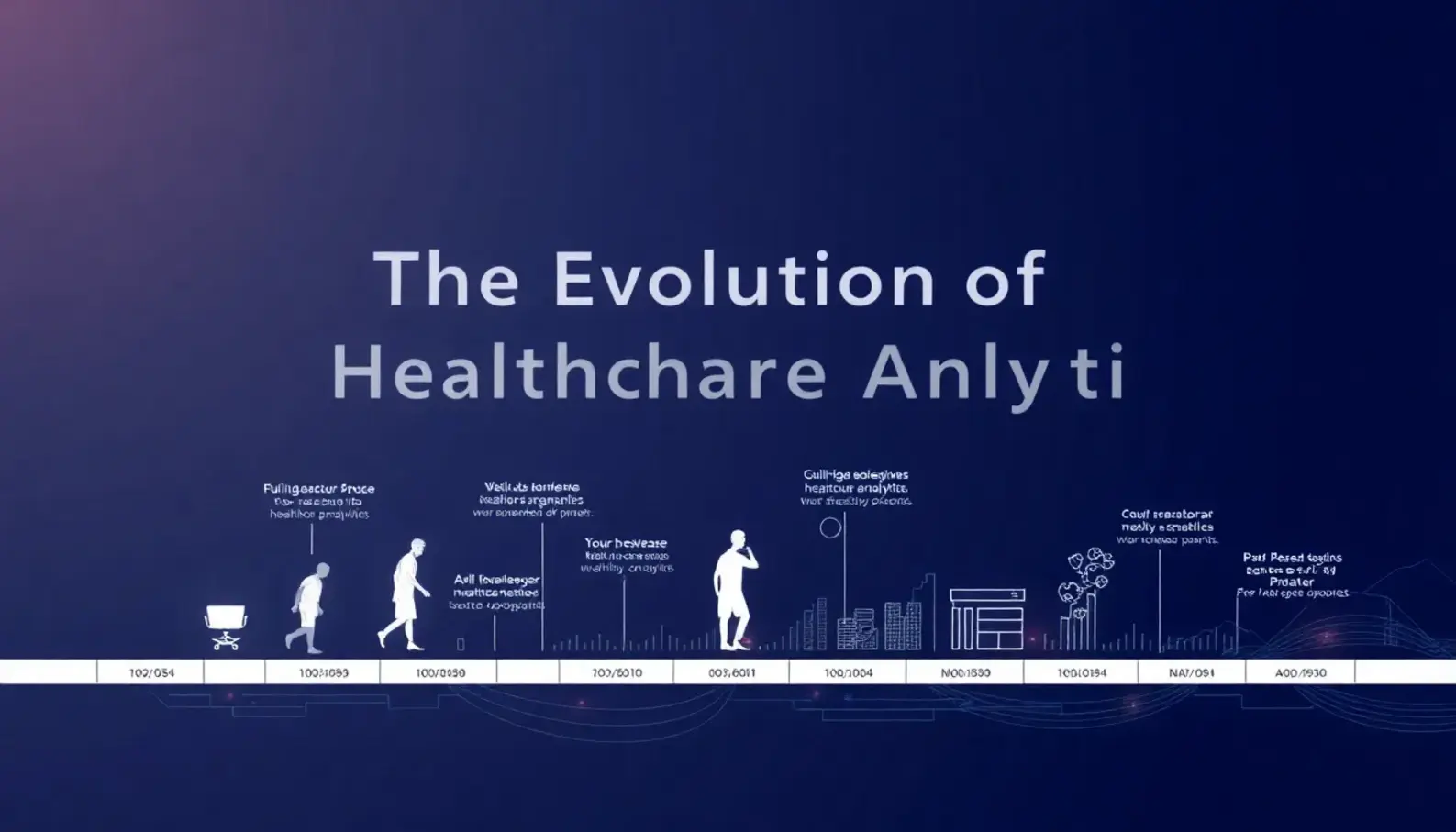
The journey of healthcare analytics has been transformative, leading us from rudimentary record-keeping to sophisticated AI-driven models capable of predicting complex medical scenarios. Historically, healthcare data was sparse and often manually documented. The early stages involved basic statistical methods applied to limited datasets, constrained by technology and limited processing capabilities.
As digital transformation swept across industries, healthcare providers recognized the potential of harnessing electronic health records (EHR) to enhance patient outcomes. The shift from paper to electronic records in the late 20th century marked the first major leap in analytics capability. This transition allowed for more systematic data collection and provided a foundation for the analyses that followed.
With the onset of the 21st century, the concept of ‘big data’ gained prominence across sectors. Healthcare institutions found themselves managing unprecedented volumes of information, from patient histories and diagnostic results to treatment outcomes. These massive datasets presented both challenges and opportunities, spurring the development of more advanced analytical tools capable of extracting meaningful insights.
The integration of AI into healthcare analytics emerged as a game-changer. Traditional methods, once dependent on retrospective analysis, began evolving towards real-time data processing. AI technologies enabled healthcare professionals to uncover patterns and trends not immediately visible through conventional approaches. Machine learning, a subset of AI, plays a crucial role in modeling complex data sets and predicting potential outcomes based on historical and current data.
This capability has become essential given the increasing demand for personalized medicine. AI algorithms can sift through vast medical records to tailor treatment plans to individual patients, taking into account the unique interplay of genetic, environmental, and lifestyle factors. These AI-driven solutions, however, are not without their challenges.
Healthcare organizations often grapple with integrating these technologies into existing systems. The necessary infrastructure, data privacy concerns, and the steep learning curve associated with new technologies can pose significant barriers. Additionally, ensuring data accuracy and consistency is critical, as flawed data can lead to incorrect predictions and potentially harmful decisions.
AI has demonstrated potential in mitigating these challenges. By automating routine analytics tasks, it allows health practitioners to focus on more nuanced aspects of patient care. Enhanced data cleaning algorithms improve the quality of data inputs, ensuring that the subsequent analyses and predictions are reliable. AI-driven dashboards offer intuitive interfaces for non-technical users, further streamlining the decision-making process.
Moreover, real-time data processing has become increasingly vital in patient care, particularly in urgent or evolving situations. AI systems capable of real-time analysis can alert medical professionals to critical changes in a patient’s condition, facilitating timely interventions. This capability not only improves patient outcomes but also optimizes resource allocation within healthcare facilities.
Looking forward, the collaborative potential of AI in healthcare analytics is expansive. By integrating AI with advancements in quantum computing, as discussed in this article, there is potential for even more rapid and precise healthcare analytics. Such innovations will likely accelerate the evolution of healthcare analytics, further transforming patient care strategies.
For healthcare providers, the pursuit of fully harnessing AI’s potential is ongoing. Addressing ethical considerations, ensuring compliance with regulations, and fostering interdisciplinary collaborations will be crucial. As AI continues to evolve, it holds the promise of revolutionizing patient care and healthcare decision-making on a global scale.
AI Applications in Data Analytics for Healthcare
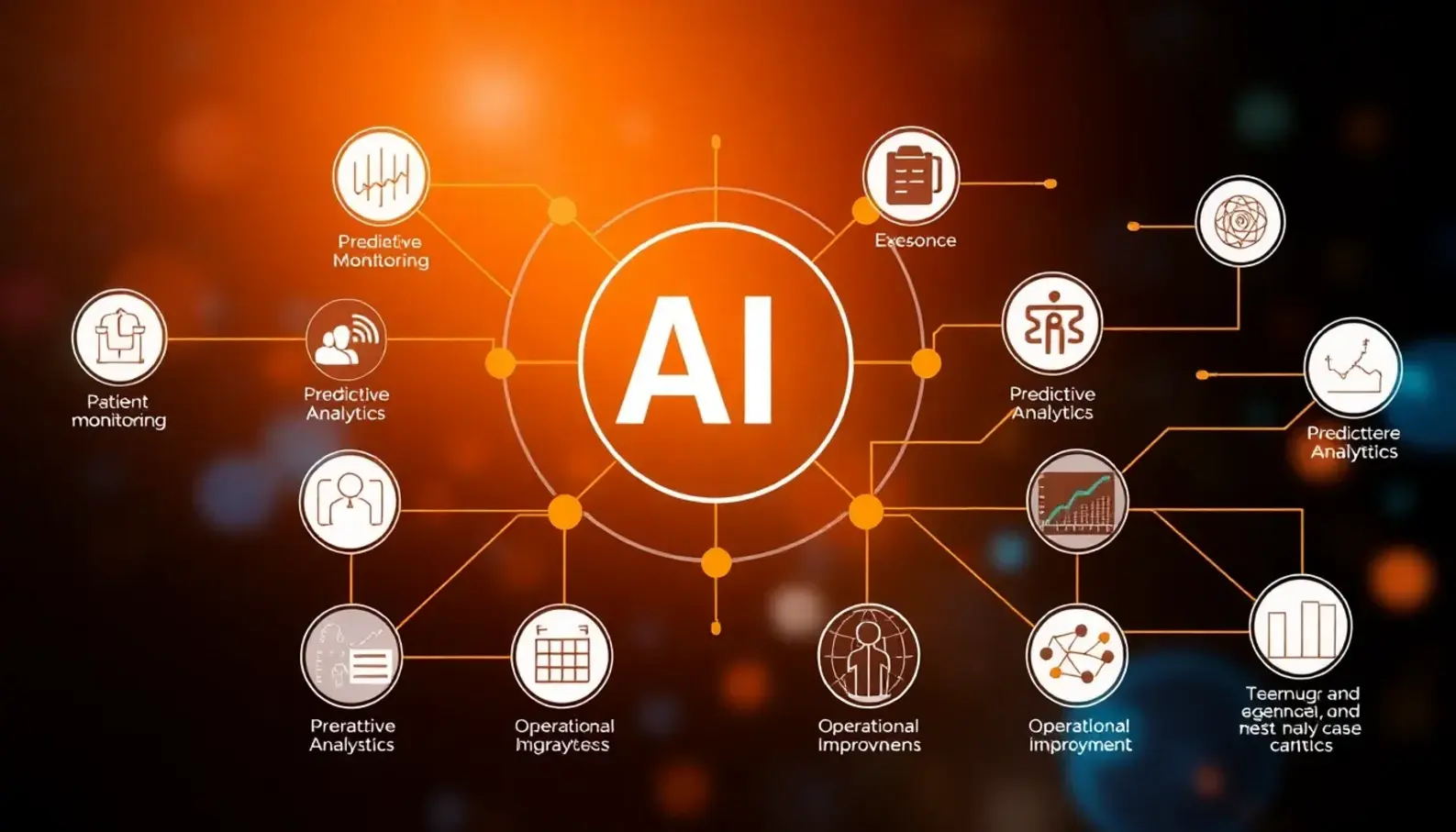
Artificial Intelligence (AI) is transforming healthcare analytics through its ability to process and learn from vast datasets with unprecedented speed and precision. This chapter explores several applications of AI in data analytics within the healthcare sector, focusing on predictive analytics, patient monitoring, risk assessment, and operational efficiency improvements.
Predictive analytics is one area where AI’s impact is profoundly felt. By analyzing historical data, machine learning algorithms can identify patterns that might not be evident to the human eye. For instance, in chronic disease management, AI models can predict patient deterioration earlier than traditional methods. This early detection allows healthcare providers to intervene sooner, potentially preventing complications and reducing hospital admissions. Such models also facilitate personalized treatment plans by anticipating how different patients will respond to various interventions.
Moreover, AI-driven predictive analytics extends to infection control. Hospitals leverage AI tools to foresee outbreaks by analyzing patient demographics, admission rates, and geographical health data. By predicting such incidents, healthcare facilities can allocate resources more effectively, prepare staff in advance, and implement preventive measures to curb potential outbreaks.
Patient monitoring also benefits significantly from AI. Intelligent monitoring systems continuously aggregate and analyze patient data from wearable devices and electronic health records (EHRs). These systems alert clinicians to abnormal patterns in real-time such as fluctuations in vital signs. For example, AI algorithms used in intensive care units can predict the onset of sepsis hours before traditional methods, greatly improving patient outcomes through prompt interventions. These systems contribute not only to immediate patient care but also enhance long-term monitoring by identifying trends that could suggest future health issues.
Risk assessment is another domain where AI enhances healthcare analytics. Advanced algorithms are employed to stratify patient populations based on their risk levels. This stratification assists healthcare providers in prioritizing high-risk patients for monitoring and treatment. For instance, AI models can analyze risk factors for cardiovascular diseases or diabetes, providing actionable insights into patient populations that require urgent attention. The enhanced accuracy of AI risk assessment models has led to more efficient allocation of healthcare resources, improving patient outcomes and reducing healthcare costs.
In terms of operational efficiency, AI excels in optimizing resource management within healthcare facilities. AI applications can analyze patient flow data, predicting peak admission times and adjusting staffing needs accordingly. This insight minimizes waiting times, reduces hospital congestion, and improves overall patient satisfaction. AI algorithms also support inventory management by predicting the demand for medications and medical supplies, thereby reducing waste and ensuring that critical supplies are available when needed.
A real-world example of AI’s efficacy in operational efficiency is seen in streamlining the surgical workflow. AI systems analyze historical data to optimize operating room schedules, ensuring that surgeries are conducted with minimal delays and maximum resource utilization. Such improvements not only enhance the patient experience but also increase the healthcare facility’s throughput.
One relevant example in enhancing patient care through technology is the integration of AI with wearable technology, discussed further in the AI Wearable Tech in Health article. Wearable devices, coupled with AI analytics, enable continuous patient monitoring and have shown to reduce emergency admissions by providing valuable real-time health insights.
The effectiveness of AI tools in healthcare settings is continually improving as these systems become more sophisticated. Machine learning models, for instance, evolve by refining their algorithms based on new data inputs, thus improving accuracy over time. This evolution has led to significant improvements in patient care and resource management, underscoring the transformative power of AI in healthcare analytics. As AI technology continues to advance, its applications in data analytics will undoubtedly expand, offering even greater enhancements in patient care and operational efficiency.
The Future Landscape of AI in Healthcare Decisions

As we progress into an era of digital transformation, artificial intelligence (AI) is poised to redefine the landscape of healthcare analytics. This shift brings not only unprecedented efficiency and accuracy but also a realm of possibilities for improved patient care and administrative decision-making. Emerging trends in AI are juggling between predictive analytics and personalized medicine, placing a strong emphasis on data-driven insights.
One of the most promising trends involves utilizing AI for predictive analytics to foresee and mitigate health risks. With increasing amounts of patient data being digitized, predictive models can identify patterns that transcend traditional diagnostic boundaries. This allows clinicians to anticipate patient needs with greater precision, ultimately leading to more proactive care strategies.
Moreover, AI is enabling personalized medicine, which tailors treatments to individual patient profiles. By analyzing genetic material, lifestyle factors, and medical history, AI systems can suggest more effective treatment plans that align closely with patient-specific conditions. This level of customization fosters a transition from a one-size-fits-all approach to a more targeted and effective healthcare strategy.
Ethical considerations are inevitable as AI intertwines with healthcare. Concerns over patient privacy and data security are paramount. Ensuring that AI systems comply with strict data protection laws, such as HIPAA in the United States, is crucial to maintain patients’ trust. Moreover, there is the fear of AI systems perpetuating biases present in training datasets. Developers must therefore ensure rigorous testing and validation of AI algorithms to prevent skewed outcomes and ensure equity in healthcare access.
The integration of AI in healthcare analytics may pose several challenges. Resistance to change from healthcare professionals is a major hurdle. Fear of technology replacing human jobs can lead to reluctance in adopting AI systems. However, rather than replacing roles, AI can enhance them. For example, administrative tasks executed by AI can free up significant time for healthcare professionals, allowing them to focus more on patient care.
Moreover, AI systems can serve as diagnostic aids, empowering professionals rather than overshadowing their expertise. By providing decision support tools that highlight potential diagnoses based on patient data patterns, AI can foster a more informed decision-making process. Decision-makers need to position AI as a supplemental tool that enhances human judgment.
Patient interactions stand to be significantly improved through AI-driven analytics. AI chatbots and virtual assistants can handle routine inquiries, assist in scheduling appointments, and provide preliminary support, thus relieving pressure on human staff and enhancing patient experience with prompt responses. Furthermore, AI can analyze patient feedback to suggest improvements in healthcare delivery, ensuring a continually improving care environment.
To effectively integrate AI solutions into healthcare systems, several recommendations can be considered. First, investing in continuous education and training for doctors, nurses, and supporting staff is essential. A well-informed workforce that understands the capabilities and limitations of AI will be more adept at leveraging these technologies for optimal outcomes.
Second, collaboration between healthcare providers, IT professionals, and AI developers is crucial. Developing interoperable systems that allow for seamless data exchange and integration across platforms will facilitate the widespread adoption of AI.
Lastly, establishing a governance framework to oversee the ethical implementation of AI is necessary. Such a framework should include guidelines on data usage, AI model transparency, and accountability measures that ensure AI’s alignment with broader healthcare goals.
For those seeking more insights into AI application and ethical considerations, a deeper dive can be found in Generative AI Ethics. Understanding these foundations will not only empower healthcare professionals but also drive forward a future where AI and human intelligence collaborate harmoniously to enhance healthcare delivery.
Final words
AI is not just a technological advancement; it is a critical ally in healthcare analytics. By automating data processes, healthcare organizations can improve patient care and operational productivity while making informed decisions. As AI continues to progress, its influence will only deepen, paving the way for a more efficient and effective healthcare system. Proactive engagement with these tools is essential for healthcare professionals to stay at the forefront of this evolution.
Start Free Trial
Learn more: innoupdates.com
About us
Our company specializes in providing innovative AI solutions specifically tailored for healthcare analytics. We offer tools that automate data processing, enhance predictive analytics capabilities, and deliver actionable insights, empowering healthcare organizations to improve patient outcomes and operational efficiency.