
Healthcare is one of the sectors that stands at the brink of extraordinary change due to advances in artificial intelligence (AI) and analytics. As mountains of data pile up from electronic health records and other healthcare systems, analysts and developers must adapt to harness this data effectively. AI in healthcare analytics not only enhances patient care but also streamlines operations and optimizes resource allocation. This article dissects the application of AI in healthcare analytics, focusing on actionable insights and practical strategies for professionals eager to dive into this evolving field.
Understanding AI’s Role in Healthcare Analytics

The transformative impact of artificial intelligence in healthcare analytics is becoming increasingly evident. AI technologies like machine learning and natural language processing (NLP) serve as the backbone for revolutionizing how data is managed, analyzed, and leveraged to improve patient outcomes and streamline healthcare operations.
Machine learning involves training algorithms to recognize patterns within data sets. In healthcare, this capability is invaluable for interpreting vast amounts of patient data, which are often complex and multifaceted. For instance, predictive analytics powered by machine learning can identify patients at risk for certain conditions before they manifest overt symptoms. This early intervention capability can significantly enhance patient outcomes by enabling preventive measures.
Moreover, machine learning algorithms can segment patients into subgroups based on similarities in their data. This segmentation can inform personalized treatments, much like personalized medicine tailors drug regimens to individuals rather than applying a one-size-fits-all approach. The precise adjustments to care plans can reduce adverse drug reactions and improve patient adherence.
NLP, on the other hand, has found its place in parsing clinical texts, such as physician notes, electronic health records (EHRs), and medical literature. Often, valuable insights are buried within textual data that are not easily categorized or analyzed using traditional methods. NLP technologies sift through this unstructured data to extract meaningful patterns and indicators of patient health. For example, identifying trends in physician notes regarding patient symptoms over time can aid in more informed clinical decision-making.
AI also plays a pivotal role in predictive modeling, wherein historical data informs future trends. Such models can forecast disease outbreaks, hospital readmission rates, and even identify the likelihood of certain procedures being required. By utilizing these models, healthcare providers can allocate resources more efficiently and react proactively rather than reactively to healthcare changes.
Consider the case study of a major hospital network employing AI to reduce the rate of patient readmissions. The network integrated machine learning models that analyzed patient demographics, past medical history, and even social factors to predict which patients were at highest risk of readmission. Post-discharge care plans were then tailored specifically for these high-risk individuals, resulting in a 20% decrease in readmissions within a year.
Another compelling example lies within oncology. AI algorithms have been developed to assess imaging data, such as MRI and CT scans, to assist radiologists in detecting malignancies more accurately. Machine learning tools enhance diagnostic precision by identifying subtle anomalies that might evade human eyes. This capability has significantly improved early cancer detection rates, enabling timely interventions that can save lives.
However, the integration of AI in healthcare analytics is not without its challenges. Data privacy remains a critical concern. Protecting sensitive patient information while maintaining analytical accuracy is a fine balance that must be adhered to, complying with regulations such as HIPAA.
Furthermore, biases within AI models can lead to disparities in healthcare delivery. These biases often stem from unrepresentative training data, highlighting the necessity for diverse data sets that reflect the entire patient population. Continuous monitoring and adjustment of AI models are required to ensure equitable healthcare outcomes.
Looking toward application, hybrid computing strategies (https://innoupdates.com/innovation/hybrid-computing-strategies/) are emerging as a promising avenue for enhancing the capability and efficiency of AI techniques. By leveraging both cloud-based resources and on-premises systems, healthcare providers can better manage large volumes of data and execute complex algorithms efficiently.
Adoption of AI in healthcare analytics continues to grow, owing to its profound benefits in advancing clinical practice and research. While challenges persist, the opportunities for better patient care and operational efficiency are vast. As analysts and developers deepen their understanding of AI’s role in healthcare, they drive innovations that hold the potential to transform the future of medical analytics.
Practical Steps for Implementing AI Solutions in Healthcare Analytics
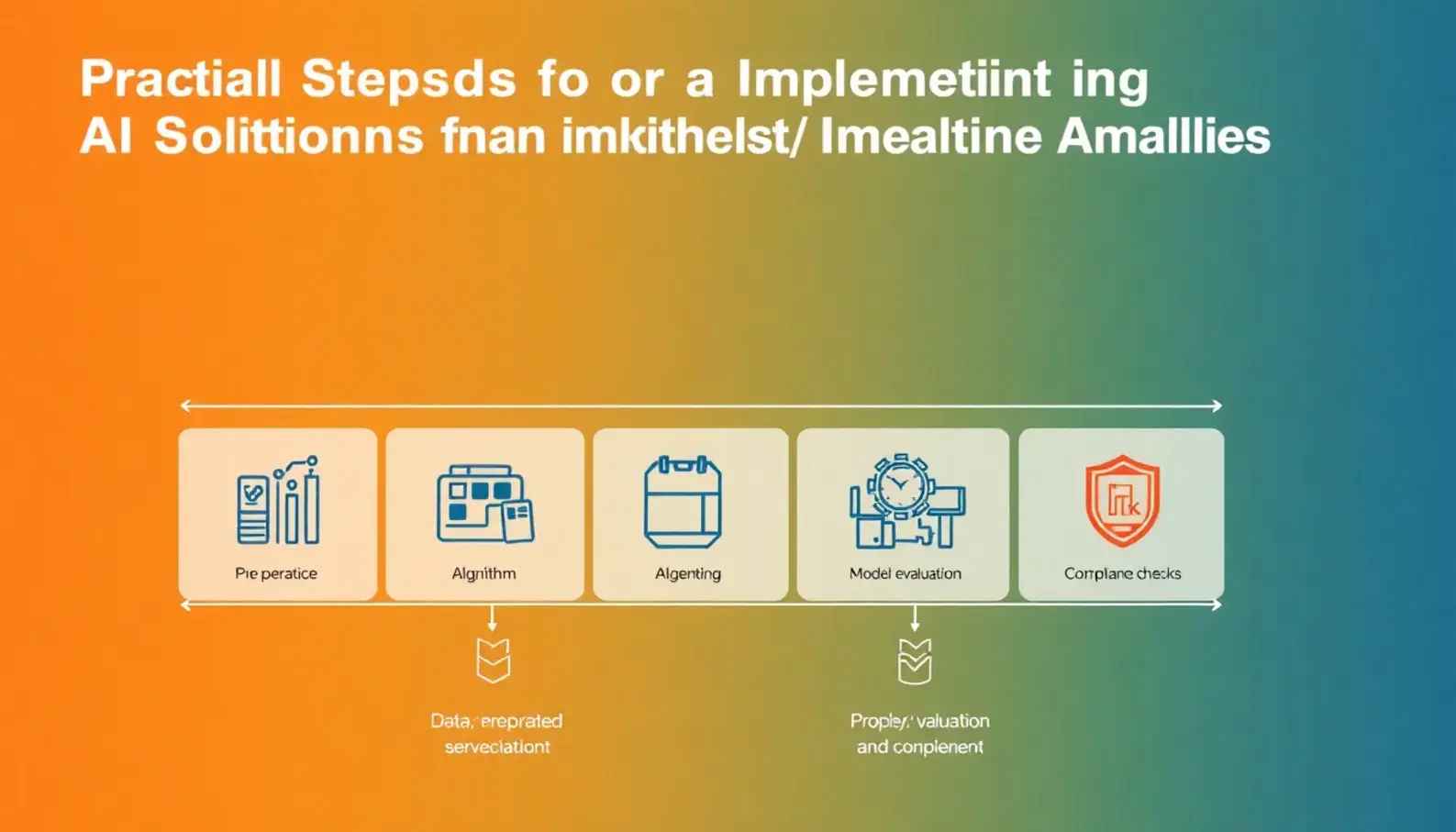
To effectively implement AI-driven solutions in healthcare analytics, it is crucial for analysts and developers to follow a structured approach. This chapter outlines essential actions, from data preparation to the deployment of AI models.
Data Preparation
Data is the lifeblood of any AI solution. In healthcare, the challenge often lies in dealing with vast volumes of data sourced from electronic health records (EHR), lab results, and sensor data. Begin with a data audit to assess the quality and completeness of the data. Identify and address issues like missing values, duplicates, and inconsistencies.
Data Cleaning and Transformation
Focus on cleaning the data to eliminate errors. For instance, standardize units of measurement and ensure consistency across datasets. Use data wrangling tools to automate the transformation process, converting raw data into a usable format. An effective strategy is essential as poor data quality directly impacts model accuracy.
Data Annotation and Labeling
For supervised learning tasks, ensure the data is correctly labeled. This step may require collaboration with domain experts, especially in complex areas like radiology or pathology. Use annotation tools to streamline this process. Proper labeling significantly enhances model performance by providing clear examples during training.
Selecting the Right Algorithm
Choosing an appropriate algorithm is vital in crafting a successful AI solution. This depends on the problem type—be it classification, regression, or clustering.
Algorithm Exploration
Begin with a thorough exploration of machine learning (ML) algorithms suitable for healthcare data. Consider logistic regression for binary outcomes or random forests for handling non-linear relationships. Employ deep learning techniques for more complex tasks, like image analysis in medical imaging.
Benchmarking and Comparison
Conduct benchmarking exercises to compare different models. Utilize cross-validation to ensure that the chosen model generalizes well to new data. Pay particular attention to metrics like accuracy, precision, recall, and F1 score, which are instrumental in assessing model effectiveness in healthcare applications.
Model Evaluation
Once a model is selected, rigorous evaluation is crucial.
Validation Techniques
Use k-fold cross-validation to assess the model’s stability. Divide the dataset into ‘k’ subsets, training the model on ‘k-1’ parts and evaluating it on the remaining subset. This method helps in understanding the model’s behavior across different data splits.
Performance Metrics
Healthcare analytics requires precise evaluation metrics. For example, in a model predicting disease risk, sensitivity might be more critical than overall accuracy. Evaluate on both test and validation datasets to ensure the model’s robustness across unseen data.
Compliance and Ethical Considerations
AI systems in healthcare must comply with both legal and ethical standards.
Regulatory Compliance
Familiarize yourself with relevant regulations such as the Health Insurance Portability and Accountability Act (HIPAA). Ensure patient data is anonymized and that models adhere to data protection laws.
Ethical AI
Focus on building AI systems that are unbiased and equitable. Consider how decisions made by AI could affect diverse patient populations. By implementing fair machine learning practices, analysts can mitigate risks of discriminatory bias.
Deployment and Monitoring
Deploying an AI model is an iterative process that requires continuous monitoring and adjustment.
Model Deployment
Utilize frameworks to streamline the deployment process, ensuring models are easily integrated into existing healthcare systems. Consider deploying models in stages, starting with a limited scope before a full-scale roll-out.
Monitoring and Maintenance
Post-deployment, implement a monitoring system to track the model’s performance over time. Watch for model drift, which occurs when model predictions degrade due to shifts in underlying data patterns. Regularly update models based on new data and insights.
Tools and Frameworks
Selecting the right tools is integral to the efficient development and deployment of AI solutions.
Development Frameworks
Explore open-source machine learning libraries to build your models. These libraries offer robust, well-tested algorithms and are continuously updated by community contributions.
Data Management Platforms
Choose platforms that facilitate data management, enabling seamless data ingestion, processing, and analysis. These tools aid in maintaining data consistency and quality across various stages of the AI development lifecycle.
Conclusion
Implemented correctly, AI solutions in healthcare can lead to significant improvements in patient outcomes, operational efficiency, and overall healthcare delivery. For those interested in exploring further, insights from AI’s impact in other sectors like AI in Business Growth can provide valuable cross-industry learnings. Continual learning and adaptation are key—embracing these steps will empower healthcare analysts and developers to harness AI’s transformative potential.
Final words
AI’s integration into healthcare analytics offers immense potential to enhance patient outcomes and streamline operations. By understanding AI technologies and following practical implementation steps, healthcare analysts and developers can become pioneers in crafting intelligent solutions that address current challenges. The commitment to embracing these tools not only fosters innovation but ultimately leads to improved healthcare services.
Download our Research Report to delve deeper into AI in Healthcare Analytics!
Learn more: https://innoupdates.com
About us
At InnouUpdates, we provide cutting-edge research and tools designed to empower healthcare organizations in harnessing the full potential of AI in analytics. Our comprehensive reports, customized solutions, and expert consultations help healthcare analysts and developers drive impactful changes in their systems and practices.