
The integration of artificial intelligence (AI) in healthcare analytics is unlocking unprecedented opportunities for improving patient outcomes and operational efficiencies. However, with innovation comes the essential challenge of compliance. Entrepreneurs and designers must navigate a complex web of regulations while harnessing the power of data analytics. This requires a sophisticated understanding of compliance frameworks that govern data security and patient privacy. As we delve into this topic, we will explore the nuances of AI in healthcare analytics compliance, pinpoint the challenges, and identify innovative solutions to ensure ethical and responsible use of AI technologies.
Understanding the Landscape of Compliance in AI Healthcare Analytics
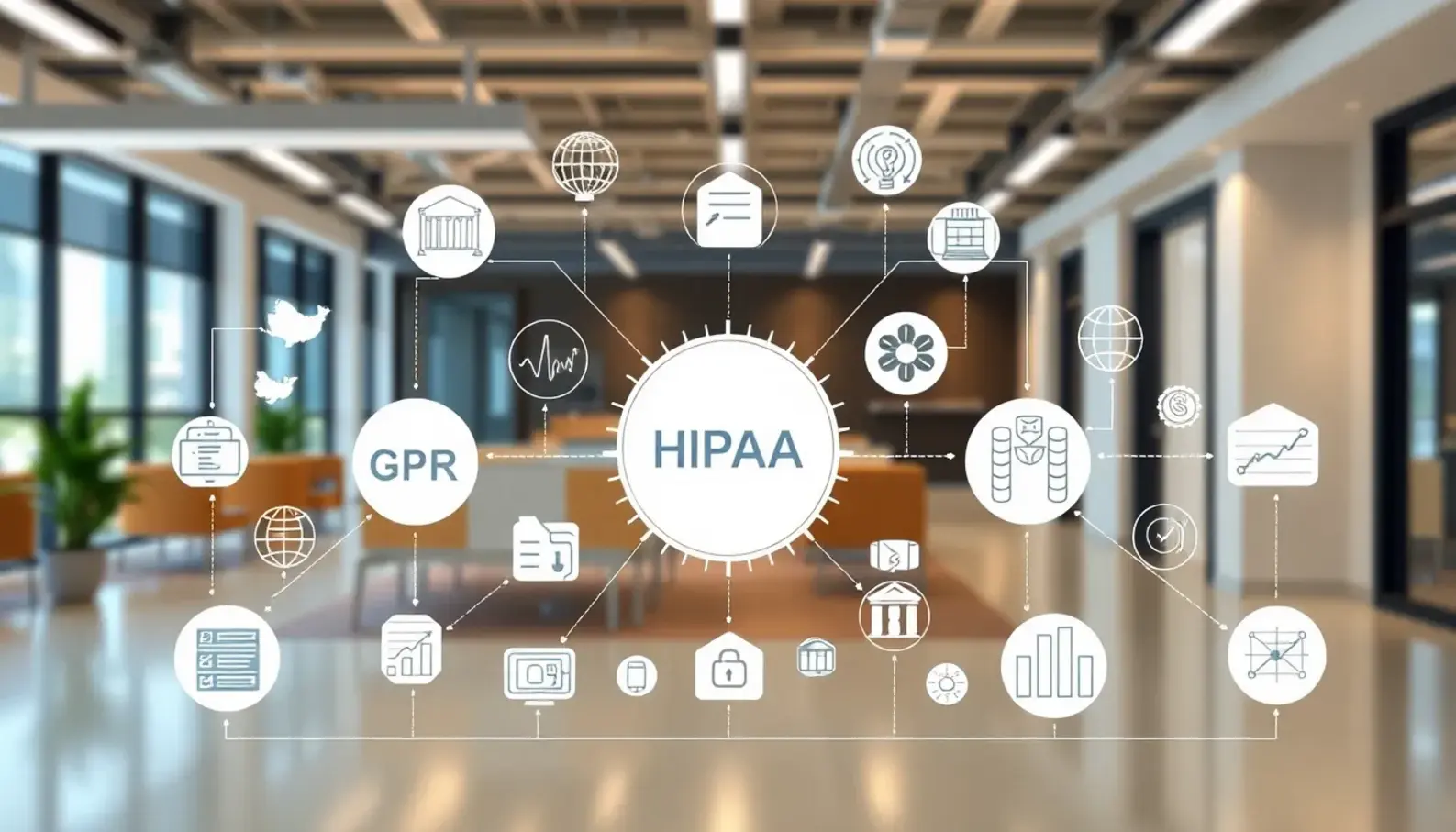
As artificial intelligence continues to transform the healthcare landscape, regulatory compliance becomes a pivotal aspect for entrepreneurs and innovators aiming to harness AI within healthcare analytics. A comprehensive understanding of key regulatory frameworks like the General Data Protection Regulation (GDPR) and the Health Insurance Portability and Accountability Act (HIPAA) is crucial, as these set stringent guidelines for data usage and privacy.
GDPR’s Impact on Healthcare Analytics
In Europe, GDPR stands as a cornerstone regulation, governing how personal data is collected, processed, and stored. Its relevance to AI in healthcare analytics cannot be overstated, as it directly impacts how companies manage vast amounts of health data. GDPR mandates that personal data be processed lawfully, transparently, and for a specific purpose. This implies that AI solutions must embed privacy considerations by design, ensuring that data is handled securely.
Entrepreneurs must navigate several fundamental principles of GDPR: obtaining explicit consent from individuals, ensuring data minimization by collecting only necessary information, and maintaining robust security measures to protect data integrity. Violations can lead to substantial fines, which underscores the necessity for startups to have a thorough compliance strategy.
Consider a healthcare analytics company using AI to predict patient outcomes. To comply with GDPR, this company would need to implement measures that anonymize patient data, thereby minimizing the risk of data breaches. Additionally, they must ensure that their AI models do not infer sensitive information unlawfully, thus avoiding any potential breaches of patient confidentiality.
HIPAA and Its Implications
In the United States, HIPAA presents another pivotal regulatory framework that entrepreneurs must consider. HIPAA aims to protect patient health information (PHI) and applies to covered entities and their business associates. It necessitates that organizations implement physical, administrative, and technical safeguards to ensure the confidentiality, integrity, and availability of PHI.
Entrepreneurs developing AI solutions in the US healthcare domain must ensure compliance with HIPAA by employing encryption, access controls, and audit controls to monitor PHI access. A simple lapse, such as insufficient data encryption, can result in unauthorized access and substantial financial penalties.
For instance, a startup developing an AI-driven medical application must utilize strong encryption standards both in transit and at rest when handling PHI. Furthermore, implementing role-based access to sensitive data is critical to ensuring compliance, limiting data exposure only to authorized personnel.
Aligning Innovations with Compliance
Ensuring alignment with these regulations necessitates a proactive approach. Entrepreneurs should conduct detailed risk assessments and design their solutions with a privacy-first mindset. This not only helps in gaining consumer trust but also aids in avoiding potential regulatory pitfalls.
Moreover, engaging with legal experts specializing in data protection early in the product development phase can provide valuable insights into compliance requirements. These experts can guide the establishment of compliance checklists and protocols, fostering a culture of responsibility and accountability within the organization.
Startups might also consider obtaining certifications such as ISO/IEC 27001, which demonstrates a commitment to best practices in information security. Such certifications can be a competitive differentiator, illustrating a dedication to safeguarding consumer data.
Ethical Considerations and Their Confluence with Legal Frameworks
Beyond legal mandates, ethical considerations play a significant role. The intersection of ethics and regulation in AI is intricate, requiring a balanced approach to innovation and compliance. Ethical AI in healthcare involves ensuring that AI systems do not perpetuate biases and that decisions made by AI are transparent and interpretable.
Ethical considerations demand that AI solutions uphold principles of fairness, accountability, and transparency. These principles are crucial when dealing with sensitive healthcare data, as any form of bias could lead to adverse health outcomes.
For example, if an AI system is trained primarily on data from a particular demographic, the resulting predictions may not be applicable across diverse populations, leading to health disparities. Therefore, diverse and representative data sets must be prioritized to ensure equitable AI healthcare solutions.
Compliance Challenges and Strategies for Startups
One of the common compliance challenges faced by startups is the understanding and interpreting the vast and complex regulatory landscape. Many startups underestimate the resources required to achieve full compliance, leading to potential oversight.
To overcome these challenges, startups should leverage available technology tools designed to facilitate compliance, such as automated compliance monitoring solutions. These technologies assist in continuously tracking compliance metrics and identifying potential areas of non-compliance in real-time.
Additionally, fostering partnerships with established healthcare organizations can provide startups with the opportunity to align their compliance strategies with industry standards. Such collaborations often provide a sandbox environment where startups can test their innovations while mitigating compliance risks.
A compelling example of overcoming compliance challenges can be illustrated through a startup that entered the healthcare analytics market with limited resources. By participating in an accelerator program focused on healthcare technologies, the startup gained access to mentorship and expertise in navigating regulatory complexities. This support enabled them to refine their data protection strategies and achieve HIPAA compliance within a short timeframe.
For more insights on innovations across various sectors, explore discussions on AI ethics in healthcare found in this article.
By understanding and proactively engaging with compliance requirements, entrepreneurs can confidently innovate in the AI healthcare analytics space, ensuring their solutions are both transformative and responsible. Developing a robust framework for compliance will not only protect businesses from regulatory repercussions but also build trust and credibility with consumers and stakeholders alike.
Innovating Beyond Compliance: Strategies for Success

In the complex world of AI healthcare analytics, compliance is not just a requirement but a foundation for innovation. Entrepreneurs must innovate beyond compliance to harness AI in healthcare without sacrificing adherence to regulations. Building a culture of compliance is pivotal, as it fosters an environment where innovation can thrive safely and ethically.
Creating a culture of compliance starts from the top. Leaders in healthcare startups should integrate compliance into the business ethos. Rather than being an afterthought, compliance must be a core focus of strategic planning and development. This mindset should permeate every level of the organization, ensuring that all employees understand the importance of regulatory adherence.
One effective approach is to design compliance training that is engaging and ongoing. This involves more than just checking the boxes; it requires a deep understanding of relevant regulations and their implications for the business. Regularly updated training sessions can help staff stay informed about the latest regulatory changes and how they impact their work.
Technology can play a significant role in facilitating compliance. Leveraging AI solutions can help organizations manage large volumes of data while ensuring compliance with privacy standards like HIPAA. Advanced data governance tools can help classify, monitor, and protect patient data, ensuring that it is used responsibly and in accordance with regulations.
Effective data governance includes strategies for data lineage, metadata management, and ensuring data accuracy. Accurate data is crucial not only for compliance but also for deriving meaningful insights. Implementing robust data management systems that automate data quality checks can reduce the risk of non-compliance and provide assurance to stakeholders about the integrity of the data used in analytics.
Security measures are another critical component of compliance in AI healthcare analytics. Protecting sensitive patient data from breaches must be a top priority. This involves employing state-of-the-art encryption methods, multi-factor authentication, and intrusion detection systems. Proactively identifying and addressing security vulnerabilities can prevent potential breaches and help maintain compliance.
AI technologies also offer opportunities to automate compliance tasks. Compliance automation can reduce the burden on human resources and increase efficiency. From monitoring data access to auditing processes, AI can streamline compliance workflows and identify potential risks before they become issues. However, implementing AI for compliance requires an understanding of its limitations and necessary controls to ensure it functions as intended.
Several companies have successfully implemented compliance strategies that facilitate innovation. For instance, a leading healthcare analytics company has adopted a comprehensive data governance framework that integrates advanced AI tools. This approach has enabled them to scale their operations while maintaining patient privacy and meeting regulatory standards. Their success lies in their proactive adaptation to new compliance requirements and continuous innovation in data management.
As the regulatory landscape continues to evolve, staying ahead of trends is imperative for entrepreneurs. The future of compliance in AI healthcare analytics will likely involve increased scrutiny and new regulations as AI technologies become more pervasive. Entrepreneurs can prepare by staying informed about regulatory updates and actively participating in industry discussions about compliance and ethics.
To navigate future challenges, businesses should invest in adaptive compliance strategies and technologies. Engaging with regulatory bodies and contributing to the development of compliance standards can also offer a proactive way to influence the future regulatory environment.
For more insights on how AI innovations intersect with compliance in various domains, consider exploring AI in Law, which discusses similar themes in a different industry context, offering valuable parallels and strategies that can be adapted to healthcare analytics.
In conclusion, the key to innovating beyond compliance in AI healthcare analytics lies in building a strong compliance culture, leveraging technology to automate and streamline processes, and staying ahead of regulatory trends. By embedding compliance into the very fabric of their organizations, entrepreneurs can unlock the potential of AI in healthcare while safeguarding patient trust and meeting regulatory obligations.
Final words
Navigating compliance in AI healthcare analytics is not merely a regulatory obligation but a strategic advantage for entrepreneurs and innovators. As the healthcare landscape evolves, embracing compliance while fostering innovation will be crucial for success. By understanding regulatory frameworks and adopting innovative strategies, you can ensure not only compliance but also the enhancement of patient care and operational efficiency. Make compliance a cornerstone of your innovation journey.
Sign Up for an insightful Webinar to learn more about AI in healthcare analytics compliance!
Learn more: innoupdates.com
About us
Our company specializes in providing cutting-edge solutions focused on integrating AI technology with a strong foundation of compliance in healthcare analytics. We offer comprehensive services, including consulting on regulatory frameworks, design of compliant data systems, and workshops on ethical AI practices, ensuring your innovations not only succeed but align perfectly with industry regulations.