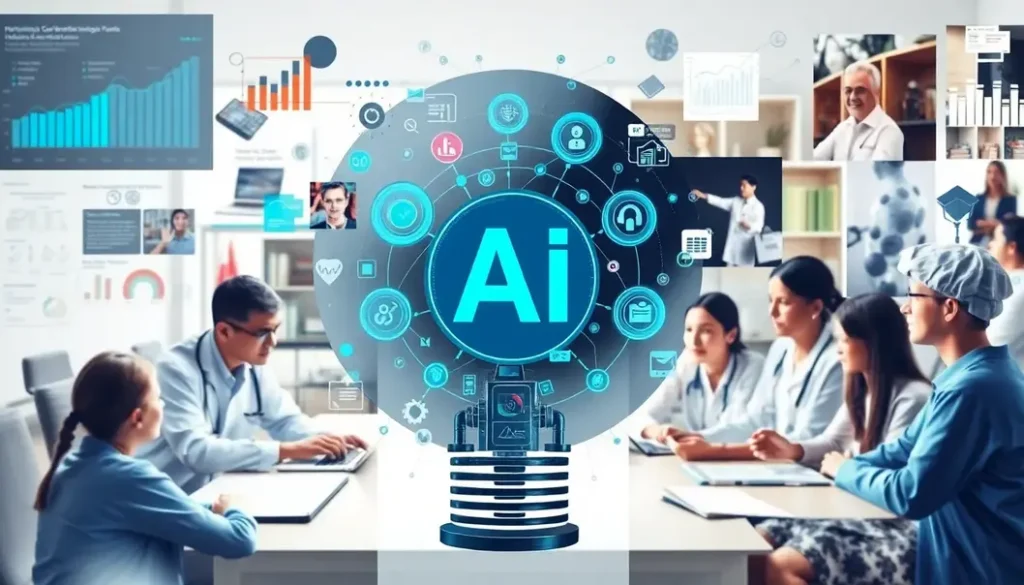
The intersection of artificial intelligence (AI) and healthcare analytics offers a vast landscape for improving patient outcomes. By leveraging data-driven insights, healthcare providers can personalize care plans, optimize treatment protocols, and enhance healthcare delivery systems. This paradigm shift not only benefits patients but also serves stakeholders across the healthcare spectrum—from clinicians to administrators. As educators and leaders, understanding the implications of this integration is vital for informing curriculum development and shaping future healthcare professionals in a landscape increasingly defined by technological advances.
Understanding the AI Revolution in Healthcare

Artificial Intelligence (AI) stands as a transformative force in healthcare, reshaping the landscape of patient diagnosis and treatment. Central to this revolution is the capability of AI to analyze vast amounts of data, driving forward personalized medicine. By leveraging machine learning and natural language processing (NLP), healthcare providers can unlock insights previously hidden within complex datasets.
Machine learning, a subset of AI, enables systems to learn from data patterns and make autonomous decisions. In healthcare, this technology is crucial. Machine learning algorithms sift through millions of patient records, identifying patterns that can predict disease onset before symptoms manifest. These predictive models empower doctors to recommend preventive measures tailored to individual patient needs, shifting from reactive to proactive healthcare.
Natural language processing contributes significantly by interpreting free-text data in medical records and literature. NLP can efficiently extract relevant patient information from clinical notes, making unstructured data usable for analysis. For instance, by parsing doctors’ notes, NLP systems can recognize key symptoms, medications, and treatment responses, creating a holistic view of the patient’s medical history.
A real-world application demonstrating AI’s potential in healthcare is in radiology. AI tools, using image recognition capabilities, analyze radiological images to identify anomalies such as tumors. These tools often detect anomalies with accuracy rivaling or exceeding that of experienced radiologists. In one case study, researchers reported that using AI reduced diagnostic errors in mammography by up to 50%. This not only improves early detection rates but also reduces unnecessary biopsies and patient stress.
Moreover, personalized treatment plans are becoming more attainable with AI-driven analytics. Consider oncology, where treatment efficacy varies widely among individuals. AI algorithms analyze genetic information alongside treatment data to recommend individualized therapy plans. This precision medicine approach ensures that patients receive the most effective treatments with optimal dosages, minimizing adverse effects.
AI’s role extends to managing chronic diseases, like diabetes and heart disease. Wearable devices equipped with AI continuously monitor vital signs, transmitting data for analysis. Machine learning models predict potential health risks based on this data, prompting timely interventions. These technologies enable patients to manage their conditions better, reducing hospitalizations and improving quality of life.
Beyond patient treatment and diagnosis, AI streamlines administrative tasks, easing the burden on healthcare workers. By automating routine work such as scheduling, billing, and managing healthcare records, AI frees up time for medical professionals to focus on patient care. It enhances efficiency across healthcare facilities, leading to cost savings and improved patient satisfaction.
Despite its advantages, integrating AI in healthcare is not without challenges. Ensuring data privacy and addressing ethical concerns are paramount. AI systems must be transparent, with decisions explainable to healthcare professionals and patients alike. Continuous monitoring and updating of AI systems are necessary to integrate the latest advancements and data securely.
One must also consider AI’s potential socioeconomic impact, such as job displacement within healthcare. Balancing the efficiency of AI with the irreplaceable human touch in caregiving is crucial. Training programs focused on equipping healthcare professionals with the skills to work alongside AI technologies can mitigate these concerns.
For more insights on the intersection of AI and wearable health tech, you can explore this detailed discussion on AI wearable tech in health.
As healthcare systems globally strive to deliver patient-centered care, AI’s role becomes ever more integral. By harnessing AI for healthcare analytics, the industry stands at the cusp of unprecedented advancements in personalized medicine. This revolution promises not only to reshape how healthcare is delivered but, fundamentally, to improve patient outcomes in ways once deemed impossible.
Data-Driven Personalization: Tailoring Treatments to Individual Needs

Harnessing the potential of data-driven personalization is transforming healthcare analytics. At the heart of this transformation lies the ability to tailor treatments to individual patients. Predictive analytics and machine learning algorithms are leading this shift by unlocking deep insights from patient data, enabling healthcare professionals to provide more precise care.
Predictive analytics allows practitioners to anticipate health trends in patients by analyzing historical data. By examining patterns and markers unique to each individual, predictive models can forecast potential health issues before they emerge. These capabilities significantly enhance preventive care, moving the focus from reactionary treatments to proactive healthcare.
Machine learning algorithms contribute by processing large volumes of data to discover associations and patterns that might elude human analysts. This capability aids in identifying specific treatment regimens that align with individual patient’s genetic, lifestyle, and environmental factors. Personalized treatment plans have resulted in improved outcomes, especially in areas such as oncology and chronic disease management.
In oncology, for example, personalized treatment regimens have transformed how clinicians approach cancer care. By leveraging genetic data, machine learning algorithms can predict how different patients will respond to specific therapies. This precision helps in selecting the most effective treatment with fewer side effects, significantly enhancing patient quality of life.
Chronic disease management has also seen substantial enhancements through personalized analytics. Diabetes treatment serves as a case study in effective data-driven personalization. Machine learning tools assess a diabetic patient’s historical glucose levels, lifestyle choices, and even genetic markers to personalize a treatment plan. Such tailored approaches, which factor in personal variables, can significantly improve disease management and patient outcomes compared to generalized treatments.
Despite the significant benefits, the adoption of AI in healthcare analytics raises ethical considerations, particularly concerning data privacy and patient consent. Ensuring the confidentiality and secure handling of patient data is paramount, and requires adherence to strict regulatory frameworks. Protecting sensitive health information while enabling personalized care creates a delicate balance that healthcare providers must address.
Patient consent is also critical. Patients should be fully aware of how their data will be used and have the right to control the terms of its use. Clear communication and transparency in obtaining consent are vital in maintaining trust and ensuring ethical standards.
Another ethical concern is the potential for bias in AI algorithms. If not properly addressed, these biases can lead to disparities in treatment recommendations for different demographic groups. Ensuring algorithms are trained on diverse datasets and continuously monitored for bias is crucial to delivering equitable healthcare.
In conclusion, data-driven personalization presents a formidable opportunity to revolutionize healthcare. By tailoring treatments to the individual, predictive analytics and machine learning algorithms enhance patient care significantly. Addressing ethical concerns, such as privacy and bias, ensures that this transformation benefits everyone. As we explore this frontier, the potential for improved healthcare outcomes remains vast, charting a promising course for the future of medical care.
For further exploration of AI’s impact across different industries, including education technology and its personalization strategies, consider reading this insightful article.
Future Prospects: Cultivating AI Literacy in Healthcare Education

As artificial intelligence continues to transform the landscape of healthcare analytics, equipping future healthcare professionals with AI literacy is not just advantageous but essential. The seamless integration of AI into healthcare settings demands a workforce adept in leveraging these technologies for enhanced patient care and operational efficiency. To facilitate this transition, educational institutions must proactively incorporate AI and data analytics into their curricula.
The role of AI in healthcare is multifaceted, ranging from predictive diagnostics to personalized medicine. This dynamic field necessitates a curriculum that combines foundational healthcare knowledge with robust data science training. Schools can start by embedding data analytics modules in existing healthcare programs. These modules can cover key AI concepts, statistical methods, and their practical applications in clinical settings. For instance, students might engage in hands-on projects analyzing real-world healthcare datasets to glean insights on patient outcomes.
Incorporating AI literacy into healthcare education goes beyond merely understanding the technology; it involves fostering critical thinking about ethical implications and biases inherent in AI systems. By guiding students in exploring these complexities, educators can cultivate professionals who not only use AI solutions but do so responsibly and effectively. Crucial to this initiative is interdisciplinary collaboration, where healthcare programs partner with computer science and engineering faculties. These partnerships can lead to comprehensive courses, bridging both technical and clinical aspects.
Current trends in educational innovations highlight the growing importance of collaborations between academic institutions and tech companies. Such partnerships offer students exposure to cutting-edge technologies and real-world challenges through internships, workshops, and collaborative research projects. For example, immersive learning experiences, such as virtual internships with tech firms specializing in healthcare AI solutions, can provide invaluable insights that textbooks alone cannot offer. This approach ensures that students graduate with practical knowledge and the confidence to tackle contemporary healthcare issues with AI tools.
Online learning platforms also play a pivotal role in democratizing AI education. Institutions can leverage these platforms to offer courses that are accessible, flexible, and tailored to student needs. Massive open online courses (MOOCs) on AI in healthcare provide a wide-reaching mechanism for building foundational skills. These offerings allow students from diverse backgrounds to progress at their own pace, ensuring a broader reach and promoting inclusivity.
Moreover, as the field of AI evolves, continuous professional development remains paramount. Healthcare professionals must engage in lifelong learning to stay abreast of technological advancements and emerging AI applications. Professional development programs, including certificate courses and workshops, should be regularly updated to reflect the latest developments in AI. Tailoring these programs for various levels of expertise, from beginners to advanced practitioners, ensures that they remain relevant and impactful.
Furthermore, professional societies and organizations can lead the charge in promoting AI literacy through conferences and seminars. These events foster knowledge exchange and provide healthcare professionals with opportunities to discuss best practices and collaboratively explore innovative solutions. They also serve as a platform to critically evaluate the ethical and regulatory considerations that accompany AI deployment in healthcare settings.
As educational institutions and healthcare organizations endeavor to integrate AI into their frameworks, effective strategies for implementation will be essential. This includes devising metrics for assessing the effectiveness of AI literacy initiatives. Such metrics might encompass both qualitative and quantitative measures, evaluating factors like student engagement, skill proficiency, and the integration of AI into clinical practice.
In conclusion, the future of healthcare will be increasingly intertwined with AI technologies. Therefore, the cultivation of AI literacy within healthcare education is not just a preparation for tomorrow’s challenges but a necessary component of today’s training. By embedding AI education within healthcare curricula and fostering continuous professional development, we can equip healthcare professionals to harness the full potential of AI—ultimately enhancing patient care through data-driven insights. For those interested in the broader educational landscape and its integration with technology, insights into personalized education technologies can offer valuable perspectives.
Final words
AI’s role in healthcare analytics is reshaping personalized patient care and revolutionizing treatment methodologies. As the integration of technology and healthcare deepens, educators and leaders must prioritize AI literacy in curriculum development. This will enable future professionals to harness the power of data analytics effectively, aligning healthcare with patients’ unique needs and outcomes. The continued evolution of AI opens a myriad of possibilities for precision medicine and an enhanced healthcare delivery model.
Try Free Demo
Learn more: https://innoupdates.com
About us
Our offerings include state-of-the-art AI solutions for healthcare analytics, empowering organizations to personalize patient care pathways. We’ve developed advanced platforms that utilize machine learning algorithms to analyze patient data comprehensively, enabling healthcare providers to enhance treatment outcomes and streamline operational efficiencies. We also provide educational resources tailored to healthcare professionals, empowering them with essential AI literacy to navigate this rapidly evolving landscape. Join us in redefining the future of healthcare through data-driven insights and cutting-edge technologies.