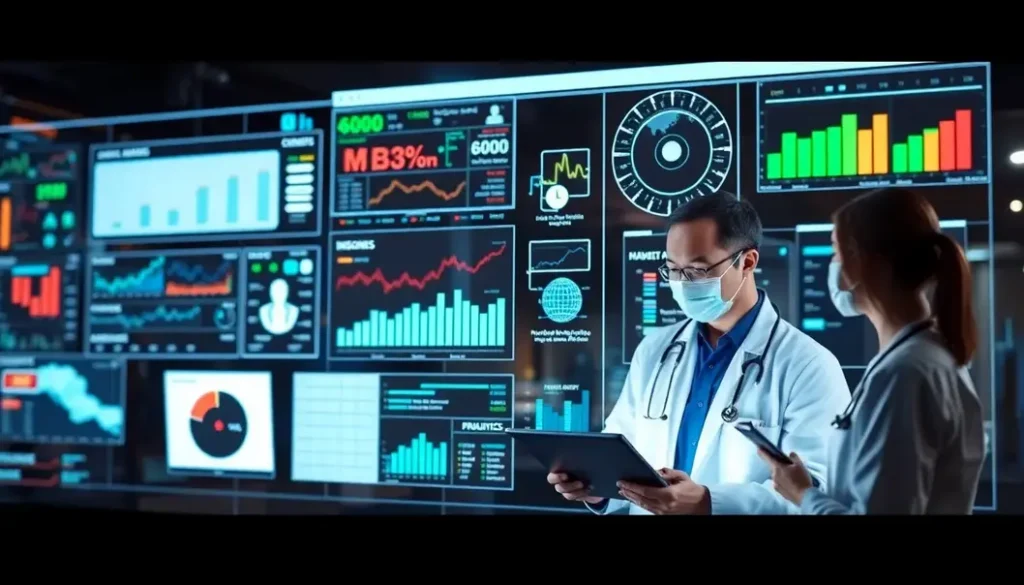
The integration of artificial intelligence within healthcare analytics education is revolutionizing the sector, enhancing the way data is interpreted, visualized, and utilized. As engineers and CTOs, understanding the interplay between AI technologies and healthcare systems becomes crucial. This synergy promises not only improved patient outcomes but also robust operational efficiencies. Organizations that leverage AI can provide healthcare professionals with the tools to derive actionable insights from complex datasets, leading to informed decision-making processes. By equipping themselves with engineering and technical skills tailored to this growing field, leaders can position their teams and institutions at the forefront of healthcare innovation.
The Landscape of AI in Healthcare

Artificial intelligence is revolutionizing the healthcare industry. It is providing transformative changes in data analytics and patient care. Understanding the evolution of AI technologies in this sector and their applications is crucial for engineers and CTOs to harness these advancements effectively.
AI’s entry into healthcare analytics has been marked by the ability to process vast amounts of data with unprecedented speed and accuracy. Traditionally, healthcare data has been siloed, making it difficult to extract meaningful insights. AI, through machine learning and deep learning algorithms, has transformed this landscape by enabling comprehensive data integration and analysis.
One of the primary applications of AI in healthcare analytics is predictive modeling. By analyzing historical data, AI algorithms can predict disease outbreaks, patient admission rates, and even individual patient outcomes. This allows healthcare providers to allocate resources more effectively and ensures that interventions are timely and targeted.
Additionally, AI has made strides in personalized medicine. Machine learning models can analyze genetic data, lifestyle factors, and medical history to recommend personalized treatment plans. This level of customization was unachievable with traditional analytics methods, highlighting AI’s potential to transform patient care.
Another groundbreaking application is found in image and signal processing. AI algorithms can accurately interpret medical images, such as MRIs and CT scans, to detect abnormalities that might be missed by the human eye. This has improved diagnostic accuracy and speed, leading to better patient outcomes.
The impact of AI extends beyond patient care into operational efficiency. AI-driven analytics can optimize hospital operations, such as scheduling and supply chain management, thus reducing costs and improving service delivery. For instance, predictive analytics can forecast patient admission patterns, allowing hospitals to optimize staff schedules and allocate resources efficiently.
As AI technologies evolve, they are reshaping roles within healthcare organizations. Data scientists, machine learning engineers, and data analysts are becoming integral to healthcare teams. These professionals work alongside clinicians to design, implement, and maintain AI-driven models, facilitating a more collaborative approach to healthcare delivery.
Moreover, the role of the CTO is becoming pivotal in integrating AI into healthcare systems. They must understand both the technological and healthcare landscapes to oversee AI integration effectively. This requires leading interdisciplinary teams, managing AI tools, and maintaining ethical standards in AI deployments.
Engineers and CTOs in healthcare must also be vigilant about the ethical implications of AI. Ensuring data privacy, preventing algorithmic bias, and maintaining transparency in AI models are critical aspects that require attention. This is in line with broader discussions on AI ethics, as explored here.
The ongoing evolution of AI in healthcare indicates a robust future that promises further advancements in analytics education. Emerging trends, such as the integration of AI with other technologies like the Internet of Things (IoT) and augmented reality, are poised to revolutionize how healthcare data is collected, processed, and utilized. Engineers and CTOs need to stay abreast of these developments to leverage AI effectively.
In summary, AI is reshaping healthcare analytics and patient care by offering innovative solutions that were previously inconceivable. It is vital for engineers and CTOs to understand this evolving landscape to harness AI’s full potential and prepare for the future of healthcare.
Building the Foundation: AI Skills for Engineers

For engineers venturing into the realm of healthcare analytics, understanding specific AI competencies is paramount. These skills form the backbone of effectively implementing AI solutions in healthcare settings. Engineers must become adept in data science, which involves collecting, managing, and analyzing massive datasets. This discipline requires engineers to deeply engage with complex data structures and extract meaningful insights that inform decision-making.
A strong proficiency in machine learning algorithms is essential. These algorithms enable systems to learn and adapt by identifying patterns within data, leading to improved predictive accuracy and process efficiencies. Engineers should be familiar with a wide variety of algorithms, including supervised, unsupervised, and reinforcement learning techniques, each applicable to different types of healthcare data scenarios.
Additionally, applying statistical methods is crucial. Statistics provide the foundation for understanding variabilities and making well-informed inferences from sampled data. Engineers should practice applying statistical tests, regression models, and hypothesis testing to data interpretation. Delving into probabilistic models can also enhance prediction capabilities, particularly in areas dealing with uncertainty and variation.
Mastering the right tools and technologies can significantly boost an engineer’s capability to implement impactful AI solutions. Programming languages such as Python or R, equipped with extensive libraries for data manipulation and machine learning, should be at the fingertips of any healthcare analytics engineer. Furthermore, familiarity with database management systems and data pipelines is critical to ensure seamless data flow and access across various platforms and departments.
Cloud computing platforms offer robust infrastructures for scalable data storage and high-performance computing, vital for processing large-scale datasets commonly found in healthcare analytics. Engineers should cultivate skills in managing these cloud environments to leverage their full potential.
Moreover, engineers need education pathways that foster these competencies. This might include taking online courses, attending workshops, or participating in hands-on projects that simulate real-world problems. Participation in hackathons or collaborations with interdisciplinary teams can also provide invaluable experience and expose engineers to the nuanced challenges inherent to healthcare data.
Staying updated on emerging trends and technologies is also crucial. The field of AI is rapidly evolving, and engineers must stay informed about the latest innovations to ensure they are integrating the most effective solutions. Encouragement of continuous learning and professional development is, therefore, a necessity for any engineer aiming to excel in healthcare analytics.
Interestingly, the integration of AI has parallels in numerous other sectors as well. For instance, the financial industry employs similar analytical strategies to revolutionize and optimize decision-making processes. Insights from these sectors can sometimes provide unexpected breakthroughs in health analytics. Examples of AI integration in finance offer intriguing comparisons that engineers can learn from.
In essence, the foundation of effective AI integration in healthcare analytics is built on a strong grasp of essential technical skills, including data science, machine learning, and statistical analysis. Proficiency in modern tools and ongoing education are pivotal components that enable engineers to harness these skills efficiently. Equipped with these capabilities, engineers are positioned to significantly contribute to the development and implementation of forward-looking AI solutions in the healthcare sector.
The Future of Healthcare Analytics Education

The evolution of healthcare analytics education through AI technologies is both inevitable and transformative. As AI continues to shape the healthcare industry, it necessitates a parallel evolution in the educational frameworks that prepare engineers and CTOs to navigate this landscape. Such progress hinges on innovating curricula, integrating emerging AI tools, fostering industry partnerships, and embracing lifelong learning practices.
Curriculum Development
Developing a relevant educational curriculum begins with understanding the core competencies required to leverage AI analytics effectively in healthcare. Courses must encompass data science fundamentals, machine learning, and the ethical implications of AI in healthcare. Moreover, incorporating healthcare-specific knowledge, such as patient data management and medical analytics, is essential.
Educators should adopt a modular approach, allowing for adaptability in course content to incorporate cutting-edge AI developments rapidly. Real-world case studies and practical applications should form the backbone of learning, equipping students with the skills to apply theoretical knowledge in dynamic environments.
Emerging AI Tools
Adopting and understanding emerging AI tools is crucial in preparing engineers and CTOs. Educational programs must incorporate training on the latest technologies, such as neural networks, natural language processing, and computer vision, tailored to the healthcare context. This will enable future leaders to design systems that can process complex medical data and derive actionable insights.
Collaborations with AI startups and companies developing healthcare-specific AI solutions can keep curricula updated with the latest innovations. This relationship between academia and industry can help students gain hands-on experience with AI technologies that are actively shaping the healthcare landscape.
Industry Partnerships
Forging partnerships with industry leaders and healthcare institutions is vital to creating a synergetic environment for AI education. These partnerships can offer students internships, access to exclusive tools, and networking opportunities. Moreover, industry feedback can guide the adaptation of curriculums, ensuring they meet the evolving needs of healthcare analytics.
Industry collaborations can also facilitate joint research projects, allowing educational institutions to contribute to real-world problem-solving. Engineers and CTOs who benefit from such initiatives will graduate with a nuanced understanding of AI’s role in healthcare, poised to implement innovative solutions within their organizations.
Importance of Ongoing Education
In the constantly evolving tech landscape, fostering a culture of ongoing education is imperative. Continuous professional development programs that focus on emerging AI trends will help CTOs and engineers stay ahead of the curve. Webinars, workshops, and online courses can offer flexible learning opportunities to accommodate professional schedules.
Moreover, peer networks and professional forums provide platforms for knowledge exchange and discussion of best practices in AI-powered healthcare analytics. By actively participating in these communities, professionals can share insights and strategies, fostering collective growth and innovation.
By leveraging insights from resources like AI in HR Strategies, we can draw parallels in adapting AI trends effectively across sectors. Integrating AI strategies into healthcare analytics education empowers future leaders to harness AI’s potential fully.
Understanding future trends in AI-driven healthcare analytics education ensures that engineers and CTOs are equipped with the skills needed to adapt and excel. By embracing innovation, industry connection, and lifelong learning, educational frameworks can prepare leaders to navigate the complexities of AI in healthcare. This approach not only benefits individual careers but also enhances the capacity of organizations to deliver impactful healthcare solutions.
Final words
AI’s role in healthcare analytics education is pivotal for engineers and CTOs aiming for a more effective healthcare system. By mastering AI technologies, teams can drive significant improvements in patient care and operational workflow efficiency. As the healthcare landscape continues to evolve, professionals equipped with AI competencies will navigate future challenges while leading innovative changes. Preparing for these advancements today ensures a prosperous tomorrow filled with endless possibilities for healthcare analytics.
Download our comprehensive E-Book on AI in Healthcare Analytics Education to enhance your skills and knowledge.
Learn more: https://innoupdates.com
About us
At Innoupdates, we offer cutting-edge resources and training for professionals in healthcare analytics, focusing on AI integration, data analysis, and visualization techniques. Our E-Book covers the latest trends, practical applications, and necessary skills to thrive in an AI-driven landscape. Join us to empower your journey in healthcare innovation.