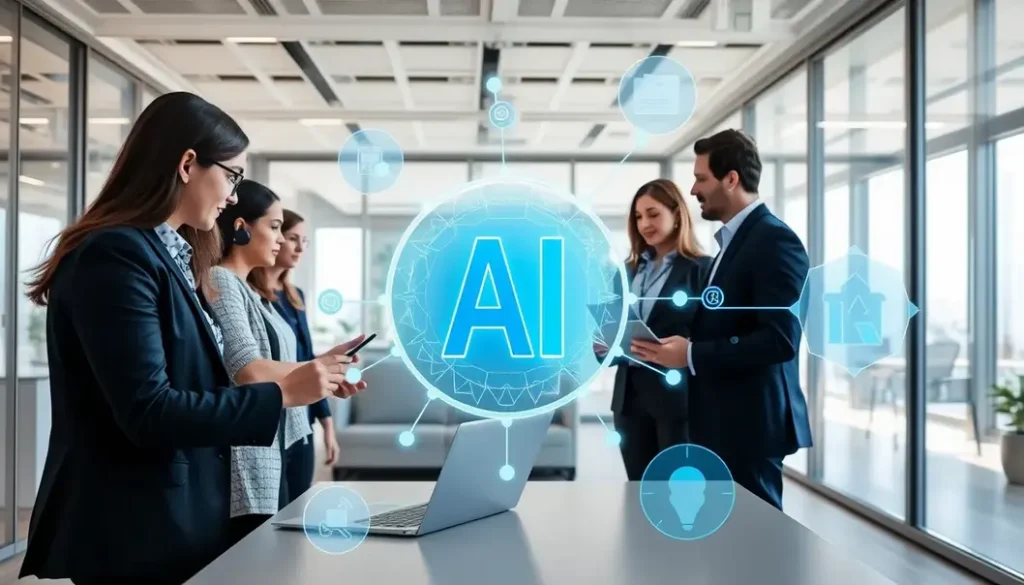
The integration of Artificial Intelligence (AI) technologies in Human Resources is revolutionizing recruitment, offering HR Directors and Hiring Managers the ability to streamline processes and enhance decision-making. By leveraging AI, organizations can not only identify top talent more efficiently but also improve candidate experience and satisfaction. Whether it’s automating repetitive tasks or analyzing vast amounts of data for better hiring predictions, the potential is immense. This article delves into how HR teams can harness AI tools to transform their hiring strategies effectively.
Understanding AI’s Role in Recruitment

Artificial Intelligence sits at the convergence of advanced computing power and rapidly available data, offering transformative possibilities across various sectors. HR, a field marked by its traditionally person-centric nature, increasingly integrates AI to streamline recruitment. By breaking down AI’s applications like resume screening, predictive analytics, and chatbots, we can appreciate its profound impact on recruitment processes.
Enhancing Resume Screening
Recruitment often involves sifting through heaps of resumes, a time-consuming task. AI automates this by deploying algorithms to scan resumes for specific skills, experiences, and qualifications. These algorithms utilize natural language processing (NLP) to understand and parse text in resumes, enabling them to extract relevant information efficiently. AI tools can adapt to evolving role requirements, learning from each screening to enhance accuracy. This not only saves time but also reduces bias, as AI evaluates candidates based entirely on predefined criteria.
Example: An AI-powered tool can filter out resumes lacking specific technical skills, focusing the recruiters’ attention on fitting candidates. Such precision ensures that no candidate with the requisite qualifications is overlooked due to the limitations of human error or bias.
Leveraging Predictive Analytics
Predictive analytics in recruitment utilizes AI to forecast a candidate’s potential success in a given role. By analyzing past hiring data and tracking the career progression of previously hired individuals, AI can predict which candidate attributes correlate with high performance and longevity. These insights inform recruiters, allowing them to prioritize candidates who embody these attributes.
Case in Point: A company might find that employees with certain project management experiences and softer skills like team collaboration consistently outperform others. By focusing on these variables during recruitment, organizations can increase their success in hiring high-performing employees.
Interactive Chatbots in Candidate Engagement
AI chatbots have revolutionized the initial stages of candidate interaction. Acting as front-line communicators, these chatbots handle queries, schedule interviews, and even conduct preliminary screenings. Operating 24/7, they ensure candidates receive timely responses, preventing the loss of interest due to delayed communications.
AI chatbots also conduct basic interviews using scripted questions, which allows them to evaluate a candidate’s fit based on initial interactions. By handling routine inquiries and processes, chatbots free up HR professionals to focus on more complex tasks, enhancing overall efficiency.
The Merits of Data-Driven Hiring
Data’s role in modern recruitment extends beyond mere resume collection. AI’s analytical capabilities allow HR departments to create detailed profiles of optimal candidates. Aggregating data from past hiring decisions, performance metrics, and employee retention rates, AI constructs a robust framework to guide future recruitment strategies. Data-driven approaches enhance decision-making and help identify diversity in candidate pools.
By examining data trends, AI can identify factors that underpin successful hires. This enables recruiters to continuously refine their criteria, ensuring they remain aligned with business needs. Moreover, having data-backed insights reduces the likelihood of subjective errors and helps maintain an objective outlook.
Creating Engaging Hiring Experiences
Beyond efficiency, AI enhances candidate experience—an increasingly vital aspect of recruitment. Personalization, aided by AI, tailors communications to individual candidates, addressing specific interests and concerns. From custom email campaigns to individual feedback, candidates feel valued, enhancing their experience.
Furthermore, AI’s capacity for immediate feedback during processes fosters transparency. Candidates receive instant insights into application statuses or interview results, fostering a sense of engagement and satisfaction, crucial for maintaining a positive employer brand.
Significance of AI-Powered Tools
Incorporating AI into recruitment does not replace human roles it augments them. AI handles mundane, repetitive tasks, allowing HR professionals to focus on more strategic aspects. The effort spent on routine tasks diminishes, enabling HR teams to engage more deeply with candidates and address nuances that technology can’t.
Understanding AI’s capabilities allows HR departments to assess which parts of their recruitment process benefit most from AI, ensuring a more strategic and impactful implementation. Human insight combined with AI’s efficiency nurtures a recruitment environment both optimal in cost and enriched in candidate quality.
For further insights into AI’s transformative impact on business, consider exploring AI in Business Growth.
Overall, AI’s integration in recruitment represents more than just a technological upgrade; it’s a shift towards more informed, precise, and human-centric hiring. By capitalizing on AI’s potential, organizations craft a recruitment strategy tuned to the rhythm of modern business landscapes, capturing the best talent available while engaging deeply with candidates.
Implementing AI Tools for Recruitment Success

Integrating AI tools into HR recruitment processes requires a structured approach to ensure success. First, organizations must conduct a comprehensive assessment of their current recruitment procedures to identify areas where AI can introduce efficiencies. Understanding these needs allows for a strategic selection of AI tools.
When selecting AI recruitment tools, several criteria should guide the decision-making process:
-
Ease of Use: The user interface and user experience should facilitate easy adoption by HR teams. These tools should simplify processes without requiring extensive training.
-
Scalability: The chosen AI solution must support the organization’s growth. Scalable AI tools can adapt to an increasing volume of recruitment tasks and data, providing long-term value.
-
Effectiveness in Identifying Candidate Fit: A critical selection factor is the AI tool’s ability to accurately match candidate skills and attributes to job requirements. This involves evaluating algorithms for bias and ensuring they provide meaningful insights into candidate suitability.
In practice, organizations employing AI in recruitment have seen diverse benefits. A case study of a mid-sized tech company reveals the successful deployment of AI tools. They implemented a solution that automated initial resume screening, resulting in a 50% reduction in time spent on this task. This allowed HR professionals to focus more on personalized candidate engagement and cultural fit assessment.
Another case involves a multinational corporation aiming to improve diversity in hiring processes. By incorporating AI tools sensitive to language processing, they achieved a more inclusive candidate pool and a 25% increase in diversity hires within a year.
Despite these successes, integrating AI tools is not without challenges:
-
Resistance to Change: Employees might resist adopting new technology due to fears of job displacement. Addressing these concerns through workshops and demonstrating AI’s role as an enabler rather than a replacer is crucial.
-
Data Privacy Concerns: AI tools process large amounts of personal data, raising privacy issues. Ensuring compliance with data protection regulations and maintaining transparency about data usage helps mitigate this risk.
-
Bias and Fairness: AI tools are only as unbiased as the data used to train them. It is essential to regularly audit AI processes to identify and correct biases. This maintenance ensures fairness and aligns with regulatory and ethical standards.
Organizations can explore related AI marketing strategies for inspiration on AI application.
Adopting a phased implementation strategy is also beneficial. Start with piloting AI tools in a specific division or for a particular role to measure effectiveness and adaptability. This approach allows for iterative improvements and confidence-building across the organization.
Finally, collaboration and feedback are key. Involve stakeholders at all levels from early stages of AI tool selection, making them active participants in the change process. Regular feedback loops ensure users’ needs are met, improving the overall success of AI integration in recruitment.
Final words
Adopting AI’s capabilities in HR not only streamlines the recruitment process but enriches the overall hiring experience for both candidates and organizations. As companies continue to evolve, those that embrace AI will stand out in attracting and retaining top talent. The future of recruitment lies in harnessing data and technology to make informed decisions.
Try AI Recruitment for Free
Learn more: https://innoupdates.com
About us
Our company specializes in AI-driven recruitment solutions tailored for HR teams. From intuitive applicant tracking systems to data analytics tools, we provide a comprehensive suite of offerings designed to streamline hiring processes, enhance candidate matching, and improve overall recruitment efficacy.