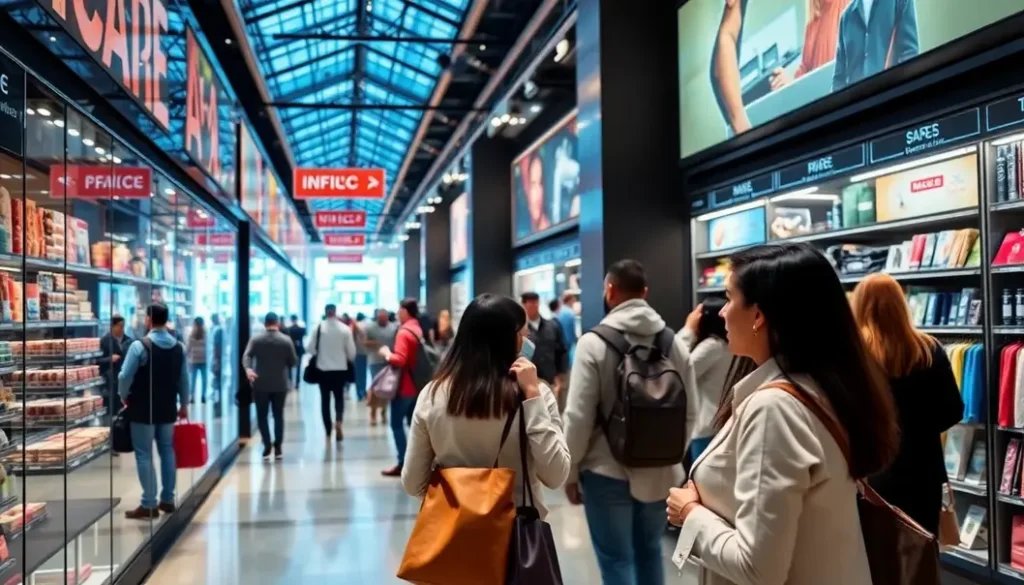
Retailers are increasingly turning to artificial intelligence (AI) to enhance customer experiences through tailored interactions and personalized engagements. AI’s power lies in its ability to analyze vast amounts of data, offering insights into consumer preferences, buying habits, and trends, which can be leveraged to create unique shopping journeys. By effectively implementing AI solutions, retailers can drive sales, improve customer satisfaction, and foster loyalty amidst growing competition in the market. This article delves into how AI is reshaping personalization strategies within the retail landscape, providing valuable insights for specialists and designers seeking a competitive edge.
Understanding the Role of AI in Retail Personalization
The retail landscape is undergoing a digital transformation, driven by the integration of artificial intelligence (AI). This integration reshapes how consumers interact with brands, and how brands respond to consumer needs. AI’s role in personalization stems from its ability to analyze vast amounts of data, recognize patterns, and make informed predictions. This enables retailers to offer highly personalized experiences tailored to individual consumer preferences.
AI technologies such as data analytics and machine learning have become instrumental in understanding consumer behavior. Retailers collect data from various sources, including online interactions, social media, and in-store visits. This data is then processed using AI algorithms, uncovering insights that were previously unreachable. By analyzing past purchases, browsing history, and even social media activity, AI systems can predict what a consumer might want next.
Machine learning, a subset of AI, is particularly significant in driving retail personalization. It involves training algorithms on historical data to make accurate predictions about future actions. For instance, recommendation engines use machine learning to suggest products that meet a specific consumer’s taste. These engines analyze patterns in customer data, continuously improving their accuracy over time. As a result, consumers are presented with products that align closely with their preferences, increasing the likelihood of purchase.
Moreover, AI-driven customer insight tools empower retailers to segment their audience more effectively. By grouping consumers based on similar behaviors and preferences, retailers can tailor marketing campaigns and product offerings. This segmentation ensures that each consumer receives personalized communication, enhancing engagement and loyalty. Advanced sentiment analysis, powered by AI, interprets social media comments, product reviews, and customer feedback. This deeper understanding of consumer sentiment enables brands to refine their strategies, offering products and services that resonate with their audience.
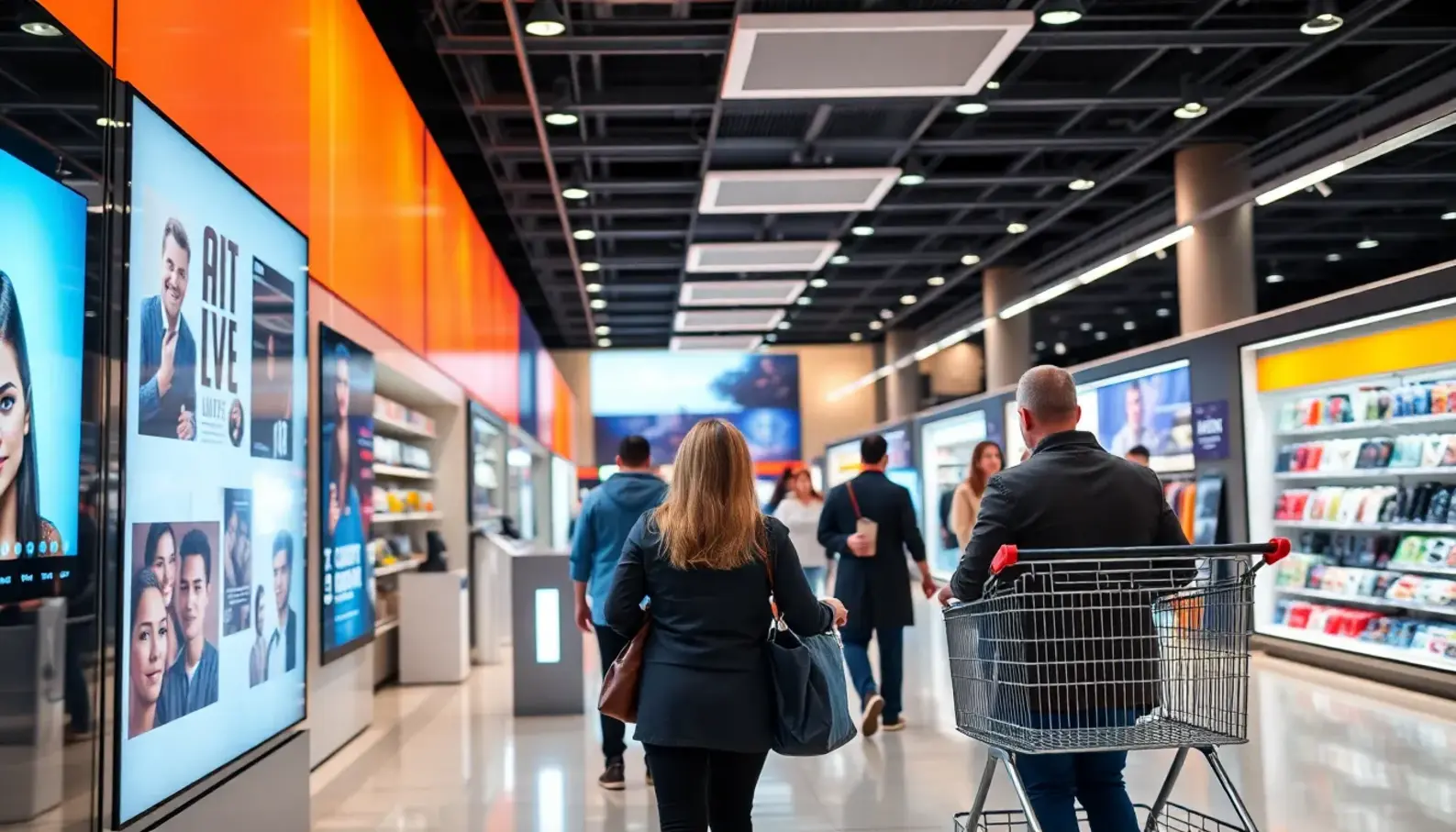
In retail environments, the implementation of AI is not limited to online platforms. Smart stores leverage AI to offer seamless, personalized shopping experiences in physical spaces as well. For instance, AI-enabled kiosks and digital displays can recommend products based on a shopper’s profile or past purchases. AI can also optimize inventory management, ensuring that popular items are always in stock, which enhances customer satisfaction.
Successful integration of AI into retail requires a strategic approach. Retailers must evaluate their existing systems and identify areas where AI can add value. Integrating AI can involve partnerships with technology providers to develop customized solutions that meet specific retail needs. Retailers must also focus on data governance and privacy, ensuring consumers’ personal information is protected.
Consider the case of a leading global retailer that successfully harnessed AI to transform its customer experience. The retailer used AI algorithms to analyze customer data, discovering unique purchasing patterns among its diverse customer base. By implementing AI-driven recommendation engines, the retailer increased sales by offering personalized suggestions to shoppers. This transformation was further supported by AI-powered chatbots on their website, providing real-time assistance and tailored responses to consumer inquiries.
Another example is a renowned fashion brand that utilized AI to enhance its in-store experience. Smart mirrors equipped with AI technology allowed customers to virtually try on clothing without visiting a fitting room. These mirrors offered style recommendations based on current fashion trends and the shopper’s previous purchases. By seamlessly integrating AI into its physical stores, the fashion brand improved conversion rates and customer satisfaction.
Furthermore, AI applications in retail are continually evolving, with emerging technologies promising even greater personalization potential. Innovations such as agentic AI, explored further on platforms like Innoudates, illustrate the potential for AI systems that can autonomously make decisions and adapt to consumer preferences in real-time. Such advancements may redefine how retailers approach customer engagement.
The role of AI in retail personalization is transformative, enabling brands to meet and exceed consumer expectations through data-driven insights. As AI technologies advance, the possibilities for creating unique retail experiences expand, setting the stage for a future where personalization isn’t just an option, but a standard. Retailers willing to embrace AI stand to benefit from increased consumer loyalty, improved sales, and a stronger competitive edge.
Designing Personalized Customer Journeys with AI

In the realm of retail, designing personalized customer journeys begins with a deep understanding of user experience (UX) design principles and the nuanced integration of AI-driven insights. The goal is not simply to enhance sales but to create an interconnected web of engagement, emotional resonance, and brand loyalty.
Personalization driven by AI relies on vast datasets, which include personal preferences, browsing history, and transaction patterns. By leveraging these elements, retailers can create a unique and compelling experience for each customer. AI algorithms analyze these datasets to predict what products might interest a customer and the ideal timing for these propositions to occur. This anticipatory design ensures that user engagement is both seamless and relevant.
Emotional connections are fundamental in the digital age, where choices abound and loyalty is transient. From a UX perspective, crafting these connections involves deploying AI-driven analytics that dive deep into not only what triggers a positive response in customers but also what might lead to inconvenience or frustration. Through continuous learning capabilities inherent in AI, feedback loops are established. These loops consist of interactions gathered through user behavior, which are then fed back into the system to refine recommendations and interactions continuously.
Imagine a shopping platform where each customer’s homepage is uniquely curated. This customization is not about rearranging a few menu items but offering a completely individualized experience. AI identifies patterns in customer behavior, such as preferred categories or shopping times, allowing websites or apps to dynamically modify their interfaces. This alignment between predicted customer desires and interface presentation is key to enhancing engagement. A customer greeted by tailored content feels valued, which strengthens their connection to the brand.
Optimization of user interfaces through AI can also incorporate more subtle design choices—such as color schemes or layout arrangements—suited to different customer profiles. By analyzing data on how users interact with various interfaces, AI can suggest modifications that align with specific audience segments’ preferences. This attention to detail ensures a smoother navigation experience and a stronger bond between customer and platform.
Maintaining a balance between automation and the human touch is another vital aspect. While AI can recommend, analyze, and modify, infusing human creativity and empathy into design processes enriches the user’s journey. AI can suggest empathetic design changes—such as offering a supportive message during checkout issues or celebrating milestones with personalized messages—thus humanizing what might otherwise seem automated or cold interactions.
Feedback loops also play a critical role in continuous improvement. Harnessing feedback involves more than observing transactional data; it extends to behavioral analytics and customer satisfaction surveys. Innovations such as sentiment analysis can gauge the emotional tone of customer interactions, providing insights into areas needing enhancement. For instance, by combining AI analytics with biometric travel tech insights, one can derive holistic customer profiles, capturing preferences from various dimensions of interaction.
Moreover, AI’s role in crafting customer journeys extends beyond the immediate interaction. It empowers organizations to forecast future needs and develop strategies to address them proactively. Predictive analytics enable businesses to go beyond just meeting current demands by suggesting desirable pathways that align with evolving consumer interests.
Internal linkages with concepts such as agentic AI insights, which emphasizes autonomy and interactive adaptability in AI systems, allow for the development of self-sufficient platforms. These platforms can adapt in real-time to changing user dynamics while providing consistent and personalized interactions.
In conclusion, designing personalized customer journeys with AI requires a delicate but calculated intertwining of technological prowess and human empathy. As retailers continue to leverage AI capabilities, they can create more dynamic, engaging, and emotionally resonant experiences that foster enduring brand loyalty.
Final words
The integration of AI into retail experience personalization is not simply a trend but a paradigm shift that empowers retailers to create more meaningful connections with their customers. By leveraging data analytics, machine learning, and intuitive design principles, businesses can offer customized interactions that enhance satisfaction and loyalty. Retailers ready to embrace AI stand to gain a competitive advantage in an ever-evolving market landscape, making the effort to personalize every touchpoint an essential aspect of modern retail strategy.
Unlock your potential in AI-driven retail! Register for our workshop today.
Learn more: https://innoupdates.com
About us
Our company offers comprehensive workshops designed for specialists and designers looking to deepen their understanding of AI in retail. Participants will gain hands-on experience and insights into integrating AI into their retail strategies, optimizing customer experience, and leveraging data-driven decision-making. Join our sessions to stay at the forefront of retail innovation!