
The landscape of data privacy is continually evolving, marked by increasing regulations designed to protect consumer information. Organizations face significant challenges in navigating this complex environment. Legal teams and businesses play crucial roles in ensuring compliance and safeguarding sensitive data. As regulatory frameworks grow in number and complexity, understanding the implications of these laws is vital. This article delves into the current data privacy regulations, offering insights on effective compliance strategies and operational best practices that will not only mitigate legal risks but also enhance customer trust.
Understanding the Data Privacy Regulatory Landscape
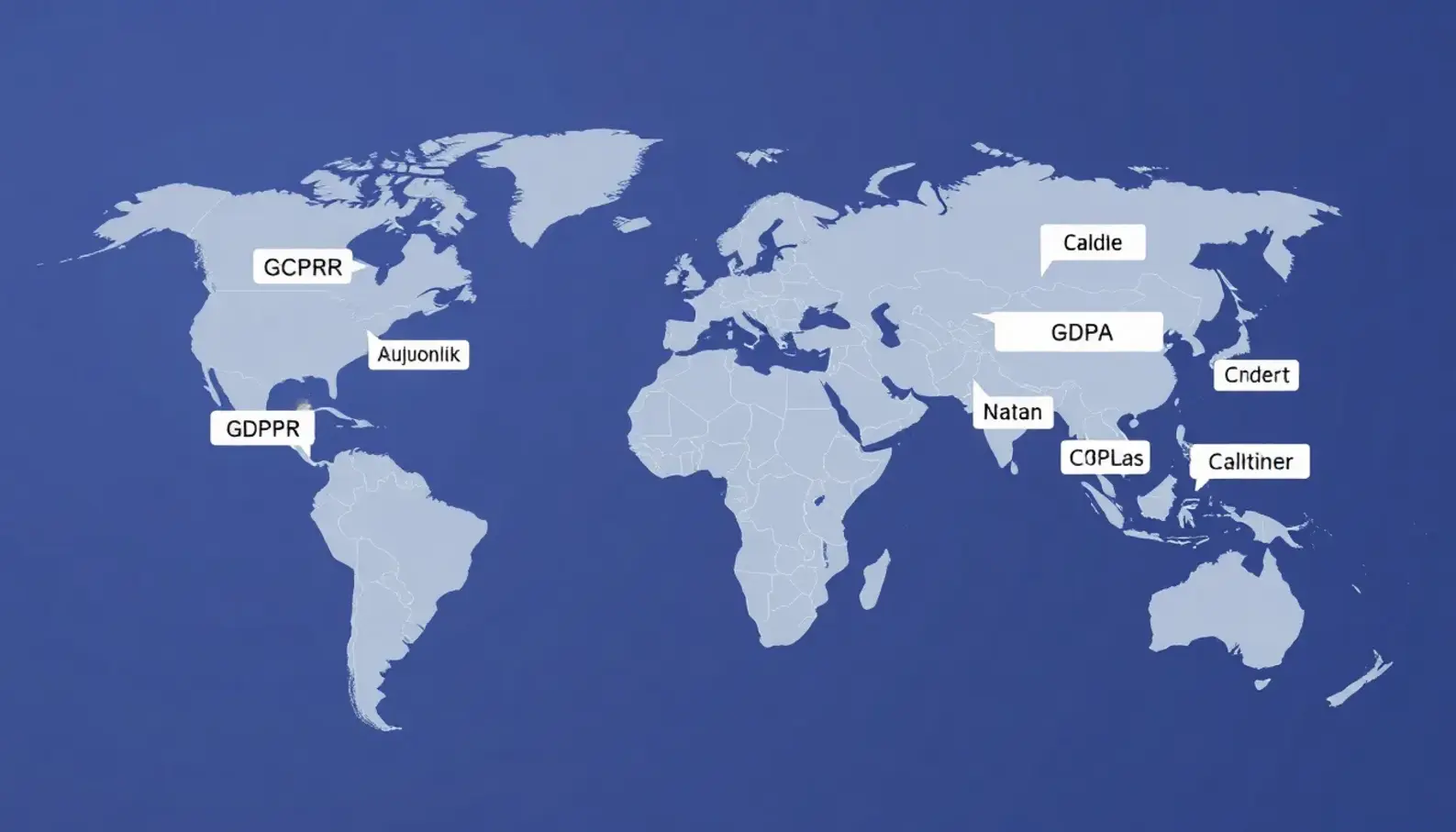
Navigating the landscape of data privacy regulations is a vital task for legal teams and businesses, requiring a deep understanding of various global frameworks. These frameworks often feature distinct requirements and nuances, challenging companies to maintain compliance across differing jurisdictions. At the core of these challenges lie several major legislative frameworks, most notably the General Data Protection Regulation (GDPR) in Europe and the California Consumer Privacy Act (CCPA).
The GDPR stands out as a comprehensive and stringent data privacy law that sets a high bar for data protection globally. It applies to all businesses that process personal data of EU residents, regardless of the company’s location. The regulation emphasizes principles such as transparency, data minimization, and accountability, imposing significant legal obligations on organizations. Companies must obtain explicit consent from individuals for data processing, ensure data is only used for specified purposes, and respect the rights of data subjects, including access and erasure rights. The potential penalties for non-compliance can be severe, with fines reaching up to 4% of the company’s annual global turnover or 20 million euros, whichever is higher. This has driven companies worldwide to improve their data protection practices dramatically.
In contrast, the CCPA establishes a slightly different set of criteria, focusing on enhancing privacy rights for California consumers. It emphasizes transparency and control, allowing consumers to know what personal data is being collected, why it’s being collected, and with whom it is shared. Companies must provide at least two methods for consumers to request this information and must respond to these requests within 45 days. Unlike the GDPR’s broad consent requirements, the CCPA allows consumers to opt-out of data selling, giving them more control over their data. Non-compliance can result in substantial penalties, including fines of up to $7,500 per intentional violation, raising the stakes for companies handling Californian data.
Beyond the GDPR and CCPA, other significant frameworks exist across the globe, creating a patchwork of regulations that companies must navigate. Japan’s Act on the Protection of Personal Information (APPI), Brazil’s General Data Protection Law (LGPD), and Canada’s Personal Information Protection and Electronic Documents Act (PIPEDA) offer additional layers of complexity. Each comes with its own set of regulatory requirements and principles, such as user consent, data accuracy, and security measures. Companies operating across multiple jurisdictions must strategize to accommodate these diverse requirements while ensuring data integrity and user trust.
The complexity increases when businesses deal with the cross-border transfer of data, leading to concerns about inconsistent data protection mechanisms. For instance, the GDPR imposes strict conditions for transfers of personal data outside the EU to ensure an equivalent level of data protection is maintained. This necessitates implementing Standard Contractual Clauses (SCCs) or other legally acceptable transfer mechanisms. Similarly, the CCPA includes stipulations regarding data sharing with third parties, mandating clear contractual agreements to safeguard consumer privacy.
To succeed in this intricate environment, organizations should adopt a comprehensive data protection strategy. Legal and compliance teams need to regularly audit and update their data protection policies and practices. Establishing robust data governance frameworks is crucial, including data mapping to understand what data is held, where it is stored, and how it flows across borders. This assists in ensuring data processing activities are compliant with applicable regulations and helps in identifying potential risks.
The stakes of non-compliance extend beyond financial penalties. Reputational damage from breaches or violations can erode consumer trust, leading to long-term business consequences. As consumers become more privacy-conscious, demonstrating a commitment to robust data protection can offer a competitive advantage. Therefore, understanding the nuances of these legislative frameworks is not merely a legal obligation but a critical component of a company’s trust strategy.
As businesses incorporate innovative technologies like AI into their operations, they must remain vigilant about data privacy implications. Employing AI responsibly can enhance privacy compliance by automating data processing and ensuring accuracy in handling consumer data. For insight into AI and its role in business growth, you might explore Generative AI Ethics, which covers ethical considerations for businesses leveraging AI.
Navigating the data privacy regulatory landscape requires a proactive approach, one where businesses continuously adapt to evolving legal standards and emerging privacy trends. By understanding the foundational principles and obligations behind major data privacy laws, organizations can better align their operational practices with legal and ethical expectations, paving the way for a more secure and trustworthy digital environment.
Implementing Data Privacy Compliance Strategies

Incorporating data privacy compliance strategies into an organization necessitates a structured approach, one that not only aligns with regulatory standards but also promotes a culture of privacy within the business. Key elements include conducting comprehensive risk assessments, establishing robust data handling policies, ensuring consistent employee training, and leveraging technology to protect data.
Risk Assessments
Conducting a risk assessment is the foundational step in any privacy compliance strategy. Businesses must identify which data they collect, where it is stored, who accesses it, and the purpose of its use. This assessment will help spotlight vulnerabilities and potential non-compliance risks, leading to the crafting of targeted strategies. A thorough risk assessment requires looking at both the technical and human elements of data handling. Regular updates to this assessment ensure that the organization adapts to new threats and regulatory changes.
Crafting Data Handling Policies
Once risks are identified, creating effective data handling policies is crucial. These policies should be comprehensive and cover the entire lifecycle of the data—from collection and processing to storage and deletion. Clearly define roles and responsibilities for data management within the organization. Policies should detail how data is encrypted, the retention period for different types of data, and how data breaches are handled. Regular audits of these policies enforce adherence and highlight areas needing improvement.
Employee Training
Employees are at the forefront of data handling; hence, they must be equipped with the knowledge to maintain compliance. Training sessions should be mandatory and continual, reflecting any updates in regulations or internal policies. Training should cover the principles of data protection, such as data minimization and purpose limitation. Encourage an open line of communication where employees feel comfortable reporting potential data privacy issues without fear of reprisal.
Using Technology for Data Protection
Technology plays a pivotal role in safeguarding data. Employ advanced encryption methods to protect data both in transit and at rest. Consider deploying automated solutions that detect suspicious activities and potential data breaches. Regular penetration testing can gauge the effectiveness of these technological safeguards and uncover any weak spots before they are exploited. Implementing privacy-enhancing technologies (PETs) further bolsters data protection efforts.
Maintaining Compliance Amidst Changing Regulations
Regulatory landscapes are constantly evolving. Maintaining compliance requires vigilant monitoring of both local and international data privacy laws. Organizations should appoint a dedicated data protection officer (DPO) or compliance officer who stays abreast of new regulations. Forming alliances with external legal advisors can also provide insights into emerging legislative frameworks. Additionally, businesses should establish flexible policies that can swiftly adapt to new regulations without the need for a complete overhaul.
Cultivating a Culture of Privacy
Ultimately, compliance should be seen as an organization-wide initiative rather than a task for the legal or IT department alone. Cultivating a privacy-centric culture involves integrating data privacy into the business’s core values. Encourage leadership to voice the importance of data privacy and showcase their commitment through the adoption of ethical data practices. Transparency with customers about how their data is used and protected also fosters trust and solidifies the organization’s reputation.
For more insights on innovative approaches to safeguarding privacy and integrating compliance in the legal framework, you may find the article on AI in law at AI in Law particularly enlightening.
By taking these actionable steps, organizations can not only ensure compliance with current data privacy regulations but also position themselves as leaders in the ethically responsible management of data.
Final words
Navigating the intricacies of data privacy regulations is not merely a legal obligation but a strategic advantage in today’s marketplace. Organizations that embrace compliance not only mitigate risks but also build stronger relationships with customers based on trust. As regulations evolve, staying informed and proactive will ensure that businesses remain ahead of the compliance curve.
Ensure Data Privacy Compliance
Learn more: https://innoupdates.com
About us
Our Data Privacy Consulting Services provide tailored solutions to help organizations navigate the complex landscape of data privacy regulations, ensuring compliance and promoting best practices for effective data management.