
Cloud native development emphasizes creating applications that fully leverage the advantages of cloud computing. This approach involves utilizing microservices, containers, and continuous integration and delivery (CI/CD) practices. By prioritizing scalability, flexibility, and resilience, developers can more efficiently deploy applications and respond to the evolving demands of their users. Understanding the essential components of cloud native development is key for modern software developers and DevOps teams looking to enhance operational efficiency and deliver high-quality applications faster.
Core Principles of Cloud Native Development
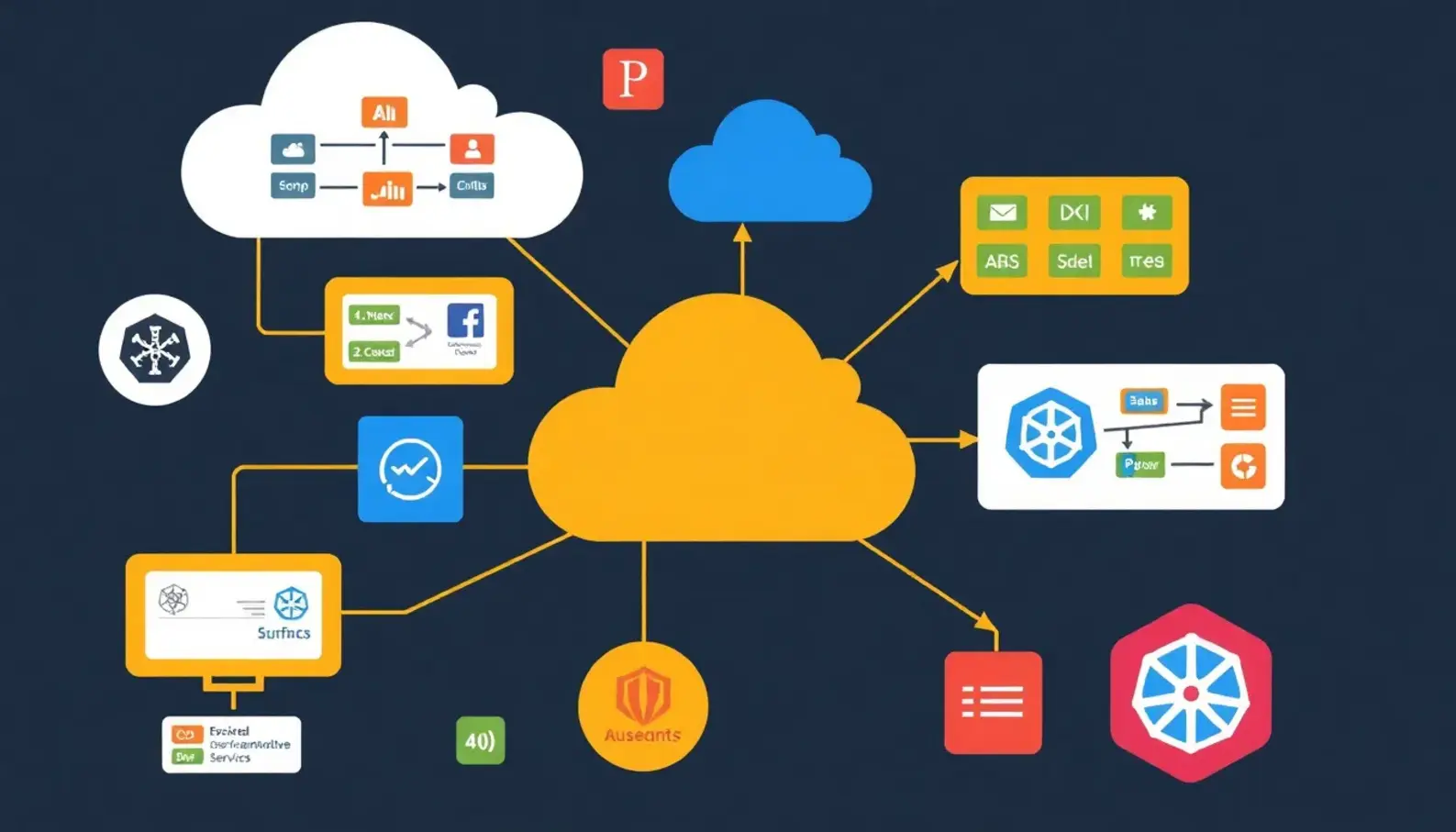
The era of cloud native development represents a significant evolution in software architecture, geared towards leveraging the full potential of cloud computing. At its heart, cloud native development embodies several core principles, designed to enhance scalability, resilience, and efficiency. These principles include microservices, containers, and orchestration, each playing a pivotal role in redefining how applications are conceptualized and executed.
Microservices form the backbone of cloud native architecture. This approach breaks down applications into small, independent services that can be developed, deployed, and scaled individually. The shift away from monolithic structures to microservices allows developers to focus on specific functionality, leading to more agile and adaptable software solutions. Each microservice can be fine-tuned to optimize resource usage and performance, thus contributing significantly to scalability and resilience.
Embracing microservices requires a paradigm shift in how applications are designed and managed. Developers need to adopt a service-oriented mindset, where each microservice communicates with others through well-defined APIs. This decoupling not only enhances fault tolerance but also facilitates the continuous integration and continuous deployment (CI/CD) processes, empowering teams to release updates and features rapidly without disrupting the entire application.
Containers are another cornerstone of cloud native development, providing a lightweight and portable way to package applications and their dependencies. By containerizing applications, developers ensure that software runs consistently across diverse environments, from development to testing and production. Containers maximize resource utilization by enabling applications to share the same operating system kernel, resulting in reduced overhead compared to traditional virtual machines.
To fully exploit the capabilities of containers, developers must focus on building immutable infrastructure. This means that once a container image is created, it doesn’t change. Any updates or patches result in a new container version, guaranteeing consistency and reproducibility. The immutable nature of containers aligns perfectly with CI/CD practices, allowing for seamless rollbacks and version control.
Orchestration completes the triad of cloud native principles, managing containerized applications at scale. With orchestration tools, developers can automate the deployment, scaling, and operation of application containers across clusters of machines. These tools handle tasks such as service discovery, load balancing, and self-healing, which are critical for maintaining application uptime and performance.
One significant advantage of orchestration is autoscaling, where the platform automatically adjusts the number of running containers based on real-time application demand. This capability ensures optimal resource allocation, reducing costs and improving application responsiveness during peak traffic. Additionally, orchestration tools offer abstractions like namespaces and network policies, enhancing security and efficiency when managing complex systems.
Developers embarking on cloud native development should consider some practical strategies to implement these principles effectively in their workflows. Begin by deconstructing monolithic applications into microservices incrementally. This iterative process allows teams to manage complexity more easily and ensures a gradual and manageable transition.
Next, consistently utilize containers for all parts of the application lifecycle, from development to deployment. Leverage container registries to store and distribute container images, ensuring that every team member works from the same baseline. This consistency is crucial not only for collaboration but also for minimizing discrepancies between development and production environments.
Incorporate orchestration frameworks early in the development cycle to benefit from their automation and management capabilities. Design applications to be stateless whenever possible, enabling easier scaling and recovery. Stateless services do not store session information between requests, simplifying operations and resource management.
Security must be a central consideration throughout cloud native development. Given the distributed and dynamic nature of microservices and containers, implement robust security measures such as zero-trust networking, where each service must authenticate communication requests. Encrypting data both in transit and at rest, applying least privilege access controls, and regularly scanning for vulnerabilities are essential best practices.
Finally, foster a culture of monitoring and observability. Implement comprehensive logging and alerting systems to gain insights into application performance and user behavior. These insights are invaluable for identifying performance bottlenecks, potential failures, and opportunities for optimization.
As cloud native development continues to evolve, its core principles will undeniably remain central to building scalable, resilient, and efficient applications. By embracing microservices, containers, and orchestration, developers can unlock the full power of cloud computing, driving innovation and growth. Developers seeking further insights into cutting-edge technologies might explore the transformative potential of ambient intelligence in the near future, as it aligns with and enhances the cloud native philosophy.
Implementing CI/CD for Cloud Native Applications
Continuous Integration and Continuous Delivery (CI/CD) are cornerstones in the realm of cloud native development. They underpin the rapid development and deployment cycles essential for modern applications. By automating testing and deployment processes, CI/CD allows for increased reliability and speed in delivering scalable applications.
Automation in testing and deployment reduces human error and enhances system resilience. Emphasizing automated testing, developers can catch defects early, ensuring any code alterations align with the expected functionality. Automated testing frameworks often encompass unit tests, integration tests, and end-to-end tests. By leveraging a combination of these, teams can confidently validate their code against a multitude of scenarios, minimizing disruptive issues in production.
In a cloud native context, the deployment process is frequently decoupled from code releases. This decoupling enables techniques like blue-green deployments and canary releases. Blue-green deployments involve running two identical production environments where one serves production traffic and the other, called the ‘blue’ environment, is idle. By toggling traffic between these environments, downtime is minimized during releases. Conversely, canary releases employ gradual feature rollouts to a subset of users. This controlled exposure allows for real-time feedback before committing changes to the broader audience.
Integrating CI/CD in cloud native applications requires selecting the right tools and platforms that facilitate seamless workflows. Tools must support containerization and orchestration technologies, such as Kubernetes. Efficient CI/CD pipelines invoke automated workflows that manage source code version control, build automation, test execution, and deployment automation. These workflows can be set to trigger on code changes in the shared repository, ensuring immediate integration of team contributions.
To ensure system reliability, it is crucial to incorporate infrastructure as code (IaC) alongside CI/CD practices. IaC automates provisioning, making the environment replicable and consistent. As infrastructures evolve, managing infrastructure through code ensures that changes are version-controlled and testable, similar to software codebases.
Scalability in cloud native applications gets a boost from CI/CD by supporting microservices architecture. Microservices decouple functionalities, allowing modular development and independent deployment pipelines. This autonomy accelerates the release cycles of individual services without impacting overall application stability. In this microservices environment, CI/CD not only supports continuous delivery but also ensures that each service meets its specified requirements before integration.
Aligning CI/CD with container orchestration maximizes application robustness and agility. Containers encapsulate app components and their dependencies, promoting consistent behavior across various environments. These containers, orchestrated through platforms, streamline the deployment of applications in scalable configurations, making them resilient to workload shifts.
Furthermore, monitoring and observability play crucial roles. Implementing monitoring tools within the CI/CD pipeline provides real-time insights into system performance, while observability ensures prompt detection of anomalies. Effective notifications and metrics help teams respond swiftly to potential bottlenecks or failures, maintaining consistent application performance.
Adopting continuous security practices within the CI/CD methodology, known as DevSecOps, enhances the security posture of cloud native applications. Integrating security measures early in the development process ensures vulnerabilities are identified and mitigated promptly, reducing risk exposure.
In conclusion, implementing CI/CD within cloud native development not only accelerates delivery speed but also enhances system reliability and scalability. By harnessing the best practices and tools, teams can effectively address the complexities of modern application deployment, paving the way for consistent innovation.
Final words
Combining principles of cloud native development with CI/CD practices provides a robust framework for building more resilient, scalable applications. This approach not only enhances operational efficiencies but also allows developers to respond rapidly to changes in user requirements. Embracing these methodologies ensures your applications can thrive in the dynamic landscape of modern cloud environments.
Build Scalable Applications
Learn more: https://innoupdates.com
About us
Our company offers comprehensive Cloud Native Development Tools designed to facilitate the creation and deployment of cloud-first applications. By leveraging our solutions, developers can harness the full potential of cloud environments, ensuring faster delivery, enhanced scalability, and greater flexibility in software development.