
The integration of machine learning in healthcare presents groundbreaking opportunities for hospitals and medical researchers. As vast amounts of health data continue to cascade in a digital age, machine learning algorithms can analyze complex datasets, revealing patterns that human intellect may overlook. This technological marriage aims to enhance diagnostic accuracy, optimize treatment plans, and streamline healthcare processes—from administrative duties to clinical practices. By embedding machine learning into the healthcare fabric, organizations can achieve personalized patient care and harness predictive analytics for improved patient outcomes.
Unlocking Potential: Machine Learning Applications in Hospitals
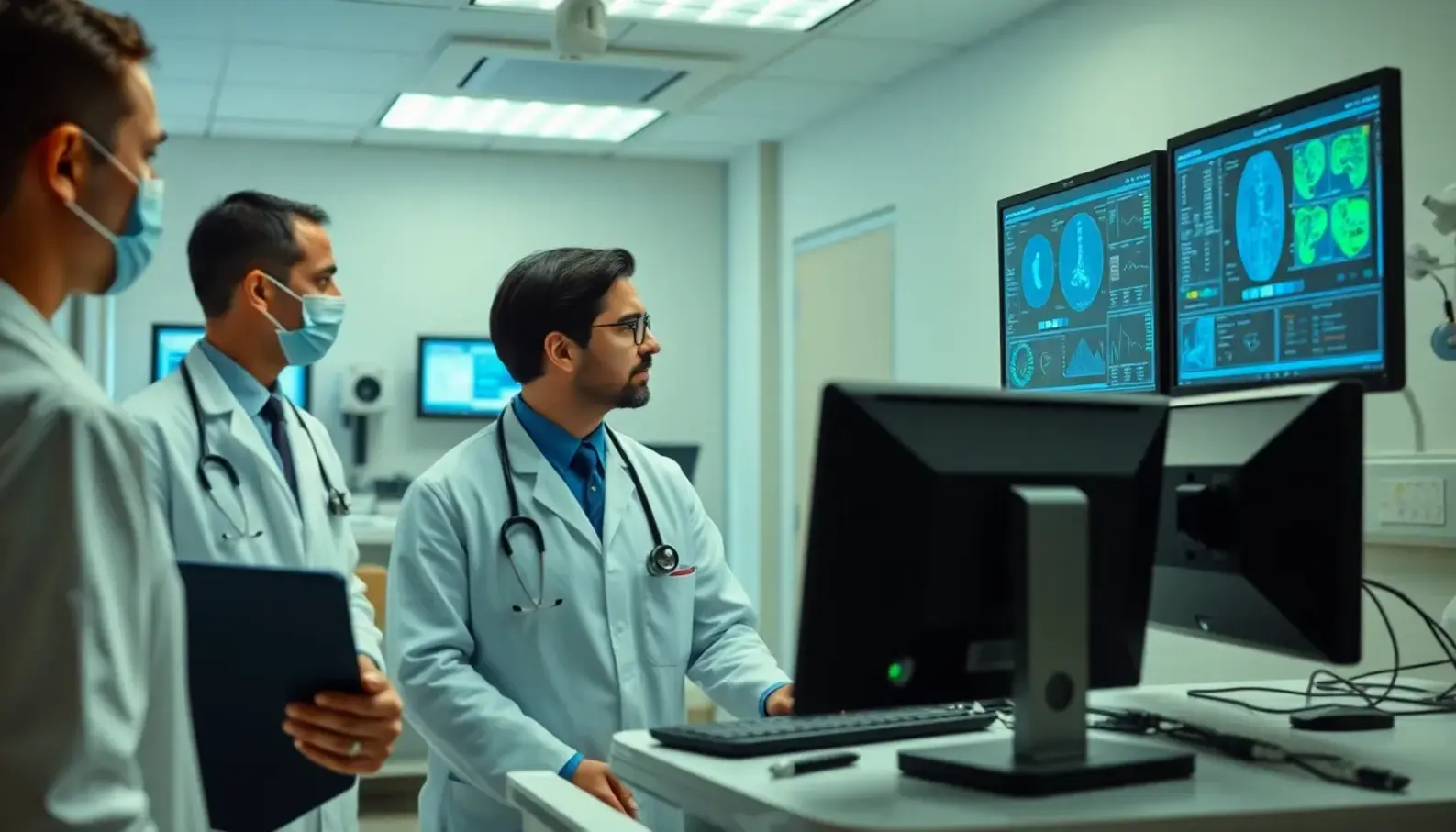
Harnessing machine learning (ML) in hospitals promises to reshape healthcare delivery, unleashing unparalleled innovation in both patient care and clinical research. From predictive analytics to operational streamlining, ML algorithms are paving the way for substantial improvements in clinical and administrative settings.
One of the transformative applications of machine learning in hospitals is predictive analytics. By analyzing vast amounts of patient data, predictive models can foresee potential health outcomes and events, such as sepsis or cardiac arrests, before they occur. For instance, a study at a major U.S. hospital implemented an ML-based system that reduced emergency admissions for sepsis by 30%. These algorithms, often based on neural networks or decision trees, mine patient records and real-time data feeds to alert clinicians of high-risk scenarios in advance, naturally leading to proactive intervention and improved patient outcomes.
Treatment optimization is another frontier where machine learning has demonstrated considerable promise. Hospitals have begun to integrate reinforcement learning algorithms to tailor treatment plans per individual patient profiles. These algorithms analyze treatments’ efficacy on similar conditions and personal health data, recommending adjustments to medication dosages and therapy regimens. A European hospital network utilizing ML for oncology treatment optimization saw a 20% increase in positive patient outcomes in less than a year.
Operational efficiency within hospitals is equally paramount. ML assists in optimizing resource allocation, thereby promptly matching staff and facilities with patient needs. Natural language processing (NLP) models streamline administrative tasks, such as patient triaging and discharge planning, reducing wait times and enhancing bed turnover rates. For instance, NLP algorithms have decreased the average wait time in emergency departments by 35% by automating preliminary assessments.
In radiology, machine learning is enhancing diagnostic accuracy. Deep learning models, capable of pattern recognition beyond human capacity, assist radiologists in identifying minute details in imaging that may indicate early disease stages. A well-known case involved an ML system correctly detecting 95% of breast cancer cases in a dataset, outperforming traditional methods and radiologists alone. Such systems not only boost diagnostic accuracy but also alleviate radiologists’ workload, permitting more focus on complex cases.
Similarly, in pathology, ML’s role is growing exponentially. Algorithms trained on histopathological images can differentiate between benign and malignant tissues with high precision. Integrating machine learning in pathology departments has proven to cut diagnostic errors significantly. For example, implementation in a pathology lab led to a reduction in misdiagnosis rates by 40%, underscoring the potential for ML to ensure more reliable and quicker pathology results.
Personalized medicine, perhaps the most exciting application of ML in hospitals, is being revolutionized. Algorithms analyze genetic, environmental, and lifestyle data to craft personalized treatment plans. In one case study, patients receiving ML-guided personalized therapies experienced fewer adverse drug reactions, with a 25% increase in therapy effectiveness metrics. Such personalization not only improves patient experiences but also reduces hospital costs by minimizing trial-and-error treatments.
Hospitals are also witnessing ML’s impact in administrative processes and decision-making frameworks. For instance, predictive algorithms accurately forecast hospital admission rates, enabling better staff scheduling and inventory management. Hospital administration can thereby improve service delivery and reduce operational costs, addressing issues like staffing shortages and supply chain disruptions preemptively.
To embrace machine learning applications successfully, hospitals must also consider the necessary infrastructure and data security measures. The integration of ML systems demands substantial computational resources and robust cybersecurity protocols to protect sensitive patient data. Successful case studies emphasize the need for comprehensive data governance frameworks and collaboration with data science experts to ensure compliance with regulatory standards.
The broad implications of machine learning in hospital settings culminate in more than just enhanced patient care. They signal a paradigm shift towards data-driven, evidence-based healthcare. Improved diagnostic capabilities and treatment personalization both reflect this shift. Hospitals that successfully adopt ML will see not only enhanced patient outcomes but also streamlined operations and reduced costs.
To explore further on the convergence of technology and patient care, consider visiting AI Wearable Tech in Health, which delves into how innovations extend beyond hospitals, offering new frontiers in personal health monitoring and management.
Overall, as machine learning continues to permeate hospital environments, it is crucial for both technologists and healthcare professionals to foster collaborative efforts. These efforts will work towards harnessing its full potential, addressing both challenges and opportunities in this evolving landscape.
Innovative Research: Advancing Healthcare through Machine Learning

Machine learning plays a pivotal role in transforming medical research by enhancing clinical trials, drug discovery, and epidemiology. The ability to analyze vast amounts of data swiftly and accurately is integral to these advancements. Machine learning algorithms can identify patterns and correlations that traditionally might have taken years for a human to realize.
In clinical trials, machine learning is used to optimize trial design, improve patient selection, and monitor adherence to protocols. Algorithms analyze past clinical data to identify patients most likely to benefit from a new treatment, thereby reducing trial costs and increasing success rates. Natural Language Processing (NLP) helps in understanding the vast amount of unstructured data available in patient records and research papers, providing deeper insights into patient responses and outcomes.
When it comes to drug discovery, machine learning algorithms excel at identifying promising drug candidates. Traditional methods involve significant time and financial investment, often with high rates of failure. However, by leveraging machine learning, researchers can predict the potential of chemical compounds to become effective drugs more efficiently. One approach involves the use of deep learning techniques for virtual screening, where models predict the interaction between drugs and biological targets with high accuracy. This has accelerated the pace at which new compounds are tested and brought to clinical trial phases.
Machine learning is also revolutionizing epidemiology by providing tools for real-time disease outbreak prediction and monitoring. Algorithms process data from various sources, such as social media, travel patterns, and climate conditions, to anticipate outbreaks. Predictive modeling can inform public health strategies, allowing for proactive interventions that reduce the spread of disease and allocate resources effectively.
A notable case study involves the collaboration between a major technology firm and a leading research university, where machine learning was applied to extensive patient datasets to uncover patterns in heart disease. By integrating data from electronic health records, genomic information, and lifestyle factors, researchers developed predictive models that significantly improved diagnosis and personalized treatment plans.
Despite these promising advancements, ethical considerations must be addressed. Data privacy remains a paramount concern as researchers work with sensitive health information. Ensuring that data anonymization techniques are robust is essential to maintain patient confidentiality. Bias in algorithms also poses a challenge. If datasets used to train machine learning models do not adequately represent diverse populations, the outcomes may unfairly disadvantage certain groups. Ongoing efforts are needed to ensure that datasets are equitable and algorithms are transparent and accountable.
Looking ahead, the integration of emerging technologies such as hybrid computing strategies is expected to further advance machine learning capabilities in healthcare research. Hybrid computing allows for the seamless combination of quantum and classical computational resources, providing unparalleled processing power. This innovation has the potential to address complex healthcare challenges that current technologies struggle to solve. For more insights on these technological integrations, you can explore this article on hybrid computing strategies.
Machine learning continues to reshape healthcare research, opening doors to innovations that were previously unimaginable. By combining technical sophistication with ethical sensitivity, the future of medical research appears both promising and responsible.
Final words
As hospitals and researchers embrace machine learning technologies, they stand to unlock unprecedented advancements in healthcare delivery and research initiatives. The potential to personalize patient care and improve operational efficiencies is immense. By evaluating and implementing these innovative solutions, healthcare organizations can enhance diagnostic capabilities, streamline workflows, and ultimately provide better outcomes for patients. The ongoing commitment to leveraging technology in healthcare will pave the way for a healthier future.
Improve Patient Care with Machine Learning
Learn more: https://innoupdates.com
About us
Healthcare AI Solutions that empower hospitals and medical researchers to enhance patient care and operational efficiency through innovative machine learning technology. Our comprehensive suite includes predictive analytics, automated diagnostic tools, and advanced research capabilities—all designed to meet the unique challenges of the healthcare sector.