
Urban planning is evolving through the integration of artificial intelligence, which offers city planners and urban designers innovative tools to improve decision-making processes. With enhanced data analytics, predictive modeling, and community engagement strategies powered by AI, cities can evolve more sustainably and responsively. Understanding how to effectively utilize AI technology will reshape urban environments, enabling planners to anticipate challenges and streamline development processes while promoting livability and resilience.
AI-Driven Data Analytics: A New Era in Urban Insights

Urban planning has always faced the complex challenge of integrating diverse data streams to understand and improve city environments. AI-driven data analytics brings unprecedented potential, enabling city planners to harness insights from immense data sets sourced from environmental sensors, social media, internet of things (IoT) devices, and mobility patterns. This represents a transformative opportunity for creating data-rich cities that respond dynamically to urban challenges.
AI’s ability to analyze large datasets allows for a granular understanding of the urban ecosystem. Sensors embedded throughout a city collect extensive data on noise levels, air quality, temperature, and lighting. AI algorithms process this data in near-real-time, offering insights into the environmental health of a city. For example, fluctuations in air quality can be monitored and managed, allowing for rapid responses to pollution spikes.
Social media offers another valuable source of real-time data. Citizens frequently report issues related to infrastructure, safety concerns, and general urban experiences via social platforms. AI-powered sentiment analysis tools process this qualitative data, providing a barometer of public sentiment and highlighting areas of concern that might not be immediately apparent via traditional data collection methods. Such insights enable city planners to respond to citizen needs more promptly and flexibly.
Tracing mobility patterns through AI-led analytics also enhances the urban planning landscape. Movement data from vehicles, public transport, pedestrians, and bicycles create a comprehensive map of urban mobility. By analyzing these patterns, planners can identify traffic congestion hotspots and optimize transportation infrastructure, promoting more efficient and sustainable urban mobility systems. Additionally, AI-driven simulations can predict the impact of proposed changes, helping to identify the most effective interventions.
One of the key advantages of AI in urban data analytics is the ability to integrate disparate data sources. Traditional urban planning often struggles with siloed data that limits comprehensive understanding. AI breaks down these silos, fostering a holistic view of the urban environment. This integration enables dynamic models that take into account multiple variables, leading to more robust decision-making processes that consider the complex interdependencies within city systems.
Real-time data interpretation is essential for addressing ongoing urban challenges. Traffic congestion, often cited as a major urban nuisance, can be addressed through AI-driven analytics by enabling adaptive traffic light systems that respond to current conditions. Similarly, resources such as energy and water can be dynamically allocated based on real-time demand, optimizing consumption and minimizing waste.
AI also empowers planners by visualizing future scenarios. Through machine learning algorithms, planners can predict urban growth patterns, helping cities prepare for increased population density and its resulting demands. Predictive analytics simulate potential developments in commercial and residential landscapes, allowing cities to plan infrastructure and services accordingly.
Despite the benefits, leveraging AI-driven analytics for urban planning must be approached with careful consideration of ethical implications. Privacy concerns arise with the massive data collection required, and ensuring data security is paramount. Implementing AI responsibly necessitates transparency about data use and maintaining rigorous data governance frameworks.
Moreover, it’s crucial that AI systems in urban analytics are developed with inclusivity in mind. These systems should reflect diverse perspectives within the population to ensure equitable urban development. Engaging with community stakeholders and embedding local knowledge in AI systems fosters trust and ensures the technology meets the community’s real-world needs.
AI-driven urban planning also faces hurdles in data quality and accessibility. Not all cities have equal access to cutting-edge technology infrastructure, creating disparities in AI implementation capabilities. Bridging this gap requires collaborative efforts between local governments, tech organizations, and global agencies to democratize access to AI tools, fostering uniform urban advancements across geographies.
To maximize the impact of AI in urban planning, integrating AI strategies across various domains within the city infrastructure is crucial. For example, exploring advancements in AI in business growth can offer insights on incorporating economic development strategies that align with urban growth. Cross-pollination of AI success stories across different fields can bolster urban planning projects.
In conclusion, AI-driven data analytics heralds a new era in urban insights, equipping city planners with powerful tools to elevate urban environments. By harnessing AI’s capabilities to integrate, analyze, and visualize complex datasets, urban planners can craft more intelligent, responsive, and sustainable cities that align with evolving community needs and environmental challenges.
Community Engagement and Predictive Modeling
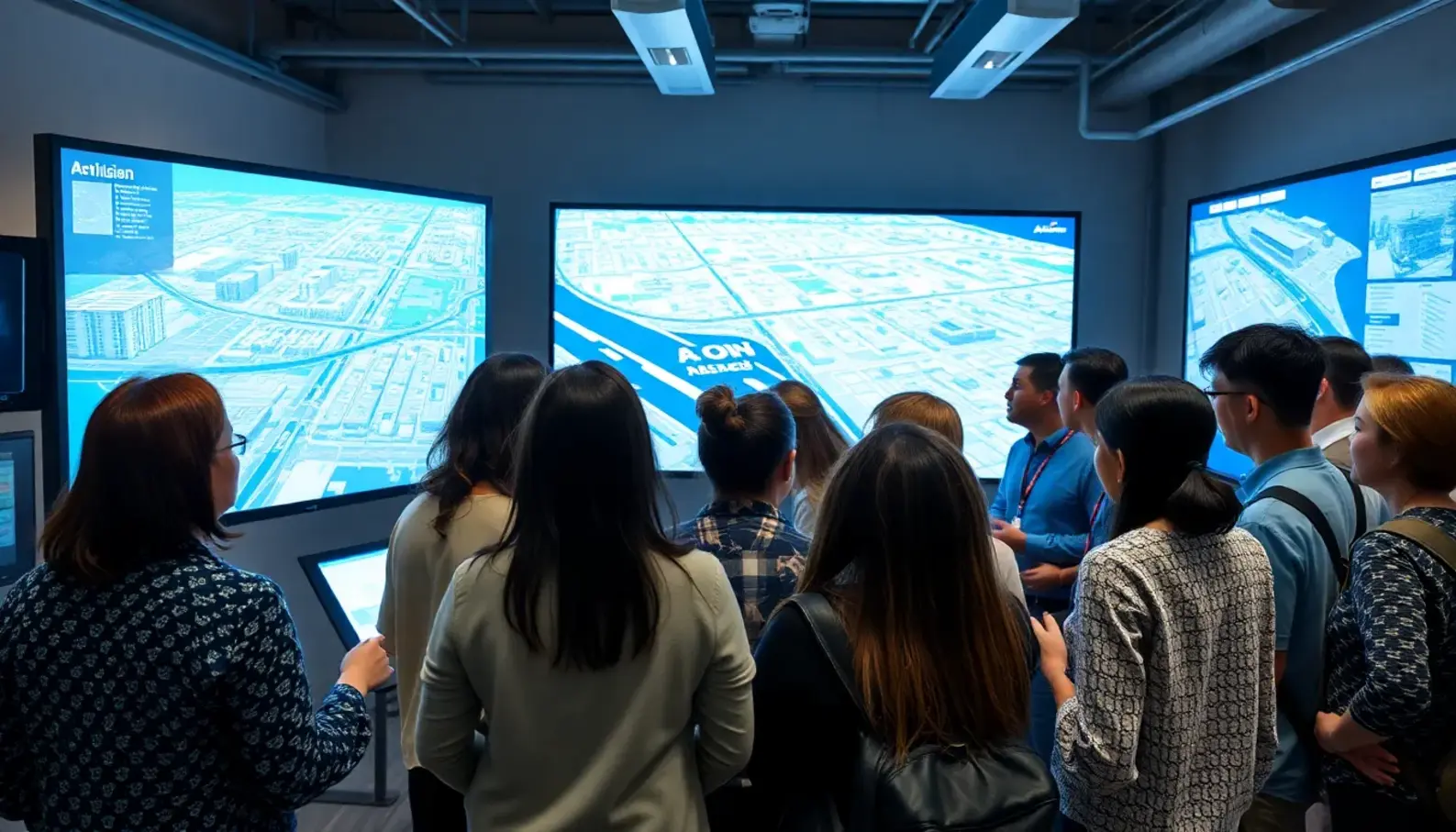
Community engagement in urban planning has traditionally involved public meetings, workshops, and surveys, providing a direct channel for citizens to voice their opinions. However, these methods, while valuable, can be limited in scope and reach. Artificial Intelligence (AI) offers transformative potential by enhancing these engagement efforts through advanced predictive modeling and simulation tools.
Predictive modeling allows urban planners to create detailed simulations of future cityscapes. These models enable planners to visualize the impacts of potential urban development scenarios, allowing for data-driven analyses of proposed changes. By projecting these scenarios, communities can better understand future developments, facilitating more informed discussions and inputs.
For example, planners can simulate the impact of a new public transport system on traffic patterns and air quality before any concrete is poured. This preemptive visualization helps stakeholders foresee the long-term benefits and drawbacks of such projects. As a result, public forums shift from hypothetical debates to data-backed discussions, enhancing the quality of community feedback.
AI’s role extends to gathering insights efficiently. Advanced machine learning algorithms can process vast amounts of feedback from varied sources, such as social media, online polls, and public comment sections. This ensures that planners receive a holistic understanding of community concerns, desires, and priorities, fostering a more inclusive dialogue where diverse voices are truly considered.
To integrate public feedback effectively, it’s crucial that AI models are adaptable and unbiased. Training these models involves ensuring demographic representation in the data, avoiding historical biases that may skew priorities away from marginalized communities. Transparent AI processes enable citizens to trust that their inputs are being valued correctly, promoting trust and collaboration.
Simulation tools, powered by AI, can illustrate hypothetical changes to urban infrastructure on multiple fronts. For instance, potential zoning law changes can be modeled to observe effects on population density, housing affordability, and green space distribution. By engaging communities through interactive platforms where these models are accessible, citizens can see firsthand how decisions might alter their neighborhoods, empowering proactive participation.
Moreover, AI-driven participatory platforms can provide real-time data analysis. When citizens suggest alternative proposals, AI can quickly assess feasibility, costs, and potential impacts, delivering instant feedback that enhances the decision-making process. This iterative approach ensures community involvement is meaningful and directly influential in shaping policy.
In terms of best practices, cities should embrace an open-data policy to promote transparency. Encouraging citizens to explore the datasets behind simulation tools demystifies AI, providing insights into how inputs are processed and modeled. Ensuring ongoing community workshops educate residents about AI tools further supports robust engagement, as knowledgeable citizens are better equipped to contribute constructively.
Finally, privacy considerations remain paramount. AI applications in urban planning must safeguard personal data, building systems that prioritize anonymity and data security. Balancing transparency and privacy not only respects individual rights but also fosters an environment of trust crucial for successful community engagement.
By combining AI-driven predictive modeling with thoughtful community engagement strategies, urban planners can design city landscapes that reflect the needs and aspirations of their inhabitants. This approach not only improves the planning process but also strengthens the relationship between citizens and city governments, creating a collaborative dynamic that is essential for the sustainable development of urban environments. For more insights on integrating AI in diverse fields, consider exploring AI ethics.
Final words
The integration of AI in urban planning empowers city planners and designers to create adaptive, sustainable environments strategically. By effectively harnessing AI’s capabilities for data analysis and community engagement, planners can make informed decisions that address urban challenges and enhance overall quality of life. Embracing these technological advancements is essential for building the smart cities of tomorrow.
Plan Smarter Cities with Our AI Solutions
Learn more: https://innoupdates.com
About us
Urban Planning AI and Data Analytics offers city planners access to cutting-edge AI tools that enhance data analysis, community engagement, and predictive modeling to create efficient, sustainable urban environments.