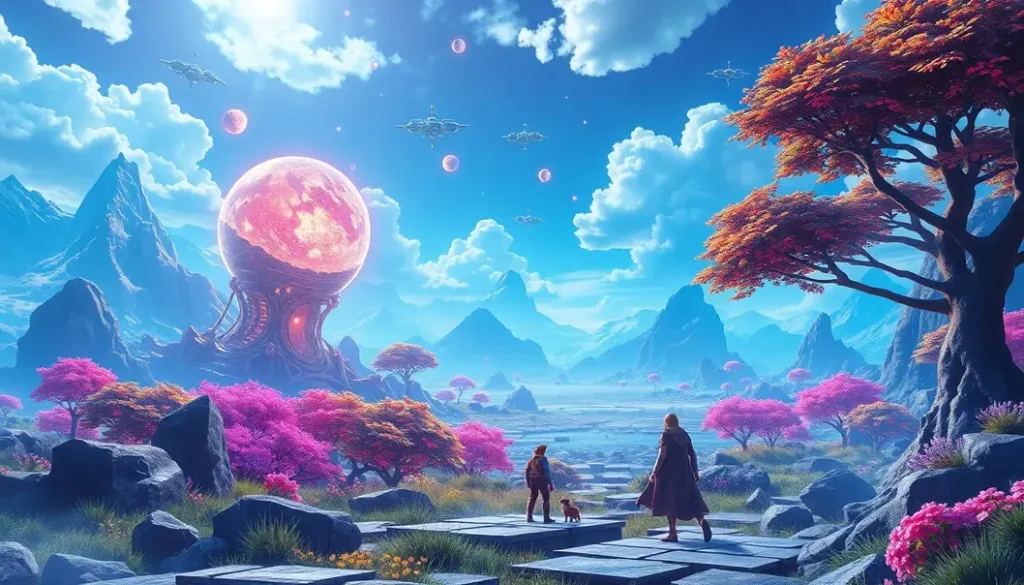
Artificial Intelligence is no longer just a backdrop in gaming; it plays a crucial role in shaping narratives, enhancing gameplay, and influencing design. From adaptive difficulty levels to intelligent NPC behavior, the integration of AI is rapidly redefining the boundaries of creativity and interactivity in game development. Developers and designers now have unprecedented tools at their disposal, allowing for the creation of dynamic worlds that respond to player actions in compelling ways. This evolution not only elevates player engagement but also paves the way for innovative design paradigms poised to transform the gaming landscape.
The Building Blocks of AI in Gaming

The intersection of AI and game development has ushered in a new era, vastly transforming the player experience. At its core, this transformation is fueled by key technological advancements shaping how games are developed and experienced. Among these, procedural generation, machine learning, and natural language processing stand as foundational pillars. These technologies drive innovation in gameplay mechanics, character realism, and narrative depth, altering the very fabric of interactive entertainment.
Procedural generation is one of the most significant developments in game design, enabling the creation of vast, diverse worlds with minimal manual input. By leveraging algorithms, developers can construct expansive environments, often with infinite variability, which enhances replayability and player engagement. This methodology has been utilized to great effect in multiple game genres, providing players with unique experiences each time they engage with the game. Procedural generation allows developers to manage resources efficiently, reducing the time and cost traditionally required for manual game design.
Machine learning, another cornerstone of modern game development, plays a pivotal role in improving AI-driven character behavior and making non-player characters (NPCs) more lifelike. By analyzing player behavior and adjusting tactics dynamically, machine learning enables NPCs to present challenges that escalate in complexity, keeping players engaged and invested. This capability extends to adaptive gameplay, where the game evolves in response to the player’s actions, maintaining a personalized level of difficulty.
Natural language processing (NLP) has transformed player interaction, especially in narrative-driven games. By allowing players to communicate with NPCs in more natural and intuitive ways, NLP creates immersive experiences that were previously unattainable. This technology enables branching dialogues and complex storylines that adapt to player choices, enhancing narrative depth and fostering players’ emotional investment in the game’s story.
The inclusion of AI technologies in game development comes with its share of challenges. Balancing game complexity with playability remains a constant hurdle. Developers must ensure AI does not become overly dominant, overshadowing player agency. Similarly, while procedural generation is a powerful tool, it can lead to environments that feel random or lack intentional design if not carefully managed. Developers often address this by incorporating handcrafted elements alongside procedurally generated ones to maintain cohesion and purpose.
Machine learning models require significant data to function effectively, posing privacy and ethical concerns. To mitigate this, developers can utilize anonymized data or synthetic datasets to train their models. Additionally, machine learning algorithms must be continuously refined and tested to ensure NPCs behave believably and respond appropriately to a wide range of player strategies.
The dynamic field of natural language processing continues to advance, and while it offers tremendous potential, implementing it cost-effectively remains a widespread challenge. Developers must balance the sophistication of NLP systems with resource constraints, often resulting in hybrid approaches that combine keyword recognition with extensive scripting to simulate complex interactions.
Several games have successfully harnessed AI to enhance player interaction and storytelling. One notable example demonstrates the use of procedural generation to craft a universe teeming with diverse planets and ecosystems, each offering unique challenges and opportunities for exploration. This example showcases both the potential and the challenges of procedural generation, as developers must constantly balance randomness with meaningful content to keep players engaged.
Another game exemplifies the power of machine learning by creating NPCs equipped with advanced behavior patterns that adapt to player actions. This strategic depth keeps gameplay fresh and unpredictable, requiring players to continuously refine their strategies. The game’s ability to learn from player behavior and adapt accordingly creates a dynamic and challenging environment.
Moreover, a narrative-heavy game highlights the impact of NLP, featuring a complex storyline driven by player choice. By allowing players to communicate through natural language inputs, the game delivers a deeply immersive experience, with dialogue and outcomes that tailor to individual play styles. This creates a personal connection to the game world, driving player engagement through compelling, player-driven narratives.
In linking these advancements to broader technological conversations, readers can explore the ethical considerations of generative AI in more detail in this article, which examines the implications and responsibilities of AI integration across various domains.
As AI technologies continue influencing game development, the potential for innovation is boundless. By addressing integration challenges thoughtfully, developers can leverage AI to create more engaging, personalized, and dynamic gaming experiences, pushing the boundaries of traditional gaming paradigms.
AI-Powered Player Engagement: Crafting Immersive Experiences
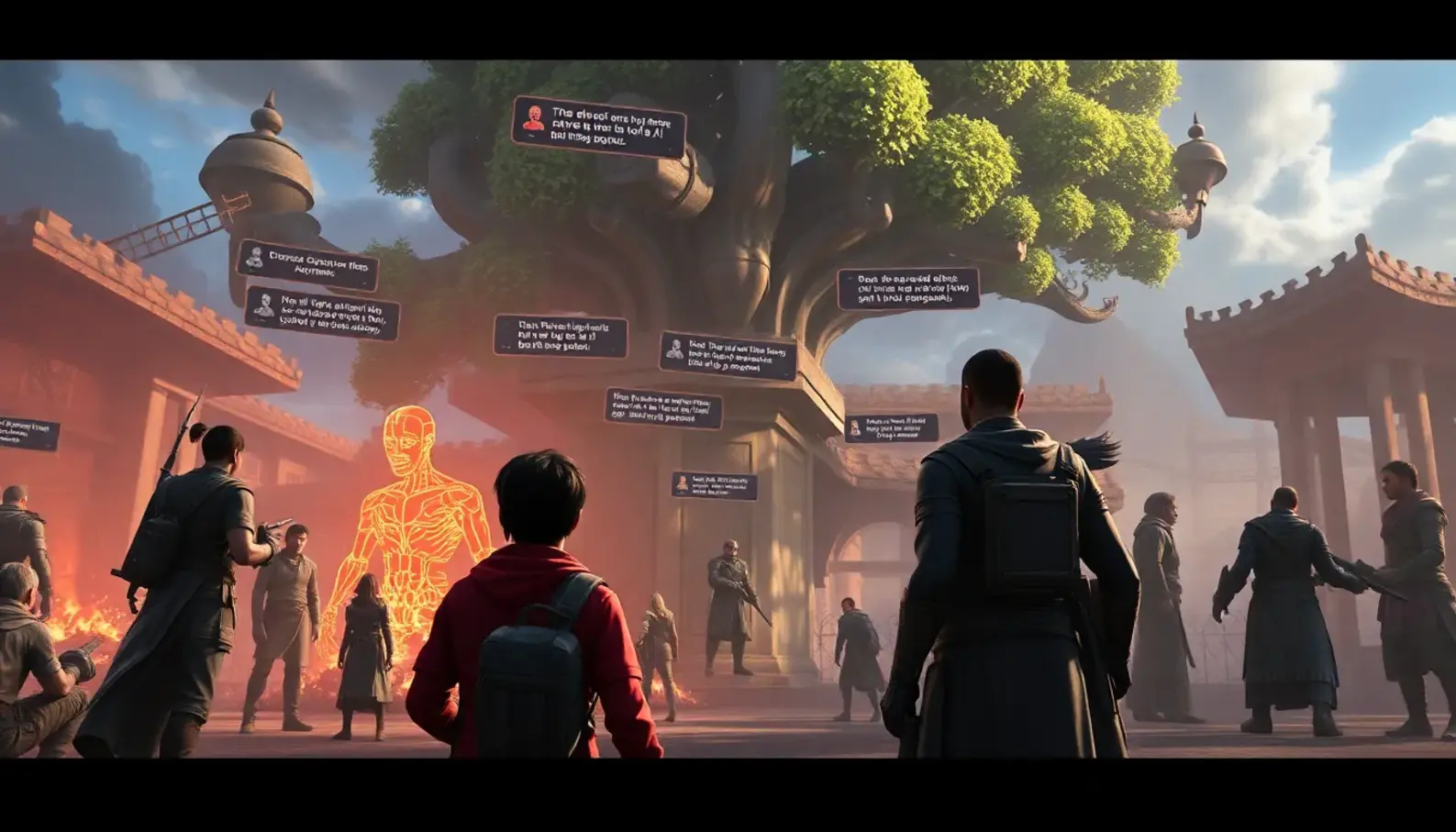
In an industry continually pushing the boundaries of technology and art, AI plays a transformative role in reshaping player engagement. By analyzing vast datasets, AI personalizes every interaction, adjusting to each player’s preferences, skill levels, and gameplay style. This approach creates a connection that extends beyond mere entertainment, offering an interactive canvas that evolves with the player.
AI harnesses data analysis to understand and predict player behavior. Each decision, pause, and reaction forms a dataset, utilized by developers to customize experiences. By employing sophisticated behavioral modeling techniques, AI suggests tailored game elements and narratives, adapting in real-time. For instance, a player who struggles with a specific aspect can find challenges adjusted to match their developing skills, maintaining engagement without frustration. This dynamic adjustment ensures that players remain situated within their optimal experience zone.
Furthermore, AI’s ability to shape dynamic narratives revolutionizes storytelling in gaming. Traditional static stories give way to emergent narratives influenced by player actions and choices. Through complex decision trees, AI scripts stories that morph with interaction, ensuring that no two playthroughs are identical. This innovation empowers players with unprecedented narrative agency, allowing them to weave their own tales within the game world. As players drive the storyline, AI subtly alters character motives, dialogue, and plot twists, crafting a rich narrative tapestry unique to each session.
AI’s prowess extends into procedural content generation, facilitating infinite game variability. Algorithms dynamically create environments, quests, and scenarios, offering limitless content. This capability immerses players in worlds that feel boundless, avoiding the repetitiveness that plagues static content. By analyzing player preferences and play style, AI adapts generated content to align with individual tendencies, enhancing immersion and satisfaction. Players who favor exploration can wander through newly minted vistas, while those seeking combat might find themselves confronting tailored adversarial challenges.
The evolution of AI-driven storytelling is not merely reactive but interactive, ushering in new dimensions of gameplay. Through player interactions, stories adapt, providing an evolving experience distinct each time. Games become living organisms, responsive to the player’s touch. As players shape the world around them, they find narratives that evolve based on their decisions. AI ensures that these narratives remain coherent yet unpredictable, blending scripted storybeats with spontaneous, player-driven elements.
As we peer into the future, the potential of AI in gaming becomes apparent not only in narrative personalization but also in predictive analytics. By collecting and analyzing data on player actions, preferences, and engagement patterns, AI predicts future behaviors and tailors content accordingly. This foresight allows developers to craft experiences that resonate with players before they even recognize their desires. In virtual reality, AI could revolutionize immersion, creating worlds that respond to physical movements and emotional states, providing a deeply personal gaming experience.
AI’s integration into game development heralds an era where every game is a journey unique as the individual playing it. As technology advances, the interplay of AI with gaming promises a future where personalized, engaging, and ever-evolving experiences are not the exception but the norm. AI proves not only a tool for developers but an active participant in story creation, nudging the boundaries of what gaming can achieve.
For further exploration into how AI influences player engagement and other technological intersections, visit the spectrum of discussions at AI in Marketing Strategies.
Final words
AI’s integration into game development is more than a trend; it heralds a new era of creativity and interactivity. As technology evolves, so too do the opportunities for developers and designers to craft unforgettable experiences. Embracing AI not only enriches engagement but also innovates every aspect of game design. Moving forward, the collaboration between human creativity and artificial intelligence will define the future of gaming, offering an exciting landscape for developers eager to explore new possibilities.
Revolutionize Game Development with AI
Learn more: https://innoupdates.com
About us
Explore our advanced Gaming Development AI Tools and Services, designed to help you build smarter and more engaging game experiences.