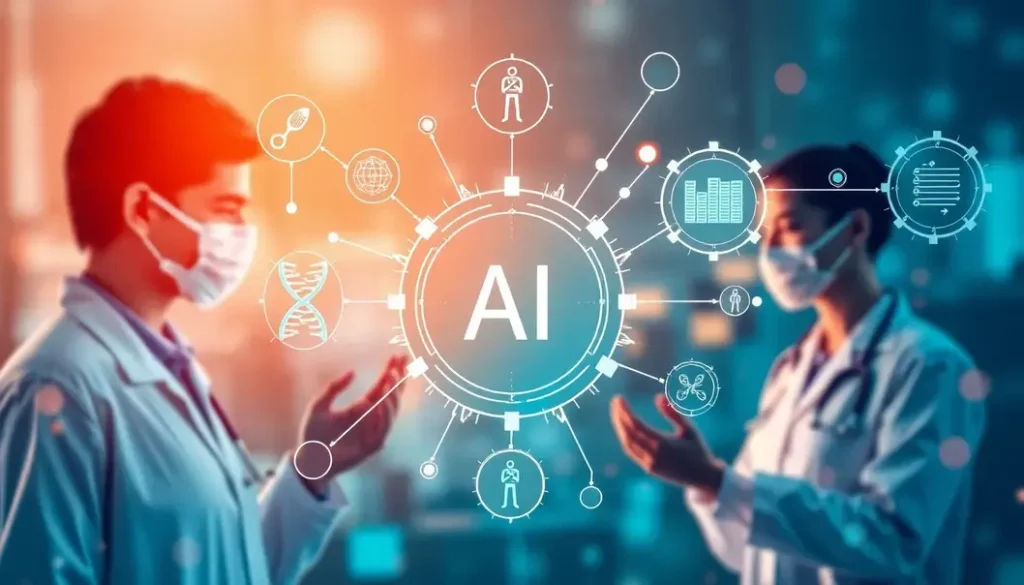
Artificial Intelligence (AI) is fundamentally changing the landscape of personalized medicine by enabling more precise diagnostics and treatment plans. Traditional approaches often follow a one-size-fits-all methodology, which can overlook the unique biological makeup of individual patients. AI offers the potential to enhance outcomes through improved risk assessments, predictive analytics, and machine learning algorithms that analyze vast datasets. This synergy fosters a more patient-centered approach, enabling healthcare professionals to deliver tailored therapies that resonate with personal histories and genetic profiles. As a result, both doctors and patients are positioned to benefit from advances in this dynamic field.
The Role of AI in Personalizing Patient Care

Artificial Intelligence (AI) stands at the forefront of transformative change in healthcare, offering immense potential to personalize patient care. AI technologies provide healthcare professionals with tools that can tailor treatments and preventive strategies to individual patient needs. This chapter delves into the practical applications of AI, focusing on how genomic sequencing analysis and machine learning algorithms are pivotal in personalizing medical care.
Genomic Sequencing Analysis
Genomic sequencing has become more accessible and cost-effective, allowing for detailed insights into a patient’s genetic makeup. AI enhances this process by analyzing massive volumes of genomic data swiftly and accurately. Through deep learning models, AI can identify genetic variations that might predispose patients to specific diseases. This enables clinicians to develop personalized treatment plans based on an individual’s genetic profile, improving the effectiveness of interventions.
One of the most compelling uses of AI in genomic sequencing is its ability to predict disease susceptibility. For instance, by analyzing gene expression patterns, AI can help identify individuals at risk for conditions such as cancer or cardiovascular diseases. This predictive capability allows for early intervention, potentially mitigating disease progression.
Machine Learning in Predictive Healthcare
Machine learning algorithms extend beyond genomics into broader predictive healthcare applications. These algorithms analyze data from electronic health records, medical imaging, and even wearable devices to forecast disease trajectories. For example, using large datasets, machine learning models can predict the likelihood of a patient developing chronic conditions like diabetes or hypertension.
These insights facilitate proactive patient monitoring and treatment, thus preventing severe health episodes. Furthermore, AI-driven predictive analytics help healthcare providers prioritize patient cases, ensuring that those in critical need receive timely attention. This integration into existing medical workflows reduces manual errors and enhances the efficiency of healthcare delivery.
Integration into Medical Workflows
Integrating AI tools into medical workflows involves overcoming several challenges, such as ensuring data interoperability and maintaining patient privacy. Nonetheless, successful integration results in seamless collaboration between AI systems and healthcare providers. AI tools can assist doctors in making more informed decisions by offering data-driven recommendations supported by the latest medical research.
For instance, AI systems can automate the analysis of medical images, highlighting areas of concern that might require further investigation. This not only saves time but also increases diagnostic accuracy. Additionally, AI-driven chatbots and virtual assistants can handle routine patient inquiries, freeing up healthcare personnel to focus on more complex tasks.
Case Studies Highlighting AI in Personalized Medicine
Several real-world case studies illustrate the successful implementation of AI in personalized healthcare. One notable example comes from oncology, where AI algorithms analyze patient data to suggest customized treatment regimens. By evaluating factors such as tumor genetics and patient history, AI aids oncologists in designing more effective and patient-specific treatment plans.
In another case, AI has been instrumental in cardiology, where it helps predict the risk of heart attacks by analyzing lifestyle factors and genetic predispositions. Personalized lifestyle recommendations and medication adjustments based on AI insights have led to improved patient outcomes and reduced hospitalization rates.
Moreover, AI’s role in wearable technology is expanding, with devices continuously monitoring vital signs and alerting healthcare providers in real-time to any deviations from the norm. This continuous flow of data allows for personalized healthcare interventions and improved patient management. For more information on AI’s role beyond healthcare into wearable technology, consider exploring insights on AI and wearable tech.
Through these implementations, AI not only enhances the personalization of medical care but also fosters better patient engagement and adherence to treatment plans, thus driving healthcare towards a more patient-centric model.
Conclusion
The integration of AI in personalized medicine is revolutionizing patient care by tailoring treatments to individual genetic and lifestyle profiles. As AI technologies continue to evolve, they promise even more significant advancements in predicting, diagnosing, and treating diseases. The fusion of AI with traditional medical practices paves the way for a new era of healthcare that is both efficient and personalized.
Challenges and Ethical Considerations in AI-Driven Personalized Medicine

Artificial intelligence (AI) holds immense potential for personalized medicine, but it also raises significant ethical and technical challenges. The integration of AI into healthcare requires careful navigation, especially concerning data privacy, algorithmic bias, and transparency.
Data Privacy Concerns
AI-driven personalized medicine relies heavily on vast amounts of patient data. This poses substantial privacy concerns. Patients’ medical histories, genetic information, and treatment responses are sensitive and must be protected. The challenge lies in balancing data utilization and privacy protection. Anonymization and encryption techniques can mitigate risks, but they are not infallible. A breach of medical data can have severe consequences, including identity theft and exploitation.
Furthermore, data sharing with AI developers and researchers necessitates stringent consent protocols. Patients must be well-informed about how their data will be used and the potential risks involved. Healthcare providers need to ensure robust cybersecurity measures to protect against unauthorized data access and breaches.
Algorithmic Bias
Algorithmic bias is another significant challenge in using AI for personalized medicine. Bias can creep into AI systems through the datasets they are trained on, which might not be representative of all populations. This can lead to the development of models that are less accurate for certain demographics, exacerbating existing healthcare disparities.
To address this issue, diversity in data should be a priority during AI development. Algorithms must be tested across varied population groups to ensure they perform equitably. Continuous monitoring and a commitment to revising algorithms can help mitigate bias.
Need for Transparency
AI systems often operate as black boxes, making it difficult to understand how they arrive at specific recommendations. This lack of transparency can undermine trust in AI-driven personalized medicine. Patients and clinicians must have confidence in AI’s recommendations, which requires clarity in how AI systems process data and make decisions.
One approach to increase transparency is implementing explainable AI techniques. These techniques clarify how AI reaches conclusions, thus empowering healthcare providers and patients to make informed decisions.
Ensuring Equitable Access
The introduction of AI in healthcare should not widen the gap between different societal groups. Access to AI-driven personalized medicine must be equitable. Ensuring that all patients, regardless of socioeconomic status, have access to AI technologies is a significant ethical responsibility for healthcare providers.
Policymakers must work towards creating inclusive healthcare systems. Public health initiatives could subsidize AI healthcare solutions for underprivileged groups. Collaborations between governments and healthcare providers are essential in building equitable AI healthcare models.
Regulatory Frameworks and Responsible AI Use
Effective regulation is critical in harnessing AI in personalized medicine responsibly. Regulatory bodies need to develop comprehensive guidelines that outline ethical AI usage in healthcare. These regulations should address data protection, bias minimization, and equitable access, providing a framework for ethical AI systems.
International cooperation could lead to standardized regulations, providing unified guidelines for AI applications globally. Regulatory frameworks must evolve continuously alongside AI advancements, ensuring they remain relevant and practical.
Empowering Patients
Patient empowerment is central to personalized medicine. Patients should be active participants in their treatment plans, with AI acting as a support tool rather than a decision-maker. Educating patients about AI in healthcare can enable them to make informed decisions about their treatments.
Clinicians can play a crucial role in this educational process, explaining AI’s role and limitations. Clear communication can help build trust, allowing patients to feel more comfortable and secure in AI-assisted treatments.
Overall, while AI in personalized medicine presents exciting opportunities, it is imperative to address ethical and technical challenges proactively. By focusing on data privacy, bias reduction, transparency, equitable access, and patient empowerment, the integration of AI into healthcare can be both effective and ethical. For further insights on AI and healthcare innovations, consider exploring AI wearable tech in health.
Final words
The integration of AI into personalized medicine represents a significant advancement in how healthcare can be tailored to fit individual patient needs. By allowing for more precise diagnostics and treatment plans, AI empowers both healthcare providers and patients. Yet, the journey comes with ethical responsibilities that must be addressed collaboratively. As this field continues to evolve, there lies immense potential for improved patient outcomes and a deeper understanding of health as a personal and unique experience.
Receive Personalized Healthcare with AI
Learn more: innoupdates.com
About us
Personalized Medicine AI Research and Solutions