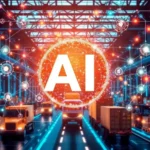
Artificial Intelligence is reshaping the landscape of supply chain management, offering unparalleled efficiency and insight. With AI’s capabilities, stakeholders can no longer afford to overlook its potential for optimization. For students, mastering AI tools can unlock new career opportunities, while investors see the value in innovative solutions that reduce waste and enhance agility. This convergence of technology and education is paving the way for a future where businesses thrive on data-driven decisions.
The Integration of AI in Supply Chain Education

As artificial intelligence continues to reshape industries, its impact is profoundly felt in supply chain education. Educational institutions face the challenge of adapting curricula to prepare students for a landscape where AI-driven decision-making becomes standard. The emergence of AI in supply chains emphasizes the need for future leaders to be proficient not only in traditional logistics and management principles but also in data analytics, machine learning, and automation.
Integrating AI into supply chain training programs involves several strategic adaptations. First, curricula must include modules that focus on the use of AI tools in logistics, demand forecasting, inventory management, and customer relationship management. These modules are designed to give students a theoretical understanding of AI applications while also emphasizing practical, hands-on experience with current technologies. The goal is to bridge the gap between academic theory and industry practices.
One of the primary adaptations in supply chain education is the incorporation of AI-driven simulation software in classroom settings. These simulations allow students to interact with complex supply chain scenarios using AI tools. For example, predictive analytics can help optimize inventory levels or forecast demand with higher precision. Such simulations provide students with real-time feedback, enhancing their decision-making skills in controlled environments.
Case studies from leading universities offer valuable insights into effective AI integration. For example, the Massachusetts Institute of Technology (MIT) has long been at the forefront of supply chain education. It has incorporated advanced AI algorithms into its curriculum, allowing students to work on real-world projects with industry partners. This approach not only enriches learning but also ensures that graduates are equipped with the skills required by employers.
Similarly, vocational programs have made noteworthy progress by including AI-based courses in their offerings. Programs at institutions like Delft University of Technology combine traditional supply chain coursework with modules on AI and data analytics. Students learn to deploy machine learning models to solve supply chain challenges, preparing them to enter a workforce increasingly reliant on data-driven solutions.
The evolution of these programs underscores a shift in the skills that are considered vital for supply chain professionals. Traditional skills such as procurement and logistics are now intertwined with technical competencies like programming, statistical analysis, and skills in AI software. Institutions are therefore offering interdisciplinary courses that combine business management with computer science and engineering.
Moreover, the integration of AI into supply chain education is reflected in partnerships between academia and industry. Collaborations with tech companies enable institutions to offer courses developed with insights from industry leaders. For instance, joint research projects might involve building AI models to improve supply chain efficiency, offering students the opportunity to engage directly with cutting-edge technologies.
These partnerships also promote the development of smart classrooms equipped with AI technologies, facilitating an innovative learning environment. Interactive tools like AI assistants can guide students through complex assignments, offering a personalized educational experience that accommodates individual learning paces and styles.
While the integration of AI into supply chain education is promising, it also poses challenges. Institutions must continuously update curricula to keep up with rapid technological advances. Investing in faculty training is also crucial, ensuring that instructors are well-versed in both AI technologies and their applications within the supply chain context.
The role of AI in supply chain education extends beyond training students; it also involves research endeavors that explore new applications of AI. Research conducted in universities often informs industry practices, creating a virtuous cycle where education and industry mutually benefit from innovations in AI.
As we look toward the future, the importance of AI in supply chain training programs will only grow. Educational institutions must remain agile, embracing AI not just as a subject to be taught, but as a tool that can transform the way supply chains are managed. This transformation promises to equip students with the capabilities necessary to lead in an era where supply chain decisions are increasingly driven by artificial intelligence.
For further insights into how AI is impacting various sectors, readers can explore the implications of AI in business growth, which delves into how data-driven strategies are revolutionizing industries at large.
Investing in AI: A New Frontier for Supply Chain Innovation

As the realm of supply chain management increasingly integrates advanced technologies, AI stands out as a transformative force. For investors eyeing the sector, the potential to harness AI-driven innovations presents a compelling opportunity. AI, when deployed effectively, not only streamlines operations but also radically transforms logistics and decision-making workflows.
AI-Driven Analytics: A Wealth of Data
First, consider the burgeoning field of AI-driven analytics. This technology empowers supply chain managers to mine vast quantities of data for actionable insights. Investors should focus on entities that enhance their predictive capabilities through AI. Machine learning algorithms, a subset of AI, refine these predictions, adapting to changing market conditions and consumer behaviors. These adaptations help companies maintain robust and agile supply chains, crucial for modern markets.
Investing in analytics-focused companies benefits from their ability to deploy self-improving systems that both forecast demand fluctuations and optimize inventory levels. Embracing AI-driven analytics allows for proactive measures rather than reactive crisis management, thus fostering a resilient supply chain.
Automation: The Key to Efficiency
Next, AI-powered automation promises to revolutionize tasks traditionally handled manually, from warehouse management to delivery logistics. The automation segment remains a hotbed for investment, presenting substantial opportunities for reducing operational costs and improving accuracy. Investors should look for startups or established companies rolling out robotic process automation (RPA) and intelligent autonomous systems.
One of the primary benefits of automation lies in its role in error reduction. By minimizing human intervention, automation lowers risks of human errors which can lead to costly disruptions. Furthermore, AI-enabled automation enhances scalability. Businesses can quickly adjust to increased demand without the delays tied to scaling up human resources.
Predictive Technologies: Forecasting the Unpredictable
The unpredictable nature of supply and demand makes predictive technologies indispensable. Here, AI models estimate future trends based on large datasets encompassing everything from historical sales data to social media sentiment analysis. Investors should target firms that leverage such technologies, which act as early warning systems, flagging potential disruptions and enabling preemptive actions.
The advantage extends beyond short-term forecasting. Predictive AI technologies also drive long-term strategic planning by highlighting future supply chain capacities and constraints. This capability dramatically boosts strategic advantages, providing firms with the foresight needed to capitalize on emerging market opportunities.
Pioneering Companies Leading AI Integration
Many organizations are at the forefront of this AI integration journey, creating fertile ground for investment. These trailblazers develop AI platforms that focus on refining logistics, enhancing visibility across supply chains, and mitigating risks associated with supply interruptions.
Discerning investors should prioritize companies that demonstrate a strong adaptability to AI advancements, fostering environments of continuous learning and improvement. A commitment to AI R&D investments signals a firm’s dedication to staying ahead in a competitive landscape.
Calculating Return on Investment (ROI)
Determining the ROI of AI investments requires careful analysis. The initial outlay might seem steep, but the long-term savings in operational costs and the value added through efficiency gains often outweigh initial expenditures. Lowering labor costs, reducing material waste, and increasing throughput efficiency all contribute to a healthier bottom line.
Moreover, implementing AI solutions often leads to enhanced customer satisfaction through faster service delivery and accuracy, which can further bolster financial returns. Companies investing in AI often witness returns manifesting not only as incremental monetary benefits but also as strengthened market positions.
Future-Proofing Supply Chains
Investors must recognize the strategic imperative of aligning with future-ready technologies. AI has emerged not merely as an operational upgrade but as a strategic pillar in building resilient supply chains equipped to handle the complexities of global commerce.
The integration of AI within supply chain management reflects a broader trend towards digital transformation—a journey that savvy investors must embark upon. As the supply chain ecosystem continues to evolve, AI stands at the helm of steering this evolution, representing a lucrative opportunity for those willing to invest in the future of logistics and operations.
For further insights into how AI contributes to broader industry transformations, visit AI in Business Growth.
Final words
AI’s impact on supply chain training is profound, bridging gaps in education and market demands. As professionals equip themselves with AI skills, their potential for innovation and efficiency multiplies. For investors, recognizing and acting upon these trends can lead to successful ventures that leverage the latest technologies.
Read Guide
Learn more: innoupdates.com
About us
Our company specializes in comprehensive training and consulting services for businesses seeking to implement AI technologies in their supply chains. We offer tailored programs that equip individuals and teams with critical skills in AI applications, ensuring that they stay ahead in a rapidly evolving marketplace.