
Financial fraud is evolving, becoming more sophisticated with each passing year. As financial institutions safeguard assets and customer information, the integration of artificial intelligence (AI) has emerged as a crucial strategy in enhancing fraud detection capabilities. By leveraging advanced algorithms and machine learning techniques, organizations can identify anomalous patterns and behaviors, thus reinforcing their defenses against fraudulent activities. This article delves into the pivotal role AI plays in financial fraud detection, exploring key methodologies and actionable insights tailored for professionals in the finance and security sectors.
Understanding Fraud Patterns and Anomalies
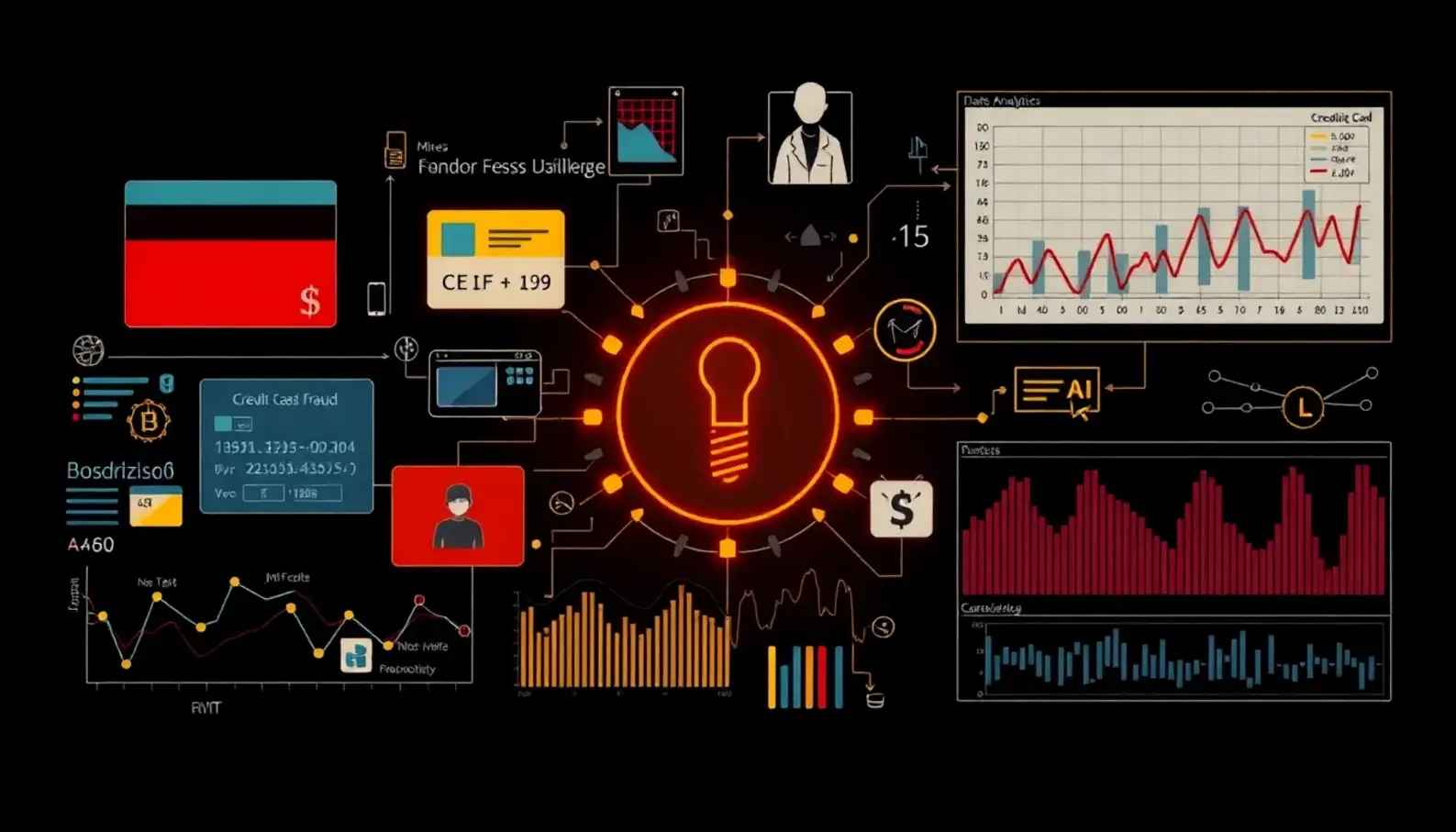
Fraud detection in financial systems involves untangling complex behavioral patterns and identifying anomalies that indicate suspicious activity. It is imperative for financial institutions to dive deep into the vast expanse of data they accumulate daily, leveraging sophisticated algorithms to discern genuine activities from potential fraud.
The bedrock of these detection methods is data analytics, especially when it comes to parsing through historical data to extract patterns indicative of fraudulent behavior. With the evolution of machine learning, these patterns become more sophisticated, adjusting dynamically as fraudsters evolve their methods.
When discussing types of fraud that technology can help mitigate, we consider several categories: identity theft, transaction fraud, insider trading, and synthetic fraud, to name a few. Each varies in complexity and requires a distinct approach for effective detection. Identity theft, for instance, often involves stolen credentials used to impersonate legitimate customers. In contrast, synthetic fraud involves creating fictitious identities from fragments of real ones to execute illegal transactions.
Data Points for Early Detection
To identify fraud early, institutions must scrutinize various data points. These include transaction velocity, location anomalies, and spending pattern deviations. For instance, a transaction initiated from a different geographical region could flag fraud if the location is inconsistent with the customer’s usual pattern.
Another crucial data point is the transaction amount compared to historical transactions by the same user. Outliers often signal potential fraud, especially when there is a sudden hike in transaction volume or frequency without a valid explanation. Behavioral biometrics add another layer of security by analyzing the user’s interaction with devices. Typing speed, mouse movements, and even the angle at which a device is held can serve as unique identifiers that, if altered, suggest fraudulent activity.
Enhancing Predictive Capabilities with AI
Artificial intelligence revolutionizes fraud detection by enhancing the predictive capabilities of traditional systems. Machine learning algorithms, particularly those based on neural networks, can process vast quantities of data to identify suspicious activity patterns more accurately than rule-based systems.
These algorithms employ a variety of models, including supervised, unsupervised, and semi-supervised learning. In supervised learning, the system learns from labeled datasets, enabling it to identify known fraud patterns. Unsupervised learning is crucial for recognizing new, unknown fraudulent behaviors that deviate from established norms.
Fraud scenarios can also be simulated using adversarial training approaches where AI models learn by evaluating potential fraudulent strategies through simulated attacks, thereby strengthening their predictive accuracy. For instance, by employing Generative Adversarial Networks (GANs), systems can better anticipate and counter unknown fraud techniques.
The role of machine learning extends beyond detection. While flagging anomalies is one aspect, AI also assists in reducing false positives, a significant challenge for financial institutions. The continuous refinement of models based on real-time data allows for more precise discrimination between legitimate and fraudulent transactions.
The Role of Historical Data
Historical data provides a wealth of insights into trends and patterns that are crucial for understanding the modus operandi of fraudsters. By analyzing past data, institutions can pinpoint periods of heightened fraudulent activity and understand how fraudsters adapt to detection methods. This historical perspective enables more robust model training, equipping systems with the ability to recognize even subtle shifts in fraud patterns.
The integration of data from various sources—social media, e-commerce platforms, and even government databases—enhances the breadth and depth of historical data. This cross-referencing of data creates comprehensive user profiles that aid in more sophisticated anomaly detection.
Financial institutions must, however, remain vigilant about data privacy and security. Ensuring that data-driven approaches comply with regulations such as GDPR is paramount to maintaining customer trust.
Internal Linking
To broaden your understanding of how AI is integrated across different sectors, consider exploring AI’s role in business growth strategies. Visit AI in Business Growth.
Through careful analysis and the incorporation of advanced AI technologies, financial institutions can stay ahead of fraudsters, adapting swiftly to new threats. Understanding and predicting fraud patterns is a dynamic process, one that requires constant innovation and vigilance.
AI-Driven Solutions for Enhanced Detection

Fraud detection within financial institutions has greatly benefited from the advanced capabilities of artificial intelligence, as these technologies facilitate real-time analysis and responses. The implementation of machine learning models and neural networks has been transformative, providing robust solutions to detect fraudulent activities and reduce false positive rates effectively.
Machine learning models, being at the forefront of AI-driven fraud detection strategies, excel through their ability to process vast amounts of data rapidly. These models analyze historical transaction data and learn patterns associated with both legitimate and fraudulent activities. By applying algorithms such as decision trees or support vector machines, financial institutions gain an adaptive edge in identifying non-conforming patterns. This adaptability ensures that the models evolve in line with changing fraud tactics, thereby enhancing the accuracy of fraud detection mechanisms.
One of the most impactful attributes of machine learning in fraud detection is its capability to minimize false positives—erroneous alerts that can be costly and time-consuming. Traditional systems often depend on static rules and thresholds, leading to alarm fatigue and missed genuine threats. Machine learning models, however, thrive on dynamic analysis, constantly refining their detection parameters based on new data inputs and reducing unnecessary disruptions in transaction flows.
Neural networks, particularly deep learning models, expand the horizons of fraud detection by enabling previously unimaginable levels of complexity in data analysis. These networks mimic the human brain’s structure and are capable of identifying intricate patterns across diverse data sets. This ability is pivotal in parsing through unstructured data, such as emails, phone calls, or social media activity, which may contain early indicators of fraudulent schemes. Deep learning networks can simultaneously analyze text, voice, and transactional data, ensuring fraud signals do not slip through unnoticed.
For financial institutions looking to harness AI for fraud detection, implementing real-time monitoring systems is essential. Real-time systems leverage AI to monitor transactions and account activities as they occur, providing instant alerts for potential fraudulent behavior. The integration of AI into these systems ensures that not only are threats detected immediately, but they are also contextualized within broader patterns, enhancing both speed and accuracy. This is particularly crucial in preventing losses during ongoing transactions.
Successful case studies across various financial institutions demonstrate the efficacy of AI-driven fraud detection strategies. One notable example involves a large multinational bank that reduced its fraud detection time by over 60% utilizing machine learning models. The bank integrated predictive analytics into their transaction processing systems, resulting in a substantial drop in unauthorized transactions. Such implementations underscore the potential for AI to not just detect, but proactively deter fraud attempts through pattern recognition and anticipatory alerts.
In another case, a regional credit union employed neural networks to scrutinize customer account behaviors, identifying odd patterns even in low-frequency transactions. This approach enabled early detection of identity theft attempts, saving potential losses and preserving customer trust. The integration involved careful selection of relevant neural network architectures and vigilant data quality management to ensure the systems operated at optimal effectiveness.
Adopting best practices for integrating AI solutions into existing infrastructures involves several critical steps. Firstly, institutions should commence with comprehensive data audits to ensure the quality and relevance of the inputs AI systems will analyze. Data diversity and accuracy are essential for the reliability of AI in fraud detection, making initial assessments crucial.
Secondly, collaboration between IT experts and fraud analysts is vital to customize AI tools that cater specifically to institutional vulnerabilities and goals. Developing a seamless integration plan that incorporates AI without disrupting current processes is key to a smooth transition. Additionally, continuous monitoring and tuning of AI models is necessary, as fraud techniques evolve rapidly.
Finally, ensuring compliance with legal and ethical guidelines while deploying AI tools will safeguard against any potential misuse or privacy concerns. Implementing transparent processes for data handling and decision-making makes it easier to identify biases or errors, maintaining regulatory compliance and customer confidence.
These thoughtfully crafted AI-driven strategies represent a pivotal shift in fraud detection paradigms. As financial institutions continue to evolve their methods, they gain significant leverage in safeguarding against increasingly sophisticated fraud tactics. For further exploration into AI applications, refer to this insightful article on AI in finance strategies, which provides a comprehensive overview of how AI can transform various facets of the finance sector.
Final words
The increasing sophistication of financial fraud demands innovative solutions that keep pace with emerging threats. AI equips financial institutions with powerful tools to identify and mitigate fraud effectively, safeguarding both assets and customer trust. As technology evolves, continuous investment in AI-driven systems will be integral to a robust fraud prevention strategy.
Prevent Fraud with AI Detection Systems
Learn more: https://innoupdates.com
About us
Financial AI Fraud Detection Solutions are designed to harness advanced algorithms and machine learning techniques to proactively identify and prevent fraudulent activities, providing secure and efficient financial transaction environments.