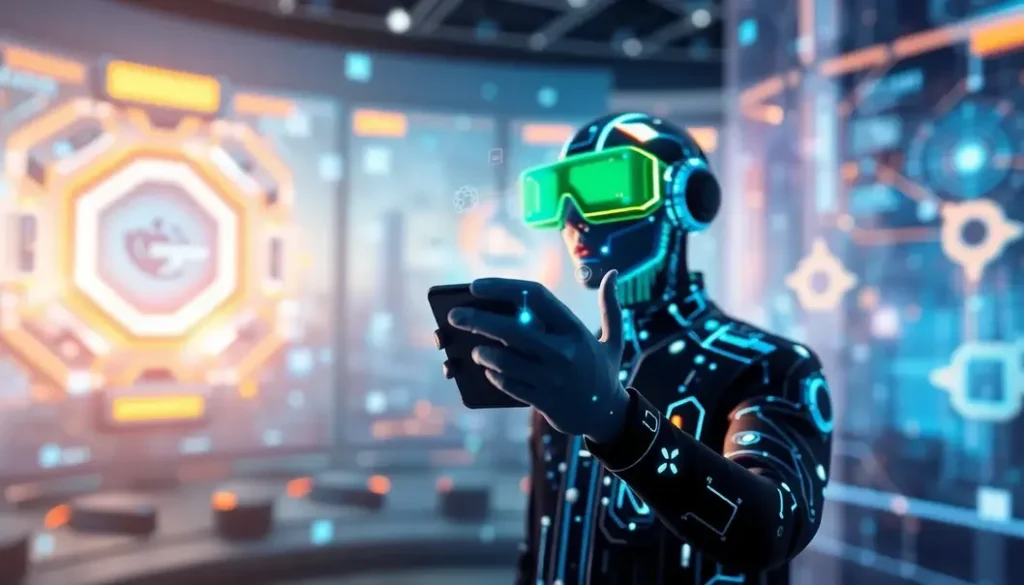
The integration of Artificial Intelligence (AI) in Augmented Reality (AR) is pushing boundaries and redefining user experiences. As AR developers and designers, leveraging AI opens doors to creating more immersive and interactive environments. By incorporating machine learning, computer vision, and natural language processing, the complexity of AR applications decreases while enhancing user engagement. This blend not only streamlines development processes but also fosters innovation. Navigating through this dynamic landscape empowers AR professionals to reimagine the possibilities of immersive technology. Explore how AI is shaping AR development and discover tools and techniques that elevate your projects to new heights.
The AI-Driven Framework for Augmented Reality

Artificial Intelligence (AI) seamlessly integrates with Augmented Reality (AR), creating a revolutionized framework that enhances the design and interactivity of AR applications. This synergy between AI and AR is not merely superficial; it is fundamentally transforming the way developers and users interact with augmented environments.
Machine Learning as a Cornerstone
Machine learning (ML) stands at the forefront of AI technologies enhancing AR, providing robust tools for developing smart, adaptive interactions. Through algorithms capable of learning and adapting from data, ML enables AR systems to offer personalized and real-time responses. For instance, ML algorithms can analyze a user’s behavior and preferences within an AR application to tailor content that aligns with their specific needs, enhancing engagement.
In AR development, ML is used extensively in predictive modeling. By anticipating user movements and predicting environmental changes, ML helps in creating fluid and lifelike AR experiences. This predictive capability reduces latency and enhances the realism of interactions, making them virtually seamless.
Computer Vision: Bringing Contextual Awareness
Computer vision, another pivotal AI technology, empowers AR systems by interpreting and understanding the visual world. This technology allows AR applications to recognize and process images and objects from the environment, incorporating them into the digital experience seamlessly.
The application of computer vision in AR is diverse. It enables the creation of interactive experiences that respond to the physical world in sophisticated ways. For example, a computer vision-enabled AR application can recognize a coffee cup on a table and offer nutritional information, brand suggestions, or simulated interactions such as changing the cup’s color in the user’s view.
Furthermore, computer vision is instrumental in improving user interface designs in AR. By understanding spatial relationships and contextual details, it allows for intuitive and immersive navigation within AR environments. This level of interactivity is essential for applications ranging from gaming to professional simulations.
Enhancing Interactivity and Usability
AI-driven frameworks fundamentally enhance interactivity within AR systems by enabling the development of intelligent agents. These agents can interact, adapt, and respond to user inputs in more human-like and contextually aware manners. Leveraging AI, agents in AR applications can understand user intentions, predict actions, and respond in real-time, offering a more cohesive and engaging experience.
The usability aspect is significantly improved as AI technologies are integrated. The ability of AI to personalize user experiences based on historical data diminishes the barriers typically associated with technology learning curves. In educational AR applications, for example, AI can adapt the complexity of information presented based on the user’s learning progress, ensuring an optimal and user-friendly experience.
Applications and Innovations
The confluence of AI and AR presents numerous applications and innovative solutions. In retail, for instance, AR applications can use AI to provide personalized shopping experiences. By analyzing customer preferences and behaviors, AI can assist AR in virtual try-ons and product recommendations, adding significant value to the user shopping journey.
In the realm of healthcare, AI-powered AR can enhance diagnostic precision and procedure execution. Surgeons use AR applications to visualize patient data overlaid on real-time views during invasive procedures, assisted by AI models that identify crucial anatomical landmarks with precision.
Future Prospects and Challenges
The future of AI-driven AR frameworks holds immense potential yet faces notable challenges. There are ethical considerations surrounding data privacy, especially as AI systems become more capable of processing sensitive user data. Ensuring these systems maintain user trust by safeguarding personal information is crucial.
Moreover, the continued development of AI technologies must focus on reducing the computational demands and energy consumption associated with AI-AR systems. Optimized algorithms and hardware advancements will be key in enabling more widespread adoption.
In conclusion, the integration of AI into AR is leading to transformative changes that go beyond traditional interactions. For businesses, exploring these technologies could lead to substantial growth opportunities, as discussed in related topics, such as AI in business growth strategies. As these technologies evolve, their synergy promises to continually redefine user experiences and expand the horizons of what is possible in augmented reality.
Designing Immersive AR Experiences with AI Insights
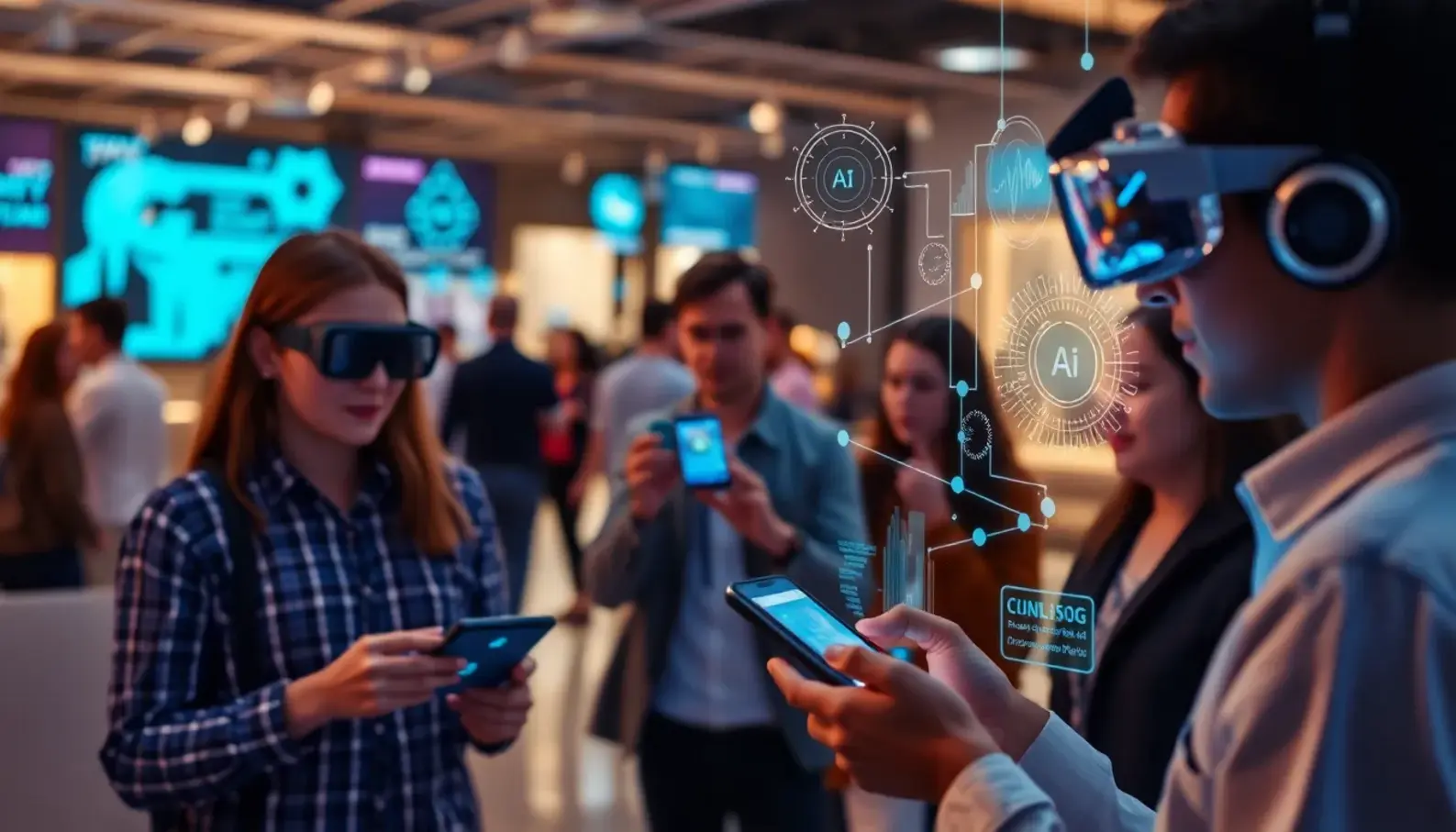
Artificial Intelligence is redefining the user experience in augmented reality applications. It enables developers to craft more engaging and personalized experiences through insights derived from data analysis and predictive modeling. The transformation begins with AI’s ability to process vast amounts of user interaction data, allowing for a more nuanced understanding of user preferences.
Predictive Analytics in AR Development
Predictive analytics utilizes algorithms to analyze patterns within large datasets. By employing these insights, AR developers can anticipate user actions and preferences, tailoring experiences accordingly. This results in applications that respond dynamically to user behaviors. For instance, an AR app for interior design can suggest furniture arrangements based on past interactions, creating a personalized experience without manual input.
AI enhances AR experiences by building a profile of the user over time. It analyzes behaviors, preferences, and engagement patterns. This data is invaluable in refining design elements to cater to individual user needs, making each interaction feel uniquely tailored.
AI-Driven Design Tools
Design tools powered by AI facilitate the creation of intuitive and aesthetically pleasing AR environments. These tools often include AI-assisted design generation, which uses machine learning models to suggest design improvements. By offering creative insights and highlighting possibilities previously unconsidered, these tools enhance both the efficiency and creativity of the design process.
For example, AI can assist in texture and material selections, recommending choices that align with thematic goals. This process not only saves time but also ensures a consistent aesthetic. Machine learning models can adjust lighting conditions and suggest layouts in real-time, ensuring that each design choice enhances the overall user experience.
Personalization Through User Interaction Data
User interaction data is a treasure trove of insights for developers. It reveals how users interact with AR environments and which elements capture their attention. AI processes this data, enabling real-time modifications to UX/UI design.
Imagine a gaming AR application that monitors user engagement levels within different scenarios. By analyzing this data, AI could dynamically adjust the difficulty, offering a personalized gaming experience. This adaptability ensures users remain engaged and satisfied, directly impacting the application’s success.
Moreover, emotional analysis can enhance personalization. Using AI to read user emotions through biometrics or behavioral cues allows developers to create responsive environments. An educational AR tool could adjust its teaching methods based on a student’s frustration or excitement levels, optimizing learning outcomes by adapting in real-time to emotional signals.
Real-world Success Stories
AI-driven AR applications have already seen success across various industries. In retail, some platforms offer virtual try-ons, utilizing AI to adapt clothing fits based on user body data. These applications remove the uncertainty from online shopping, bridging the gap between physical and digital retail experiences.
In the entertainment industry, AI is used to create immersive narratives in AR storytelling. By analyzing user choices, these applications craft personalized story arcs that engage audiences deeply. The fusion of AI with AR in this domain offers a pioneering approach to interactive entertainment.
The fitness sector also benefits from AI-enhanced AR technologies. Personal training applications use AI to analyze user form and suggest corrections in real-time, transforming at-home workouts. These applications provide users with tailored feedback, emulating the experience of having a personal trainer on hand.
Linking to Broader AI Innovations
The intersection of AI and AR in user experience design reflects broader trends in AI’s role across industries. For more insights into AI’s transformative capabilities, readers can explore applications in other sectors, such as AI Marketing Strategies, where AI also leverages data for personalized experiences.
Conclusion
Harnessing AI for designing immersive AR experiences is not merely about technological integration; it’s a shift towards user-centric design practices. AI enables developers to create environments that adapt, learn, and respond, crafting experiences that resonate on a personal level. As AI continues to advance, the potential for AR applications will only expand, heralding a new era of tailored digital realities.
Final words
As AI continues to reshape the landscape of Augmented Reality, developers and designers are equipped with powerful tools to craft unprecedented user experiences. Embracing this fusion magnifies creativity and enhances interactions, setting the stage for innovation. The potential of AI in AR is boundless — harness it wisely to elevate your projects and push the envelope of what’s possible in immersive technology.
Build Engaging AR Experiences with AI
Learn more: https://innoupdates.com
About us
Our company offers advanced AI solutions for AR content creation and interaction, empowering developers and designers to create innovative, immersive experiences that captivate users.