
Healthcare analytics has reached a pivotal moment where AI technologies are becoming essential for improving patient outcomes, optimizing operations, and managing costs. Leveraging vast amounts of data generated every day can lead to enhanced decision-making, predictive capabilities, and personalized care strategies. As CTOs and professionals in the field recognize the potential of AI, the imperative to integrate these solutions effectively has never been more pressing. This examination will explore the latest advancements in AI-driven healthcare analytics and how they can be harnessed to revolutionize the clinical environment.
Leveraging Artificial Intelligence for Data-Driven Insights
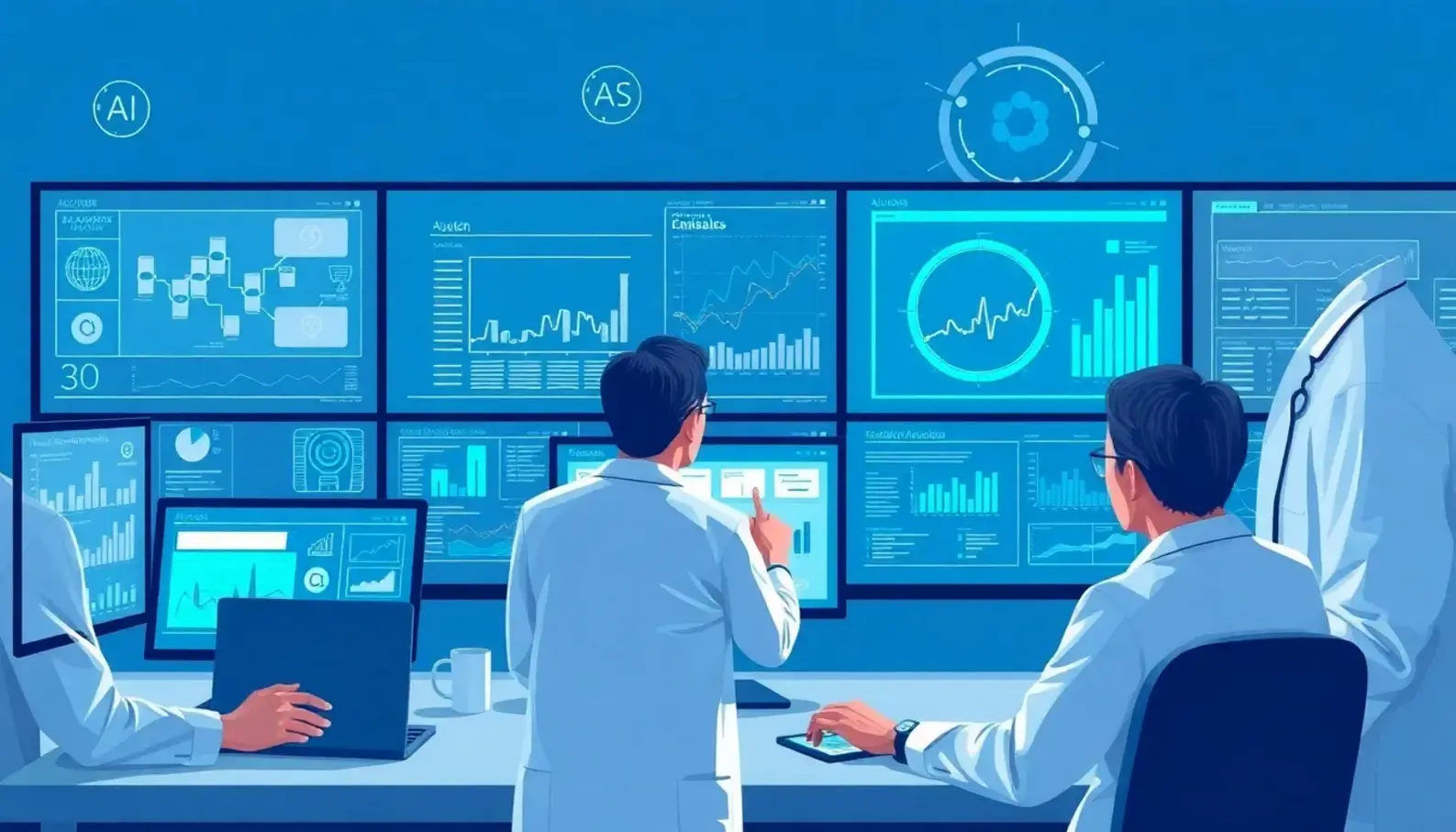
As healthcare ecosystems grapple with an ever-increasing volume of data, artificial intelligence emerges as a powerful tool to harness and transform this data into meaningful insights. The integration of AI into healthcare analytics is reshaping patient care and streamlining hospital operations. AI-driven technologies like machine learning and natural language processing are making it feasible to extract precise, actionable insights from vast datasets, impacting clinical outcomes and administrative efficiencies significantly.
Machine Learning and Predictive Analytics in Healthcare
Machine learning (ML) algorithms excel in identifying patterns within complex and multidimensional data, a capability that is invaluable in healthcare. They can ingest and analyze a variety of data sources—from electronic health records (EHRs) to imaging data—facilitating early detection of diseases, treatment optimization, and patient management. Predictive analytics, powered by ML, enables practitioners to foresee health risks and complications by analyzing historical data and identifying risk factors.
For instance, predictive models can forecast patient readmissions by assessing patient demographics, medical history, and current health status. This foreknowledge allows healthcare providers to tailor interventions to minimize readmission risks, enhancing patient care quality while reducing costs.
Natural Language Processing and Data Interpretation
Natural language processing (NLP) techniques have become instrumental in healthcare for extracting meaningful information from unstructured data, such as physician notes and medical literature. By converting text data into structured information, NLP aids in disease diagnosis, identifying symptoms, and even automating routine documentation tasks that often consume valuable time of healthcare providers.
One practical application of NLP is in the assessment of patient satisfaction and service quality through sentiment analysis of patient feedback. By analyzing patient reviews and feedback in real-time, hospitals can swiftly identify areas needing improvement and address patient concerns more proactively.
Impact on Treatment Plans and Patient Outcomes
Integrating AI into treatment planning has a profound impact on patient outcomes. AI systems can analyze clinical data comprehensively to recommend personalized treatment plans that accommodate individual patient profiles. Case studies illustrate this potential; for example, in oncology, AI algorithms can scrutinize tumor genetics alongside clinical data to propose targeted therapies, potentially increasing treatment efficacy and reducing adverse effects.
Moreover, AI-facilitated analytics in imaging has enhanced diagnostic accuracy. Algorithms trained on extensive image datasets can detect anomalies with greater precision than traditional methods, ensuring more accurate and timely diagnoses. These innovations contribute directly to improved patient outcomes by enabling more effective and personalized interventions.
Operational Efficiency and Hospital Management
AI also supports hospitals in optimizing resource allocation and operation management. In light of growing pressures to reduce costs without compromising care quality, AI-driven analytics provides hospital administrators with insights to make informed decisions regarding staffing, inventory management, and patient flow.
AI tools use historical and real-time data to model patient admission trends and predict peak occupancy periods. Such insights enable hospitals to optimize staffing levels and resource availability, enhancing operational efficiency. Efficient resource management not only improves hospital performance but also elevates patient experience by reducing wait times and avoiding resource shortages.
Challenges and Best Practices for AI Adoption
Despite the potential benefits, the adoption of AI in healthcare analytics is not without challenges. Concerns over data privacy and security loom large, especially regarding the handling of sensitive health data. Institutions must navigate rigid regulatory landscapes while adhering to standards designed to protect patient privacy and data integrity.
Additionally, integrating AI solutions requires overcoming technical and cultural barriers within healthcare organizations. Successful deployment hinges on collaboration between IT specialists and healthcare professionals to develop interpretable and trustworthy AI models.
Adopting best practices, such as establishing a multidisciplinary team, prioritizing data governance, and fostering a culture of continuous learning, can facilitate smoother integration. Maintaining transparency in AI processes and ensuring models are aligned with clinical standards are also crucial for gaining stakeholder trust.
Amid these challenges, embracing hybrid approaches—combining machine learning with domain knowledge—can mitigate risks and enhance model performance. To dive deeper into the technical strategies enhancing AI’s role in healthcare, visit this resource on hybrid computing strategies.
AI’s role in transforming healthcare analytics is both promising and intricate, driving innovations that redevelop patient care and operational frameworks. As the technology evolves, healthcare institutions equipped to navigate its challenges will position themselves at the forefront of innovative patient-centered care.
Navigating Challenges and Opportunities in AI Implementation

Implementing artificial intelligence in healthcare analytics presents unique challenges and opportunities. Foremost, regulatory compliance is at the forefront of these considerations. Organizations must adhere to stringent regulations that govern patient data, such as the Health Insurance Portability and Accountability Act (HIPAA) in the United States. Compliance ensures that the integration of AI into healthcare systems respects legal constraints and protects patient confidentiality.
Beyond regulatory compliance, data privacy and security concerns are paramount. AI systems require vast amounts of data to learn and operate effectively. However, this data could become a double-edged sword, posing risks if not handled securely. Implementing robust encryption methods and secure data storage practices are essential to prevent unauthorized access and data breaches. Cybersecurity measures must evolve in tandem with AI technologies to safeguard sensitive information.
Engaging stakeholders across various levels of the organization is also crucial. Clinicians, often at the forefront of using AI in practice, must be involved from the outset to ensure the tools meet practical clinical needs. Their insights can guide the development process, ensuring that AI solutions offer value and are user-friendly. IT teams, conversely, are the backbone of technical integration, offering the essential infrastructure and expertise to seamlessly incorporate AI tools into existing systems.
Organizational culture significantly influences AI adoption in healthcare environments. A culture that fosters innovation and embraces technology naturally predisposes itself to successful AI integration. Conversely, resistance to change can be a barrier. Leadership must cultivate an environment where stakeholders feel empowered to experiment with and adopt innovative solutions without fear of failure.
Looking ahead, predictive modeling and personalized medicine represent significant opportunities within AI healthcare analytics. Predictive models can forecast patient outcomes, enabling preemptive interventions that optimize care and resource allocation. Personalized medicine, augmented by AI, promises to tailor treatments to individual patient profiles, increasing efficacy and minimizing adverse effects. The combination of these advancements could revolutionize healthcare delivery, making it more efficient and effective.
To harness these benefits, healthcare IT leaders can adopt several actionable strategies. First, they should invest in ongoing education and training for all stakeholders to keep them abreast of the latest developments in AI technologies. Second, fostering interdisciplinary collaboration can bridge the gap between technical development and clinical application, ensuring solutions address real-world needs. Third, prioritizing scalable and flexible IT infrastructures can accommodate the evolving nature of AI applications in healthcare.
In conclusion, while AI offers transformative potential for healthcare analytics, realizing these benefits requires careful navigation of regulatory landscapes, robust data security practices, and active stakeholder engagement. By creating a supportive culture and staying ahead of technological trends, healthcare organizations can not only overcome barriers but also seize emerging opportunities to revolutionize patient care.
For further insights into how AI is impacting various sectors, including healthcare, you might explore related topics such as AI in finance strategies. Understanding these cross-sector implementations can provide valuable lessons that transcend industry boundaries.
Final words
AI integration in healthcare analytics offers unprecedented opportunities to harness data for improving patient outcomes and streamlining operations. Navigating the complexities of implementation requires a strategic approach that considers technological, regulatory, and organizational aspects. The future of healthcare will increasingly depend on the ability to leverage AI technologies effectively, fostering innovations that enhance care quality and operational efficiencies. Adopting these insights is not just beneficial but essential in navigating the evolving landscape of healthcare analytics.
Schedule a Consultation
Learn more: https://innoupdates.com
About us
At Innoupdates, we specialize in providing cutting-edge AI-driven solutions tailored for the healthcare sector. Our offerings range from advanced data analytics systems to comprehensive consulting services that guide organizations through the complexities of AI adoption. We ensure that our clients not only stay ahead of market trends but also maximize their technology investments to achieve operational excellence and improved patient care outcomes.