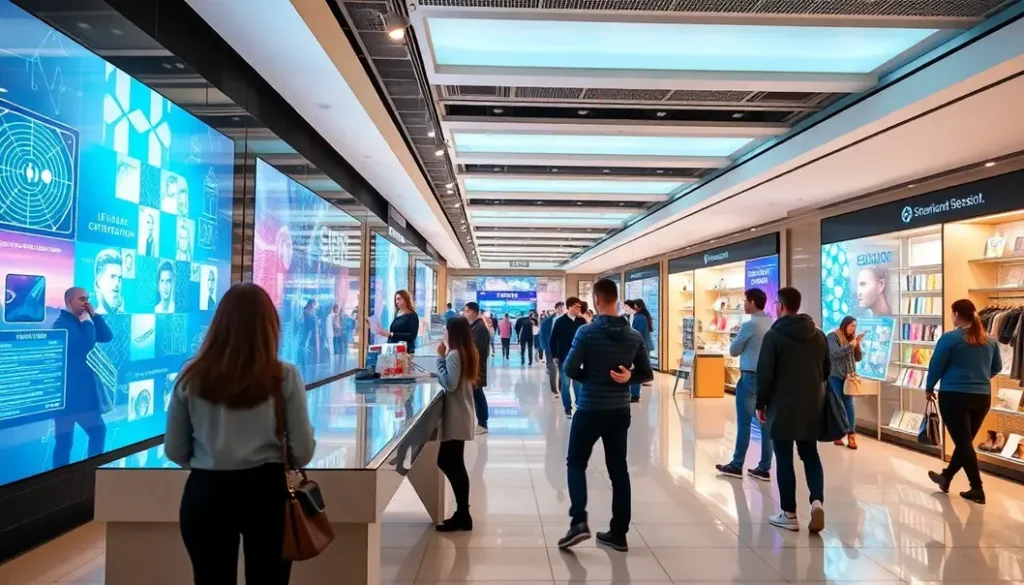
The retail industry stands on the brink of profound change as artificial intelligence reshapes how brands interact with their customers. From personalized shopping experiences to predictive inventory management, AI tools are revolutionizing efficiency and engagement. As the competition ramps up, CTOs and creative leaders must evaluate how AI not just enhances operational capabilities but also enriches the overall retail experience. This exploration will delve into the specific AI applications that are driving customer loyalty and operational success in retail.
Unveiling AI’s Role in Customer Engagement

Incorporating AI into retail is transforming how brands connect with their customers. By leveraging machine learning and natural language processing, retailers are crafting more personalized interactions. These technologies allow businesses to anticipate what customers want before they even know themselves, enhancing the shopping experience significantly.
At the heart of this transformation is machine learning, which sifts through vast amounts of data to find patterns that inform decision-making. Retailers employ machine learning algorithms to analyze customer purchase histories, browsing behaviors, and even social media interactions. This analysis enables them to offer tailored recommendations, leading to a more satisfying customer journey.
Take, for example, online clothing stores that use AI to suggest outfits based on previous purchases and size preferences. By recognizing subtle patterns in customer choices, brands can propose products that closely match individual tastes. This personalized approach fosters a sense of being understood and valued, which is essential for building brand loyalty.
Natural language processing (NLP) is another groundbreaking tool reshaping customer engagement. Through NLP, chatbots and virtual assistants can understand and respond to customer inquiries efficiently. By processing text and speech in a way akin to human interpretation, these intelligent systems can handle a broad array of customer service tasks, from answering simple questions to addressing complex issues. This capability allows retailers to provide consistent, 24/7 customer support, thus elevating customer satisfaction.
In addition to personalized recommendations, AI-driven analytics play a crucial role in refining retail strategies. Using predictive analytics, retailers can forecast demand fluctuations, optimize inventory, and adjust pricing dynamically. This adaptability ensures that customers find the products they desire, at the right time, and at a competitive price. As a result, customer experiences are not just reactive but proactively managed to meet emerging trends and needs.
Real-world examples underscore the potency of AI in retail. Some grocers utilize AI to predict purchasing patterns, ensuring that stock levels meet customer demands without overproduction. This approach minimizes waste and ensures product availability, enhancing customer trust. Similarly, electronics retailers might use AI analytics to determine optimal store layouts or even identify underperforming items that require reimagined advertisement strategies.
An intriguing application of AI in enhancing customer engagement is sentiment analysis. By examining customer reviews and social media interactions, AI algorithms can gauge public sentiment about products or services. This insight allows brands to make informed adjustments in real-time, addressing complaints or amplifying positive experiences. Consequently, retailers can refine campaigns and product offerings to align more closely with customer desires and market conditions.
The synergy between AI and customer engagement is further exemplified through smart assistants, which relay real-time information to facilitate immediate purchasing decisions, much like smart assistants in the home. By integrating voice commands, retailers allow customers to shop hands-free, enabling a seamless browsing experience that fits seamlessly into busy lifestyles.
AI’s capacity to empower retailers with detailed consumer insights cannot be overstated. By enabling a granular understanding of customer preferences and behaviors, retailers can create more impactful marketing strategies. For instance, dynamic, AI-driven marketing campaigns can shift in real-time, aligning with customer interests and intent more accurately than static campaigns ever could. This flexibility not only increases engagement but also enhances conversion rates.
Moreover, AI fosters a deeper connection with customers by crafting experiences that feel personalized yet universally accessible. It’s this balance of individual attention and broad applicability that positions AI as a cornerstone for future retail strategies. Brands that harness AI effectively can differentiate themselves in the crowded retail landscape, delivering experiences that attract and retain customers.
In conclusion, the integration of AI in retail is revolutionizing customer engagement by adopting more personalized and intelligent approaches. As machine learning, NLP, and analytics continue to evolve, so too will the opportunities for retailers to connect more authentically and effectively with their customers. This transformation is not merely about technology but about fostering a new era of customer-centric retail experiences.
Optimizing Operations with Predictive Analytics
In the ever-evolving landscape of retail, optimizing operations is a crucial aspect that can significantly impact both efficiency and customer satisfaction. Predictive analytics, empowered by AI, provides retailers with powerful tools to streamline operations. By harnessing the vast amounts of data generated through customer purchases, retailers can forecast future trends and allocate resources with precision. This chapter delves into how AI-driven predictive analytics can refine inventory management, streamline supply chains, and enhance product assortment strategies.
Predictive analytics involves analyzing historical data to make informed predictions about future events. In the context of retail, this means examining past purchase patterns, seasonal trends, and customer behavior to anticipate future demand. AI systems can analyze complex data sets far beyond the capacity of human analysts, identifying patterns and correlations that inform decision-making.
One key area where predictive analytics makes a substantial impact is inventory management. Overstocks and stockouts are perennial challenges in retail, leading to revenue loss and customer dissatisfaction. Predictive analytics enables retailers to maintain optimal stock levels by accurately forecasting demand for each product. This means fewer products languish on shelves and resources are put to better use.
Consider a leading global retailer that adopted AI to transform its inventory management process. By analyzing historical sales data combined with external factors such as weather forecasts and local events, the retailer could predict product demand with remarkable accuracy. This allowed them to adjust inventory levels proactively, significantly reducing excess inventory and minimizing markdowns.
Beyond inventory management, AI-driven predictive analytics enhances supply chain efficiency. Retail supply chains are intricate networks requiring precise coordination. An unexpected surge in demand or a disruption in supply can cause ripple effects that undermine profitability. Predictive analytics helps retailers anticipate these fluctuations and adjust their supply chains accordingly.
For example, a major electronics retailer utilized predictive analytics to optimize its supply chain. By integrating sales data, supplier performance metrics, and logistics data, the retailer could foresee potential disruptions or spikes in demand. This proactive approach allowed them to reroute shipments, adjust orders, and ultimately ensure products were available when and where needed.
Moreover, predictive analytics supports retailers in developing more effective product assortment strategies. By understanding customers’ preferences and predicting which products will be in demand, retailers can tailor their offerings to meet customer expectations. This not only enhances customer satisfaction but also drives sales.
A fashion retailer illustrates this impact by using AI-driven predictive analytics to refine its seasonal collections. By analyzing customer behavior, previous sales, and even social media trends, the retailer accurately forecasted high-demand styles. This enabled them to prioritize production and marketing efforts toward those items, maximizing profitability and reducing unsold stock.
When retailers successfully implement predictive analytics, the results are tangible both operationally and financially. Enhanced forecasting leads to improved resource allocation, reducing waste and increasing efficiency. Retailers become more agile, better equipped to respond to market changes and consumer preferences. The positive effects extend to customer satisfaction as well. When products are consistently in stock, and assortments resonate with customer desires, loyalty and sales are bolstered.
The tangible benefits of AI-powered predictive analytics in retail are evident across various sectors. As demonstrated, retailers that embrace this technology improve inventory accuracy, enhance supply chain resilience, and fine-tune product assortments. The result is a more efficient operation that not only cuts costs but also elevates the customer experience.
To explore how AI is driving business transformations in other sectors, such as finance or marketing, you might find useful insights at AI in business growth strategies. Understanding these cross-industry innovations illustrates the expansive potential of AI technologies.
The journey toward leveraging AI in retail is ongoing, with both challenges and opportunities on the horizon. However, by adopting AI-driven predictive analytics, retailers can position themselves to thrive in a competitive marketplace while achieving unparalleled operational efficiency and heightened customer satisfaction.
The Future of Retail: Building Brand Loyalty through AI

Artificial Intelligence is reshaping how retailers build and maintain brand loyalty. By creating personalized and immersive shopping experiences, AI is a cornerstone in developing long-lasting consumer relationships. This transformation is not just a trend; it’s a strategic overhaul that demands innovative approaches in customer engagement.
AI-Powered Loyalty Programs
Traditional loyalty programs are now a thing of the past. AI elevates them by providing tailored experiences for each customer. Machine learning algorithms analyze purchase history, preferences, and behavior, enabling the crafting of customized rewards. Such specificity enhances a customer’s emotional connection to a brand. For instance, rather than offering a generic discount, a store may offer tailored promotions on products similar to those the customer has shown interest in. This promotes a sense of recognition and value, pivotal for loyalty.
Sentiment Analysis: Understanding Customer Emotions
Understanding customer satisfaction is crucial for fostering loyalty. Sentiment analysis tools powered by AI sift through vast amounts of customer feedback, reviews, and social media engagements. These tools identify trends in customer sentiment, allowing retailers to address issues proactively. If a particular aspect of service or product is consistently criticized, businesses can make informed changes to address these concerns. By showing responsiveness, brands demonstrate their commitment to consumer satisfaction, reinforcing trust and loyalty.
Seamless Omnichannel Integration
The modern consumer interacts with brands across multiple platforms. A seamless omnichannel experience is no longer optional; it is essential. AI plays a vital role by ensuring consistency across all touchpoints, whether online stores, apps, or physical shops. Advanced AI systems track inventory and customer interactions in real-time. This integration guarantees that customers receive uniform experiences, reinforcing brand reliability. For example, a customer starting their shopping journey online could receive personalized assistance and recommendations when visiting a physical store, enhancing their overall experience.
Innovative Implementations
AI’s implementation in retail is best illustrated through innovative examples. Consider a smart virtual assistant embedded in a retailer’s app, guiding users with real-time recommendations based on current trends and user preferences. Such systems leverage historical data and predictive analytics to anticipate needs and desires, driving engagement and loyalty.
Moreover, wearable technology integrated with AI can offer a new depth of personalization. Imagine a loyalty program where, based on biometric data, an interface suggests shopping discounts on basketball gear just after a workout session. This level of interaction turns technology into a personal shopping companion, consistently nudging consumers towards brand loyalty.
A Forward-Looking Perspective
The path ahead for AI in retail is vibrant with possibilities. As AI technologies evolve, their capacity to refine customer loyalty strategies will expand. Innovations like augmented reality shopping experiences or smarter chatbots operating 24/7 will soon become standard. These technologies offer unprecedented levels of personalization and convenience, foundational elements for enduring brand loyalty. To explore some related advancements, consider reading about smart assistants facilitating home shopping, which similarly enhance the consumer experience by integrating AI into daily life.
In summary, the future of retail, driven by AI, offers tools that craft meaningful consumer relationships. By harnessing the power of AI for loyalty programs, sentiment analysis, and seamless omnichannel strategies, retailers can step into a new era of consumer engagement. Brands that adeptly maneuver these innovations will not only survive but thrive, establishing profound and lasting loyalty with their customer base.
Final words
As AI technologies continue to evolve, retail leaders must embrace these advancements to remain competitive. By enhancing customer engagement and optimizing operations, AI empowers brands to foster deeper connections with their audiences while driving both efficiency and loyalty. The future of retail is bright, and AI is at the helm, charting a course toward transformative experiences for customers and businesses alike.
Join the AI revolution in retail and apply for our Beta program today!
Learn more: https://innoupdates.com
About us
We offer a revolutionary AI-powered solution specifically designed for the retail industry. Our platform integrates machine learning, data analytics, and personalized marketing tools to help retailers enhance customer experience, optimize supply chains, and improve overall operational efficiency. With our technology, brands can anticipate customer needs, streamline inventory management, and build lasting loyalty among their customer base.