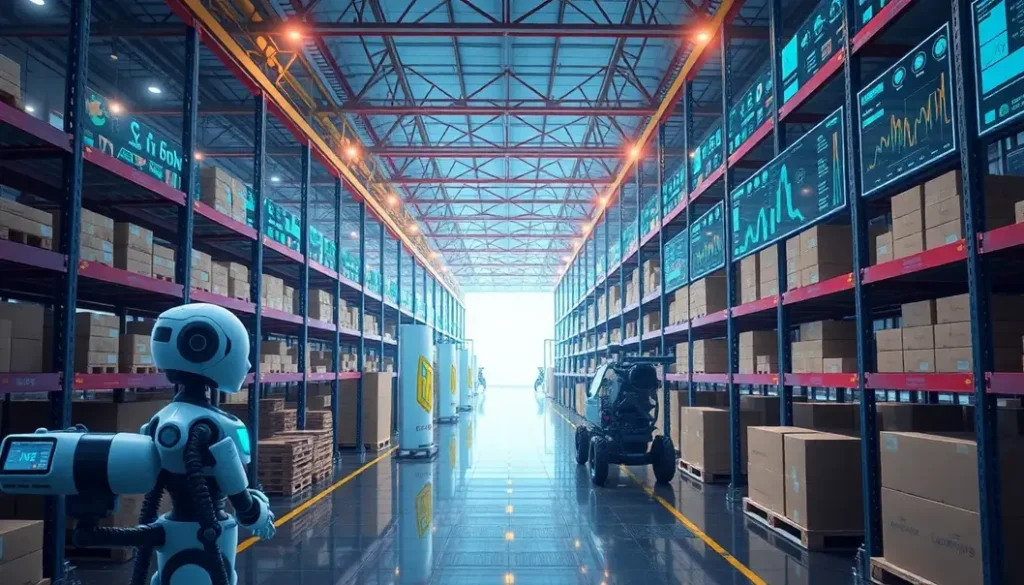
The advent of artificial intelligence (AI) in supply chain management marks a pivotal shift in operational efficiency. By leveraging AI-enabled recommendation systems, organizations can transform data into actionable insights, streamlining procurement, production, and distribution processes. This paradigm not only enhances decision-making but also fosters a more agile and responsive supply chain. For CIOs and CEOs, understanding the dynamics of AI recommendation systems is essential to capitalize on their potential for creating competitive advantages in a rapidly evolving market.
Harnessing Data: The Backbone of AI Recommendation Systems

In the evolving landscape of supply chain management, data serves not only as an asset but as a critical foundation for building advanced AI recommendation systems. These systems are designed to transform traditional supply chain operations into agile, efficient, and highly responsive networks.
At the heart of these systems lies the effective harnessing and utilization of data. The variety of data types that feed AI recommendation algorithms is vast, encompassing transactional data, sensor data, social media inputs, weather patterns, and more. This data, when processed correctly, empowers organizations to gain valuable insights, driving decisions that optimize every aspect of the supply chain.
One of the pivotal techniques in processing these vast data reservoirs is predictive analytics. This branch of analytics focuses on analyzing historical data patterns to forecast future trends. Within the context of supply chains, predictive analytics can significantly enhance demand forecasting, enabling companies to anticipate stock needs accurately and reduce instances of overproduction or stockouts. By analyzing seasonal trends, consumer behavior, and market conditions, predictive models can suggest optimal inventory levels, thus reducing holding costs and increasing turnover rates.
In addition to predictive analytics, machine learning algorithms form a core component of AI recommendation systems. These algorithms, through continuous learning and adaptation, offer nuanced insights that static models cannot provide. For example, machine learning can optimize routing and logistics by predicting potential disruptions and suggesting alternative paths. Given the complexity of global logistics, incorporating machine learning into supply chain operations can reduce delays and improve delivery precision.
Real-world applications of these technologies abound. In predictive maintenance, companies equipped with IoT-enabled devices can continuously monitor the health of their machinery. By analyzing sensor data through machine learning, organizations can predict failures before they occur, scheduling maintenance proactively. This foresight not only prevents costly downtime but also extends the lifespan of machinery.
Inventory management, too, benefits immensely from AI-driven insights. By leveraging big data analytics, businesses can optimize their stock levels dynamically. For instance, machine learning can analyze past sales data alongside current market trends to recommend restocking schedules that align with demand fluctuations. This balancing act ensures that capital is not unnecessarily tied up in inventory, thus enhancing cash flow.
Demand forecasting is another area where AI profoundly impacts efficiency and profitability. Traditional forecasting methods often rely on static models that fail to account for unexpected market conditions. AI systems, however, can incorporate real-time data streams to adjust forecasts on the fly. This adaptability means that predictions remain accurate even amidst changing circumstances, allowing companies to respond swiftly to shifts in consumer demand.
A leading example in the industry is how logistics firms are integrating AI to refine their supply chain operations. These organizations utilize a mix of predictive analytics and machine learning to not only predict delivery times with remarkable precision but also to flag potential disruptions in advance. By doing so, they maintain service reliability even in the face of unforeseen challenges.
An intriguing development is the integration of AI-driven autonomous drones in logistics, an innovation explored further in autonomous drones logistics. These drones can deliver goods to remote areas efficiently, guided by AI systems that determine optimal delivery routes in real time. Such applications are revolutionizing last-mile delivery and providing solutions in regions where traditional logistics face limitations.
As businesses increasingly adopt AI-based solutions, the need for robust data frameworks will only grow. The success of AI recommendation systems hinges on the quality and breadth of data available. Consequently, companies must invest in data collection and processing technologies, ensuring seamless integration across the supply chain. This strategic investment will pave the way for more innovative solutions, driving the future of supply chains to new heights.
Enhancing Decision-Making Processes through AI Insights

In supply chains, the ability to make swift and informed decisions is crucial for maintaining competitive advantage and operational efficiency. AI-driven recommendation systems have emerged as transformative tools, equipping decision-makers with deep, data-driven insights that augment their ability to evaluate complex situations and opportunities in real-time.
One of the core functionalities of AI in supply chains is facilitating real-time analytics. These systems process vast amounts of data generated from diverse sources such as inventory levels, market trends, and transportation logistics. The algorithms can identify patterns and predict outcomes, enabling supply chain managers to anticipate demand fluctuations, optimize inventory levels, and reduce waste. By continuously analyzing data, AI provides the foresight necessary to navigate uncertainties, ensuring that supply chains remain resilient and responsive to changes in market dynamics.
Risk assessment is another domain where AI-driven systems shine. Traditional methods often rely on retrospective analyses and human intuition, which can be limited by biases and historical data constraints. AI, however, evaluates risk by simulating various scenarios, assessing potential impacts, and offering probability-based predictions. This real-time risk modeling allows leaders to proactively address potential disruptions, whether they arise from supplier issues, geopolitical tensions, or natural disasters. Consequently, supply chain managers can implement contingency plans preemptively, securing operations against unforeseen crises.
Supplier evaluation, a critical element of supply chain management, is significantly enhanced by AI. Historically, supplier selection was a labor-intensive process reliant on periodic manual reviews and subjective assessments. AI transforms this process by aggregating and analyzing vast datasets, including supplier performance metrics, compliance records, and financial health indicators. The resultant insights enable supply chain professionals to make objective and strategic supplier selections. Improved supplier relationships, based on reliable data, often result in cost efficiencies, greater innovation, and more robust supply chain networks.
AI empowers leaders to execute decisions faster without sacrificing quality or accuracy. By automating routine analyses and providing advanced visualization tools, AI reduces decision paralysis and enhances strategic agility. Leaders can focus on high-value tasks such as strategy development and stakeholder management while relying on AI to provide timely updates and suggestions based on the latest data.
The impact of AI integration in supply chains is evident in case studies from Fortune 500 companies. For instance, a leading global retailer implemented AI algorithms to optimize its inventory management process. By leveraging AI’s predictive analytics, the retailer achieved a 20% reduction in excess inventory, leading to significant cost savings and improved cash flow.
Additionally, a major automotive company employed AI-driven risk assessment tools to enhance its supply chain resilience. This initiative enabled the company to reduce lead times and improve fulfillment rates by 15%, ensuring that production schedules were maintained even during supply shocks.
While the benefits are clear, the integration of AI in supply chains necessitates consideration of AI in business growth. It highlights strategic pathways and business transformations facilitated by AI. Companies must navigate challenges such as data privacy, integration with legacy systems, and the need for continuous employee training to adapt to AI-enhanced processes effectively.
AI-driven recommendation systems are revolutionizing supply chain management by enabling data-rich decision-making. As organizations continue to harness these technologies, they position themselves to achieve unprecedented levels of efficiency and profitability.
Final words
AI-powered recommendation systems hold immense potential for the future of supply chain management. By harnessing data and integrating informed AI insights, organizations can significantly enhance their operational efficiency and drive profitability. As the landscape continues to evolve, embracing these technological advancements will be crucial for staying competitive.
Join the Community
Learn more: innoupdates.com
About us
Our offering encompasses a comprehensive suite of AI solutions tailored for the supply chain industry. Our expert team collaborates with businesses to implement AI-driven recommendation systems, enhance visibility, streamline operations, and deliver actionable insights that foster growth and innovation.