
Voice recognition technology has evolved significantly, shifting from niche applications to mainstream adoption. Leveraging machine learning and natural language processing, voice recognition enables seamless human-computer interaction, improving user experience and operational efficiency. Developers and businesses must understand its capabilities and incorporate them into their workflows to create innovative solutions. This article delves into the technicalities of voice recognition technology, discussing its features, challenges, and best practices for implementation. Whether you’re a developer looking to integrate voice services or a business aiming to enhance customer engagement, this guide will pave the way for effective application of this cutting-edge technology.
Understanding Voice Recognition Technology
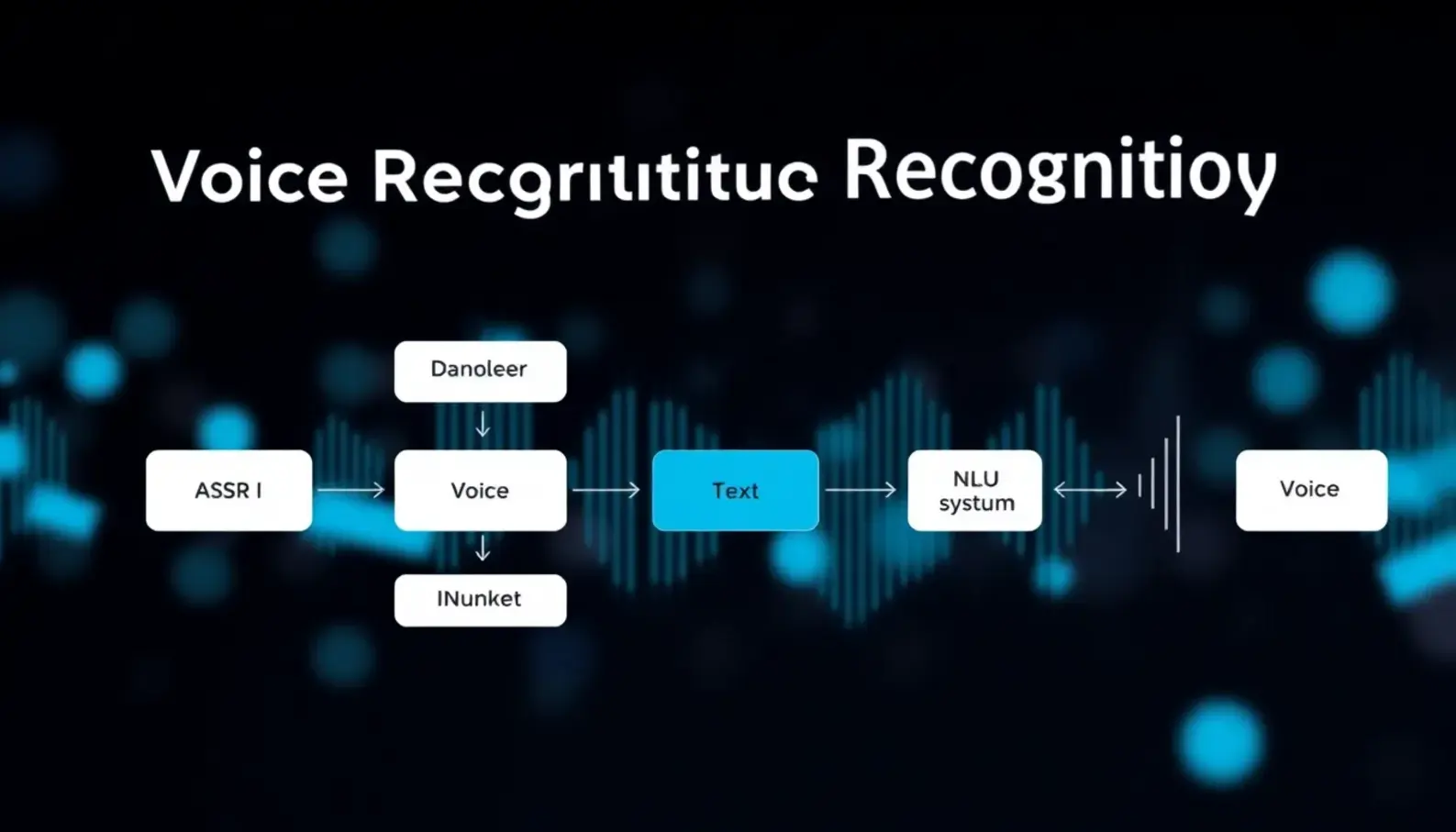
Voice recognition technology has transformed how we interact with machines. It involves machines interpreting and responding to human speech, making interaction more intuitive and efficient. Over the years, advancements have greatly enhanced the accuracy and utility of these systems, allowing for widespread adoption across various sectors.
The journey of voice recognition began in the early 1950s, with technology that could recognize limited vocabulary. Since then, it has undergone significant refinements due to improvements in computational power and the rise of machine learning. The integration of neural networks has been pivotal, drastically improving the performance and accuracy of recognizing diverse speech patterns.
Working Principles
Voice recognition systems operate through several critical components. One is Automatic Speech Recognition (ASR), which converts spoken language into text. ASR systems utilize acoustic models to analyze sound waves and phonemes—the smallest units of sound. They match these against a database, interpreting the most likely sequence of words.
Alongside ASR, Natural Language Understanding (NLU) extracts meaning and intent from recognized text. It interprets context, semantics, and user intent, allowing systems to respond appropriately. NLU encompasses complex algorithms and language models trained on vast datasets, improving with each interaction.
The final component, Text-to-Speech (TTS) systems, enables machines to convert text back into human-like speech. TTS technologies mimic human intonation and emphasis, making interactions more natural. Together, ASR, NLU, and TTS form the backbone of most voice-enabled applications.
Types of Voice Recognition Systems
Voice recognition technology spans several modalities, each serving distinct purposes. Speaker Verification is used for security, confirming the identity of a speaker based on voice biometrics. It compares voice samples against stored profiles, ensuring secure and personalized interactions.
Another type is Voice Command Systems, which allow users to interact with devices through specific voice commands. These systems are embedded in smartphones, vehicles, and smart homes, providing convenience and accessibility. They require robust NLU to accurately interpret and execute spoken requests.
Dialogue Systems represent another advancement. These conversational agents can engage in back-and-forth interactions, offering services like customer support or virtual assistance. They rely heavily on ASR, NLU, and TTS, coupled with machine learning models to learn from previous dialogues, enhancing responsiveness and accuracy.
These modalities cater to different industries, from healthcare to automotive, tailoring experiences to user needs and expectations. For instance, voice recognition systems in healthcare can transcribe patient interactions, improve documentation efficiency, and reduce the potential for human error.
Advancements Fueling Progress
Recent years have seen leaps in machine learning that significantly boost voice recognition capabilities. Deep learning models, particularly those based on neural networks, enable systems to learn and generalize better from varied data inputs. Transfer learning has also played a critical role, allowing pre-trained models to adapt to new tasks with minimal data.
Another significant advancement is the incorporation of context-aware computing, where systems use context clues to understand more about a user’s situation or environment. This helps provide more accurate responses, improving user experience.
As we look to the future, the integration of ambient intelligence highlights one of the promising paths forward. Voice recognition is evolving to become more seamless and anticipatory, blending into the background of everyday life, enhancing human interactions with technology.
The growing capabilities of these systems open new horizons for developers and businesses. By harnessing these technologies, opportunities to innovate and enhance user experiences abound, from building more inclusive interfaces to creating entirely new service domains.
Integrating Voice Recognition into Applications
Voice recognition technology offers developers the remarkable chance to create highly interactive applications. The journey to integrating this technology into software is filled with opportunities and challenges. Understanding popular APIs and frameworks is essential for successful implementation.
APIs offer powerful tools for voice recognition. Developers can choose from several options that provide robust solutions, including speech-to-text conversion, which can be essential for accessibility and user convenience. Frameworks natively support various languages and dialects, addressing global audiences with ease. Each solution varies, but they fundamentally analyze acoustic signals and convert them into digital data that applications can interpret.
Integrating voice recognition into applications involves some distinct steps. First, define the scope of your project and identify how voice recognition will enhance the user experience. Consider functionalities that can be automated or improved with voice commands. The next step is selecting the right API or framework that aligns with your development environment and project needs.
Once selected, familiarize yourself with the SDKs provided by these platforms. Begin by setting up a development environment. Whether it’s for mobile, desktop, or web applications, ensure compatibility with voice recognition libraries. Implement event listeners to capture audio input and facilitate communication between the app and the voice recognition engine. Customize responses to user inputs to make interactions feel natural and intuitive.
Best practices in voice-enabled application development emphasize user experience design. This requires considering how users interact with voice commands intuitively. Some users may prefer concise commands, while others favor natural conversational dialogue. Incorporate adaptability to handle diverse accents and speech patterns efficiently. Testing with varied user demographics is crucial to ensure inclusivity.
Data privacy is paramount in voice applications. Implement robust privacy measures to encrypt and securely store voice data. Adhere to legal compliance, such as GDPR or CCPA, by informing users about data usage and seeking consent. Offer clear privacy policies displayed within your application.
Real-world deployment of voice recognition systems presents its own set of challenges. Handling background noise is vital for maintaining accuracy in recognizing user speech. Employ noise-cancellation techniques and algorithms that enhance voice detection amidst environmental disturbances. Furthermore, user variability in speech volume, speed, and clarity requires adaptable algorithms for consistent performance.
Case studies provide valuable insights—one company significantly boosted customer engagement by voice-enabling its support application. This allowed users to navigate menus and receive assistance through voice commands, improving operational efficiency and satisfaction rates. Another example highlights a retail business utilizing voice recognition to streamline inventory management, using voice commands to update stock data hands-free.
For more insights on applying AI techniques in businesses, check out this resource on AI in business growth, which aligns with enhancing operational efficiency using innovative technologies.
Integrating voice recognition into applications is a journey of investigating potential, subscription to best practices, and adapting to user needs. As more businesses and developers harness this technology, the capabilities and expectations will continue to evolve, unlocking new possibilities for developers and businesses worldwide.
Final words
Voice recognition technology offers immense potential for developers and businesses alike in crafting innovative user experiences. Understanding its workings and best practices for integration enables organizations to stand out in today’s tech landscape. As the technology continues to evolve, embracing voice recognition will be key for future success in a rapidly changing digital world.
Integrate Voice Recognition into Your Apps
Learn more: innoupdates.com
About us
Explore our Voice Recognition APIs that provide robust and scalable solutions for integrating voice capabilities into your applications, enhancing interactions and improving user engagement.