As the retail landscape continues to evolve, leveraging artificial intelligence is pivotal for enhancing customer experience. Entrepreneurs and consultants are increasingly recognizing the potential of AI technologies to refine service delivery, optimize inventory management, and personalize marketing strategies. By exploring advanced AI applications, businesses can not only meet consumer expectations but exceed them, ensuring sustained success in a competitive market. This insight will delve into three key areas where AI can significantly improve the quality of the retail experience.
Personalization at Scale: Tailoring Customer Interactions

The retail industry is undergoing a seismic shift driven by the power of artificial intelligence. One of the most transformative applications of AI is its ability to deliver personalization at scale. By deeply analyzing customer data, retailers can accurately predict customer needs, ensuring every interaction is uniquely tailored.
Customer profiling forms the backbone of this personalized approach. With AI, retailers can segment their audience beyond rudimentary demographics. Advanced algorithms incorporate behavioral data, purchase histories, and even social media activity. This allows retailers to build comprehensive profiles that predict preferences with remarkable precision.
Tailored Recommendations: Maximizing Engagement
AI-driven recommendations are revolutionizing how customers discover products. By analyzing past behavior and identifying patterns, AI systems can suggest items that a customer is most likely to purchase. This predictive capability boosts engagement rates significantly. According to a study by McKinsey, companies that have fully embraced AI see a 10% to 15% increase in sales through personalized recommendations.
A case study illustrating this success is a major online retailer that implemented an AI recommendation engine. The retailer saw a 35% increase in conversion rates and a 15% reduction in return rates, indicating happier, more satisfied customers. The engine continuously learns from customer interactions, continually refining and enhancing its accuracy.
Dynamic Pricing: Offering Real-Time Value
Dynamic pricing is another potent AI-driven technique that tailors pricing strategies in real time. This approach considers competitor pricing, customer demand, and inventory levels. Retailers can offer the right price to the right customer at the right time, maximizing both sales and margins. Research suggests that retailers utilizing dynamic pricing see an average profit increase of 25%.
An illustrative example is a large electronics chain that incorporated dynamic pricing into their strategy. They experienced a 20% boost in online sales within months. AI algorithms enabled them to respond instantly to market fluctuations, ensuring competitive yet profitable pricing.
AI Challenges and Considerations
While the benefits of AI in personalization are clear, challenges remain. Retailers must navigate privacy concerns, ensuring customer data is handled securely and ethically. Building trust through transparency in data usage is paramount to fostering a loyal customer base.
Retailers should also ensure that their AI systems remain unbiased. This involves continually auditing algorithms for potential biases that may skew results or lead to unfair treatment of certain customer segments.
For businesses keen on exploring ethical considerations in AI use, resources on AI ethics provide valuable insights into maintaining consumer trust while optimizing AI’s potential.
The Way Forward
The future of retail lies in leveraging AI’s ability to engage customers at a deeply personal level. Companies capable of harnessing this technology will not only enhance the customer experience but also drive substantial competitive advantage. As retailers continue to refine their AI strategies, personalization at scale will become the norm, with AI serving as the catalyst for this transformation.
AI in Inventory Management: Optimizing Stock Levels
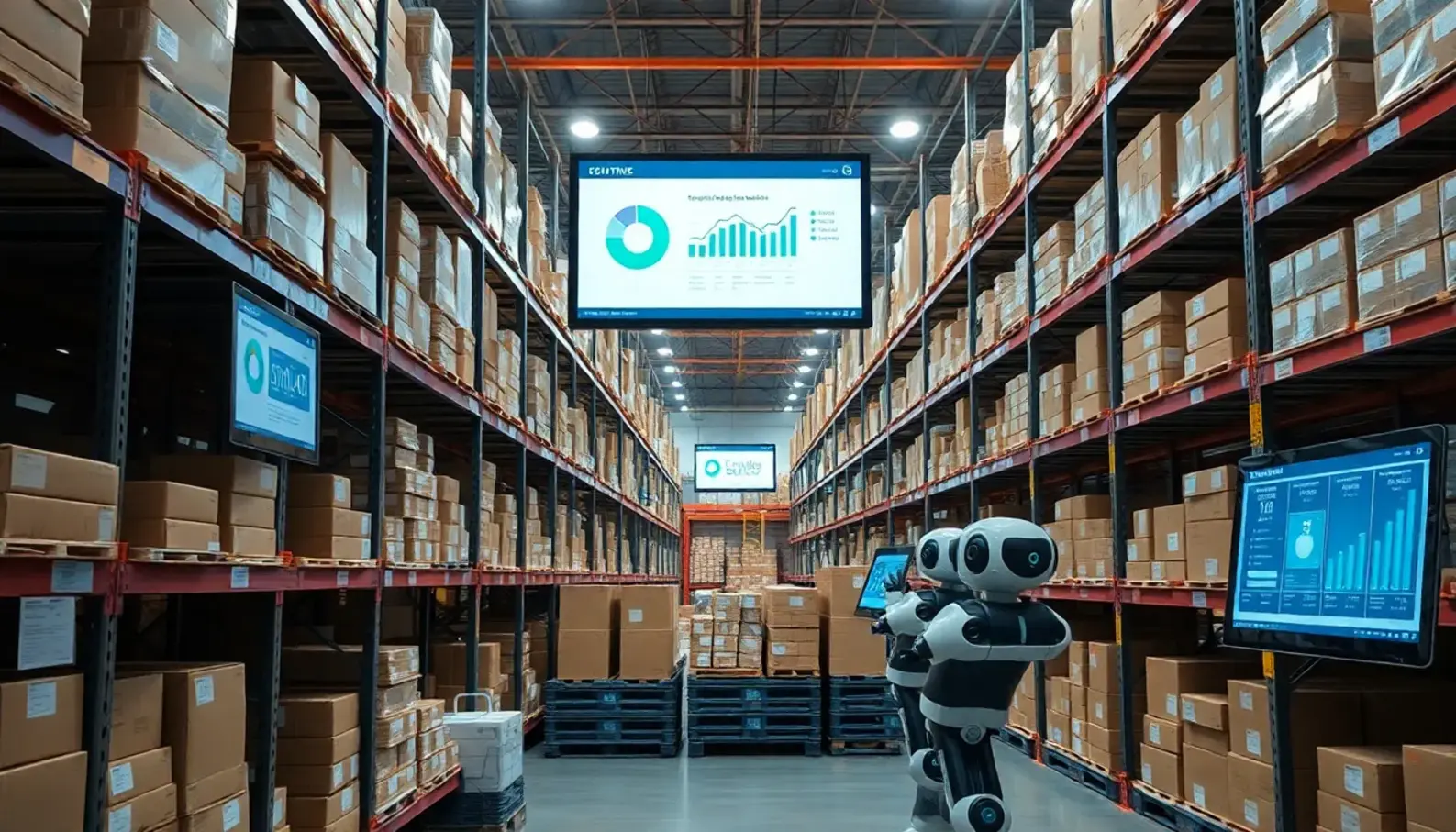
AI technology has become an indispensable tool for inventory management in the retail sector, helping businesses streamline processes, forecast demand, and maintain optimal stock levels. By leveraging advanced algorithms and real-time data analytics, AI helps retailers achieve an agile and responsive inventory system that significantly minimizes the risks of overstocking and stockouts.
AI algorithms have revolutionized demand forecasting by analyzing vast arrays of data, including historical sales figures, market trends, and customer behaviors. They decipher patterns and predict future demand with remarkable accuracy. According to a study by McKinsey, retailers using AI-based forecasting solutions have improved their forecasting accuracy by 20% to 50%, leading to a 10% reduction in stockouts and a reduction in inventory costs of up to 20%.
Real-time stock level monitoring with AI is another game-changer. Through the application of IoT sensors and AI analytics, retailers can monitor inventory levels instantaneously across multiple locations. This enables them to make informed restocking decisions and adjust supply chains dynamically. Machine learning algorithms analyze sales patterns and inventory turnover rates, offering insights into the optimal timing for restocking different products.
Moreover, AI-powered inventory management systems can predict not just what products might be in demand, but also suggest ideal stock quantities to minimize waste. By understanding nuances such as seasonality and regional variations in consumer preferences, AI systems can optimize stock levels accordingly. This ensures that popular items are replenished promptly, while slow-moving inventory is minimized.
Consider the frictionless integration of AI with existing retail systems. This integration not only provides a comprehensive view of inventory but also refines the supply chain operations. A report from Deloitte highlights that AI-driven inventory management has led to a 30% increase in operational efficiency. This efficiency is compounded by the cost savings associated with reduced waste and improved logistics.
Retail giants have particularly benefitted from AI by streamlining their warehouse management systems. In these massive environments, AI aids in organizing product storage more effectively, optimizing pick-paths for time efficiency, and automating re-order processes. This has been instrumental in managing the complexities of omnichannel retailing, where seamless integration of online and offline sales vectors is crucial.
Operational efficiency and cost reduction are not the only benefits; AI-driven inventory management also enhances the customer experience. By ensuring product availability, customers are more likely to find the products they want, which translates into increased satisfaction and loyalty. Enhanced precision in inventory also contributes to personalized marketing strategies by ensuring that promotional offers align closely with available stock, avoiding customer disappointment from unfulfilled promises.
Internal collaboration is also a significant advantage of AI in inventory management. Through data transparency and a unified platform approach, sales, marketing, and supply chain teams can work cohesively to support overall business strategies. AI facilitates real-time communication, fostering a proactive rather than reactive environment. This ensures alignment in strategy execution, contributing significantly to business growth.
The adaptive nature of AI means it continuously learns and evolves, becoming more effective over time. As more data is accumulated, AI systems refine their algorithms, improving their precision in supply chain and stock level predictions. This continuous improvement cycle ensures that retailers are always equipped with the latest insights to inform their inventory strategies.
Although the benefits are clear, the implementation of AI-driven inventory management also presents challenges. Companies must invest in robust IT infrastructure and skilled personnel to manage the sophisticated AI systems. Additionally, data privacy and ethical considerations must be addressed, ensuring that all AI solutions comply with regulatory frameworks and consumer rights.
Nevertheless, the transformative potential of AI in inventory management is undeniable. Its ability to optimize stock levels, reduce waste, and improve operational efficiency makes it an indispensable asset in the retail industry’s quest for greater customer satisfaction and competitive advantage. For further insights into AI’s impact on business growth, readers may find interest in AI in Business Growth.
Enhancing Customer Service: AI-Powered Support Systems

Artificial intelligence is reshaping retail customer service in profound ways. A primary component of this transformation is the deployment of AI chatbots and virtual assistants, which have become increasingly adept at handling customer inquiries with remarkable efficiency. These AI-driven systems provide the luxury of 24/7 customer support, ensuring accessibility at any time, no matter the hour.
AI-powered support systems bring several benefits to retailers. They offer instantaneous responses, handling large volumes of inquiries simultaneously without faltering. Unlike traditional customer service representatives, AI chatbots don’t need breaks, leading to uninterrupted service. This reliability not only enhances customer satisfaction but also fosters brand loyalty, as customers appreciate quick and efficient interactions.
The quick resolution of customer inquiries is another significant advantage. AI systems are programmed to access vast databases that contain answers to frequently asked questions, product details, and common troubleshooting steps. Thus, customers receive precise responses in seconds, without the need for human intervention. For more complex issues, these systems can seamlessly escalate the conversation to a human representative who has been updated on the context, ensuring a smooth transition and minimizing the need for customers to repeat themselves.
A crucial feature of AI chatbots and assistants is their ability to learn from each interaction. Machine learning algorithms analyze customer interactions and adjust responses to improve accuracy over time. This continuous learning process enables AI to better understand customer needs and preferences, thereby offering increasingly personalized service. For example, if a frequent customer regularly inquires about shipping updates, the system can proactively provide this information.
In the retail sector, several companies have successfully integrated AI support systems to enhance customer service. For instance, one retailer implemented an AI chatbot to manage inquiries during peak holiday seasons. The system was able to handle increased customer demand without requiring additional staff, reducing wait times and improving customer satisfaction metrics. Another retailer used a virtual assistant to provide customized product recommendations, resulting in increased conversion rates and higher average order values.
These real-world examples demonstrate that AI-powered customer service isn’t just a theoretical idea but a practical application that organizations can leverage for tangible business results. Furthermore, integrating AI in customer service can lead to significant cost savings as it reduces the need for a large human support team. This efficiency allows businesses to reallocate human resources to more complex tasks that require empathy and complex problem-solving.
For a deeper understanding of how AI is integrated into various business processes, such as marketing or human resources, you can explore more about AI marketing strategies, which showcase how AI analytics tools tailor marketing efforts to match customer preferences closely.
While AI-powered systems continue to evolve, the future holds potential for even more sophisticated tools. These advancements could predict customer needs with greater accuracy and provide even more seamless customer experiences. As AI technology becomes more advanced, these systems will become indispensable to retail operations, transforming them from support tools to strategic assets that drive customer engagement and business growth.
Final words
The integration of AI in retail is not just a trend; it is a crucial step towards ensuring long-term success and enhancing customer experience. By focusing on personalization, inventory management, and customer support, retail businesses can leverage AI technologies to meet and exceed customer expectations. For entrepreneurs and consultants, these insights provide actionable strategies to guide clients in adopting AI solutions that drive growth and satisfaction.
Start Free Trial
Learn more: https://innoupdates.com
About us
Our company offers cutting-edge AI solutions specifically designed for the retail sector, enabling businesses to enhance customer experience, optimize operations, and leverage data analytics for smarter decision-making. With our tools, retailers can embrace AI with confidence and drive innovative solutions tailored to their needs.