
The retail sector faces unprecedented changes driven by technological advancements, notably artificial intelligence (AI). Retail managers and educators are increasingly tasked with integrating AI solutions that redefine customer interactions and streamline operations. AI’s ability to analyze data, understand consumer behavior, and create personalized shopping experiences is becoming essential in staying competitive. Managers must consider both the operational aspects and the indispensable role of education in upskilling teams for this transformation. As companies adopt AI technologies, navigating challenges and recognizing opportunities will be crucial to maximizing return on investment and ensuring sustainable growth.
Understanding AI’s Role in Retail

Artificial Intelligence (AI) has become a cornerstone in retail, fundamentally shifting how businesses operate and engage with customers. By delving into predictive analytics, personalization, and operational efficiency, AI technologies enhance customer experience and transform store operations. This chapter explores these fundamental concepts, providing practical advice for managers aiming to integrate AI into their existing frameworks.
Predictive analytics is a powerful AI tool that enables retailers to anticipate customer needs and preferences. By analyzing patterns from historical data, AI can forecast future buying behaviors. This capability allows retailers to optimize stock levels, reducing excess inventory and minimizing out-of-stock situations. For instance, using predictive analytics, a retailer can manage seasonal inventory by predicting which products will be in demand. This reduces costs and improves customer satisfaction by ensuring popular items are always available.
Personalization elevates the shopping experience by tailoring interactions to individual preferences. AI algorithms analyze customer data to create personalized recommendations and offers. This not only enhances customer satisfaction but also increases sales. For example, an online clothing retailer can suggest outfits based on previous purchases and browsing history, creating a personalized shopping journey. Such targeted interactions build customer loyalty and drive repeat business.
AI’s role in operational efficiency cannot be understated, particularly in inventory management. Automated systems utilize AI to track real-time inventory levels, manage supply chain logistics, and optimize reorder processes. This automation reduces labor costs and decreases the likelihood of human error. A real-world example includes AI-driven solutions for automatic reordering, where the system predicts when stock levels will fall below a certain threshold and places orders to suppliers accordingly.
Sales are also significantly bolstered by AI through targeted marketing strategies. By using deep learning algorithms to analyze data from various sources, retailers can develop campaigns that resonate with their audience. For instance, a retailer could launch a marketing campaign aimed at customers who have shown interest in a specific product category but have not yet made a purchase. This targeted approach increases engagement and conversion rates, as customers receive marketing materials relevant to their interests.
Managers looking to integrate AI technologies should start by assessing their current data infrastructure. AI’s effectiveness hinges on access to quality, comprehensive data. Therefore, investing in robust data management systems is crucial. Additionally, training staff to understand and utilize AI tools can ensure seamless adaptation and integration into daily operations.
For practical application and further reading, an exploration into AI’s influence on marketing strategies can be valuable, as detailed here: AI Marketing Strategies. This resource offers insights into the nuanced intersection of AI and marketing, providing a deeper understanding of how to leverage AI for strategic advantage.
In conclusion, AI’s capabilities in predictive analytics, personalization, and operational efficiency redefine the retail landscape. By offering enhanced customer insights and facilitating smarter inventory management, AI empowers retailers to drive sales growth through innovative marketing strategies. Managers who embrace these technologies are poised to lead their businesses into a future defined by exceptional customer experiences and operational excellence.
Implementing AI Solutions: Best Practices

Implementing AI solutions in retail requires diligent planning and strategic execution. Retailers must begin by selecting the right AI tools to match their specific needs. This involves understanding the scope of AI capabilities and aligning them with business goals. Retailers should prioritize AI tools that offer scalability and adaptability as their business evolves. This means considering both present requirements and future growth potential.
Ensuring data integrity is critical. Retailers must establish rigorous data governance policies to maintain high-quality data. This includes setting protocols for data collection, cleansing, and storage. AI relies heavily on data accuracy and consistency, so any compromise in data quality can lead to inaccurate insights and decision-making.
Training staff is paramount to the successful implementation of AI solutions. Employees must be equipped with the knowledge and skills to utilize these tools effectively. Retailers should invest in comprehensive training programs that cover not just the technical aspects but also the AI’s impact on roles and workflows. Engaging staff early during the implementation phase fosters a sense of ownership and reduces resistance to change.
Integration of AI solutions into day-to-day operations requires a seamless approach. Retailers should aim for minimal disruption by gradually integrating AI systems into existing processes. Identifying key operational areas that would most benefit from AI is crucial. Retailers might start with areas like inventory management or customer service, allowing for easier adoption and faster results.
Managers play a pivotal role in cultivating a data-driven culture within their teams. Encouraging collaboration between technical and operational functions is essential. Managers should facilitate regular cross-functional meetings to ensure alignment and address any integration challenges promptly. Promoting a collaborative culture helps teams leverage AI capabilities to the fullest.
Incorporating AI in retail should emphasize continuous improvement. Managers must establish feedback loops to assess the AI’s performance and gather insights from teams. This involves regular review of performance metrics and open channels for feedback from staff at all levels. Such practices ensure that AI tools remain effective and aligned with the organization’s operational goals.
Linking AI to other technological advancements can further enhance its benefits. For instance, integrating AI with smart assistant technology can streamline customer interactions and improve satisfaction. By taking a holistic approach, retailers can ensure their AI solutions are not isolated but part of a broader technological ecosystem.
Finally, retailers should not overlook the importance of a robust support system. Establishing partnerships with tech providers for ongoing support and updates is critical. This helps in keeping the systems up-to-date with the latest advancements and security features, thus maximizing the return on investment in AI solutions.
Measuring Success: KPIs and Feedback Loops
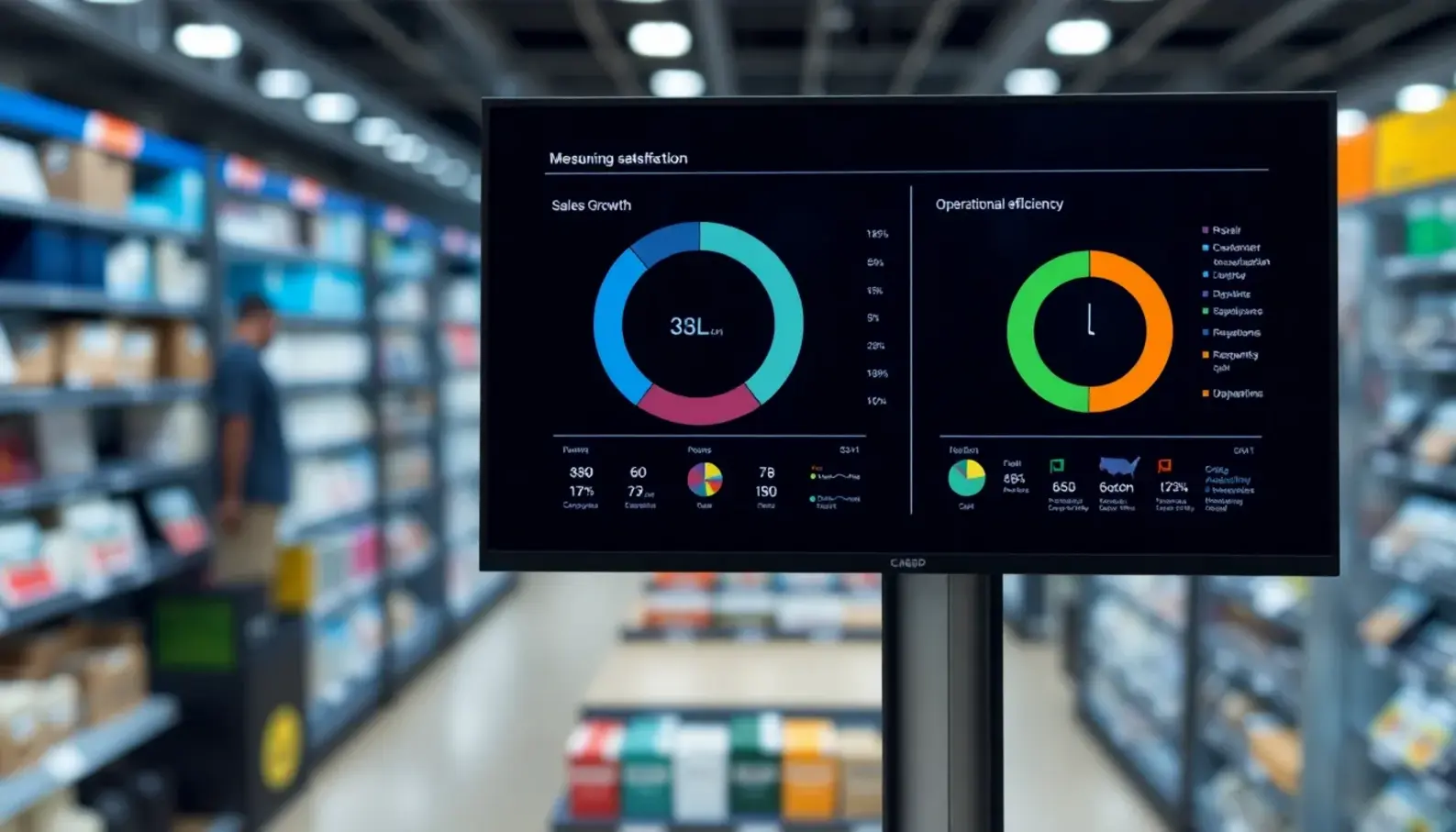
In the quest to leverage AI for redefining customer experiences in retail, it is essential to establish clear metrics for evaluating success. Focusing on key performance indicators (KPIs) and feedback loops can provide actionable insights that drive continuous improvements and adapt strategies to meet evolving customer needs.
To measure AI’s impact, retail professionals should adopt a multi-dimensional approach. Here are some key KPIs that are particularly relevant:
1. Customer Satisfaction and Net Promoter Score (NPS):
Assessing customer satisfaction remains a cornerstone of any retail operation. NPS is a widely used metric for gauging customer loyalty and the likelihood of recommending the store to others. AI implementations should aim to improve these scores by enhancing service efficiency, personalization, and overall shopping experience.
2. Conversion Rate:
Monitoring how effectively AI-driven interactions convert prospects into purchasers is critical. Whether through personalized recommendations or streamlined checkout processes, tracking conversion rates can reveal the efficacy of AI solutions in driving sales.
3. Average Order Value (AOV):
AI can significantly influence shopping behavior by analyzing consumer data and suggesting complementary products. An increase in AOV can indicate successful upselling and cross-selling strategies powered by AI analytics.
4. Customer Retention Rate:
AI can bolster retention through personalized rewards and timely engagement. Tracking retention rates provides insights into long-term customer relationships and the role of AI in maintaining them.
5. Inventory Turnover:
AI optimizes stock management by predicting demand trends and automating replenishment strategies. High inventory turnover rates signal efficient stock utilization and alignment with customer demand driven by AI insights.
Collecting Customer Feedback:
Effective feedback collection is crucial for refining AI systems. Here are some methods:
Online Surveys: Deploy brief surveys after purchases or interactions to gain timely insights. Ensure surveys are concise to encourage completion.
Social Listening: Utilize AI tools to monitor social media channels for unsolicited feedback. This real-time data can highlight emerging trends and areas needing improvement.
In-Store Kiosks: Provide interactive kiosks to collect feedback from in-store customers. This approach captures immediate reactions and can help identify in-person experience challenges.
Review Platforms: Regularly review and analyze feedback on third-party platforms. AI can categorize and quantify sentiments, providing an objective view of customer opinions.
Refining AI Systems Based on Performance Data:
Once KPIs are measured and feedback gathered, the next step is using this data to refine AI systems. Consider these strategies:
Data Analysis: Employ machine learning algorithms to analyze data streams for patterns and anomalies, enabling timely adjustments.
Iterative Testing: Test small-scale changes before full implementation. A/B testing can help determine the effectiveness of modifications based on key metrics.
Personalization Tweaks: Leverage feedback to fine-tune AI algorithms’ personalization capabilities, ensuring relevance and enhancing customer satisfaction.
Operational Adjustments: Deploy insights to optimize staff allocation, streamline logistics operations, and enhance inventory management, using AI to address detected inefficiencies.
Creating Continuous Improvement Loops:
Sustainable success with AI in retail demands the establishment of continuous improvement loops. This involves regularly revisiting and refining approaches in response to performance data.
Dynamic Adaptation: Monitor market trends and customer behaviors closely, allowing AI systems to adapt swiftly to changes in preferences and demands.
Collaboration and Training: Encourage collaboration between analysts, AI experts, and front-line staff. Providing training ensures all team members can contribute insights and align their efforts with AI-driven objectives.
For an in-depth look at AI in business growth and how these principles can be applied across sectors, consider exploring resources on AI in business growth.
Incorporating these KPIs, feedback mechanisms, and continuous improvement strategies allows retail managers to optimize AI implementations effectively. By systematically measuring success, the retail experience not only becomes more engaging but also evolves to anticipate and meet future customer expectations.
Final words
Adopting AI technologies is a pivotal opportunity for retailers to enhance customer experience and operational efficiency. Managers and educators must collaborate to ensure effective implementation and ongoing education in AI solutions. By embedding AI into their strategic framework, retailers can not only meet the evolving demands of consumers but also pave the way for innovative retail practices. Staying proactive about measurement and adaptation will ensure businesses remain agile, competitive, and responsive to the market.
Read Guide
Learn more: innoupdates.com
About us
InnoUpdates specializes in providing cutting-edge AI solutions tailored for the retail sector. Our comprehensive offerings include data analytics tools, customer personalization software, and strategic consulting services focused on enhancing customer engagement and optimizing operational efficiency. We empower retail businesses to harness the full potential of AI technologies, ensuring they can thrive in today’s competitive landscape.