
The integration of artificial intelligence in healthcare analytics maintenance offers unprecedented opportunities for healthcare organizations. By employing AI-driven techniques, institutions can enhance decision-making, streamline operations, and maintain high-quality patient care. As the healthcare landscape evolves, it becomes crucial for planners and directors to understand how to harness these technologies in their strategic initiatives. Focused data management, insightful analytics, and machine learning present avenues not just for improved outcomes but also for operational resilience. This article provides insights into the pivotal role of AI in healthcare analytics, examining case examples, challenges, and future trends that assure a comprehensive understanding of its maintenance.
Understanding AI’s Role in Healthcare Analytics

AI has become a transformative force in healthcare analytics, offering substantial capabilities that enhance efficiency and decision-making. Its significance in healthcare analytics lies in its ability to process vast volumes of data swiftly and accurately, surpassing traditional methods. This capability empowers healthcare professionals to extract meaningful insights, leading to improved patient outcomes and operational efficiency.
Machine learning, a subset of AI, plays a pivotal role in recognizing patterns within large datasets, facilitating predictive analytics. Through predictive models, healthcare providers can foresee potential health complications and intervene proactively. For instance, predictive analytics can assess readmission risks, enabling tailored patient care strategies to mitigate such events.
The application of AI in healthcare analytics extends to anomaly detection, which is instrumental in identifying irregularities in patient data. This feature is crucial for early diagnosis and prevention of diseases. For example, AI systems can detect subtle changes in a patient’s vital signs, signaling a need for immediate medical attention and thus preventing escalation.
AI-driven analytics also fosters personalized medicine by understanding complex patient data patterns, including genetic information. This leads to the development of patient-specific treatment plans, enhancing efficacy and reducing adverse effects. By harnessing machine learning algorithms, healthcare professionals can tailor therapies grounded in a patient’s unique genetic makeup and lifestyle factors.
Moreover, AI enhances decision-making processes by providing real-time insights and recommendations. In hospital management, AI can optimize resource allocation, reduce waiting times, and streamline processes such as patient admissions and discharge planning. These improvements not only improve patient satisfaction but also enhance the overall operational workflow of healthcare facilities.
Data management is another critical area where AI excels. The accumulation of health records, imaging data, and lab results creates a complex web of information that requires efficient organization and retrieval. AI systems automate data handling tasks, ensuring that medical records are both current and readily accessible to authorized personnel. This efficiency reduces time spent on administrative tasks, allowing healthcare professionals to focus more on direct patient care.
For healthcare planners and directors, AI provides tools to visualize data trends and model scenarios, supporting strategic planning and policy development. The ability to forecast healthcare demands and track the effectiveness of implemented strategies is invaluable. This foresight allows for informed decisions that align with organizational goals and resource allocation.
Real-world applications of AI in healthcare analytics are abundant. Automated image analysis in radiology expedites the diagnostic process, making it possible to identify diseases like cancer at an early stage. Similarly, natural language processing aids in extracting valuable information from unstructured data sources, such as physician notes and medical literature, broadening the scope of data analytics in healthcare.
Despite these advancements, ethical considerations, as discussed here, remain paramount. Protecting patient privacy and ensuring data security are critical as AI systems handle sensitive health information. It is essential for institutions to implement robust ethical guidelines and security measures to gain and maintain patient trust.
By integrating AI technologies into healthcare analytics, the industry takes significant strides towards a more efficient, patient-centric future. AI not only supports healthcare providers in delivering high-quality care but also revolutionizes the strategic planning landscape, enabling a more responsive and adaptive healthcare system.
Challenges in AI Maintenance for Healthcare Analytics
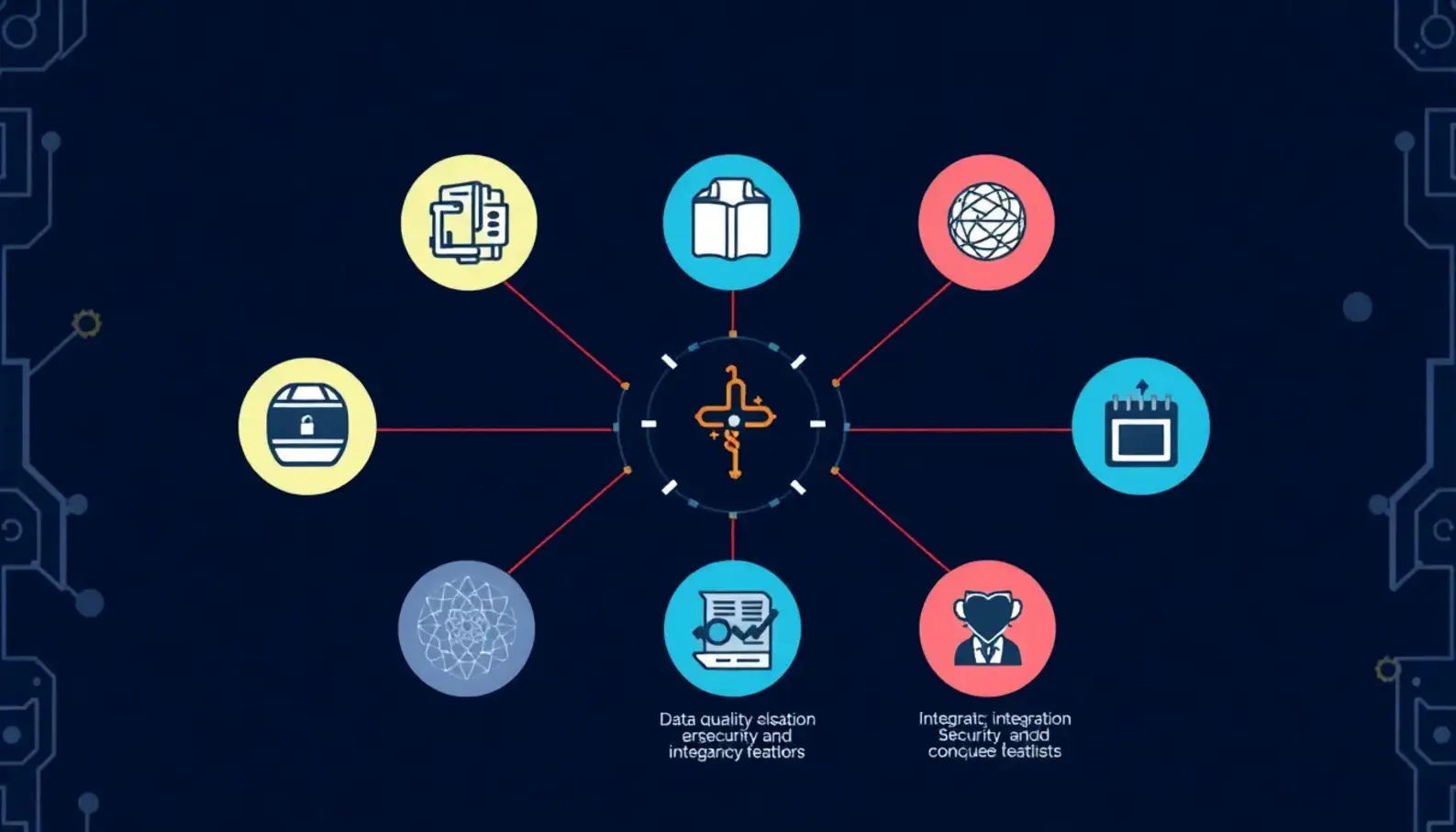
Maintaining AI systems in healthcare analytics requires navigating a multitude of challenges. These challenges range from ensuring data quality to grappling with the complexities of system integration, addressing security concerns, and adhering to stringent regulatory compliance requirements. Each of these issues must be addressed meticulously to facilitate a smooth maintenance process and sustain the effectiveness and reliability of AI applications in healthcare.
One of the most pressing challenges is data quality. AI systems are only as good as the data they process, making high-quality data a critical component in healthcare analytics. Data in healthcare can be incomplete, inconsistent, or outdated due to disparate sources and manual entry errors. These issues can lead to incorrect or misleading analyses, affecting patient outcomes and healthcare decisions. Ensuring data quality involves implementing stringent validation processes, data cleaning techniques, and real-time monitoring systems to detect and rectify discrepancies swiftly.
In addition to data quality, the integration of AI systems with existing healthcare IT infrastructures poses significant challenges. Healthcare organizations often use a variety of systems to manage patient records, billing, and treatment plans. Seamlessly integrating AI analytics into this ecosystem without disrupting operational workflows is complex. Organizations need to adopt interoperability standards, develop robust APIs, and engage in thorough testing to mitigate integration risks. Such strategies help ensure that AI tools complement existing systems rather than function as isolated solutions.
Security concerns present another formidable obstacle. Healthcare data is highly sensitive, necessitating robust protection against breaches and unauthorized access. AI systems, which often require connectivity to external data sources and networks, expand the potential attack surface. Enforcing strong encryption protocols, implementing multi-factor authentication, and continuously updating security measures are paramount to safeguarding data integrity. Additionally, regular security audits and staff training programs can fortify an organization’s defense against potential cyber threats.
Regulatory compliance further complicates the maintenance of AI in healthcare analytics. Regulations like the Health Insurance Portability and Accountability Act (HIPAA) and the General Data Protection Regulation (GDPR) impose strict criteria for data handling and patient privacy. AI systems must be designed to comply with these regulations from the outset, with ongoing updates to ensure continued adherence to any changes in regulatory landscapes. Collaboration with legal experts and compliance officers can help navigate these requirements and embed compliance within the AI system’s lifecycle.
Overcoming these challenges requires a strategic, multi-faceted approach. Organizations can adopt best practices like establishing cross-functional teams dedicated to AI system maintenance. These teams should include data scientists, IT professionals, healthcare practitioners, and compliance experts. Their collaborative effort ensures that all aspects of the AI system are maintained efficiently, from integrating new functionalities to updating security measures.
Moreover, fostering a culture of continuous learning within healthcare organizations is crucial. AI analytics and the technological landscape are constantly evolving; staying abreast of the latest developments can dramatically enhance maintenance processes. Encouraging professional development through workshops, seminars, and partnerships with academic institutions can keep teams informed and agile, prepared to adapt to new challenges as they emerge.
For example, insights from the article on AI in HR Strategies highlight the importance of continuous learning, which can be applied similarly in healthcare settings. Leveraging these insights, organizations can develop robust training modules and knowledge-sharing platforms to equip their teams with the skills needed for effective AI maintenance.
Through meticulous attention to data quality, integration, security, and compliance, along with fostering a strong organizational culture, healthcare institutions can surmount these challenges. By doing so, they ensure that AI systems continue to improve healthcare delivery, support patient care, and facilitate informed decision-making across the ecosystem.
Building a Future-Ready AI Analytics Framework

Developing a future-ready AI analytics framework in healthcare requires strategic emphasis on scalability, adaptability, and collaborative partnerships. It is paramount for healthcare organizations to design systems that can efficiently evolve to meet the growing complexities of patient care and administrative demands. This chapter explores key strategies to build an AI analytics framework resilient to rapid technological and environmental changes, underscoring best practices for innovation and collaboration to achieve sustainable healthcare practices.
Scalability is Key
Scalable infrastructure is a cornerstone of any future-ready AI framework. It necessitates designing AI solutions that can grow in capacity and complexity, parallel to the expanding datasets inherent in healthcare environments. Start with a modular architecture that allows incremental enhancements without necessitating entire system overhauls. Cloud-based services are a powerful ally in achieving scalability, offering flexible storage and processing capabilities that adapt to varying demands. Prioritize tools and platforms that enable seamless integration of new technologies and datasets, thereby ensuring that the analytics framework remains robust even under significant load increases.
Embrace Adaptability
Adaptability in AI frameworks involves the ability to adjust analytic processes and strategies in response to new data, regulations, and technologies. Building an agile development culture focused on continuous improvement and iteration is crucial. Encourage cross-functional teams to embrace change and foster a mindset that views adaptation as a competitive advantage. Implementing automated machine learning (AutoML) can help hasten model training and deployment, allowing organizations to swiftly respond to shifts in healthcare needs and regulations.
Foster Partnerships with Technology Providers
Strategic partnerships with technology providers can enhance the capabilities of an AI analytics framework. Collaborate with tech vendors that are not merely suppliers but partners in innovation. These collaborations can facilitate shared insights and technological advancements. Choose partners who offer flexibility in their solutions and are committed to the long-term growth of your institution’s analytical capabilities. Additionally, establish agreements that ensure the co-development of solutions, allowing healthcare organizations to apply industry-leading AI innovations tailored to their specific needs.
Encouraging Innovation
Fostering innovation within healthcare teams is vital for sustaining a future-ready analytics framework. Create an environment where experimentation is encouraged and supported. Dedicate resources to research and development, and incentivize staff to innovate through hackathons and innovation challenges. A culture of innovation feeds the AI analytics framework with fresh ideas and novel approaches to improving patient care and administrative efficiency. Encourage teams to explore beyond their usual silos, merging insights from different specialties to foster breakthrough advancements.
Enhancing Team Capabilities
To harness the full potential of AI, healthcare practitioners need to be equipped with the right skills. Invest in ongoing training for all levels of staff to enhance their understanding and ability to operate AI tools efficiently. Consider partnerships with educational institutions to provide workshops and certifications in AI and data analytics. Develop a structured mentorship program where seasoned data scientists can guide less experienced team members. By investing in your workforce’s development, you build a knowledge-rich environment that bolsters the overall effectiveness of your AI initiatives.
Paving the Way for Long-term success
Long-term success in leveraging AI analytics for better patient outcomes hinges on establishing a clear alignment between technological capabilities and organizational goals. Implementation should be guided by the principle of patient-centric care, ensuring AI interventions enhance, rather than detract from, the quality of service. Regularly evaluate the performance of AI systems and their contributions to patient outcomes, using feedback to refine algorithms and assessment protocols. Moreover, maintaining a governance framework that mitigates biases in AI models is essential to uphold ethical standards in healthcare. This ensures that AI applications contribute positively to patient diversity and equity in healthcare delivery.
Nurturing Ethical AI Practices
Adopting ethical AI practices is critical. Clearly define ethical standards and protocols for AI use in healthcare. Engage stakeholders—from clinicians to patients—in discussions about the ethical implications of AI deployment. By fostering transparency in AI decision-making processes, healthcare organizations can earn trust and confidence in technological solutions. Continue to explore intersections of ethics and technology, as elucidated in resources like Generative AI Ethics, ensuring practices evolve alongside advancements.
By orchestrating these strategies, healthcare organizations can develop an AI analytics framework that is both forward-thinking and deeply rooted in scalable, adaptable technologies. Such frameworks not only empower healthcare providers with actionable insights but significantly contribute to sustainable healthcare practices pivotal for improved patient care and enhanced organizational performance.
Final words
AI in healthcare analytics maintenance is integral to driving efficiencies and enhancing patient care. By comprehensively addressing its challenges and building a robust framework, healthcare leaders can harness its full potential. Moving forward, organizations must prioritize the strategic implementation of AI to ensure sustainable practices and improved outcomes.
Book a Demo
Learn more: https://innoupdates.com
About us
Our company specializes in advanced AI solutions tailored for the healthcare sector, focusing on predictive analytics, data management, and operational optimization. We assist organizations in leveraging cutting-edge technologies to enhance their analytics capabilities, improve patient outcomes, and maintain efficient workflows. Our expert guidance and innovative approaches ensure your transition to AI-driven analytics is smooth and impactful.