Present-day healthcare systems face unprecedented challenges and complexities in managing vast quantities of data. With the integration of artificial intelligence (AI) in healthcare analytics tools, researchers and analysts are empowered to derive actionable insights. By processing and interpreting diverse data sets, these tools play a crucial role in predictive modeling, patient management, and operational efficiencies. This article delves into the applications, benefits, challenges, and future prospects of AI-driven analytics in the healthcare sector while providing an enriching perspective for professionals involved in healthcare data analysis.
Empowering Clinical Decisions with Predictive Analytics
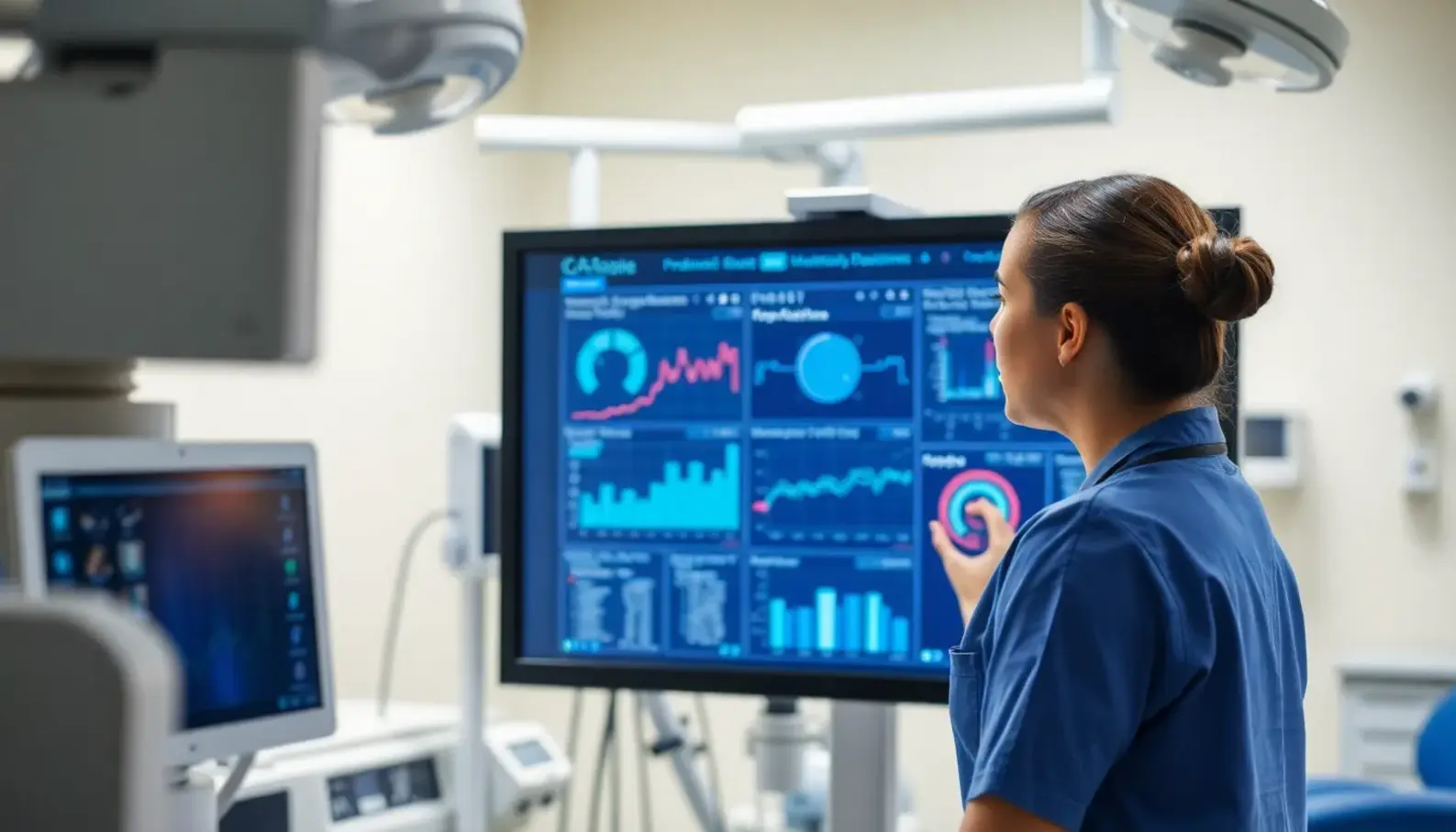
Predictive analytics, driven by artificial intelligence, is transforming healthcare by providing unprecedented insights into patient outcomes and treatment efficacy. By analyzing both historical and real-time data, AI models can predict patient trajectories and assist clinicians in making informed decisions. These predictive models are invaluable tools in modern medicine, leveraging patterns from various data sources to identify at-risk patients, refine diagnoses, and optimize treatment strategies.
One of the critical applications of predictive analytics in healthcare lies in harnessing electronic health records (EHRs). EHRs, when analyzed through AI algorithms, reveal patterns and trends that are not immediately apparent to human observers. For example, by closely examining a patient’s medical history alongside a broader dataset, predictive models can forecast potential health deterioration, allowing clinicians to intervene early. This proactive approach not only enhances patient care but also reduces the burden on healthcare facilities.
Moreover, integrating genetic data into predictive models opens new avenues in personalized medicine. Understanding a patient’s genetic predispositions enables healthcare providers to tailor treatment plans specific to individual genetic profiles. This level of customization is becoming increasingly achievable with advances in AI, supporting clinicians in making precise and effective medical decisions.
Clinical trial data also plays a significant role in predictive analytics. By aggregating and analyzing trial outcomes, predictive models can gauge treatment response rates and identify potential side effects across diverse patient populations. This comprehensive analysis informs clinicians about the most effective treatment plans, thus enhancing overall healthcare quality.
To illustrate the practical applications of predictive analytics, consider a case study involving a major hospital that implemented an AI-driven patient monitoring system. The system continuously analyzed patient data from various sources, including EHRs and wearable devices. By employing machine learning algorithms, the hospital could predict critical events like cardiac arrests with accuracy, offering a window of opportunity for intervention. The implementation of such systems led to a significant reduction in mortality rates and improved patient outcomes.
In another successful initiative, a healthcare provider utilized predictive analytics to streamline their triage processes in emergency departments. AI models analyzed patient data upon admission to prioritize cases based on urgency and availability of resources. As a result, waiting times decreased, and critical patients received timely care, demonstrating how predictive analytics can enhance operational efficiency in clinical settings.
Best practices for leveraging predictive analytics include ensuring data quality and integration across systems. Consistent data entry standards across EHRs and collaborating with data scientists to develop robust models are crucial. Additionally, adopting user-friendly interfaces ensures clinicians can effectively engage with predictive tools, fostering trust and wide-scale adoption.
Ethical considerations must also guide the use of predictive analytics in healthcare. Ensuring patient privacy and data security is paramount. Transparent AI operations and regular audits are necessary to maintain ethical standards while exploring the potential of predictive analytics.
For those interested in exploring the convergence of AI and healthcare further, visit Agentic AI Insights. This article delves into the groundbreaking contributions of agentic AI in various fields, including healthcare, highlighting how predictive analytics continues to reshape our approach to medicine.
In summary, predictive analytics powered by AI is a game-changer in clinical decision-making. By enabling healthcare providers to forecast patient outcomes and design personalized treatment plans, these tools are paving the way for a more efficient and patient-centered healthcare system. Through careful implementation and continuous ethical oversight, predictive analytics will remain at the forefront of innovation in health care.
Operational Efficiency and Cost Reduction through AI Tools

Artificial Intelligence (AI) is increasingly being utilized to enhance operational efficiency and reduce costs in healthcare. Through the integration of AI-driven analytics tools, healthcare institutions can optimize resource management, improve workflow efficiency, and ultimately cut down on unnecessary expenditures. One of the most significant advantages AI offers in this sector is its capability to accurately analyze patient flow, appointment scheduling, and staffing patterns, which can have pronounced effects on overall operational performance and patient satisfaction.
In the context of patient flow, AI tools can predict peak hours and high-demand periods within healthcare facilities by analyzing historical and real-time data. This allows for the proactive management of resources, ensuring that patient wait times are minimized and that staffing levels are appropriate for expected demands. Through predictive modeling, AI assists healthcare managers in making data-driven decisions about resource allocation, leading to better utilization of personnel and facilities.
Appointment scheduling is another area where AI can drastically reduce inefficiencies. Traditional scheduling often leads to gaps in service provision or overbooking, causing frustration for both patients and staff. AI can analyze patterns and preferences to optimize scheduling processes. By considering factors such as past appointment no-shows, duration variances of particular treatments, and necessary intervals between procedures, AI helps create a balanced schedule that enhances productivity and patient experience. As a result, healthcare providers can decrease idle time and maximize the use of clinical spaces and professionals.
Staffing patterns can also benefit significantly from AI-driven analytics. Machine learning algorithms can forecast patient volume fluctuations and suggest optimal staffing levels, ensuring that healthcare providers are neither understaffed nor overstaffed, which can lead to burnout or unnecessary labor costs. By dynamically adjusting staffing requirements in response to AI predictions, healthcare institutions can maintain high levels of care without excessive staffing expenditures.
In addition to these operational aspects, AI is revolutionizing supply chain management and administrative functions in healthcare. By utilizing predictive analytics, AI can forecast supply needs based on trends and consumption patterns, helping avoid both shortages and surplus inventory. This precise inventory management reduces waste and ensures that critical supplies are always available when needed.
Real-world examples illustrate the tangible benefits of AI in healthcare operations. For instance, some hospitals have implemented AI systems to automate inventory management processes. These systems utilize algorithms to predict demand for various medical supplies, resulting in a streamlined procurement process that minimizes stockouts and excessive inventory holding costs. In administrative functions, AI tools handle repetitive tasks, such as data entry and billing, with speed and accuracy, freeing up human resources for more complex and value-added tasks.
The integration of AI in healthcare not only transforms back-end efficiency but also directly impacts patient care quality. By enhancing operational efficiency, healthcare providers can allocate more time and attention to patient interactions, leading to higher satisfaction levels. Furthermore, improved resource management leads to faster service delivery and reduced throughput times, enhancing the patient experience.
As healthcare institutions continue to embrace AI technologies, they open doors to innovative solutions that ensure sustainable operations and improved patient outcomes. For further insights into AI applications across various industries, readers can explore articles such as AI in Business Growth, which delve into the transformative power of AI tools on organizational efficiency and cost optimization strategies.
Navigating Challenges and Future Directions for AI in Healthcare

The integration of AI into healthcare analytics is fraught with challenges but also glimmers with potential innovation. At its core, AI in healthcare must balance between technological progress and safeguarding important societal values like privacy and ethics. Practitioners grappling with these issues face a complex array of barriers, such as data privacy concerns, regulatory compliance, and adherence to ethical standards.
Data Privacy and Security
A major hurdle in integrating AI into healthcare systems is ensuring data privacy. Patient data is exceptionally sensitive, and any breaches can have severe implications for both patients and healthcare providers. AI systems need vast amounts of data to function optimally, but accessing and analyzing this data circumspectly is paramount. Implementing robust encryption protocols and anonymizing data are crucial strategies to mitigate security risks. However, these technical measures alone are insufficient without comprehensive regulatory frameworks that define clear data usage policies.
Regulatory Compliance
Navigating regulatory landscapes is another critical challenge for AI adoption. Healthcare regulation is highly complex and varies significantly across regions. Compliance with existing laws such as HIPAA in the United States, GDPR in the European Union, and other national legislations introduces layers of complexity. AI systems must be designed to not only respect current regulations but remain adaptable to future changes in policy. Adaptive compliance mechanisms embedded within AI models can offer solutions, making them resilient to evolving legal frameworks.
Ethical Considerations
AI poses unique ethical questions, especially concerning decision-making. How can healthcare providers ensure AI does not exacerbate existing inequalities or introduce new biases? It’s vital for developers to scrutinize datasets for historical biases and ensure models are transparent and interpretable. Establishing diverse and interdisciplinary teams can help build ethical AI systems that align with societal values and priorities. Stakeholder engagement, including patient voices, will be essential for creating trustworthy AI tools.
Systemic Integration
Integrating these technologies into existing healthcare systems presents logistical and operational challenges. Legacy systems are often not equipped to deal with the demands of AI, necessitating significant investment in infrastructure. Interoperability between AI tools and traditional medical systems needs to be prioritized to facilitate seamless integration. This may involve deploying hybrid models that allow new AI technologies to complement existing tools. Collaboration between healthcare providers, technology companies, and regulators can yield innovative adaptations.
Future Research and Development
Looking ahead, several areas hold promise for future research and development within AI healthcare analytics. Developing more sophisticated natural language processing tools to understand and synthesize medical literature could revolutionize clinical decision-making. Moreover, research into explainable AI can demystify AI processes, allowing practitioners to understand the rationale behind AI-driven decisions, thus increasing trust.
There’s also a pressing need to explore AI’s role in personalized medicine. By leveraging genetic, environmental, and lifestyle data, AI can pave the way for more personalized treatment plans, enhancing patient outcomes. Advances in machine learning models that can predict disease outbreaks or help in early diagnosis already show transformative potential in healthcare.
Finally, embedding AI into wearable technology presents another frontier. By harnessing continuous patient data, these technologies can monitor vital signs in real-time, offering critical insights into patient health dynamics. For more information on wearable tech advancements, check out this article.
AI’s journey in healthcare analytics is ongoing, marked by both challenges and opportunities. By addressing current hurdles and fostering innovation, AI can significantly contribute to improving patient care and outcomes. The key lies in striking the right balance between leveraging technological advancements and upholding the ethical, regulatory, and privacy standards foundational to healthcare.
Final words
The evolving landscape of healthcare analytics is undeniably influenced by AI technology. As predictive models, operational efficiency tools, and innovative practices continue to emerge, professionals in the healthcare domain are positioned to make well-informed decisions. With awareness of the challenges and proactive strategies for addressing them, researchers and analysts can fully harness AI’s transformative potential in shaping the future of healthcare analytics.
Start Free Trial
Learn more: https://innoupdates.com
About us
Innoupdates offers advanced AI-driven healthcare analytics solutions designed for researchers and analysts. Our tools enable seamless integration of data sources to provide actionable insights, optimize clinical workflows, and improve overall patient outcomes. With customizable dashboards and real-time analytics, our offerings empower healthcare professionals to make data-driven decisions that enhance care quality and operational efficiency.