
The integration of artificial intelligence (AI) within healthcare analytics is revolutionizing how patient care is delivered and optimized. Through sophisticated recommendation systems, AI analyzes vast datasets to empower clinicians and hospital administrators with actionable insights. This data-driven approach not only enhances diagnostic accuracy but also facilitates personalized treatment plans tailored to individual patient needs. As AI continues to evolve and mature in healthcare, understanding its implications and applications in analytics becomes paramount for scientists and CFOs alike. This exploration delves into the mechanisms, benefits, and critical considerations surrounding AI-driven recommendation systems in healthcare, advocating for a robust framework to harness its full potential.
Chapter 1: Understanding AI in Healthcare Analytics

Artificial intelligence is transforming healthcare by enhancing data analysis and leading to more precise outcomes. To appreciate AI’s role in healthcare analytics, it is crucial to understand the various components that constitute its foundation.
AI applications in healthcare leapfrog traditional methodologies through machine learning, natural language processing (NLP), and deep learning. These technologies enable systems to process large datasets, identify patterns, and deliver recommendations that are often more consistent than those made by human counterparts.
A key component of AI in healthcare is the type of data utilized. Healthcare data is diverse, encompassing structured data such as demographic information and lab results, to unstructured data like physician notes and medical images. The combination of these data types poses unique challenges and opportunities for AI systems.
Machine learning algorithms, particularly supervised learning models, are often trained using historical data to predict future outcomes. These models rely heavily on label data to provide recommendations on treatment plans. On the other hand, unsupervised learning explores data without labeled responses, clustering similar data points and uncovering hidden patterns useful for diagnostics.
Natural language processing allows AI systems to extract meaningful insights from unstructured text data, enhancing the understanding of patient records and clinical literature. NLP systems can summarize patient histories efficiently, enabling better decision-making by healthcare professionals.
Deep learning, a subset of machine learning, uses neural networks to mimic human brain processes. These algorithms are particularly effective in analyzing complex datasets such as medical imaging. Deep learning can identify anomalies in images, such as tumors, with incredible accuracy, thus augmenting diagnostic capabilities.
Data quality plays a pivotal role in the effectiveness of AI-driven recommendation systems. Inaccurate or incomplete data can lead to erroneous recommendations, impacting patient care significantly. Hence, ensuring high-quality data is a non-negotiable aspect of deploying AI in healthcare. Data cleansing, normalization, and validation are critical processes to maintain data integrity.
Several case studies highlight AI’s impact in healthcare analytics. For instance, a collaboration between researchers and clinics successfully reduced diagnostic errors through AI-driven systems in radiology. These systems analyzed thousands of radiographs, offering radiologists a second opinion, which decreased the rate of misdiagnoses significantly.
Another notable example is the use of AI to personalize treatment plans in oncology. By analyzing genetic mutations alongside clinical data, AI systems propose tailored therapies, improving patient outcomes. Such applications underscore AI’s potential to revolutionize individualized patient care.
For further insights into AI’s transformative capabilities in diverse fields—including legal frameworks and business growth—consider exploring strategies discussed at AI in Business Growth.
The future chapters will delve deeper into specialized applications of AI in healthcare, discussing targeted solutions and forthcoming innovations. The synergy between AI technologies and healthcare data analytics harbor immense potential for advancing the quality and precision of healthcare services.
Chapter 2: The Mechanics of Recommendation Systems
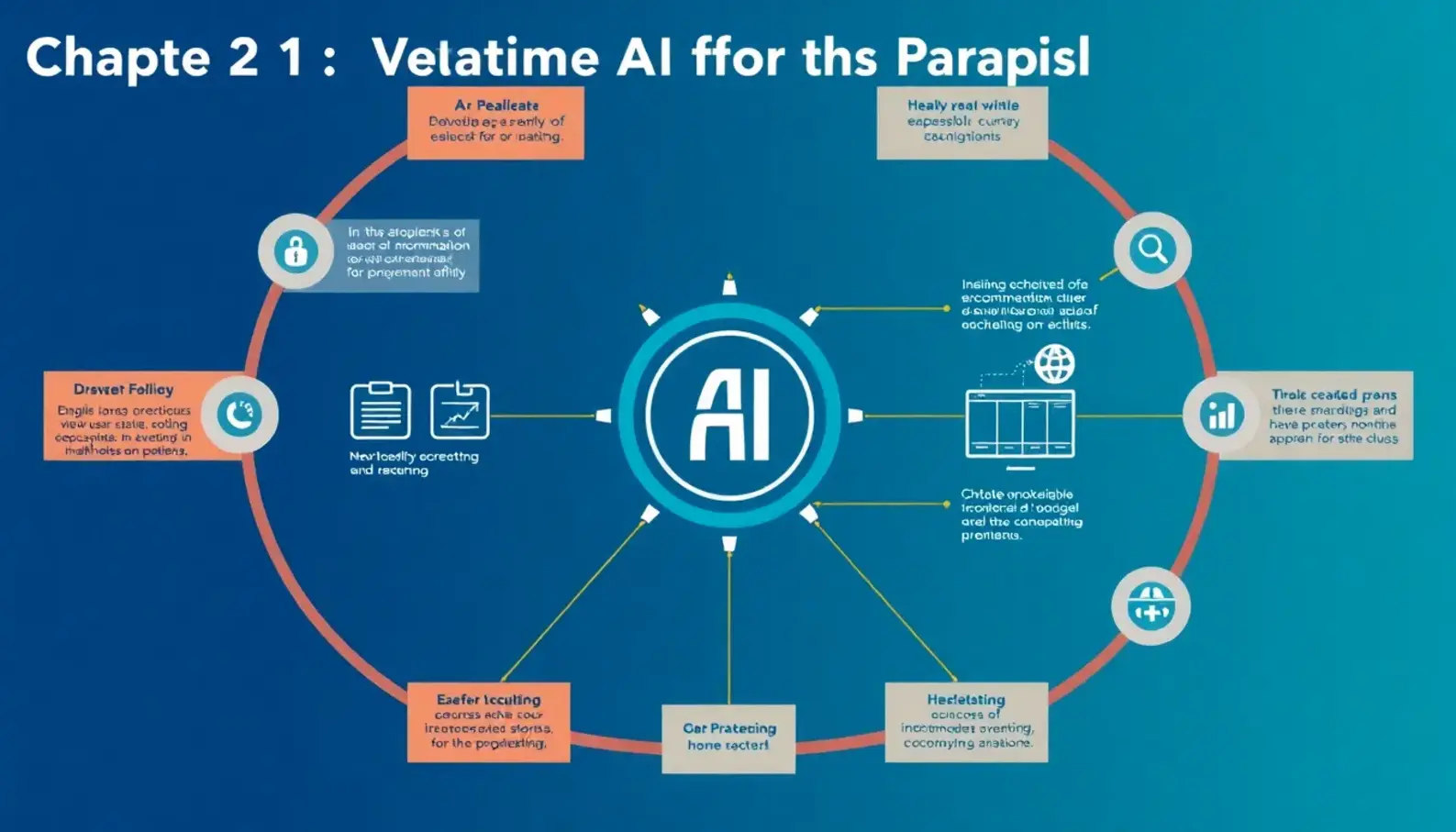
Recommendation systems play a transformative role in healthcare analytics, acting like intelligent engines that guide medical professionals towards optimal decisions. At the heart of these systems are algorithms designed to process vast quantities of data, identifying patterns that might elude even the most seasoned experts.
One foundational algorithm is collaborative filtering. This technique is divided into two sub-types: user-based and item-based filtering. User-based collaborative filtering leverages the preferences of similar users to make recommendations. In a healthcare context, this might mean suggesting treatments based on the successful outcomes seen in patients with comparable medical histories. Conversely, item-based filtering focuses on the similarity between items—in this case, treatments or medical procedures—and suggests options based on past combinations and results.
However, collaborative filtering alone can struggle with data sparsity, particularly in complex healthcare settings. Here, deep learning models prove invaluable. These models, often encompassing neural networks with multiple layers, excel at handling large datasets and extracting nuanced insights. They begin by inputting various data points such as patient history, demographic details, and previous treatment outcomes.
A deep learning model consists of an input layer, several hidden layers, and an output layer. Each layer comprises nodes (or neurons), which are mathematical functions modeled on neurons in the human brain. As data advances through these layers, the network learns to identify potential relationships and patterns that help predict outcomes. For instance, predicting patient readmission rates becomes more accurate as the model considers more variables, including patient age, chronic conditions, and previous admissions.
Machine learning’s role here is crucial for personalized medicine. By understanding individual patient profiles, recommendation systems can tailor treatment plans that align with each patient’s unique needs. This not only enhances the effectiveness of treatments but also improves patient satisfaction and engagement. Effective implementation can significantly lower the probability of adverse effects by suggesting alternatives previously effective for individuals with similar genetic or demographic characteristics.
In practice, numerous hospitals have successfully integrated these systems to improve patient care. One case involves a large urban hospital utilizing machine learning to predict patient readmissions. The system analyzes electronic health records (EHRs), including lab results, vitals, and admission history, thus enabling healthcare providers to flag at-risk patients and adjust care plans proactively. This approach has reduced unplanned readmission rates, indicating a positive impact on both patient outcomes and hospital resource management.
Furthermore, recommendation systems are instrumental in treatment suggestions. By employing a combination of collaborative filtering and deep learning, they propose treatment options aligning with the most recent clinical guidelines tailored to individual patient needs. Such tools have been instrumental in reducing the cognitive load on physicians, allowing them to focus on more complex decision-making tasks.
Recommendation systems also contribute to enhanced decision-making processes. In large hospital networks, data integration across multiple facilities provides a broader picture of regional health trends. By analyzing this aggregated data, systems can forecast resource needs or outbreak patterns, supporting informed administrative decisions. Moreover, cross-referencing patient data with international health trends can indicate emerging health threats or innovative treatments worth considering.
Though challenges such as data privacy and the necessity for high-quality data inputs remain, ongoing technological advancements promise to address these concerns. Blockchain technology, for instance, offers potential solutions for secure and verifiable data sharing among stakeholders.
The future of healthcare recommendations will likely expand to incorporate more diverse forms of data, including genomic information and patient-generated data from wearable devices. There’s already intersectional innovation occurring between AI, wearables, and healthcare, as discussed in various tech insights, including the evolution of AI wearable tech.
The modern healthcare ecosystem stands on the verge of fully realizing AI’s potential in recommendation systems. While present achievements are remarkable, they are merely a precursor to a future where AI tirelessly supports medical professionals in providing personalized, efficient, and effective patient care.
Chapter 3: Implementation Challenges and Future Directions

Implementing AI-driven recommendation systems in healthcare is a complex endeavor fraught with numerous challenges. These challenges range from ensuring data privacy to addressing ethical considerations and effectively integrating AI systems into existing healthcare workflows.
One of the foremost issues faced by healthcare organizations is maintaining data privacy. The sensitive nature of health data demands a delicate balance between accessibility for AI systems and safeguarding patient information. Sophisticated encryption methods and access controls are essential, but they often complicate direct data usage. Developing frameworks that ensure data robustness while enabling efficient AI processes is crucial.
Furthermore, the rise of AI in healthcare demands unwavering attention to ethical considerations. AI systems must be designed to eliminate biases that could hinder equitable treatment outcomes. This involves careful data selection and processing, ensuring diverse demographic representation to prevent skewed outputs that may disadvantage certain groups. Transparency in AI decision-making processes is also critical, allowing practitioners to understand and trust the recommendations.
Integration of AI into established workflows presents another significant hurdle. Healthcare providers often contend with legacy systems resistant to change. Synchronizing AI-driven tools with these existing infrastructures without disrupting clinical workflows demands careful planning and execution. Investing in staff training and support is vital to ensure a seamless transition and foster a culture that embraces technological advancements.
The necessity of continuous oversight and validation cannot be understated. AI systems in healthcare must operate under rigorous scrutiny, with mechanisms in place to monitor outputs and rectify anomalies swiftly. This ensures that AI recommendations remain reliable and trustworthy, safeguarding patient well-being.
Looking ahead, future directions for AI in healthcare are promising yet complex. The ability to utilize real-time data can significantly enhance patient care by allowing for immediate insights and predictions. However, real-time data integration demands robust infrastructures capable of handling vast amounts of incoming information while maintaining integrity and security.
Increasing patient engagement through AI-powered tools is another promising avenue. By providing patients with tailored recommendations and insights, AI can empower individuals to take active roles in their healthcare journeys. This necessitates interfaces that are user-friendly and accessible, ensuring every patient can benefit from AI-driven insights.
To further explore how technologies impact different sectors, consider reviewing concepts around agentic AI insights, which can offer valuable perspectives on fostering autonomy within AI frameworks.
As we progress, leveraging AI’s potential to reshape healthcare analytics requires commitment to overcoming these challenges and embracing future possibilities. Investing in infrastructure, ethical frameworks, and continuous education can pave the way for AI to transform patient care delivery significantly.
Final words
AI’s integration into healthcare analytics is not merely a trend, but an essential movement toward enhanced patient outcomes and operational efficiency. As recommendation systems grow more sophisticated through data-driven insights, stakeholders—including scientists and CFOs—must actively participate in this evolution. Embracing AI will lead to tailored treatments and improved healthcare delivery, marking a significant advancement in the industry’s commitment to patient care.
Sign Up for Webinar
Learn more: https://innoupdates.com
About us
We empower healthcare organizations by delivering advanced analytics solutions tailored to optimizing patient care. Our AI-driven platforms enhance decision-making efficiency and provide actionable insights, ensuring that healthcare systems remain at the forefront of innovation. Explore our offerings to unlock the full potential of your data.