
The integration of Artificial Intelligence (AI) into healthcare analytics is revolutionizing how data is analyzed and utilized for patient outcomes. This innovative approach leverages advanced algorithms to sift through vast amounts of health-related data, revealing patterns and insights that were previously unattainable. As we explore this intersection of technology and medicine, we will uncover the methodologies that empower scientists and clinicians alike to enhance diagnostic accuracy, streamline operations, and ultimately elevate the quality of patient care. By understanding the intricacies of AI applications in healthcare analytics, stakeholders can make informed decisions that benefit both practitioners and patients.
Integrating AI into Healthcare Analytics: Techniques and Impact
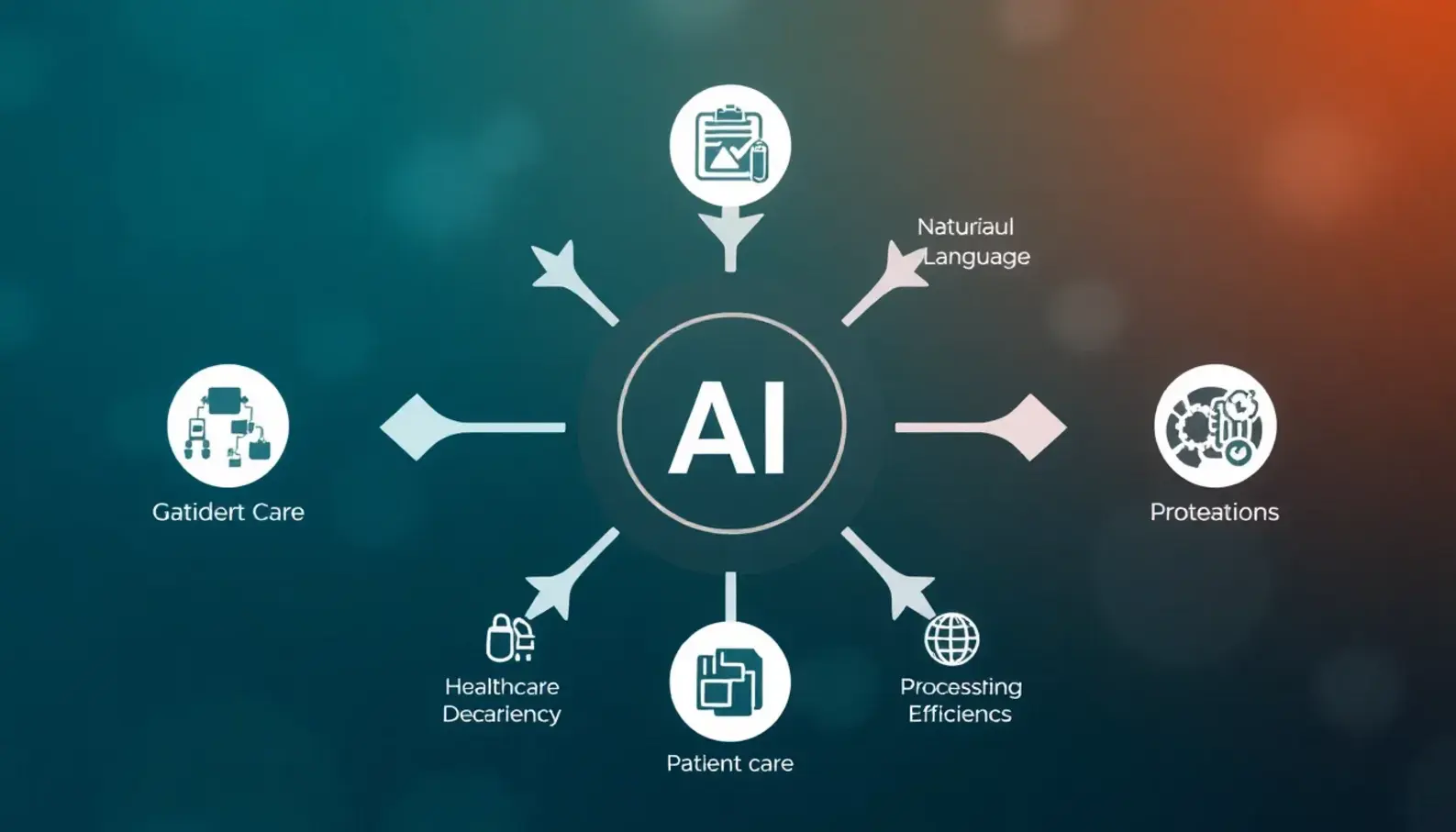
The integration of AI into healthcare analytics involves several advanced methodologies and techniques, each contributing uniquely to patient care and clinical workflow optimization. Among these, machine learning, data mining, and natural language processing (NLP) stand out as pivotal technologies. Each offers distinct benefits and presents specific challenges that healthcare providers must navigate to fully realize their potential.
Machine Learning in Healthcare
Machine learning (ML) has ushered in an era where predictive analytics can dynamically optimize healthcare outcomes. Through algorithmic models, ML processes vast amounts of patient data, identifying patterns that might elude human analysis. These models facilitate early diagnosis and treatment optimization by predicting disease progression or responses to treatment. For instance, supervised learning models have been crucial in predicting sepsis in patients well before clinical symptoms appear, allowing for proactive intervention.
Another notable application is in personalized medicine. ML enables the analysis of genetic information alongside clinical data, creating tailored treatment plans that are unique to each patient’s genetic makeup. However, the implementation of such ML models demands robust data governance. Data quality and privacy are paramount, as any inaccuracies can lead directly to flawed predictions and negative health outcomes.
Data Mining for Insight Extraction
Data mining techniques transform raw data into meaningful insights that enhance decision-making processes. By exploring large datasets, these techniques identify relationships and patterns crucial for developing improved treatment protocols and operational efficiencies. In the realm of operational efficiency, data mining can predict patient admission rates, optimizing staff allocation and resource management in hospitals.
A case study reveals the successful use of data mining in predicting patient readmission rates. By analyzing historical admission data, hospitals can identify patient profiles with high readmission likelihoods and institute follow-up protocols to mitigate unnecessary readmissions. However, the challenge lies in integrating disparate data sources while maintaining data integrity and consistency.
Natural Language Processing in Clinical Settings
Natural language processing (NLP) bridges the gap between vast amounts of unstructured clinical data and actionable insights. Clinicians generate volumes of text data daily through notes, prescriptions, and reports. NLP technologies sift through this textual data, extracting critical information with speed and accuracy.
An exemplary application of NLP is in electronic health record (EHR) systems, where it helps streamline the documentation process, reducing physician burnout and freeing up more time for patient care. Moreover, NLP has been instrumental in identifying adverse drug reactions and potential prescription errors by analyzing patient records and cross-referencing them with pharmaceutical data.
Despite its transformative potential, NLP faces challenges such as language ambiguity and domain specificity. The lexicon used in healthcare is complex and constantly evolving, requiring continuous updates and training to NLP models.
Impact on Patient Care and Operational Efficiency
The integration of these AI technologies in healthcare analytics not only enhances patient care but also significantly improves operational efficiency. Predictive models allow for anticipatory care, mitigating potential health crises before they escalate. Moreover, data-driven insights help streamline operations, reducing costs and improving patient satisfaction.
For instance, predictive analytics can foresee patient inflow, enabling better resource allocation and minimizing waiting times. In turn, this leads to enhanced patient satisfaction and optimized resource utilization. Hospitals that have adopted such technologies have noted significant improvements in their executive management of resources and patient interactions.
Addressing Challenges and Showcasing Successes
While the potential is immense, integrating AI in healthcare is rife with challenges. Data privacy concerns, integration with existing IT systems, and the need for continuous training of AI models present ongoing hurdles. Successful integration hinges on collaboration between technology providers and healthcare practitioners to tailor AI solutions to fit specific institutional needs.
A prominent example of success is a leading hospital utilizing AI-driven analytics to reduce patient mortality rates. By implementing a real-time data analytics system powered by ML, the hospital successfully identified critical risk factors early, enabling timely interventions. However, this success underscores the need for robust data management policies and cross-functional teams dedicated to overseeing the AI system’s operation.
Integrating AI into healthcare analytics is a complex endeavor that demands careful strategy and execution. While opportunities abound, long-term success will depend on addressing current limitations, fostering interdisciplinary cooperation, and committing to ethical standards. To explore further applications of AI beyond healthcare, such as its role in human resources, you may investigate innovations in AI and HR strategies.
Ethical Considerations and Challenges in AI-Driven Healthcare Analytics

As AI rapidly integrates into healthcare systems, ethical considerations and challenges become increasingly crucial to address. One of the primary discussions revolves around patient privacy. AI often necessitates vast amounts of data to perform effectively, raising questions about how personal health information is collected, stored, and utilized. Ensuring that AI systems comply with privacy laws such as the Health Insurance Portability and Accountability Act (HIPAA) is essential to protect patient confidentiality.
Data security is another significant concern. Health information is one of the most sensitive types of data, being a prime target for cyber threats. Implementing advanced security measures like encryption, access controls, and continuous monitoring can mitigate potential data breaches. However, the challenge remains to strike a balance between data utility and stringent security requirements, fostering a secure yet functional environment for AI analytics.
Algorithmic bias presents unique challenges. AI models are trained on historical data that may reflect existing biases in medical practice or patient demographic representation. When these biases are not analyzed and corrected, AI can perpetuate and even exacerbate disparities in healthcare outcomes. For instance, an AI system trained primarily on data from one ethnic group might not perform as accurately for another. Ongoing efforts to address these issues include diversifying training datasets and employing techniques like algorithmic auditing to identify and rectify bias.
Transparency in AI decision-making is also paramount. Healthcare professionals and patients alike need to understand why an AI system arrives at a particular diagnosis or treatment recommendation. Such clarity can build trust and facilitate integration of AI tools into clinical practice. Some organizations are experimenting with “explainable AI,” which focuses on producing models that offer insights into their decision processes. Providing practitioners with clear, understandable outputs is vital for ethical AI use.
Tackling these ethical issues requires a robust framework. One approach is the concept of “Ethical AI,” which encompasses principles of transparency, fairness, accountability, privacy, and human oversight. Ethical guidelines can direct the development and application of AI technologies, ensuring they benefit healthcare systems without causing harm. The World Health Organization and other health bodies have begun developing these frameworks to guide innovation ethically.
Real-world examples of ethical AI management are crucial learning tools. In some healthcare institutions, ethics committees work alongside data scientists to assess AI projects. These committees ensure adherence to ethical guidelines from project inception through implementation. An exemplary case includes an AI-driven patient triage system that underwent rigorous ethical assessment before deployment, enabling it to function without compromising patient privacy or safety.
Potential solutions and best practices focus on establishing policies that formalize ethical considerations in AI development. Regular audits, inclusive of diverse stakeholders including ethicists and community representatives, are recommended to ensure AI systems align with societal norms and expectations. Additionally, promoting continuous education for developers and healthcare personnel can facilitate a better understanding of AI’s ethical dimensions.
Linking ethics with technology implementation, organizations can foster innovations promoting global health equity. For further insights into ethical discussions surrounding AI, consider exploring the article on generative AI ethics, which outlines broader ethical considerations in AI technologies. Such resources provide foundational knowledge that can help navigate the complexities of ethical AI in healthcare, supporting improved patient care frameworks.
Final words
AI is fundamentally reshaping healthcare analytics, providing clinicians and scientists with unprecedented insights into patient care and operational efficiency. By understanding both the potential and ethical challenges of AI, stakeholders can leverage these advancements responsibly and effectively to promote a healthier society.
Download our comprehensive whitepaper on AI in healthcare analytics for deeper insights.
Learn more: https://innoupdates.com
About us
Our company specializes in leveraging advanced AI technologies to transform healthcare analytics, assisting organizations to make informed, data-driven decisions that enhance patient outcomes and optimize operations. Explore our innovative solutions to drive healthcare into the future.