
The fusion of artificial intelligence and biomimicry represents a groundbreaking approach to problem-solving across disciplines. As biologists and engineers increasingly collaborate, AI facilitates the analysis of complex biological systems, enabling innovative applications that mirror nature’s designs. This intersection is not just redefining technological advancements but also guiding sustainable and efficient solutions across various industries. The advances in AI empower us to decode nature’s strategies and implement them in engineering, ecology, and design, promoting a harmonious relationship between technology and the environment.
Decoding Nature: The Role of AI in Biomimetic Research
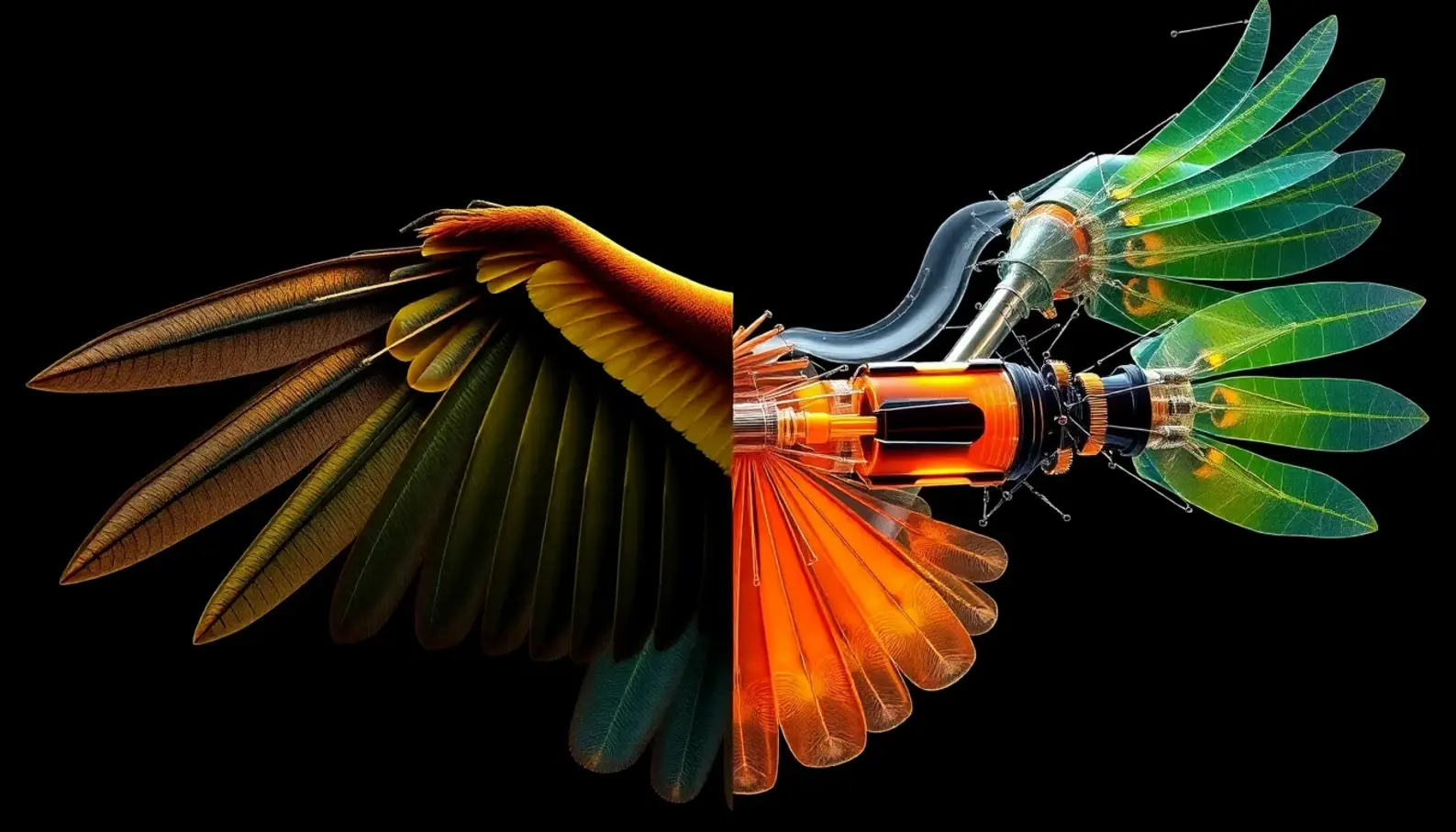
Artificial intelligence (AI) has become an indispensable part of biomimetic research, providing tools that emulate the efficiency and innovation found in natural processes. By leveraging vast amounts of data, AI-driven models replicate complex biological structures and predict environmental impacts with precision. This chapter delves into the synergy between AI and biomimicry, illustrating how machine learning algorithms and data processing enhance biomimetic research.
Machine learning algorithms shine in biomimicry through their ability to observe and learn from vast datasets that would be unmanageable manually. These algorithms can identify patterns and structures within biological datasets, which are often non-linear and complex. For instance, neural networks, which themselves find inspiration in the human brain, can process and analyze high-dimensional biological data to uncover insights that guide biomimetic design.
An essential application of AI in biomimetic research is the modeling of biological structures. This involves understanding and reproducing the intricate design principles found in natural organisms. Computational models utilizing AI can simulate the physical and optical properties of biological structures, such as the iridescence in butterfly wings or the self-cleaning surfaces of lotus leaves. These simulations provide a digital blueprint that engineers can use to develop materials with similar properties, offering innovative solutions across various industries.
Predictive analytics powered by AI contribute significantly to biomimetic research by modeling environmental impacts. By interpreting complex interactions within ecosystems, AI tools anticipate how biomimetic designs may affect or be affected by environmental variables. Such predictive capabilities are crucial in projects where sustainable practices are prioritized. For example, AI can predict how a biomimetic architectural design, inspired by termite mounds, could maintain temperature regulation and reduce energy consumption in urban environments.
AI’s role in engineering and design, through biomimicry, is exemplified by numerous innovative solutions. Consider the case of the Japanese bullet train, which encountered noise issues due to abrupt pressure changes when exiting tunnels. The solution came from nature—the kingfisher bird, adept at diving into water with minimal splash. Engineers used AI to analyze the bird’s beak shape and translate these insights into the bullet train’s design, leading to reduced noise and increased efficiency.
Another noteworthy example is the development of energy-efficient lighting systems inspired by fireflies. These insects possess light-emitting cells within their abdomen which AI-driven research unraveled, focusing on optimizing light emission while minimizing energy loss. Engineers used these biological discoveries to design LEDs with enhanced brightness and reduced energy usage.
Furthermore, AI facilitates the iterative process of design, testing approximations of nature’s solutions across various scenarios. For example, robotic designs that mimic animal locomotion, such as gecko-inspired robots, have significantly benefited from AI. By analyzing data on gecko movement and adhesion, algorithms help create robots that can navigate complex terrains, useful in search and rescue missions and infrastructure inspections.
AI’s collaborative role with biomimicry extends beyond technological advancements, influencing ethical and sustainable research practices. The precision of AI helps minimize resource waste when testing biomimetic designs, ensuring that research efforts align with environmental conservation principles.
In conclusion, AI enhances biomimetic research by unlocking nature’s secrets through data processing and machine learning algorithms. These technologies empower researchers to model biological structures and predict their impacts, leading to groundbreaking designs in engineering. The future of biomimicry, intertwined with AI, promises innovative solutions that overcome complex engineering challenges and respect the environment’s delicate balance. For more insights into AI’s transformative role across various domains, explore AI in Finance Strategies.
Innovative Designs: Biomimicry in Engineering Applications
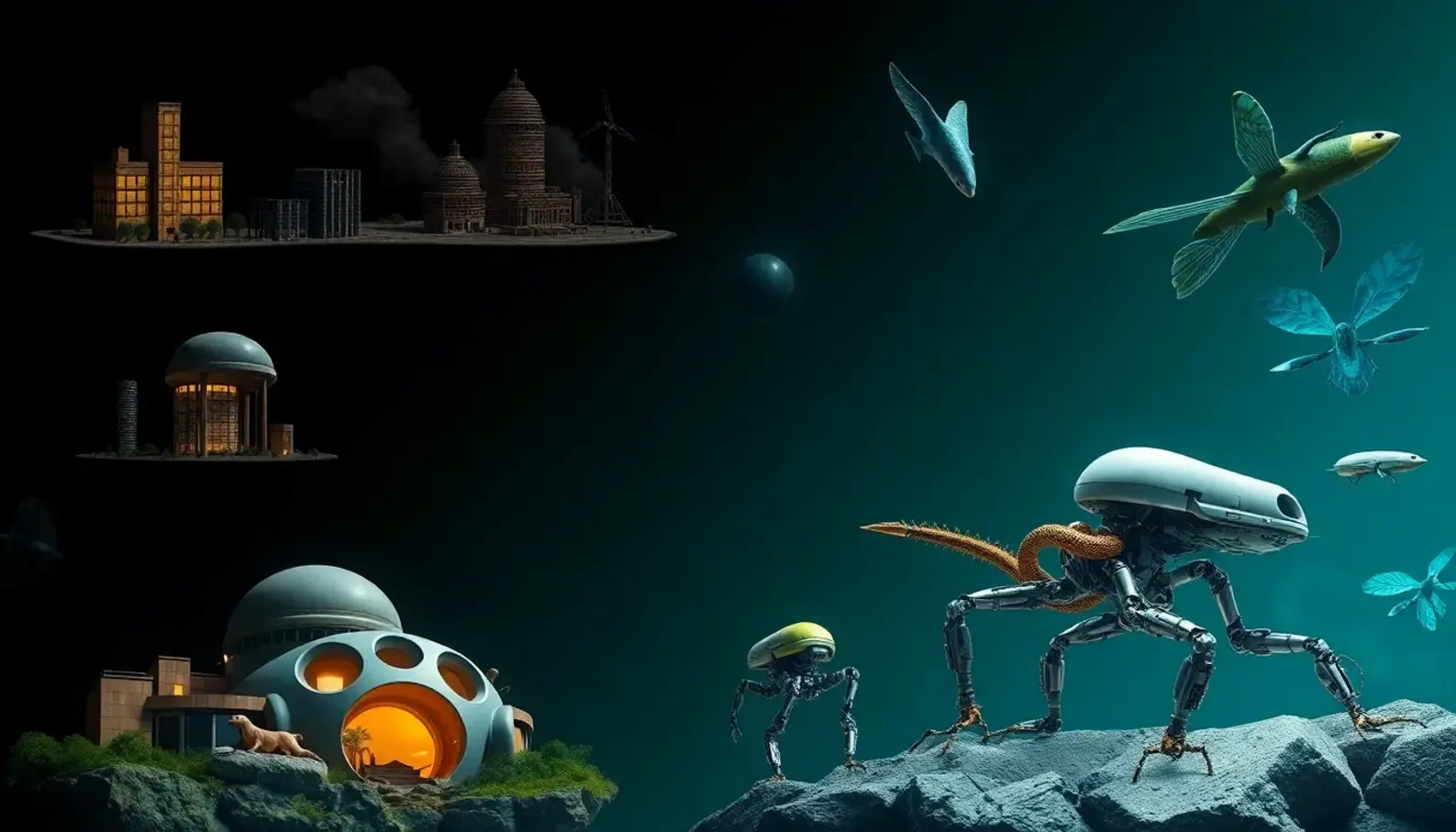
Biomimicry has long provided inspiration for innovative engineering solutions. By studying nature, engineers have developed technologies that solve significant challenges in design and functionality. The addition of artificial intelligence to this field accelerates and refines the development process by providing powerful tools such as computer vision and generative design algorithms.
In the realm of materials science, biomimicry guides the creation of substances that mimic the resilience and versatility found in nature. For instance, researchers have modeled materials after the structure of seashells, which are both lightweight and incredibly strong. AI assists in decoding the complex patterns and microstructures of such natural materials, enabling scientists to replicate and even enhance these characteristics. Generative design algorithms analyze the myriad of structural variations to find optimal configurations, vastly reducing the time necessary for testing and prototyping.
Robotics is another domain where biomimicry, enhanced by AI, continues to make strides. In particular, soft robotics draws heavily from natural organisms’ adaptability and resilience. AI-driven computer vision systems are central to this development, allowing robots to perceive and interact with their environments as organisms do. One standout example is a robot modeled after an octopus, capable of navigating underwater environments with agility and dexterity. The intricate movement patterns of the octopus were captured with AI-enhanced imaging and converted into robotic algorithms that enable similar functionality in mechanical counterparts.
The promise of biomimicry extends to sustainable design, where nature provides blueprints for economical resource use with minimal waste. Architects and engineers are increasingly looking to organisms like termites, whose mound structures naturally regulate temperature without any energy-consuming equipment. AI tools play a pivotal role in simulating and testing these natural systems within human environments. Such applications lead to buildings that maintain comfort while reducing energy consumption, addressing both environmental concerns and economic constraints.
In the pursuit of energy efficiency, biomimetic designs focus on maximizing output from minimal input. For example, engineers have developed wind turbines with blades modeled after the fins of humpback whales, which are known for their hydrodynamic efficiency. AI-driven simulations allow for the meticulous testing of various design tweaks, optimizing them for peak performance and leading to more efficient energy conversion under a variety of conditions.
Waste reduction is tackled inspired by nature’s cycles of life wherein nothing goes to waste. By mimicking these cycles, engineers create systems where by-products are re-utilized as inputs, akin to a circular economy that mirrors natural ecosystems. AI aids in juggling the complex logistics of such systems, ensuring the seamless integration of processes that reduce waste and improve resource stewardship.
One exemplary project demonstrating these principles is the development of artificial leaves. These synthetic structures aim to mimic the process of photosynthesis, transforming sunlight into chemical energy. Using computer vision and AI-driven learning models, researchers optimize these structures on a molecular level, achieving levels of efficiency previously thought unattainable. The implications for renewable energy are profound, providing a blueprint for sustainable methods that generate energy with zero emissions.
The partnership of biomimicry and AI propels us towards solutions that are both innovative and respectful of our planet’s boundaries. As understanding of both fields deepens, so too does the potential for creating systems that function not apart from, but in harmony with, the environment. With projects like autonomous drones revolutionizing logistics and further bridging the gap between nature-inspired design and technological advancement, it is clear that this synergy continues to unfold transformative possibilities across disciplines. Visit innoupdates.com to explore more about drone applications inspired by nature and AI.
Biomimicry, powered by AI, reshapes engineering landscapes by unlocking and refining nature’s designs. From materials that promise longevity and adaptability to energy-efficient systems inspired by the earth’s own processes, the innovations are myriad and impactful. As these fields converge, society is poised to benefit from sustainable advancements that not only address pressing challenges but also reaffirm the wisdom inherent in observing the natural world.
Final words
The synergy between artificial intelligence and biomimicry holds immense potential for fostering innovation and sustainability. By learning from nature’s time-tested solutions, biologists and engineers can address modern challenges with effective, efficient, and eco-friendly designs. As this integration continues to evolve, the possibilities for advancing human ingenuity while preserving our planet are boundless.
Learn How AI Mimics Nature
Learn more: https://innoupdates.com
About us
Biomimicry AI Solutions and Design provides cutting-edge tools and strategies that utilize artificial intelligence to enhance research and development in biomimicry. Our offerings include advanced analytics, AI modeling, and bespoke design services that empower professionals across biology and engineering to innovate sustainably. Join us in harnessing nature’s genius to shape the future of technology.