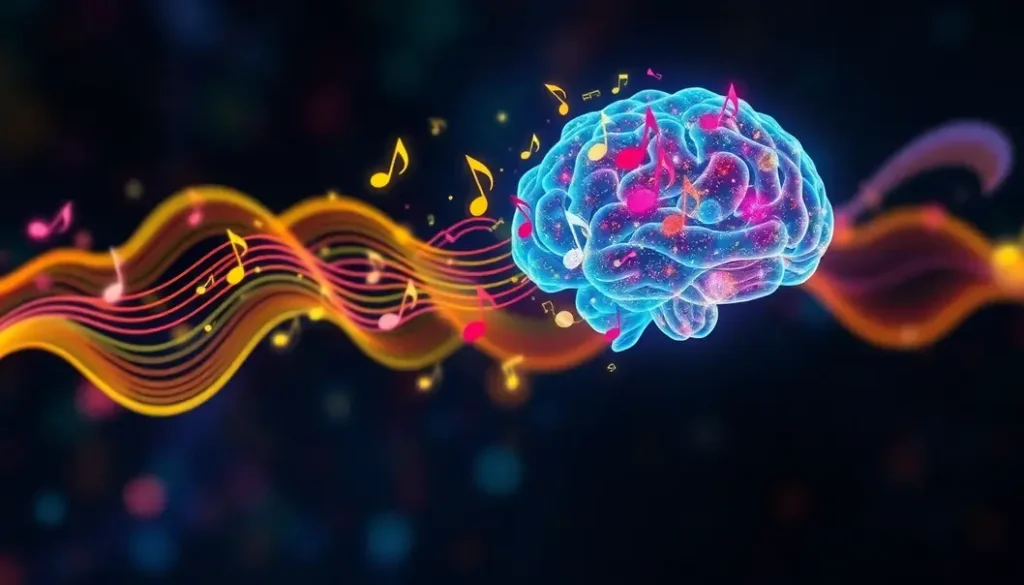
Artificial intelligence is not just a tool; it’s a collaborator, reshaping how musicians and composers approach their craft. By harnessing the analytical power and creative capability of AI, artists can explore uncharted territories in their compositions. This article dives deep into the evolving landscape of AI in music, revealing its potential to inspire, enhance, and even challenge the traditional notions of musical creation. From generating melodies to crafting entire orchestral arrangements, AI is redefining how we think about creativity in the digital age.
Unleashing Creativity: AI as Your Collaborative Partner
Artists have long sought muses to ignite their creativity, ranging from personal experiences to abstract concepts. In the ever-evolving landscape of music, artificial intelligence is emerging as a novel force, offering musicians a collaborative partner to explore uncharted territories of sound. AI doesn’t just mimic; it innovates alongside human composers, offering an expansive array of possibilities that enrich the creative process.
Musicians often face mid-composition stagnation. This is where AI steps in, acting as a catalyst for new ideas. Analyzing vast datasets from historical compositions, AI identifies patterns and creates novel structures, offering suggestions that could spark a new direction in a composition. It enriches traditional music theory with an algorithmic understanding, suggesting chords and progressions that might not easily occur to the human mind.
Creating melodies can be particularly challenging, especially when striving for uniqueness. AI can generate fresh sequences by analyzing a myriad of existing tunes and recombining elements in innovative ways. Some composers describe this interaction as listening to a trusted advisor pointing out hidden paths in the labyrinth of notes.
Enhancing the Composition Workflow
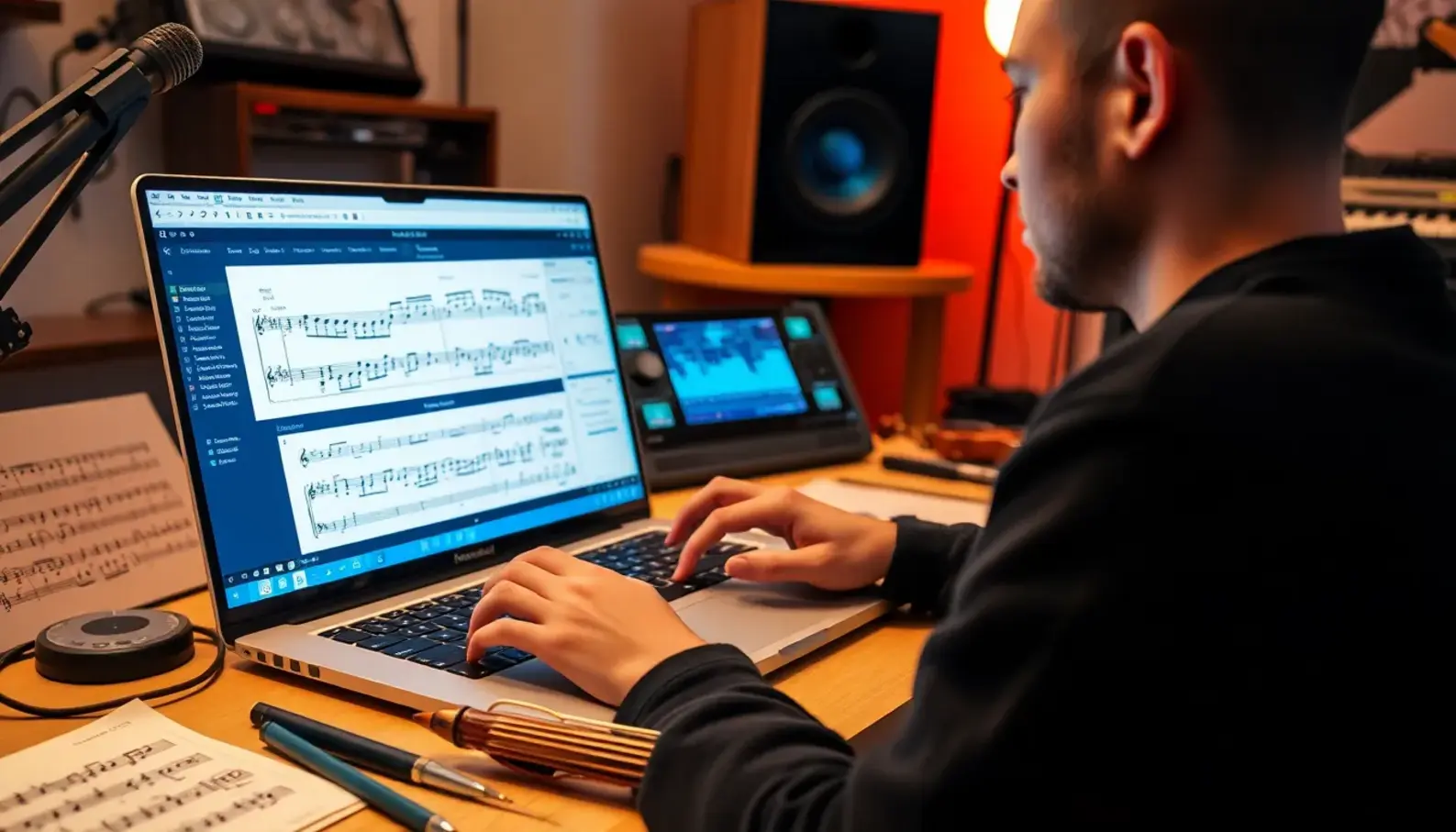
In addition to idea generation, AI streamlines the music creation process. Automated tools can transcribe complex musical ideas into sheet music and suggest variations. They provide real-time feedback on harmony and rhythm, allowing for iterative improvements. By automating mundane tasks, composers can focus more on the creative aspects, thereby enhancing productivity while maintaining high artistic standards.
Embracing Harmony and Melodic Inspiration
AI excels at harmony generation, offering an expansive harmonic vocabulary learned from a diverse array of genres. It suggests harmonies that intertwine complexity with musicality, often leading composers to unexpected, delightful results. The harmonious interplay between human creativity and machine learning turned collaboration into a symbiotic relationship.
Such interaction doesn’t diminish the artist’s input. Instead, it expands the horizon by unexpected juxtaposition. Musicians are free to tweak and adapt AI-generated content, building upon initial suggestions while infusing their personal touch.
Real-World Examples of AI-Music Collaboration
Some artists are already embracing AI tools to explore new musical avenues. A classical composer might use AI to orchestrate an entire symphony, leveraging machine-generated horn sections and string arrangements. Meanwhile, a pop artist might utilize AI to generate synthetic drum beats, pushing the boundaries of rhythm.
Jazz musicians, known for their improvisational skills, have found AI-generated harmonies and scales to be invaluable in live performances. By suggesting alternative chord progressions, AI allows jazz artists to break free from traditional structures and explore innovative harmonic landscapes.
These collaborations are not limited to established artists. Emerging musicians also use AI to gain insight into compositional techniques they have yet to master. This democratizes music creation, offering tools that lower the barriers for entry into complex areas of music theory.
Challenges and Opportunities
Despite its benefits, integrating AI into the music composition process isn’t without challenges. Ensuring the tool aligns with an artist’s unique style can be complex, requiring continuous iteration and feedback. Moreover, understanding AI suggestions within a creative context requires a balance between human intuition and machine efficiency.
Yet, these challenges pave the way for entirely new opportunities. Through AI, musicians can explore intersections with other emerging technologies, such as neuromorphic computing innovations. These relationships could lead to rich, multilayered musical experiences that transcend current boundaries.
In conclusion, as AI steadily integrates into music composition, it reshapes the creative paradigm, transforming musicians from solitary creators into collaborators with a sophisticated partner. By opening doors to new methodologies and sound combinations, AI enriches the songwriting process, making it as much a journey of discovery as it is a manifestation of artistic vision. Embracing this technological muse ignites the creative fires, fueling an era of musical innovation and exploration.
The AI Symphony: Transforming Composition Techniques
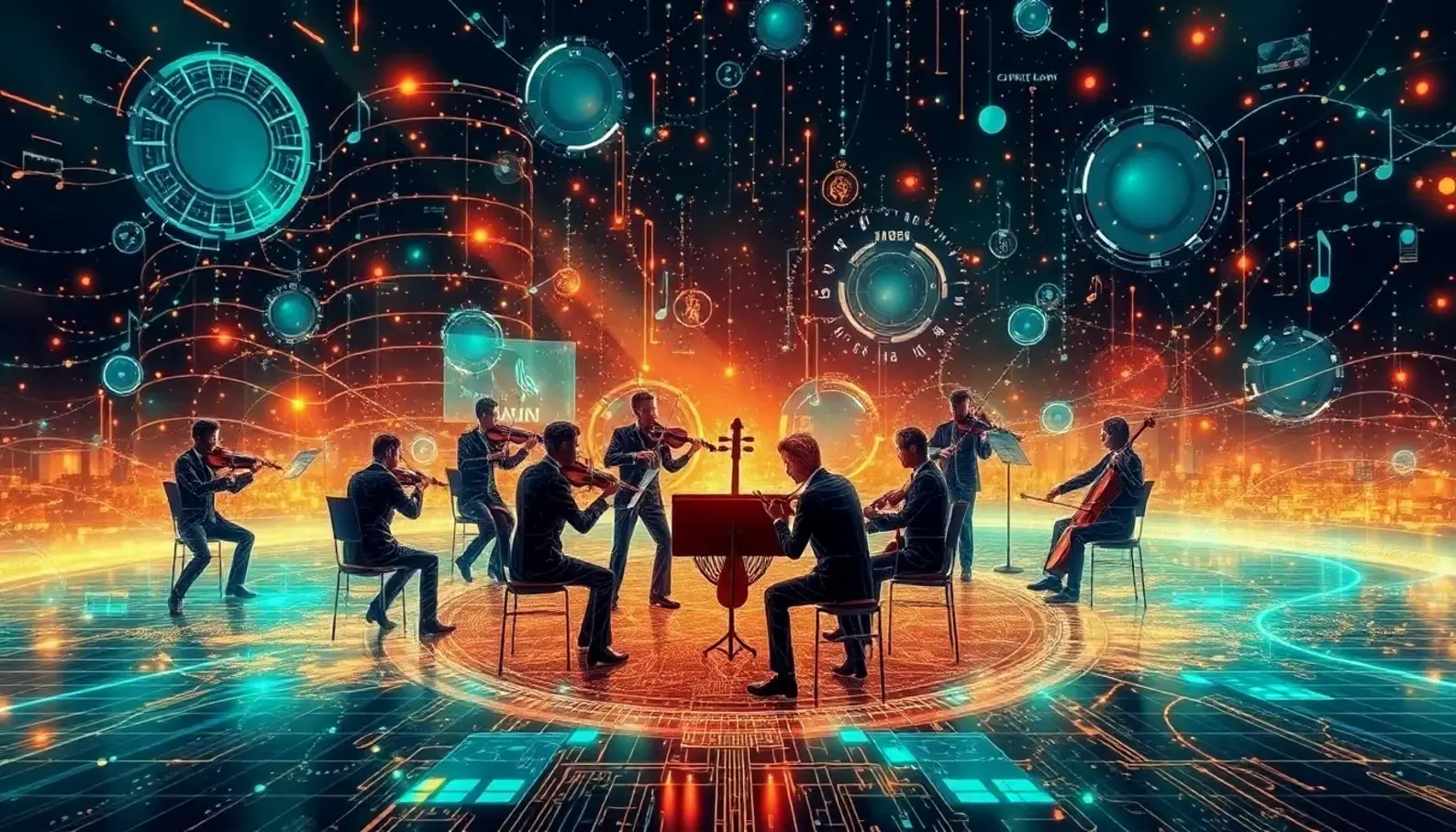
Artificial Intelligence (AI) is undeniably altering the landscape of music composition, revealing new horizons for creativity. This evolutionary step invites us to reimagine conventional methods, offering tools that analyze existing music to generate impressive new works. At the core of this transformation are intricate algorithms and sophisticated machine learning models. By dissecting music at a granular level, AI provides unprecedented insights into the mechanics of music creation.
One of the primary methods AI uses to reshape composition is through deep learning models like neural networks. These systems process large datasets of music, learning intricate patterns that escape the notice of human composers. Applications such as deep neural networks can identify harmony, melody, rhythm, and style from vast music libraries. Once these elements are understood, the AI can produce compositions that maintain the emotional depth and complexity found in music written by humans.
Algorithmic Magic
Algorithms specialized in music creation start with data—the more diverse, the richer the results. Using techniques such as Generative Adversarial Networks (GANs), models can generate new music by pitting two networks against each other. One network creates new pieces, while the other evaluates them, ensuring high-quality output. Through this iterative process, AI crafts compositions that blend innovation with tradition.
In addition to GANs, reinforcement learning models use a reward-based system to optimize music creation habits. By setting specific musical goals, such as staying within a genre or experimenting with novel chord progressions, these models enhance their ability to produce desired results over time. Critics may fear AI’s mimicry, but these sophisticated approaches ensure that compositions remain fresh and unique.
The advent of AI in music composition also heralds a shift in how genres and styles are perceived. AI’s ability to cross-reference vast music archives inspires unconventional pairings and mashups that transcend traditional genre boundaries. Electro-classical fusions or jazz-inspired hip-hop beats become more accessible through AI’s innovative lens, inviting broader audiences to explore hybrid sounds.
Implications for Music Performance
AI’s involvement extends beyond the mere creation of music to influence performances. With AI’s detailed understanding of emotional cues and performance timing, real-time accompaniment and improvisation become possible in live settings. Interactive AI systems can adapt to a performer’s style, adjusting tempos or harmonies dynamically, ensuring a harmonious balance between spontaneity and precision.
The implications for future performances are promising. Imagine AI as a silent conductor, guiding orchestras with minute precision or assisting solo performers to achieve complex compositions that require spontaneity. AI’s real-time analytical capabilities allow for immediate feedback, transforming technical accuracies into emotive storytelling.
Future Directions and Ethical Considerations
However, the rise of AI in music composition isn’t without challenges. The debate surrounding creative ownership looms large. As AI-generated works proliferate, questions of authorship and intellectual property rights need addressing. It’s imperative to establish protocols that recognize the creative efforts of programmers alongside musicians.
There’s also concern over the homogenization of music, a potential outcome of AI’s reliance on data patterns. Efforts to combat this involve integrating more diverse datasets and including inputs from various cultures and subgenres. Ensuring that AI doesn’t stifle creativity requires continuous oversight, promoting ethical AI practices. For an in-depth exploration of such ethical frameworks, refer to agentic AI insights.
Another consideration is the impact on musicians. While AI can complement their work, there’s fear about the displacement of human composers. Instead, AI should be viewed as a collaborative tool, opening new avenues for artistic expression and innovation. The symbiosis between human creativity and AI-driven analysis holds promise for a vibrant future in music.
In conclusion, AI’s role in transforming traditional composition techniques signifies a thrilling frontier in music. The melding of human insight with machine precision nurtures an ecosystem rich with potential. As we navigate this landscape, ethical and creative pursuits must guide our journey where innovation harmonizes with tradition to create music that speaks to the heart of humanity.
Final words
The integration of AI in music composition offers unprecedented opportunities for creativity and innovation. Musicians and composers are encouraged to embrace this technology, exploring its potential to elevate their artistic expression. As AI continues to evolve, it will undoubtedly inspire new genres and redefine the standards of musical composition.
Compose Music with AI Assistance
Learn more: https://innoupdates.com
About us
At Innoupdates, we provide cutting-edge AI tools tailored for musicians and composers. Our platform offers innovative solutions to enhance your creative process, from melody generation to full-composition assistance. Dive into the future of music with technology designed to inspire and empower artists like you.