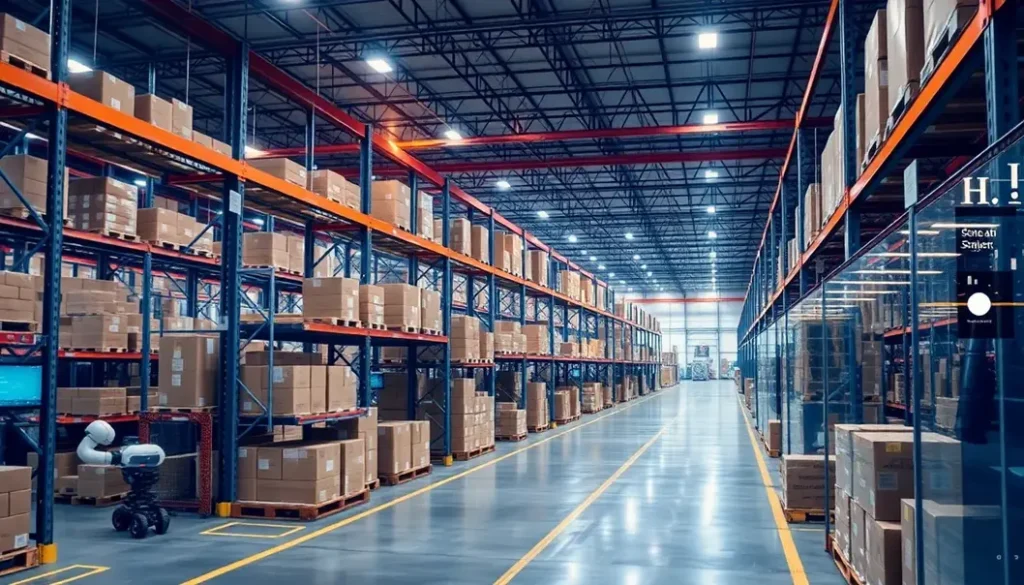
As supply chains evolve in complexity, organizations are increasingly turning to artificial intelligence (AI) to enhance their engagement strategies. AI offers unprecedented insights, improving not just efficiency, but also responsiveness to market demands. By integrating AI into supply chain management, companies can predict disruptions, optimize logistics, and foster deeper relationships with suppliers and customers. This article explores how AI can reshape supply chain engagement, spotlighting key strategies for leaders seeking competitive advantages in their operations. The transformative potential of AI in this domain promises not just incremental improvements, but a fundamental shift in how businesses perceive and manage their supply chains.
Leveraging AI for Enhanced Collaboration Across Supply Chains

Artificial intelligence is revolutionizing the way businesses interact within the intricate web of supply chains. As organizations strive for seamless operations, technology serves as a bridge, enabling dynamic collaboration from suppliers to end-users. Opportunities abound for enhancing communication and efficiency across these networks.
Innovative use of AI enables companies to anticipate needs, track inventory, and adjust production schedules with remarkable precision. This intelligence stems from the core technologies like machine learning, natural language processing, and predictive analytics, which are integral in creating responsive supply chains. Through these advancements, data is no longer a static asset but an interactive tool capable of fostering deep collaboration.
One transformative application is the use of machine learning algorithms to forecast demand more accurately. By analyzing patterns from historical data and correlating them with current trends, supply chains can eliminate bottlenecks before they arise. This proactive approach ensures that suppliers and retailers are in perfect harmony, aligning production with demand seamlessly, thus minimizing surplus and shortages.
Natural language processing (NLP) further enhances this collaborative landscape by improving exchanges between different organizations, regardless of geolocation or linguistic barriers. NLP-driven systems break down these walls by translating complex communications efficiently. When a supplier in one region communicates with a buyer elsewhere, real-time translation and contextual understanding prevent miscommunication. This level of accuracy is instrumental in ensuring that every stakeholder is on the same page, facilitating smoother transactions and a more robust supply chain.
Predictive analytics, with its ability to foresee potential disruptions, adds another layer of strategic advantage. Supply chains are vulnerable to various risks, such as natural disasters or fluctuating market dynamics. Predictive algorithms analyze existing patterns and detect anomalies that could signify impending issues. Companies then devise mitigation strategies in advance, preserving the integrity and flow of goods. Through this preparation, organizations strengthen their relationships with partners by consistently meeting commitments, even amid challenges.
A successful use of AI in supply chain collaboration is exemplified by a multinational manufacturing firm which harnessed predictive analytics to streamline its operations. The firm implemented AI systems capable of real-time data analysis across its supply networks. By predicting equipment failures before they occurred and optimizing maintenance schedules, the company achieved a 20% increase in productivity and a significant reduction in operational costs.
In another case, a leading logistics provider leveraged AI to enhance customer interaction and service delivery. By deploying AI-powered chatbots, the company revolutionized its customer service capabilities. These virtual assistants, equipped with NLP, efficiently handled inquiries, tracked shipments, and provided status updates around the clock. This not only improved customer satisfaction but also allowed human agents to address more complex issues, thereby enhancing overall service quality.
Organizations also reap benefits from AI-driven collaboration tools that provide comprehensive visibility into their supply chains. These systems integrate information from multiple sources, offering a consolidated view of the entire process. Managers gain insights into every link of the supply chain, from supplier performance to end-customer satisfaction. This transparency fosters collaboration and accountability, paving the way for strategic partnerships.
Moreover, AI facilitates collaborative innovation among partners by identifying opportunities for product improvements and cost reductions. By leveraging data analytics, stakeholders can visualize potential scenarios and assess different strategies without committing resources. This insight promotes informed decision-making, aligning partners’ goals toward mutually beneficial outcomes.
The synergy between AI and supply chain collaboration does not merely reside in efficiency. It encompasses sustainability, a critical aspect of contemporary business practices. AI-powered systems minimize waste by optimizing resource use and transport routes, supporting environmental sustainability initiatives. Supply chains become not only more agile but also more eco-friendly, contributing to broader corporate social responsibility goals.
As industries continue to embrace AI, its role in enhancing supply chain collaboration becomes more prominent. Companies leveraging these advancements achieve agile, responsive, and strategic networks capable of adapting to challenges and seizing new opportunities. The integration of AI is more than a competitive advantage; it marks a profound transformation in how businesses engage with their ecosystem, fostering sustainable growth and resilience.
For further insights on AI’s role in business modulation and transformational strategies, refer to AI in Business Growth, and explore how these innovative approaches are redefining traditional paradigms.
Predictive Analytics: Proactively Managing Supply Chain Risks

The integration of predictive analytics into supply chain management has become transformative, significantly enhancing risk mitigation capabilities. By analyzing vast amounts of data with unprecedented speed, organizations can anticipate potential disruptions before they escalate into costly problems. Through the use of advanced AI models, supply chains become proactive entities capable of dynamically adjusting operations to avert risks.
Predictive analytics leverages a variety of AI models, each with unique strengths suited to different aspects of the supply chain. Machine learning algorithms, such as random forests and support vector machines, classify and predict outcomes based on historical data. These models process vast datasets to identify patterns and anomalies that signal potential disruptions. They are particularly adept at foreseeing demand fluctuations, inventory shortages, and supplier defaults.
Deep learning models, on the other hand, excel in handling unstructured data, such as textual information from news articles and social media. These models analyze sentiment and trends, enabling organizations to foresee macroeconomic shifts or geopolitical tensions that might affect supply chains. Moreover, neural networks, when employed with big data analytics, enhance the accuracy of forecasts, particularly in complex scenarios involving multiple variables.
The success of predictive analytics relies heavily on the quality and breadth of data sources. Internal data, such as sales history, inventory levels, and production schedules, provide a foundational basis. However, external sources offer critical insights that enrich predictions. These include market reports, weather forecasts, and even real-time data streams from IoT devices embedded in the supply chain network.
One particularly impactful application of predictive analytics is in the monitoring and management of transportation risks. AI models analyze data from vehicle telematics, route information, and environmental conditions to predict potential delays or disruptions in transit. This allows logistics managers to reroute shipments in real time, minimizing the impact of unexpected events such as traffic congestion or severe weather conditions.
The regular monitoring of specific indicators is essential to maintaining the effectiveness of predictive analytics. Key performance indicators (KPIs) like lead time variability, order fulfillment rate, and supplier reliability are continuously tracked. By setting benchmarks and thresholds, organizations can receive early warnings when indicators deviate from the norm, prompting preemptive measures.
Proactive decision-making facilitated by predictive analytics is a game-changer for supply chains. It allows companies to stay ahead in a competitive market by optimizing operations and reducing unexpected costs. For instance, by forecasting demand accurately, organizations can optimize inventory levels, reducing the costs associated with overstocking or stockouts. Similarly, by identifying potential supplier issues early, firms can negotiate alternative arrangements, ensuring supply continuity and maintaining production schedules.
An exemplary case of predictive analytics in action is its use in anticipating supplier failures. By analyzing financial data, news articles, and supplier performance metrics, organizations can spot warning signs of financial distress or operational inefficiencies in their supply partners. This foresight allows companies to diversify their supply base preemptively, mitigating the risk of supply interruptions.
Integrating predictive analytics within the broader context of a digitally transformed supply chain not only safeguards against risks but also enhances service delivery. By predicting and responding to potential disruptions, companies maintain high service levels, fostering stronger customer relationships and driving competitive advantage. The ability to deliver products reliably and promptly translates into customer satisfaction and brand loyalty.
Furthermore, predictive analytics fosters sustainability within supply chains by optimizing resource usage and minimizing waste. By accurately forecasting demand and aligning production accordingly, companies can significantly reduce excess inventory and decrease carbon footprints. This sustainable approach aligns with the growing demand for eco-friendly business practices and supports long-term growth.
For organizations embarking on their predictive analytics journey in supply chain management, aligning this strategy with broader AI-driven innovations is crucial. Exploring synergies with other technologies such as autonomous drones for logistics can enhance efficiency and responsiveness. Discover how autonomous technologies are revolutionizing logistics to explore how they complement predictive models in creating an integrated, agile supply chain.
In summary, predictive analytics equips organizations with the tools necessary to foresee and preempt supply chain risks. By employing sophisticated AI models, leveraging comprehensive data sources, and regularly monitoring KPIs, businesses can make informed decisions that not only minimize risks but also optimize costs and improve service delivery. As the digital transformation of supply chains continues, predictive analytics will remain a cornerstone technology, driving sustainable growth and resilience.
Empowering Supply Chain Strategies through Autonomous Operations
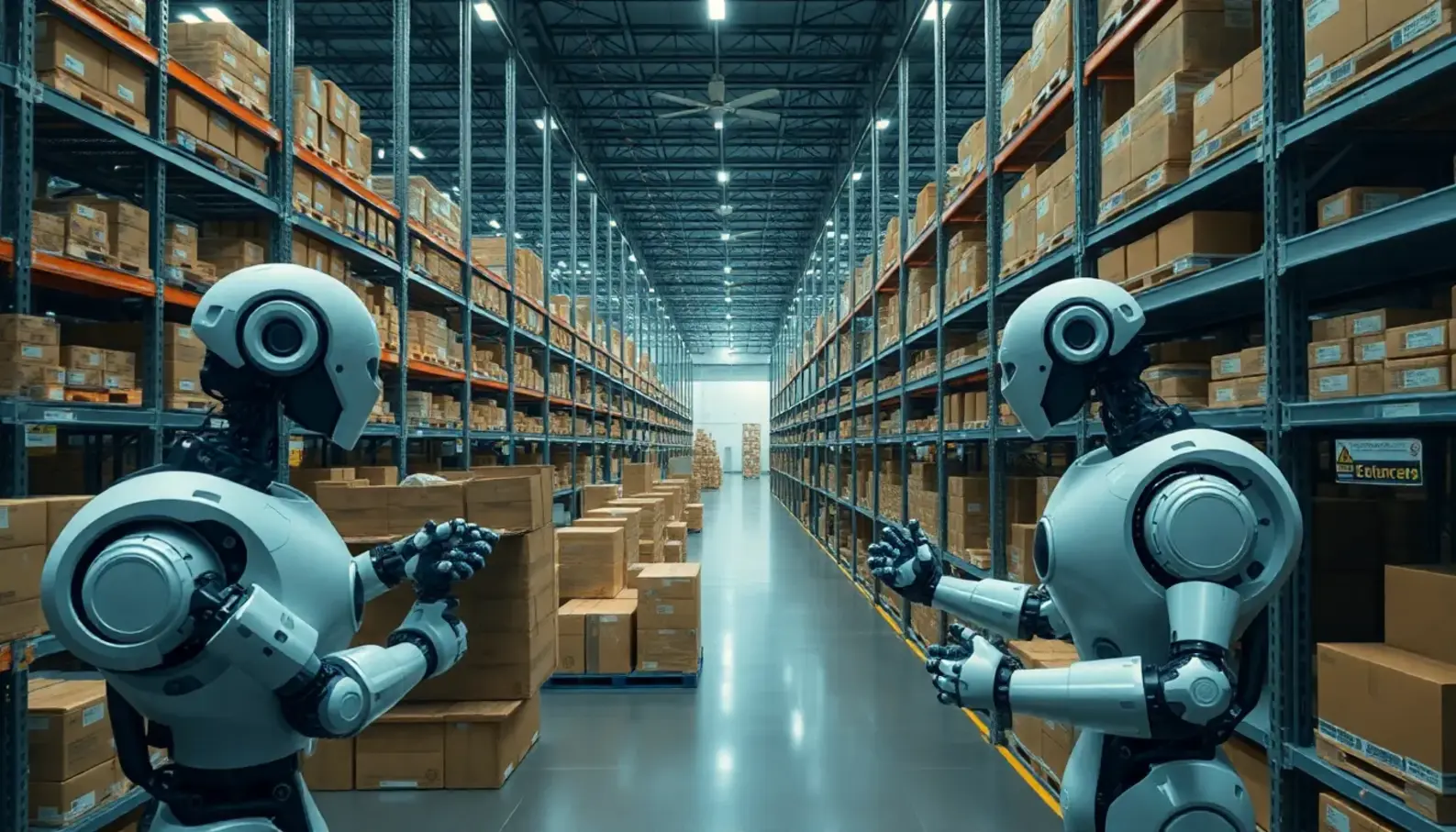
Artificial intelligence is reshaping supply chain strategies by infusing automation into various processes. Autonomous operations are taking center stage, particularly in warehousing and delivery. By leveraging AI-driven robotics, supply chains are transforming the efficiency and accuracy of operations.
AI-Driven Automation in Warehousing
In warehouses, AI automation is optimizing space utilization and inventory management. Robots enabled with AI algorithms can manage tasks like sorting, packing, and transporting goods more efficiently than humans. These robots learn and adapt to warehouse layouts, dynamically optimizing their pathways and reducing mishandling of items.
Such systems rely heavily on machine learning and computer vision to identify products and navigate complex spaces seamlessly. This reduces operational downtime, resulting in a considerable enhancement of throughput. The implementation of AI also means that warehouses can now operate continuously across shifts, unhindered by human limitations.
Transformations in Delivery Methods
The delivery phase of supply chains has seen significant innovations too. Autonomous vehicles, including drones, revolutionize last-mile delivery, cutting down the time taken to transport products to consumers. By eliminating human drivers, these solutions address issues of route optimization and fuel efficiency—autonomous systems can plan optimal routes in real time.
Additionally, AI models assess the most appropriate vehicle for a delivery based on various parameters such as weight and urgency. Companies deploying these technologies report substantial cost savings and improvement in delivery times.
Learn more about how autonomous drones are impacting logistics here.
Implications for Workforce Dynamics
The rise of autonomous operations presents both opportunities and challenges for the workforce. On one hand, the efficiency and cost savings offer organizations room for reinvestment in innovative areas. On the other, the shift demands reskilling workers as AI and robotics replace conventional roles.
Organizations face the necessity to foster a culture of continuous learning. Workers must pivot to roles that require managing and maintaining AI systems or interpreting data insights. This transition reshapes workforce dynamics, encouraging development of new competencies focused on technology management.
Enhancing Efficiency and Managing Costs
Autonomous operations streamline supply chain functions, increasing reliability and reducing redundancies. AI can predict demand fluctuations with high precision, allowing for efficient resource allocation. This predictive capability minimizes overstocking or stockouts, saving costs associated with storage and lost sales.
Moreover, automation reduces error margins associated with manual interventions. For example, using AI-driven robotics minimizes picking errors in warehouses, enhancing order accuracy and customer satisfaction. The long-term cost implications are significant, with predictable maintenance schedules and data-driven decision-making enhancing the bottom line.
Case Studies: Lessons from the Pioneers
Several companies have successfully adopted AI-driven autonomous operations, providing learning benchmarks for others. A major logistics firm integrated robotic sortation systems into its distribution centers. The move resulted in a 40% improvement in throughput and reduced labor costs substantially.
Another retailer revolutionized its delivery network with AI-enabled delivery bots. The initiative cut delivery times by half and expanded service reach in urban areas. These companies highlight the importance of iterative testing and starting small before scaling up operations.
Common lessons from these success stories include the importance of aligning AI implementation with strategic objectives, ensuring technological readiness, and preparing the organization for cultural shifts. Pioneering companies advocate for sustainable strategies that balance technological advancement with human elements to maintain morale and engagement.
The growing prevalence of autonomous operations powered by AI underscores a fundamental shift in supply chain optimization. As businesses acclimatize to this new paradigm, the dual focus on technology and workforce development becomes essential for sustainable growth. Through strategic deployment of AI, supply chains not only become agile and cost-efficient, but they also lay the groundwork for continued innovation.
Final words
AI in supply chain engagement is no longer a concept of the future; it is becoming a reality that innovative companies are beginning to embrace. By fostering collaboration, managing risks through predictive analytics, and optimizing operations through automation, organizations can achieve a significant competitive advantage. Leaders must not only adopt these technologies but also cultivate a culture of continuous learning and adaptation to fully realize their transformative potential in supply chain management.
Try Free Demo
Learn more: innoupdates.com
About us
We provide cutting-edge AI solutions to optimize your supply chain operations. Our platform empowers businesses with predictive analytics, automation tools, and real-time data management, ensuring seamless engagement with all stakeholders. Experience enhanced collaboration and risk management through our innovative technologies designed to drive efficiency and growth.