
The convergence of artificial intelligence and supply chain management represents a critical pivot point for businesses striving for operational efficiency. By integrating AI technologies, organizations can optimize logistics, enhance demand forecasting, and streamline inventory management. This intersection not only boosts efficiency but also creates a robust framework for informed decision-making. Exploring strategic AI applications within supply chains invites a new era of insight-driven management, enabling companies to stay agile in a competitive landscape. Understanding how to leverage these advanced technologies is essential for strategists and educators aiming to innovate supply chain practices effectively.
AI-Powered Demand Forecasting and Planning

Artificial Intelligence is transforming how organizations approach demand forecasting and planning, offering new methodologies that refine predictions and enhance supply chain efficiency. This shift is driven by machine learning algorithms and data analytics, which provide businesses with tools to anticipate market trends and understand customer behaviors accurately.
Central to AI’s capability in demand forecasting is the use of machine learning models. These models can process vast amounts of historical sales data, market indicators, and external variables to predict future demand with impressive accuracy. Unlike traditional forecasting methods, which often rely on linear trend analysis, AI utilizes complex algorithms that can identify patterns and relationships in data that are non-obvious to the human eye. This depth of analysis leads to more precise forecasts, which form the bedrock of effective inventory planning and resource allocation.
A critical component of AI-driven forecasting is real-time data integration. Traditional forecasting systems often hinge on outdated or static data, which can result in obsolescence by the time decisions are made. AI systems, however, continuously ingest new data from various sources, allowing forecasts to adjust dynamically. This real-time adaptability is crucial for businesses aiming to minimize excess inventory and stockouts, as forecasts can be constantly refined to reflect the latest market conditions and consumer trends.
Moreover, adaptive learning models in AI play a significant role in refining demand planning. These models learn and evolve over time, improving their prediction accuracy as they assimilate more data and understand changing patterns. This process of continuous improvement creates a feedback loop where AI systems become progressively better at demand forecasting. Implementing such systems requires a robust data infrastructure that can support the integration of diverse data sources, including sales transactions, customer feedback, and even macroeconomic indicators.
One of the standout benefits of AI in demand forecasting is the significant reduction in excess inventory and associated costs. By predicting demand more precisely, businesses can order and stock what is necessary, rather than overcompensating for potential demand spikes. This precision not only decreases holding costs but also enhances cash flow and reduces waste. Stockout risks are equally mitigated, ensuring that inventory levels are optimized to meet actual demand without exhausting supplies.
Employing AI tools in demand forecasting requires thoughtful implementation. Businesses must first establish a clear data strategy to ensure the availability and quality of data inputs. Next, selecting the appropriate machine learning algorithms that align with the specific forecasting needs of the business is essential. Furthermore, it is imperative to foster a culture that embraces the insights provided by AI, merging them with human expertise to yield the most comprehensive demand plans.
To establish a successful AI-driven forecasting system, building a robust feedback loop is crucial. This loop involves regularly reviewing forecast accuracy, analyzing discrepancies, and adjusting models based on new insights. Critical to this process is collaboration across various functional teams, such as sales, marketing, and operations, to ensure that forecasts are both realistic and actionable.
Integrating AI into demand forecasting not only optimizes the supply chain but also aligns strategic business goals with operational capabilities. It empowers companies to make informed decisions quickly, respond adeptly to market shifts, and maintain a competitive edge. For businesses keen on digital transformation, adopting AI technologies in supply chain management is no longer a mere option, but a necessity for staying ahead.
For more insights into the broader applications of AI in business contexts, including strategy and implementation, refer to AI in Business Growth.
Optimizing Logistics and Supply Chain Operations with AI
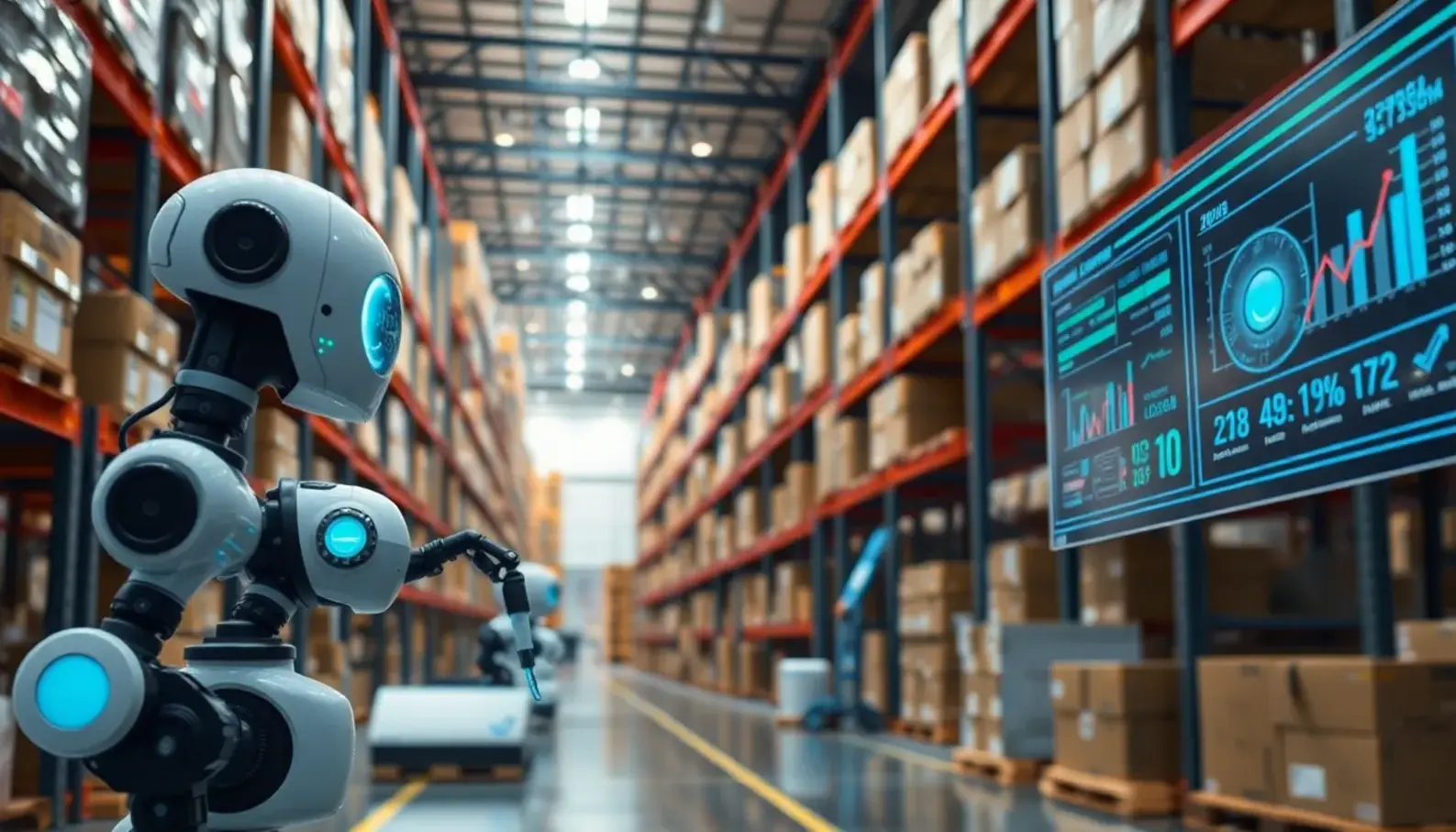
Artificial Intelligence (AI) has emerged as a transformative force in logistics optimization and supply chain operations. By leveraging AI, companies are reshaping traditional supply chain models, paving the way for more efficient, cost-effective, and reliable systems. AI’s role in fleet management, route optimization, and warehouse operations is particularly noteworthy, where it enables a level of precision and efficiency that was previously unattainable.
In fleet management, AI-driven analytics provides real-time tracking and management capabilities. Such systems analyze vast amounts of data to predict vehicle maintenance needs, ensuring uptime and reliability. Predictive analytics anticipates when a vehicle might require service, reducing the risk of unexpected breakdowns. This proactive approach not only extends the lifespan of vehicles but also minimizes service disruptions. Companies implementing this strategy have reported a decrease in maintenance costs and an improvement in fleet reliability.
Route optimization is another critical area where AI is making substantial inroads. By analyzing traffic patterns, weather conditions, and delivery constraints, AI algorithms identify the most efficient routes for logistics vehicles. This reduces fuel consumption and delivery times, translating to lower operational costs and enhanced customer satisfaction. For example, a distribution company leveraged AI-powered route planning to achieve a 15% reduction in delivery times, significantly boosting its competitive edge.
Warehouse management is undergoing a revolution with AI integration. Automated systems powered by AI manage inventory with unprecedented accuracy, reducing human error and optimizing storage space utilization. AI systems categorize inventory based on demand patterns, ensuring that high-demand items are easily accessible. This level of inventory management not only improves operational efficiency but also enhances customer fulfillment rates, as shipments are processed faster and with fewer errors.
Moreover, the role of AI is not confined to existing systems; it is also pivotal in adopting new technologies like autonomous vehicles and drones. Autonomous vehicles in supply chains offer the promise of significant cost savings and enhanced safety. AI helps these vehicles navigate complex environments, dynamically adjusting routes and speeds to ensure timely deliveries. Businesses deploying autonomous vehicles have reported reductions in delivery costs and improvements in service reliability.
The use of drones in logistics is equally transformative. They operate in areas where traditional vehicles face constraints, such as remote or congested urban locations. AI-equipped drones efficiently manage deliveries, ensuring swift and reliable service. By incorporating AI, drones can autonomously determine the best delivery paths, taking into consideration environmental factors and potential obstacles. This innovation leads to faster delivery times, reduced labor costs, and higher accuracy in time-sensitive shipments.
The integration of these technologies enhances overall supply chain performance, making delivery systems faster and more adaptable. This agility is crucial in today’s market, where consumer expectations for rapid deliveries are higher than ever. Deploying AI effectively can also lead to a reduction in operational costs, as systems optimize everything from fuel consumption to staff allocation.
In supply chain management, the potential of AI extends beyond logistics. It allows companies to harness predictive analytics, enabling more informed decision-making. Predictive models analyzed vast datasets to foresee demand shifts, allowing businesses to adjust production schedules proactively. This capability is critical in minimizing inventory surplus and understock issues, which can significantly impact profitability.
A pertinent case study involves a major retail chain that utilized AI to predict seasonal demand fluctuations. By analyzing vast arrays of customer data and market trends, the company adjusted its inventory levels in advance of peak shopping periods. The result was a 10% increase in sales and a substantial decrease in out-of-stock items, leading to higher customer satisfaction.
AI’s role in supply chain performance monitoring is also crucial. Systems continuously analyze operational data to enhance supply chain efficiency. They provide real-time insights into performance metrics, enabling companies to identify bottlenecks and mitigate them quickly. This continual assessment is vital in maintaining seamless operations and ensuring that supply chains can adapt to unforeseen circumstances and market demands.
To fully embrace AI and its benefits, companies need to ensure seamless integration with current systems. This requires investment in infrastructure and a focus on data-driven culture within organizations. For instance, collaborating with AI specialists and conducting staff training programs can foster a better understanding of these technologies. This preparation empowers teams to leverage AI tools effectively, maximizing their impact on supply chain operations.
Incorporating AI into logistics and supply chains is not without challenges, such as data privacy issues, technology costs, and measuring returns on investment. However, for those willing to navigate these hurdles, the rewards include increased efficiency, reduced costs, and improved customer satisfaction. Autonomous technologies are shaping the future, and staying ahead of these trends ensures that businesses remain competitive and responsive to market trends.
For further insights into the integration of autonomous drones in logistics and how they enhance efficiency, you can refer to an insightful discussion here.
Final words
Integrating AI into supply chain management is not merely an enhancement; it is becoming a prerequisite for success in a volatile market. As organizations embrace these technologies, they gain a significant edge in efficiency, customer engagement, and adaptability. Strategists and educators must champion these innovations to ensure that their practices and teachings reflect the realities of an increasingly AI-driven world. The future of supply chains will be defined by those ready to harness these tools effectively.
Download the Whitepaper to learn more about AI’s impact on supply chain management.
Learn more: https://innoupdates.com
About us
Our company specializes in providing cutting-edge solutions tailored to enhance supply chain management through AI-driven technologies. We offer consulting services, technology integration, and training programs designed to empower businesses with the tools they need to thrive in an evolving marketplace.