
Understanding Cybersecurity Threat Intelligence is essential for organizations aiming to enhance their security frameworks. By implementing actionable insights, security analysts can stay ahead of adversaries and protect vital assets. This article discusses the methodologies for effective threat intelligence gathering and application, focusing on how businesses can enhance their defensive posture and respond proactively to emerging threats.
Understanding the Landscape of Cybersecurity Threat Intelligence

Cybersecurity threat intelligence is an evolving discipline that plays a crucial role in defending organizations against ever-growing cyber threats. At its core, threat intelligence involves collecting, analyzing, and utilizing data to understand potential and evolving threats. This data-driven approach assists organizations in anticipating risks and reinforcing their defense mechanisms.
Core Concepts
At the heart of cybersecurity threat intelligence lies a few core components. The first is data collection. Through various sources, ranging from open web forums to proprietary databases, raw data is gathered. This data includes indicators of compromise (IOCs), vulnerabilities, exploit indicators, and threat actor tactics. The next step is analysis, where experts interpret the raw data to draw insights about potential threats. The final step is the utilization of these insights to inform decisions related to security measures and policy development.
Methodologies and Frameworks
The field of threat intelligence employs several methodologies and frameworks. Cyber Kill Chain, proposed by Lockheed Martin, is a popular framework used to understand how attacks unfold. This model breaks down cyberattacks into stages ranging from reconnaissance to actions on objectives. Another key framework is the Diamond Model, which focuses on the relationships between adversaries, their capabilities, infrastructure, and victims. These frameworks provide structured ways to analyze threat information and predict adversarial actions.
Types of Threat Intelligence
Understanding the differentiation between tactical, operational, and strategic intelligence is essential.
- Tactical Intelligence: This involves near-real-time data and low-level information, such as malware signatures and phishing email domains. Its value is immediate, providing actionable insights to frontline security personnel.
- Operational Intelligence: This type focuses on the motives and capabilities of threat actors. It involves understanding the actors’ techniques and requires detailed analysis to predict future behaviors. It is typically used for profiling adversaries and understanding their potential impact.
- Strategic Intelligence: This high-level intelligence informs decision-makers about overarching threat trends and risk implications. Strategic intelligence aids in long-term planning and the development of an organization’s security posture.
Data Collection and Analysis
Collecting threat intelligence data involves leveraging a mix of automated tools and expert human analysis. Open-source intelligence, or OSINT, is invaluable for gathering information from publicly available sources. This includes information from social media, forums, and reports from security vendors. Closed sources, like dark web analysis, involve monitoring private communications and data breaches to gather intelligence.
Automated tools play a pivotal role in sifting through vast amounts of data to identify patterns indicative of threats. Machine learning algorithms are increasingly used to enhance the speed and accuracy of threat detection. However, human expertise remains indispensable when it comes to interpreting complex threat landscapes and making informed decisions.
Utilization for Threat Forecasting
Effective utilization of threat intelligence involves translating insights into proactive measures. Organizations develop defense strategies by anticipating potential attacks and preparing accordingly. Threat forecasts enable security teams to prioritize vulnerabilities and apply patches where necessary. By predicting possible attack vectors, businesses can implement more robust controls, reducing the chances of a successful breach.
Importance of a Well-Structured Intelligence Program
A well-structured threat intelligence program is key to effective cybersecurity defenses. This involves integrating threat intelligence into every layer of security operations. Organizations should foster collaborations across departments, where insights from threat intelligence are not siloed but shared and utilized collectively. Moreover, continuous feedback loops enhance the ability to update and refine threat responses.
Case Studies
Several organizations have successfully implemented threat intelligence frameworks with remarkable outcomes. For example, a major financial institution developed an integrated threat intelligence program that reduced phishing incidents by actively monitoring and shutting down replica sites. By focusing on operational intelligence, they understood the techniques and motivations behind the campaigns, improving their defense against similar threats.
Another case involves a technology company that deployed strategic intelligence to anticipate legislative changes affecting cybersecurity in different regions. By doing so, they identified areas of potential vulnerability and adapted their policies proactively to comply with forthcoming regulations, illustrating how strategic intelligence can influence broader organizational strategies.
In conclusion, understanding the landscape of cybersecurity threat intelligence is a multifaceted endeavor. It involves integrating data from diverse sources, adopting relevant frameworks, and distinguishing between different types of intelligence to build a comprehensive defense mechanism. For more insights into how technology influences strategic planning across various sectors, you can visit here. By harnessing threat intelligence effectively, organizations can better anticipate threats and foster resilience against a dynamic cybersecurity landscape.
Implementing Threat Intelligence to Combat Cyber Threats
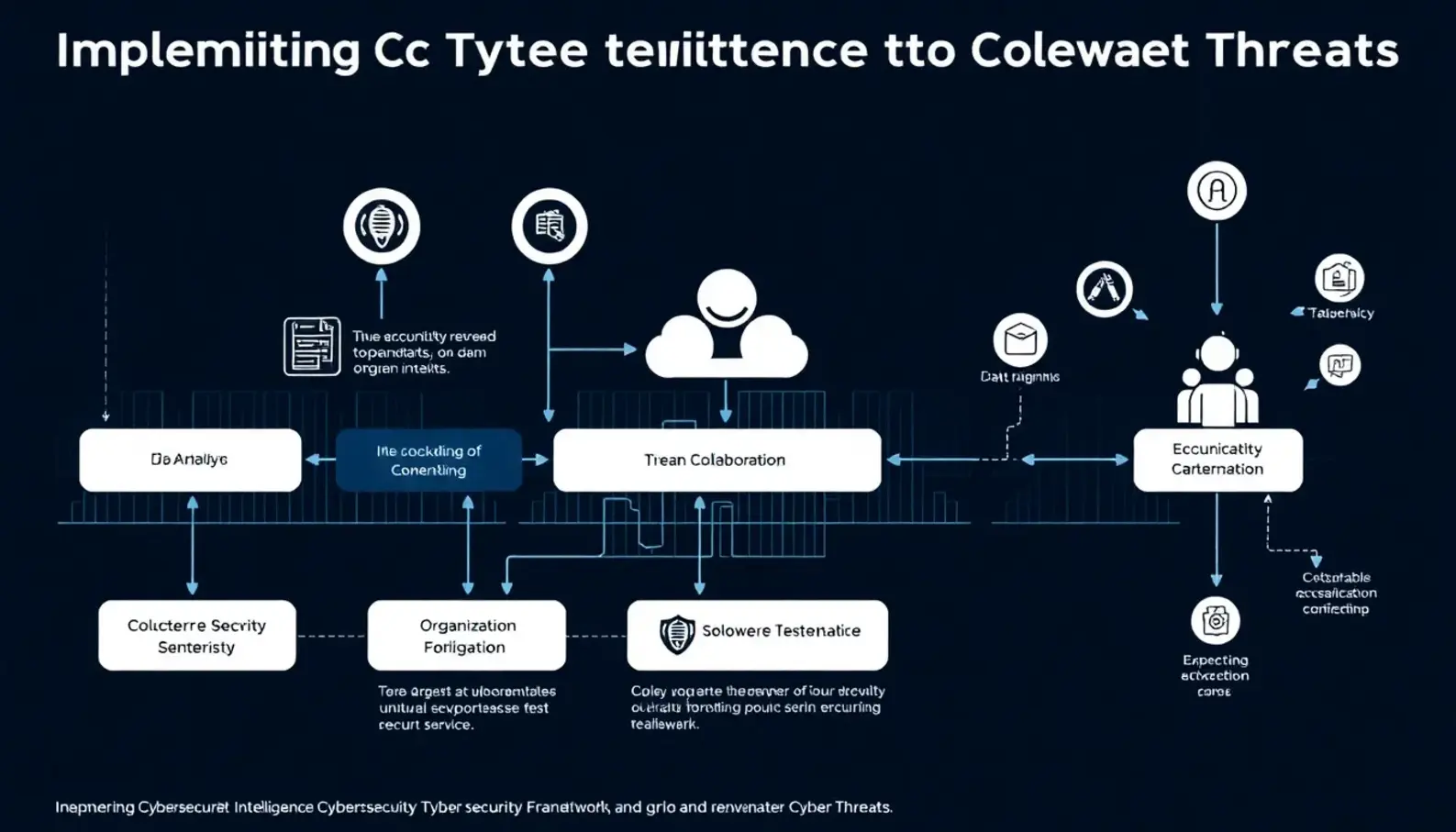
With the digital landscape continuously evolving, organizations are constantly under threat from sophisticated cyber adversaries. The key to staying ahead of these threats lies in the effective integration of Cybersecurity Threat Intelligence (CTI). This chapter will delve into the practical steps for harnessing CTI, focusing on tools and strategies for real-time data analysis, threat hunting, incident response, and inter-team collaboration.
Adopting a Proactive Threat Intelligence Approach
An effective CTI strategy starts with adopting a proactive stance. Rather than reacting to incidents, organizations must anticipate potential threats. This involves continuous monitoring of threat landscapes and understanding adversaries’ tactics. One essential method is to establish a Threat Intelligence Platform (TIP) that aggregates data from various sources, enabling a holistic view of potential threats.
Leveraging Real-Time Data Analysis Tools
Real-time data analysis is crucial for transforming raw data into actionable insights. Organizations can utilize various open-source and proprietary tools designed for parsing logs, identifying anomalies, and correlating disparate data. These tools must support rapid ingestion of threat feeds and foster collaboration across security teams. To support these capabilities, an architecture that emphasizes scalability and flexibility becomes imperative.
Developing Effective Threat Hunting Practices
Threat hunting is a proactive method of searching through networks to detect and isolate advanced threats. It requires skilled analysts and well-defined hypotheses around potential threats. Best practices include:
- Creating a Hypothesis: Define what threats might be impacting your organization and set up searches to uncover them.
- Using the Mitre ATT&CK Framework: This framework helps in understanding techniques adversaries use at various stages of an attack.
- Peer Collaboration: Encourage collaboration between analysts to ensure diverse viewpoints and expertise contribute to threat hunting.
Enhancing Incident Response through CTI
Incident response plans must be dynamic and informed by the latest intelligence. Integrating CTI into these plans enhances their effectiveness. Companies should:
- Conduct Regular Tabletop Exercises: Simulating incidents helps refine response plans.
- Deploy Automation: Use tools to automate repetitive tasks such as threat detection and alert triage.
Automation does not replace human involvement but instead supports analysts by taking on labor-intensive tasks, freeing them to focus on analysis and decision-making.
Collaboration Across Teams
For threat intelligence to be effectively utilized, seamless communication across various departments is essential. This involves establishing structured communication pathways and fostering a culture where intelligence is shared universally. Some strategies include:
- Centralized Intelligence Reports: Regularly distribute intelligence reports that are accessible to all relevant stakeholders.
- Integrated Communications Platforms: Utilize platforms that allow real-time updates and sharing of intelligence across teams.
The Role of Artificial Intelligence (AI) and Automation
AI and machine learning (ML) have transformed CTI by allowing the real-time processing of vast data sets to identify threats and patterns. These technologies can:
- Predict Threats: AI models can identify potential cyber threats with higher accuracy than manual methods.
- Augment Decision Making: ML algorithms can correlate large volumes of threat data instantly, providing analysts with actionable insights.
As organizations continue to evolve their CTI capabilities, the integration of automation and AI not only increases the speed of threat detection but also enhances the overall effectiveness of their cybersecurity strategies.
Exploring how AI is revolutionizing sectors beyond cybersecurity highlights its versatility. The integration of AI in sectors like business growth and marketing also exemplifies its potential for transformation and efficiency. For more insights on AI in various industries, visit AI in Business Growth.
While the journey to fully harnessing threat intelligence is complex, it is integral to building a robust cybersecurity posture. By proactively engaging in threat intelligence practices, leveraging real-time analysis tools, and fostering team collaboration, businesses can secure their digital frontiers more effectively. This approach not only allows organizations to combat current threats but also positions them to strategically anticipate and neutralize future risks.
Final words
Cybersecurity Threat Intelligence is crucial for adapting to the ever-evolving threat landscape. By understanding its core principles and implementing actionable insights, organizations can bolster their defenses and react swiftly to potential risks. The integration of intelligence into security strategies paves the way for improved resilience against cyber threats.
Proactively Defend Against Cyber Threats
Learn more: https://innoupdates.com
About us
Our Threat Intelligence Platform provides organizations with actionable insights and robust analytical tools tailored for enhancing security measures. By leveraging data from multiple sources, the platform identifies potential risks and empowers security teams to respond effectively to cyber threats.