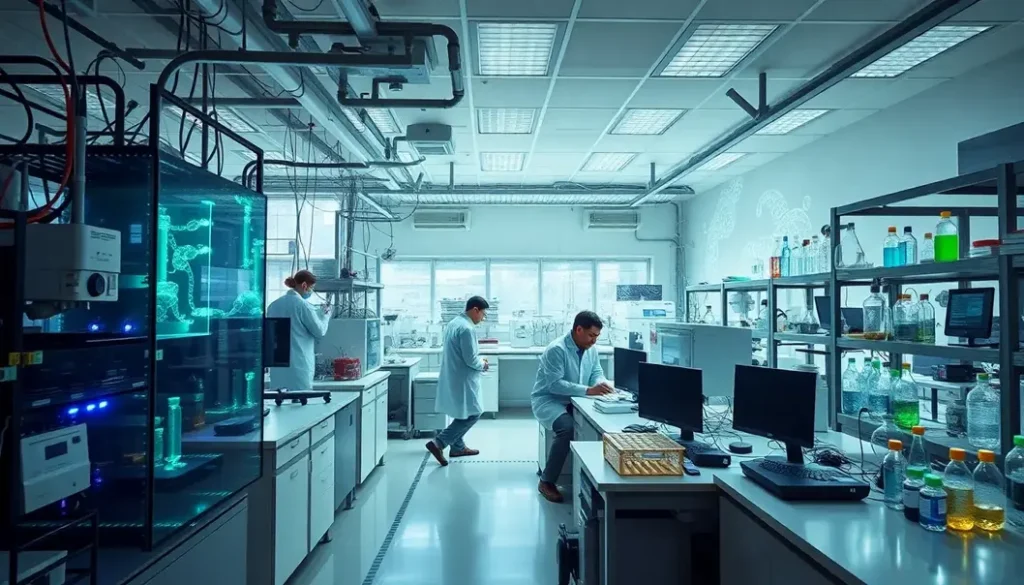
Synthetic biology lies at the intersection of biology and engineering, enabling scientists to redesign living organisms for useful purposes. This field aims to create systems and devices that exhibit biological functions, offering revolutionary applications in medicine, agriculture, and environmental sustainability. Scientists and biotech firms are increasingly investing in synthetic biology to solve critical global challenges, unlocking the potential of genetic manipulation and biomolecular design. This article delves into advancements in synthetic biology, focusing on the techniques that are shaping the future of the bioengineering landscape.
Foundations of Synthetic Biology: Concepts and Techniques
Synthetic biology represents a confluence of biology, engineering, and computer science, bringing a new perspective to how we modify life forms. Unlike traditional biotechnology, which often relies on the manipulation of existing biological systems, synthetic biology’s engineering approach focuses on designing and constructing new biological parts and systems from scratch. This chapter delves into the foundational concepts and techniques that define this transformative field.
At the heart of synthetic biology lies the concept of modular design. In engineering disciplines, complex systems are constructed using smaller, interchangeable components to achieve functionality. Similarly, synthetic biology employs genetic circuits as modular elements that perform specific functions when introduced into a living cell. These genetic circuits mimic electronic circuits and include elements like promoters, repressors, and ribosome binding sites. By interconnecting these components, scientists can create sophisticated biological systems capable of complex decision-making and computations.
One critical aspect distinguishing synthetic biology from traditional genetics is the emphasis on standardization. Standardized biological parts, often cataloged in registries such as the Registry of Standard Biological Parts, facilitate reproducibility and sharing within the community. These parts, known as BioBricks, provide a library of genetic elements that can be mixed and matched to assemble new functional systems. This standardization enables greater collaboration among researchers and fuels innovation by reducing entry barriers for synthetic biology projects.
Pathway engineering is another fundamental element of synthetic biology. Metabolic pathways, the series of chemical reactions occurring in a cell, can be re-engineered to enhance or redirect cellular functions. For instance, microbes can be programmed to produce pharmaceuticals, biofuels, or biodegradable plastics by manipulating pathways that convert simple substrates into desired products. By overcoming limitations in natural metabolic processes, synthetic biology enables the creation of new biochemical pathways that nature never intended.
Central to the field is the manipulation of genetic material using advanced molecular techniques. CRISPR technology has revolutionized synthetic biology by providing a precise tool for editing genomes with unparalleled accuracy. CRISPR systems allow scientists to target specific DNA sequences within a genome for alteration, addition, or deletion. This precision enables the construction of engineered organisms with new abilities or traits tailored to specific applications, such as disease resistance in plants or enhanced bioremediation capabilities in bacteria.
DNA synthesis and assembly form the backbone of synthetic biology techniques. Advances in DNA synthesis permit the construction of long DNA sequences from scratch, opening possibilities for creating entirely novel genomes. These synthetic genomes can then be inserted into a host cell to create organisms that function according to human-design specifications. The synthetic assembly of gene sequences allows us to surpass what traditional genetic modification techniques offer by enabling de novo construction of organisms.
Computational modeling is a pivotal tool in this field. Using computational models, synthetic biologists can simulate and predict the behavior of engineered genetic systems before experimental implementation. These models are invaluable, saving time and resources by allowing researchers to optimize designs in silico before conducting physical experiments. This integration of computation with biology exemplifies the cross-disciplinary nature of synthetic biology.
While synthetic biology opens up extraordinary possibilities, it also poses ethical and safety concerns that must be managed thoughtfully. The creation of new life forms raises questions about biosecurity and environmental impact. For instance, engineered organisms released into the environment could disrupt ecosystems. Therefore, biosafety measures must be incorporated into the design of synthetic organisms to prevent unintended consequences.
Furthermore, the field continues to evolve rapidly, integrating insights from other scientific advancements such as neuromorphic computing, which may offer novel approaches to biological computation mimicking human brain processes. Such interdisciplinary collaboration expands the horizons of what this field can achieve.
To sum up, synthetic biology provides an engineering framework for understanding and reshaping the living world. By combining the rigor of engineering with the creativity inherent in biology, this discipline is forging pathways to innovative solutions for some of our most pressing global challenges. As researchers continue to refine techniques and develop new tools, synthetic biology promises to revolutionize our understanding and application of the biological realm.
Applications of Synthetic Biology: Solutions for Global Challenges

Synthetic biology stands as a cornerstone in modern science, allowing us to engineer biological systems for innovative and practical applications. It transcends traditional limitations, making it possible to create sustainable technologies that address pressing global concerns. From healthcare advancements to agricultural innovations, synthetic biology offers transformative solutions that promise to reshape our interaction with the living world.
Healthcare Innovations
One of the most compelling applications of synthetic biology lies in healthcare, particularly in the development of synthetic vaccines and new therapeutic approaches. Traditional vaccine development can be a lengthy process, often taking years to develop and distribute. Synthetic biology accelerates this by designing and assembling genetic constructs that instruct cells to produce specific antigens rapidly. For example, synthetic biology has enabled the creation of mRNA vaccines, which have demonstrated remarkable efficacy and safety in combating pathogens swiftly.
In addition to vaccines, synthetic biology contributes to personalized medicine. Researchers are now able to design synthetic gene networks that can detect disease markers within an individual’s body, triggering a tailored therapeutic response. This level of customization not only improves treatment outcomes but also minimizes adverse reactions, as the therapy is precisely aligned with the patient’s unique genetic makeup.
Sustainable Agriculture
The agricultural sector faces mounting challenges, including climate change, soil degradation, and the need to feed a growing global population. Synthetic biology provides tools to engineer crops that are more resilient to environmental stresses and pests. For example, researchers are using genome editing techniques like CRISPR to develop crops that can withstand drought, salinity, and extreme temperatures.
Furthermore, synthetic biology enhances the nutritional content of crops. Scientists design genes encoding enzymes that increase the bioavailability of essential vitamins and minerals, addressing malnutrition. These engineered crops promise to fortify diets in regions where nutrient deficiencies are prevalent.
Synthetic biology also offers solutions for sustainable pest management. Engineered organisms that secrete targeted pest deterrents can reduce the need for harmful chemical pesticides, promoting biodiversity and soil health.
Environmental Remediation
Environmental pollution is a daunting challenge, and traditional cleanup methods often fall short in scale and sustainability. Synthetic biology offers innovative strategies to address this through bioremediation—using engineered microbes to degrade pollutants.
Microbes can be engineered to consume oil spills, degrade plastics, and detoxify heavy metals from soil and water. For instance, customized strains of bacteria that metabolize petroleum hydrocarbons can be deployed in contaminated areas, significantly accelerating the remediation process. Similarly, synthetic biology strategies aim to convert harmful waste into valuable products, such as biofuels or biodegradable materials, closing the loop on waste management.
Case Studies in Biomanufacturing
Biomanufacturing employs biological processes to produce chemicals, materials, and energy sustainably. Synthetic biology plays a central role by optimizing microbial and plant systems for efficient production.
Consider the case where engineered yeast has been utilized to manufacture rare plant-based compounds used in pharmaceuticals. Traditional extraction processes are often environmentally damaging and economically unviable, whereas microbial synthesis offers a scalable and sustainable alternative. By tailoring metabolic pathways, synthetic biology maximizes yield while minimizing resource use.
Similarly, biofuels are a significant focus area. Engineered algae and bacteria can convert sunlight, CO2, and waste biomass into fuels. This approach not only offers a renewable energy source but also supports carbon capture efforts, aligning with global climate goals.
Future Directions
The future of synthetic biology is promising, with ongoing research expanding its potential applications. As we explore the boundaries of life engineering, ethical and regulatory considerations play a crucial role. The development of automated biosafety protocols ensures that synthetic organisms do not adversely impact ecosystems. These protocols remain vital as synthetic biology advances toward more complex systems.
Moreover, interdisciplinary collaborations are essential. The convergence of synthetic biology with fields like artificial intelligence and digital modeling can enhance our understanding of biological systems. For instance, AI can help design more effective synthetic biological systems by predicting how genetic modifications impact cellular functions, as explored in generative AI studies.
Conclusion
Through synthetic biology, we are not merely applying science; we are crafting sustainable solutions to global challenges. Its applications in healthcare, agriculture, and environmental remediation demonstrate its potential to improve human life and the planet’s health. As we look to the future, the collaboration between scientists, policymakers, and industry leaders will be crucial to harness these innovations responsibly and ethically, ensuring a thriving, sustainable future for all.
Final words
The advancements in synthetic biology present exciting opportunities for addressing some of the most pressing challenges we face today. As scientists and biotech firms continue to innovate in this dynamic field, the potential for impactful solutions expands. The intersection of biology and engineering not only promises enhancements in healthcare and environmental sustainability but also fosters a deeper understanding of life itself.
Innovate with Synth Bio
Learn more: innoupdates.com
About us
Our company offers advanced bioengineering tools designed to facilitate breakthroughs in synthetic biology. We provide the latest technologies and platforms for genetic engineering, allowing researchers to accelerate their projects and achieve sustainable solutions in healthcare and environmental management.