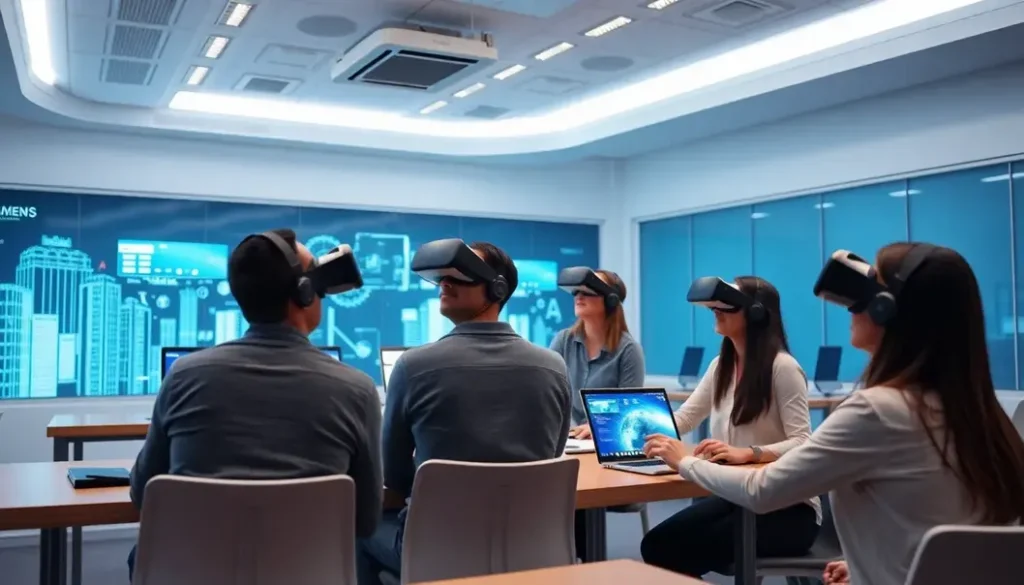
Virtual reality (VR) is revolutionizing corporate training by enhancing engagement and retention. Organizations are increasingly adopting VR to create immersive experiences that closely mimic real-world scenarios. This technology allows employees to practice skills in safe environments, facilitating a deeper understanding of complex tasks and reducing training time. As VR continues to evolve, its application in training becomes more significant, promising to reshape how corporations equip their workforce. Join the journey into the world of VR training, where possibilities are limitless and learning becomes an adventure.
The Immersive Edge: Engaging Employees with VR Training
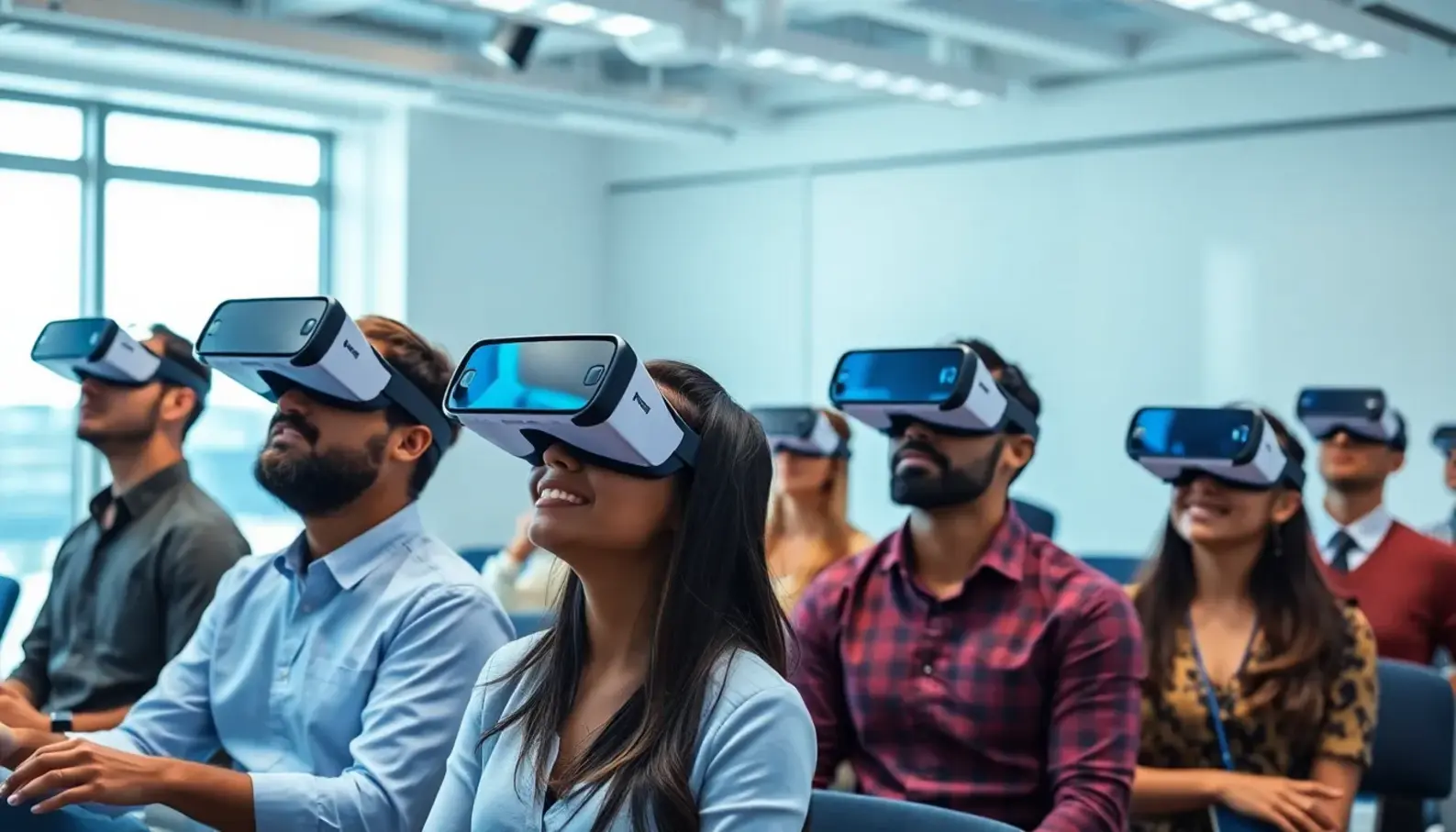
The power of virtual reality in corporate training lies in its ability to create highly immersive environments. These environments not only captivate employees’ attention but also significantly enhance learning retention. By simulating real-world scenarios, VR training offers a blend of realism and safety, which is difficult to achieve with traditional training methods.
Through virtual reality, employees can be transported into complex situations without the associated risks of the real world. For instance, onboarding new hires can be transformed into an engaging journey through the inner workings of an organization. Employees can virtually tour the company’s operations worldwide, meet key personnel as avatars, and experience the company culture from day one. This immersive introduction can foster a strong sense of belonging and motivation.
Safety protocols are another area where VR shines in corporate training. High-risk industries like manufacturing and construction benefit immensely from VR’s capabilities. Employees can practice emergency procedures, like handling equipment malfunctions or managing chemical spills, within a controlled virtual environment. This form of training allows employees to make and learn from mistakes without real-world consequences, leading to better preparedness when real incidents occur.
Customer service training can also enter new realms with VR. Picture a virtual customer service desk where employees interact with diverse customer avatars representing various temperaments and needs. Through VR, employees can practice their responses and decision-making strategies, refining their soft skills through direct feedback and real-time adjustments. This experiential learning far exceeds the efficacy of rote memorization or video tutorials.
Furthermore, the development of soft skills—one of the more challenging undertakings in corporate training—can be significantly enhanced through VR. Imagine scenarios where employees engage in difficult conversations or negotiate crucial deals in a virtual setting, receiving immediate feedback on their approach. They experience the impact of tone, body language, and word choice without the stress of actual high-stakes situations.
Statistics underscore the effectiveness of VR training in improving learning outcomes. Studies have shown that VR training can lead to a substantial increase in knowledge retention rates, sometimes up to 75%, compared to just 10% from traditional methods like lectures or reading. Moreover, Learners are 4 times faster at becoming competent on tasks using VR compared to traditional classroom-based training and are also significantly less distracted. This heightened focus is attributed to the immersive nature of VR, demanding participant engagement and interaction at all times.
Industries across the board are increasingly incorporating VR into their training programs. Take the automotive industry, for instance, where VR is used to train workers in assembly processes, reducing training times and errors. The healthcare sector uses VR simulations for surgical training, allowing surgeons to perfect techniques in lifelike simulations that respond dynamically to their actions. Each of these examples highlights VR’s flexibility and applicability across diverse fields.
The versatility of VR in corporate training programs makes it an invaluable tool not only for hard skills but also for fostering soft skills development. Virtual reality immerses learners in varied, complex situations, demanding their engagement, promoting critical thinking, and enhancing their decision-making skills. The strategic integration of VR into training modules unlocks potential across industries, reshaping how employees learn and upskill in innovative ways. For further insights into how technologies like VR are reshaping industries, you might find the AI in HR strategies an insightful read.
Practical Applications: VR Training for Real-World Scenarios
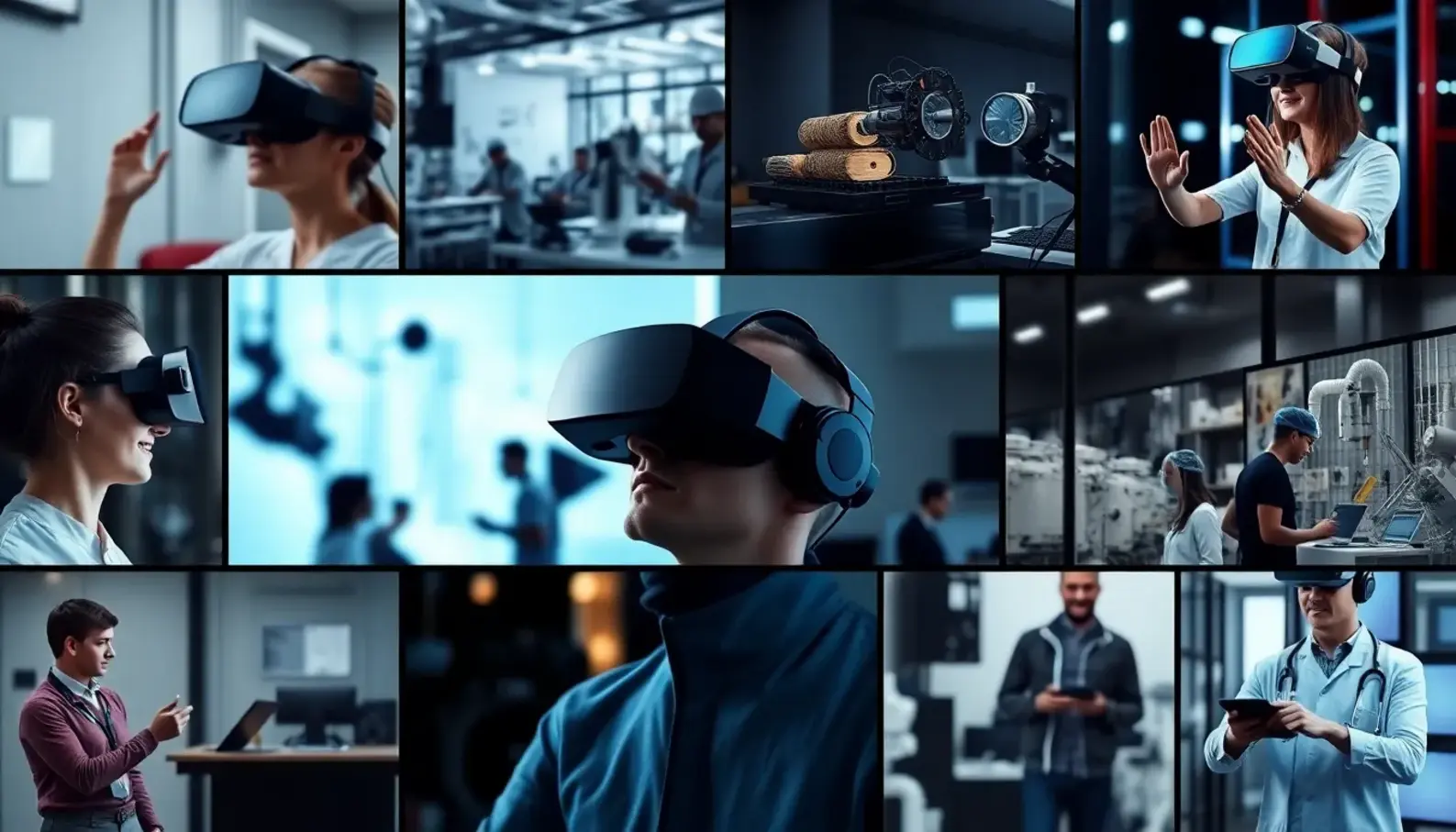
Virtual Reality (VR) offers a potent mechanism for enhancing corporate learning by providing immersive training environments tailored to specific industries. Its versatility is evident in sectors ranging from healthcare to manufacturing and customer service, where realistic simulations enhance skill acquisition, bolster confidence, and improve employee satisfaction.
Healthcare: In the medical field, VR serves as a critical educational tool. It creates detailed simulations of surgical procedures and emergency response scenarios. Trainees can engage in life-like operations without the risk of real-world consequences. This not only helps in acquiring precise skills but also fosters a high level of confidence among practitioners. For instance, a renowned hospital implemented VR to train its surgical residents. The results were promising, with a noticeable improvement in surgical skills and a significant reduction in errors during real procedures.
Manufacturing: The manufacturing industry benefits from VR’s ability to simulate complex machinery operations and safety protocols. Workers can experience the assembly processes and troubleshoot common mechanical failures in a risk-free environment. This interactive learning method accelerates the mastery of mechanical tasks and boosts operational efficiency. One case study involves a leading automobile manufacturer that equipped its workforce with VR training modules. The initiative resulted in a 25% increase in production efficiency and a dramatic decline in workplace accidents, as employees were more adept at maneuvering machinery safely.
Customer Service: VR transforms customer service training by simulating various customer interaction scenarios, from dealing with complaints to upselling products. Trainees can practice in a controlled setting, build empathy, and improve communication skills. A major retail chain utilized VR to train their customer service representatives, which led to a marked improvement in customer satisfaction scores and reduced handling times for support requests.
Integration and Scalability: Integrating VR with existing training programs offers a seamless transition. It enriches traditional learning formats, blending classroom theory with hands-on practice. Companies can scale VR solutions easily, replicating training modules across different locations and departments without additional infrastructure. The cloud-based nature of VR content ensures updates are disseminated swiftly, maintaining uniformity in training standards.
Cost-Benefit Analysis: Investing in VR solutions for corporate training may seem substantial initially. However, the long-term benefits outweigh the costs. Reduced material consumption and lower operational risks lead to financial savings. Enhanced training outcomes result in higher productivity and lower turnover rates, propelling organizations toward sustainable growth. For instance, a cost analysis within a multinational corporation showed that the initial VR deployment recouped in less than two years, followed by continual savings on training costs.
Future Outlook: The future of VR in corporate learning looks exceptionally promising. As technology advances, we can expect more sophisticated training environments, augmented by artificial intelligence and biometric feedback to offer personalized learning experiences. The intersection of VR and AI could redefine training delivery, creating adaptive learning paths tailored to individual employees’ needs.
Incorporating VR into corporate training is not just an enhancement but a transformative shift towards more engaging and effective employee development strategies. As these technologies continue to evolve, they offer the promise of even greater integration and efficacy within corporate learning ecosystems. For further insights into how emerging technologies are reshaping corporate dynamics, explore the potential impacts of AI in business growth at InnoUpdates.
Final words
Virtual reality is more than just a trend; it represents a significant shift in how corporate training is approached. By creating immersive, engaging experiences, VR not only enhances learning retention but also prepares employees for real-world challenges. As organizations continue to adopt this innovative technology, they stand to gain a competitive edge, ensuring their workforce is well-equipped and motivated for success. Embracing VR training is not just about keeping up; it’s about leading the way.
Book a VR Training Demo
Learn more: https://innoupdates.com
About us
Our VR Training Modules provide an immersive learning experience tailored to your organization’s needs. These modules can be customized for various industry applications, ensuring that your employees gain practical skills and knowledge in a simulated environment. Elevate your training approach today with our state-of-the-art VR solutions, designed to enhance engagement and learning outcomes.